


14 min 53 sec
Available in: English
The Third Door: The Mindset of Success
By Alex Banayan
Stories from Bill Gates, Tim Ferriss, Qi Lu, Steve Wozniak and others show how ambitious people break in when the usual routes are closed: polite persistence, bold calls, oversized goals and offers that serve the other side.
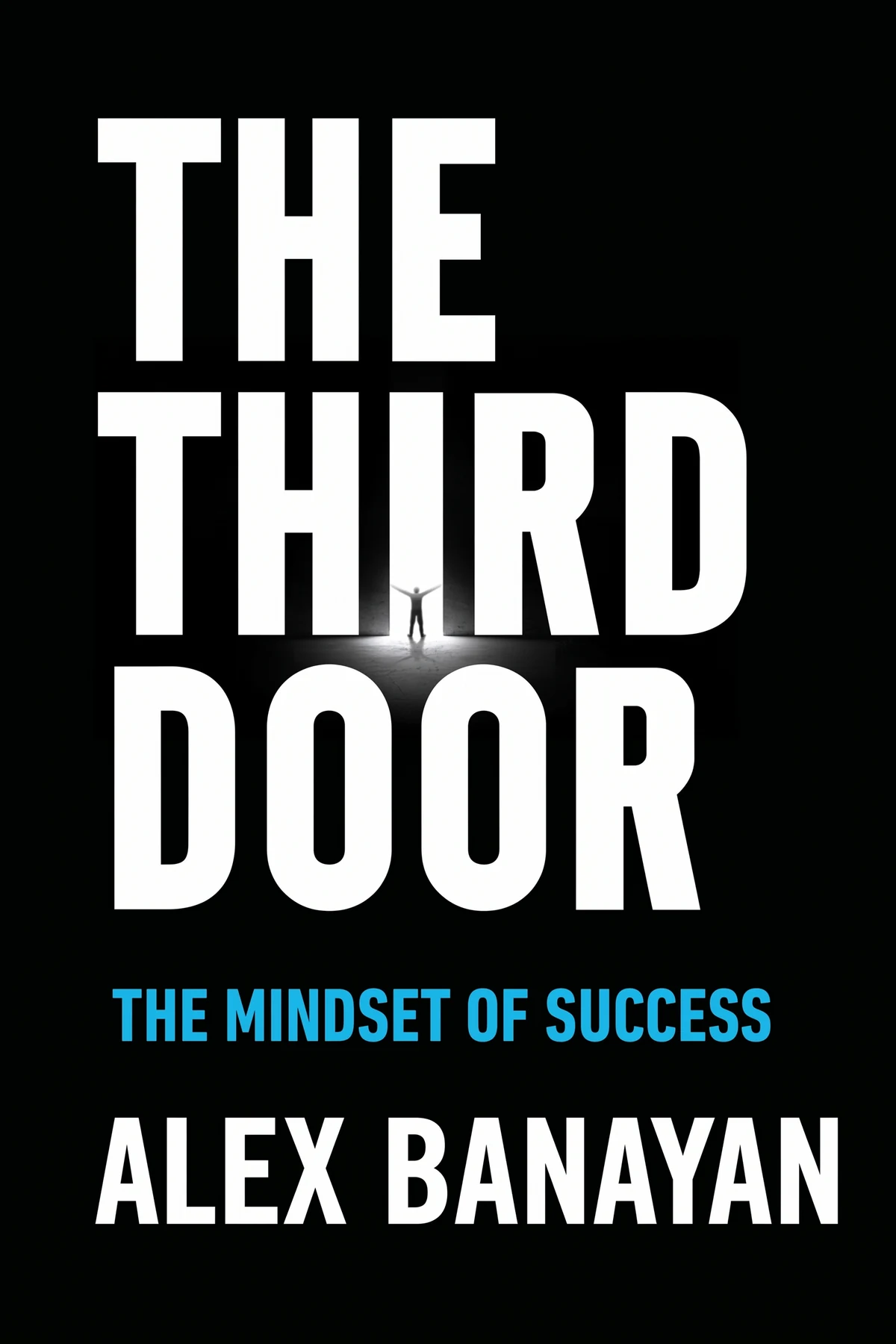
Table of Content
1. Introduction
56 sec
Most people chasing a breakthrough stand in the same queue, waiting politely to be let in. In The Third Door, Alex Banayan argues that the people at the top rarely waited. He compares success to a nightclub. Nearly everyone lines up at the main entrance, while celebrities and billionaires walk through the VIP door. A third door exists too, though few notice it: you leave the line, run around the back, knock, and perhaps slip in through the kitchen.
At 18, Banayan dropped his pre-med plans to interview people who had used that door, from Bill Gates to Steve Wozniak. What he collected adds up to one argument: initiative, used with respect and on your own terms, opens doors that waiting never will. His stories show how to follow up without annoying anyone, make the call you dread, and find a way in when the front door stays shut.
2. Start the plan before the money exists
1 min 25 sec
A college student with a huge plan and an empty bank account found his funding in the last place a serious person would look, thanks partly to advice from a stranger in a television studio.
3. Follow up without turning into a pest
1 min 33 sec
Thirty-one emails finally got a busy author to say yes. Then the author explained, kindly, why most of those emails had been a mistake, and what separates determined people from annoying ones.
4. Find the hours and grit others leave unused
1 min 49 sec
A village boy who earned $27 a month became a Microsoft president, and a skinny kid became a world boxing champion. Both found an edge hiding in places most people never think to look.
5. Aim higher than you can handle, then catch up
1 min 23 sec
A young founder wanted to meet other entrepreneurs and could not afford to. What he did instead put him in debt, sent him to ask his mother about snacks, and ended with a ski resort.
6. Stop copying winners and write your own pitch
1 min 40 sec
Banayan did everything the guides recommended and collected nothing but rejections. A friend’s story about a retail giant in trouble showed him why, and one late-night email changed everything.
7. Make the nervous call that opens the door
1 min 42 sec
Two young programmers both dreaded picking up the phone, and they had nothing finished to sell. One of them dialed anyway. Gates also explains how he dealt with skeptics and how he approached his early deal with IBM.
8. Get access by offering what people need
1 min 49 sec
A young stockbroker nobody would meet, an inventor facing a national education crisis and a CEO granting wishes at a party each reveal why so many doors stay closed, and how little it can take to open them.
9. Define success so it still makes you happy
1 min 32 sec
The Apple co-founder who stepped away from the top job turned out to be the happiest person on Banayan’s list. His choices about titles and money raise an uncomfortable test for anyone chasing promotion.
10. Conclusion
1 min 04 sec
From the far end of Banayan’s quest, The Third Door looks like a book about small choices. None of these people started with a VIP pass. Gates had a phone call to make and software he had not yet written, Lu earned $27 a month, Bisnow put his first summit on a credit card, and Banayan paid for his travels with a game show sailboat. What they shared was a readiness to step out of line, plus the judgment to do it respectfully and in a way that fit who they were.
Banayan’s practical closing advice is to build a pipeline. If you want to join a startup, approach dozens of them, since you cannot know which founder woke up this morning needing a salesperson. More attempts mean more chances to get lucky. Work through that list the way the stories suggest: follow up without pressure, make the call you dread, and lead with what the other person gains.
Wozniak supplies the final condition. A side entrance is only worth finding if the room behind it is one you actually want to be in.
About this book
What is this book about?
Most people trying to get ahead do what they are told: apply, wait, hope. Alex Banayan noticed that the people he admired most had done something else. At 18, a reluctant pre-med student, he set out to learn how Bill Gates and other legends had started, and he paid for the trip by winning a sailboat on a game show. His answer is the third door. Success, he argues, works like a nightclub. Most people queue at the main entrance, the famous walk through the VIP door, and a few step out of line and find another way in through the back. Banayan follows that idea through his own attempts to land interviews and through the stories he collected, from Tim Ferriss's twelve rejections to Qi Lu's four-hour nights, Elliott Bisnow's credit-card conference and the phone call that launched Microsoft. Readers get a set of habits they can try at once: follow up without becoming a nuisance, make the call they are dreading, aim beyond their current ability, write a pitch only they could write and offer what the other person needs. Steve Wozniak adds a final test: make sure the room behind the door is one you want.
Book Information
Who it's for
Tired of unanswered applications
Students and early-career professionals tired of applying and waiting for a reply.
Career switchers, future founders
Career switchers and aspiring founders who need a way in without connections.
Nervous about cold outreach
Anyone who avoids cold emails and nervous phone calls and wants examples of doing them well.
About the Author
Alex Banayan
Alex Banayan put his college studies on hold at 18 to start the quest that became The Third Door, described as a number one international bestseller and translated into more than a dozen languages. Forbes named him to its 30 Under 30 list, and he has written for the Washington Post and TechCrunch. As a keynote speaker, he has presented his Third Door framework to leadership teams at companies including Apple, Google and Nike.
Ratings & Reviews
Ratings at a glance

What people think
Listeners find this book an immersive and entertaining read that delivers meaningful real-world insights and encourages them to transform their lives. The narrative is captivating, with one listener characterizing it as a lovely story of perseverance, and listeners value its actionable advice and focus on working more effectively. Listeners feel the work is emotionally resonant, especially reassuring for college students, and prize its guidance on prioritizing authentic connections.
Top reviews
Kwan
Finally got around to reading this, and frankly, the Price is Right story is worth the price of admission alone. Banayan captures that frantic, desperate energy of a college student trying to find their footing in a world that feels locked tight. It’s not just a business book; it’s a beautiful story of perseverance that feels incredibly comforting for anyone currently lost in the "waiting room" of life. I appreciated the raw honesty about his failures and his father's illness, which grounded the high-flying billionaire interviews. While some parts feel a bit like a "bro-hustle" manifesto, the underlying message about prioritizing genuine human connection over transactional networking really hit home. It’s a fun, fast-paced read that motivates you to stop asking for permission and start finding your own way through the side door.
Show moreSupatra
What a wild, emotional rollercoaster this turned out to be! I picked this up expecting a dry "how-to" on networking, but instead, I got a vulnerable coming-of-age story that had me tearing up during the Jessica Alba chapter. Seeing Alex navigate his father’s cancer diagnosis while trying to maintain his professional facade was incredibly moving. It highlights the "gray" areas of success that most business books ignore—the messy, unrefined reality of trying to make an impact while your personal life is falling apart. The grit he shows is infectious. This book taught me that working smarter isn't just about shortcuts; it's about the courage to knock on a hundred doors even when ninety-nine of them stay shut. Truly life-changing perspective for me.
Show moreIvan
Ever wonder why some people just seem to "get in" while the rest of us are stuck in the main line? This book answers that question with a mix of high-stakes adventure and practical wisdom. It’s a compelling read that motivates you to change your life by simply changing how you approach opportunities. I found the section on Stefan Weitz and the "gray" of stories particularly insightful—it's a reminder that we never see the full struggle behind a "successful" person's history. The advice on prioritizing genuine relationships over cold networking is a game-changer for my own career. It’s a beautiful story of perseverance that I’ll be recommending to every college student I know.
Show morePensri
This should be mandatory reading for every twenty-something who feels like they're just spinning their wheels. Banayan's journey is an absolute masterclass in grit and creative problem-solving. I loved the way he tied in pop culture references to make the business lessons feel more accessible and less like a lecture. The book feels like a conversation with a friend who just happened to interview Bill Gates. It’s engaging, fun, and packed with little gems about how to work smarter. I’ve already started applying the "Third Door" mindset to my own job search, and the difference in my confidence is night and day. Don't listen to the cynics; this book is pure motivation.
Show moreNum
As someone who spends a lot of time mentoring young professionals, I find the "Third Door" framework to be a highly useful tool for explaining how the world actually works. Banayan’s journey to track down Bill Gates and Maya Angelou is entertaining, even if it occasionally veers into the realm of "fake it until you make it" bravado. I’ll admit, the constant name-dropping and his reliance on Elliott Bisnow can get a bit tiring after a while. However, the practical wisdom buried in these anecdotes—like the tip about never using "thanks in advance" in emails—is surprisingly actionable. The writing style is breezy and conversational, making it easy to digest in a couple of sittings. It might be a bit corny for the more cynical readers, but for a student looking for a spark, it’s a solid pick.
Show moreLek
Picked this up on a whim after seeing it all over social media. Is it a bit corny? Yes. Does it feel like a series of "lifehacks" stitched together? Occasionally. But frankly, the core message about unconventional paths is something more people need to hear. I loved the specific details about the Harry Potter references and the way he broke down the Bill Gates interview process. It’s a refreshing change from the "standard" advice of just getting a degree and waiting your turn. My only gripe is that it feels a bit unrefined in the middle sections, with some fluff that could have been trimmed. Still, the energy is undeniable, and the lessons on building genuine relationships are worth the time.
Show moreJob
The chapter on the Price is Right alone makes this a fascinating study in probability and persistence. Banayan’s writing is punchy and fast, making the 300+ pages fly by. I especially liked how he didn't portray himself as a genius, but rather as someone who was just shameless enough to keep trying. The "Third Door" analogy is brilliant because it’s so simple to visualize. We often get stuck thinking there’s only one way into a career, but this book proves that the "inside man" or the "side alley" is always there if you look hard enough. I do think the Elliott Bisnow mentorship borderlines on hero worship, but the results speak for themselves. Great for anyone feeling stuck in a rut.
Show moreNannapat
Truth is, I was skeptical because of the "hustle culture" vibes on the cover. But after hearing an interview with Alex, I decided to give it a shot. The book is essentially a long love letter to persistence. While the name-dropping can be a bit much, the actual conversations he has—especially the one with Maya Angelou—are surprisingly deep. He manages to peel back the layers of these icons to show they are just people who chose a different door. I appreciated the honesty about his "failed" interviews and the awkwardness of being a young kid in these high-powered rooms. It’s not a perfect business book, but as a narrative about finding your path, it’s excellent.
Show morePruet
Alex Banayan is definitely a persistent guy, and his story is a testament to what happens when you refuse to take "no" for an answer even when every traditional path seems blocked. I found the "Third Door" framework to be incredibly validating for my own career path, which has never been linear. The writing is very real—sometimes a bit messy and unrefined—but that just adds to the authenticity of a kid trying to figure it all out. I would have liked to see more diverse interview subjects outside of the "business dudebro" sphere, but the insights he does get are valuable. It’s a great refresher on the power of asking for what you want. Definitely worth a read if you need a kick in the pants.
Show moreGrace
Look, I really wanted to like this, but I struggled to get past the author's blatant sense of entitlement throughout most of the narrative. It feels less like a guide to success and more like a memoir of a self-absorbed kid harassing executives until they finally cave just to get him out of their hair. The 'Price is Right' section was genuinely clever, but from there, it often devolves into a repetitive cycle of 'Instagram bro' hustle culture and naive worship of billionaires. I found some of the interviews themselves to be fairly shallow, offering the same cliches you’d find in any Robbins or Ferriss book. The way he treats the women in the book, like Jessica Alba, feels a bit hollow compared to his 'dudebro' mentors. It's an okay read if you're new to the genre, but more seasoned readers might find it a bit repetitive.
Show moreQuestions about this book
What is the main idea of The Third Door by Alex Banayan?
Banayan compares success to a nightclub with three entrances. Most people queue at the main door, the famous use the VIP door, and a few find a third door by leaving the line and going around the back. Through stories from Bill Gates, Tim Ferriss, Qi Lu, Steve Wozniak and others, he argues that initiative used with respect and on your own terms opens doors that waiting does not.
How did Alex Banayan pay for his interviews?
At 18 he needed money to travel across the US for interviews. He got onto the game show The Price is Right by behaving as boldly as he could at casting, took advice from a longtime viewer to always guess low, and won a sailboat priced at $31,188. He sold it days later for $16,000 and used the money to start his quest.
What does The Third Door say about persistence?
Persistence works only when it stays respectful. Banayan sent Tim Ferriss’s assistant 31 emails ending with a cheerful thanks in advance, and Ferriss later warned him that the phrase sounds entitled. Ferriss himself was rejected 12 times before landing a job, yet he never wrote ten times a week or turned rude. He suggested telling people you understand if they have no time to reply.
How can I apply The Third Door in my career?
Start with the call or email you have been avoiding, as Gates did when he phoned MITS. Offer the other person something they want, the way Buffett offered businessmen help with their taxes. Write pitches that sound like you, not like someone more famous. And build a pipeline: approach many companies at once, since you cannot know which one needs you today.
What advice did Bill Gates give in The Third Door?
Gates gave Banayan two lessons for the early years of a career. First, a young person has to overcome skepticism, which Gates did by speaking quickly and in depth about software until nobody doubted him. Second, choose the strategic position over the quick profit: he did not push IBM for much money, knowing the IBM name would help Microsoft sell to IBM’s rivals later.
Readers also enjoyed

60 Seconds & You’re Hired!
Robin Ryan



Be A Free Range Human: Escape the 9 to 5, Create a Life You Love,
Marianne Cantwell
AUDIO SUMMARY AVAILABLE
Listen to The Third Door in 15 minutes
Get the key ideas from The Third Door by Alex Banayan, plus 5,000+ more nonfiction titles.
- 5,000+ titles
- Listen as much as you want
- 7-day free trial
- Cancel anytime









