
15 min 07 sec
Available in: English
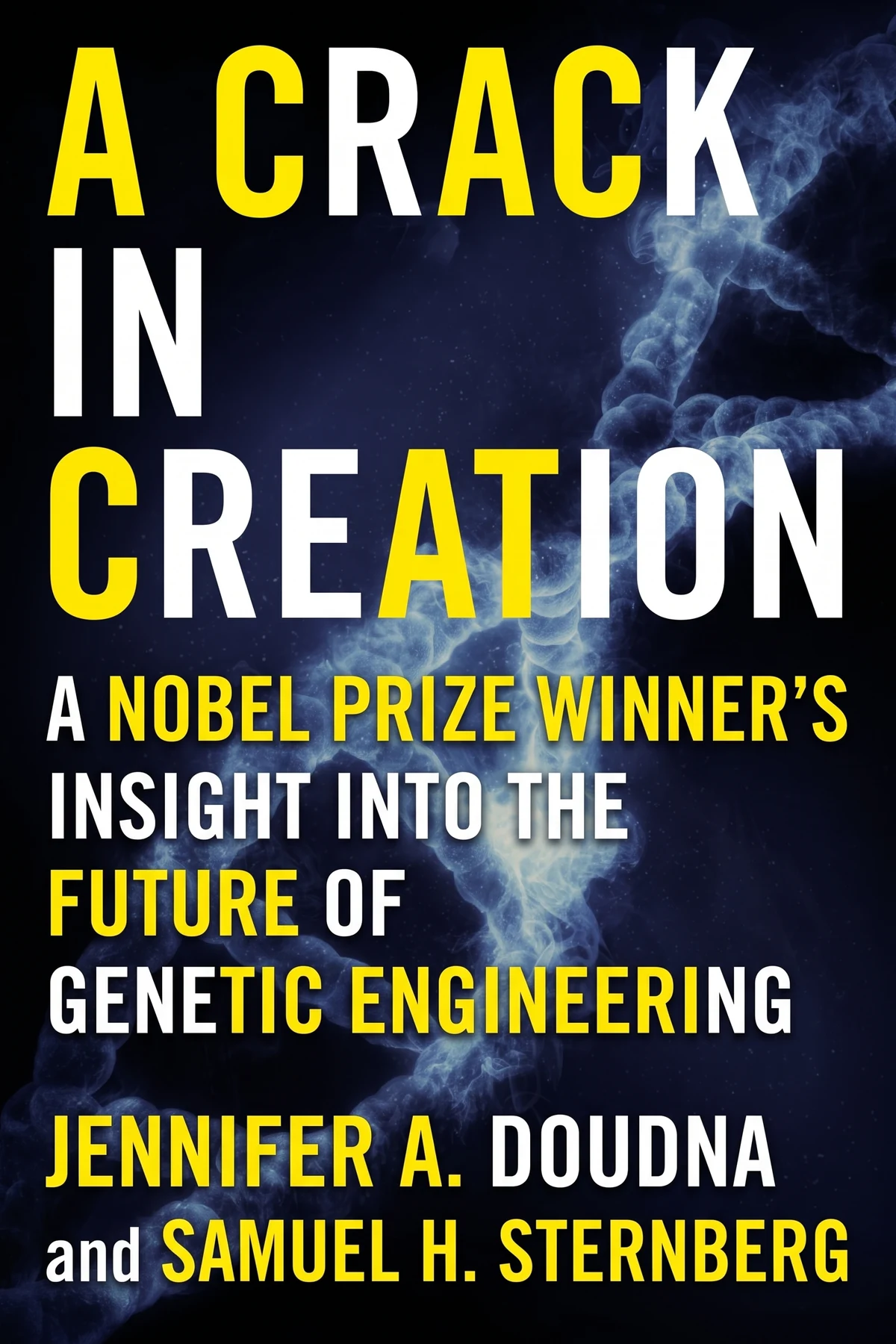
The Telomere Effect: A Revolutionary Approach to Living Younger, Healthier, Longer
Shows how telomeres, the protective caps on your chromosomes, set the pace of cellular aging. It also explains how stress, thinking habits, exercise, sleep, diet and surroundings can keep them longer and you healthier.

Table of Content
1. Introduction
1 min 01 sec
Most people treat aging as a clock nobody can argue with. In The Telomere Effect, Nobel Prize-winning biologist Elizabeth Blackburn and health psychologist Elissa Epel argue that part of its pace is set inside your cells, by protective caps on the ends of your chromosomes called telomeres. When telomeres run short, cells stop renewing, and people look older, feel older and get sick sooner.
The hopeful news is that telomeres respond to how we live. The way you handle stress, where your thoughts drift, how you exercise and sleep, what you eat and even how safe your street feels all leave a mark on them. The speed of aging, in the authors’ account, is not fixed, and ordinary daily choices can slow it. You will also hear which kind of stress helps your cells, why your waistline beats your weight as a warning sign, and how to start planning for your 70s now.
2. See what really sets the pace of your aging
1 min 30 sec
One damaged cell can harm its healthy neighbors like a bad apple in a barrel. The tiny structures that decide how long your cells keep renewing may say more about your age than your birth year.
3. Learn how worn cell caps can grow back
1 min 30 sec
A creature living in pond scum held a clue that eventually led to a Nobel Prize. The same discovery explains why the anti-aging supplements already on sale may be a gamble worth avoiding.
4. Make stress strengthen your cells instead of wearing them
1 min 36 sec
A month of crisis at work may leave your cells unharmed, while years of caregiving can age them early. A decade of research suggests the label you give a stressful moment changes how your body answers it.
5. Spot the thought patterns that age your cells
1 min 49 sec
Distrust, pessimism and a wandering mind all leave marks deep inside your cells. One study of British civil servants found something odd about the repair enzyme in the most hostile among them.
6. Move moderately and sleep at least seven hours
1 min 39 sec
Two kinds of workout boosted the enzyme that rebuilds telomeres, and a third did almost nothing. Rest turns out to be just as decisive, and the authors name a clear minimum.
7. Watch your waistline more than the scale
1 min 50 sec
A few extra pounds may matter less to your cells than you fear. The body measure that does matter is one most people never check, and what lands on your plate can change it.
8. A safer, greener street that protects your cells
1 min 30 sec
Whether you would walk home alone at night is, for the authors, a medical question. Trust between neighbors, litter on the pavement and nearby parks all show up in the cells of the people who live there.
9. Give a child's cells a strong start
1 min 29 sec
Cellular aging starts before a baby is born, and the first years leave a mark that lasts into adulthood. One small everyday moment, a bumped head, shows what parents can do about it.
10. Conclusion
1 min 13 sec
The Telomere Effect turns aging from something that happens to you into something you take part in. The caps on your chromosomes wear down with every division, yet they answer to how you meet pressure, where your thoughts go, how you move and rest, what you eat and the street you come home to. Even a parent’s calm voice after a bumped head leaves its trace.
Begin where the evidence is clearest. Call the next hard deadline a challenge and feel your body rise to meet it. Guard seven hours of sleep, and favor intervals or steady cardio, the kinds that raised telomerase. Judge your health by your waistline and your vegetables rather than the scale.
The authors also suggest looking further ahead. Picture yourself in your 60s and 70s with healthy telomeres and plan those days: the exercise, the friends, the travel, the books. Pick an older role model whose vitality you want, perhaps your own grandfather, Judi Dench or Supreme Court Justice Anthony Kennedy. Aging will come either way. How fast it comes is partly yours to decide.
About this book
What is this book about?
Aging can feel like a fixed sentence, written in your genes and your birth date. Nobel Prize winner Elizabeth Blackburn and health psychologist Elissa Epel argue that part of its speed is decided at the tips of your chromosomes, by protective structures called telomeres. Every time a cell divides, its telomeres shorten. When they run too short, cells stop renewing, and people grow sicker and weaker sooner. The authors explain how an enzyme called telomerase can rebuild telomeres, why supplements that promise to boost it deserve caution, and how everyday life feeds into telomere length. Chronic stress, cynical hostility, mind wandering and depression wear them down. Moderate aerobic exercise, interval training and at least seven hours of sleep help. Belly fat and insulin resistance matter more than the number on a scale, and safe, green, trusting neighborhoods show up in residents' cells. Even before birth, parents pass their telomere length on to their children. Readers get a clear picture of how cellular aging works and a set of practical changes, from treating stress as a challenge to setting a personal goal for life in their 60s and 70s.
Book Information
Who it's for
Professionals under chronic stress
Professionals under long-term stress who want to know what it does to their bodies and how to respond.
Worried about weight
People who worry about their weight and want to know which health measures matter more.
Current and future parents
Parents and parents-to-be curious how early life shapes a child's lifelong health.
About the Author
Elizabeth Blackburn
Elizabeth Blackburn, born in Hobart, Tasmania, in 1948, is a biologist whose research focused on telomeres. In 1984 she and Carol W. Greider discovered telomerase, the enzyme that rebuilds them. That work brought her a share of the Nobel Prize in Physiology or Medicine in 2009, making her the first Australian woman to win a Nobel. She has served as president of the Salk Institute for Biological Studies. Elissa Epel is a health psychologist and professor of psychiatry and behavioral sciences at UCSF, where she directs the Aging, Metabolism, and Emotion Center and studies how stress affects aging. She also wrote The Stress Prescription.
Ratings & Reviews
Ratings at a glance
What people think
Listeners find this book deeply informative, connecting research data to key concepts with scientific insights and recommendations. The writing is accessible and easy for most people to understand, making for a quick and captivating experience. Listeners value the specific health tips for managing stress and protecting telomeres, finding the book inspiring and useful for both teens and adults.
Top reviews
Sara
Finally got around to reading "The Telomere Effect," and I’m genuinely impressed by how Blackburn and Epel translate high-level biology into something actionable. Most of us know that stress is a killer, but seeing the molecular evidence regarding how it literally frays our DNA—like the plastic tips on shoelaces—is a total game-changer. The book is written in very accessible, laymen's language that doesn't sacrifice scientific integrity for the sake of simplicity. I particularly appreciated the sections on how our social environment and community health impact our cellular longevity. It’s not just about eating your greens; it’s about how we live our lives and relate to one another. Some might find the advice familiar, but having a Nobel Prize winner explain the "why" makes it much more compelling. It’s an inspiring read for anyone looking to understand the mechanics of aging beyond just surface-level vanity.
Show moreHassan
Ever wonder why some people seem to age so much faster than others? This book provides the scientific answer through the lens of telomeres, the protective caps at the end of our chromosomes. I found the research on how our thought patterns—like cynical hostility or rumination—affect our cellular health to be eye-opening. Elizabeth Blackburn and Elissa Epel have created a masterpiece that is both informative and deeply practical. It’s rare to find a book that combines Nobel-level science with such relatable health tips. The chapters on pregnancy and childhood telomeres were particularly moving and highlighted the long-term impact of our early environments. This isn't just a book for old people; it’s valuable for teens and young adults who want to set a foundation for a long, healthy life. It’s easily understood and very inspiring.
Show moreDavid
This is the first health book I’ve read that actually provides a satisfying "why" behind the standard medical advice we receive. Instead of just saying "stress is bad," the authors show us the physical damage it does to our chromosomes. The writing is incredibly accessible, making complex biological processes feel like common sense. I loved the "Telomere Tips" at the end of the chapters; they made the information feel very applicable to my daily routine. Not gonna lie, I’ve already started changing the way I handle work stress because of the data in these pages. It’s a rare book that manages to be both scientifically rigorous and deeply personal. Whether you’re a scientist or just someone who wants to live a better life, there is something valuable here for you.
Show moreNatalie
Picked this up on a whim and was pleasantly surprised by how much I learned. The Telomere Effect does a fantastic job of explaining the intersection between our biology and our environment. It’s not just about your genes; it’s about how you wear them. The insights into how even our neighborhood safety and social ties affect our cellular health were particularly profound. The authors have a way of making you feel empowered rather than doomed by your genetics. The book is organized beautifully, moving from the microscopic level to the broad lifestyle factors that we can actually control. It’s a quick read but one that stays with you long after you finish. Highly recommend it to anyone looking for a scientific basis for improving their overall well-being and longevity.
Show moreNuk
As a science enthusiast, I found the core research into telomerase and chromosome protection absolutely fascinating. Elizabeth Blackburn’s discovery is groundbreaking, and this book does a decent job of explaining why these repetitive DNA sequences matter so much for our health span. Truth is, the book leans quite heavily into the psychology of stress management, which I didn't anticipate going in. While the scientific explanations are solid, the self-help quizzes felt a bit out of place for a work co-authored by a Nobel Laureate. However, the practical recommendations on sleep and avoiding processed meats are well-supported by the data they present. It’s a quick and engaging read that successfully bridges the gap between laboratory research and daily habits. I would recommend it to anyone who wants a more rigorous justification for their wellness routine.
Show moreJoe
After hearing Elizabeth Blackburn speak in a TED talk, I had high hopes for this book, and it mostly delivered. The way the authors explain the enzyme telomerase is clear and helpful for someone without a PhD in genetics. I really liked how they addressed the caregiver phenomenon, showing how high-stress roles can actually shorten our life at a cellular level. Gotta say, the book does get a bit repetitive towards the middle, and I could have done without some of the more basic diet advice. We all know processed food is bad by now. Still, the underlying message about the healthspan versus the lifespan is an important distinction that more people need to understand. It’s a well-written, engaging look at how we can influence our own biological aging through mindful choices.
Show moreAstrid
Not what I expected from a book written by a world-class biologist. I was hoping for a deep, technical dive into the molecular pathways of telomere maintenance, but instead, I got a lot of mindfulness advice and "eat your vegetables" tropes. To be fair, the connection between chronic stress and cellular aging is interesting, especially the studies on caregivers, but the book repeats these points far too often. It feels like the science is being used as a thin veneer to sell yet another lifestyle program. The prose is clear and easy to follow, but it lacks the intellectual meat I was craving. If you’ve never read a health book before, you’ll find this revolutionary. If you’re already well-versed in basic biology and wellness, you might find yourself skimming through the sections on exercise and diet.
Show moreWoravit
To be fair, the actual science presented here is quite compelling, but the delivery is a mixed bag. I appreciated the specific details about how telomeres protect our genetic data during cell division. However, the book often feels like it's trying too hard to be a wellness manual. One minute you're learning about base pairs, and the next you're being told to take up meditation or change your social circle. It feels a bit disjointed at times. Also, the frequent mention of Dr. Blackburn’s Nobel Prize starts to feel like an appeal to authority after a while. I didn't hate it, but I didn't love it either. It’s a solid 3-star read for me—useful for the bibliography and the core concepts, but hindered by a lot of fluff.
Show moreKofi
This book is mostly a repackaging of common-sense health advice that we’ve all heard a million times before. Frankly, it’s a bit disappointing to see a Nobel Prize winner attach her name to something that feels so much like a generic wellness guide. The authors tell us to exercise more, sleep better, and avoid sugar—revolutionary, right? My main gripe is that the science often feels secondary to the branding. They mention correlation frequently but don't always do a great job of proving causation in a way that feels scientifically rigorous. Personally, I found the tone a bit too pop-science for my liking. There are better books out there if you actually want to understand the biology of aging without the heavy-handed therapy sessions and lifestyle quizzes. It’s okay as a basic primer, but it doesn't live up to the hype.
Show moreSomrutai
Look, I wanted a science book, but I got a therapy session instead. The connection between telomeres and lifestyle is an interesting hypothesis, but this book treats it like settled law in a way that feels disingenuous. The authors lean heavily on a few specific studies while ignoring the broader complexities of genetic research. It feels like an exercise in branding for a health program rather than a genuine attempt at science education. Even the mention of Deepak Chopra was a red flag for me. If you want a book that tells you to eat your veggies and be happy, this is for you. If you want a rigorous exploration of the current state of telomere research, look elsewhere. It was a boring read that failed to justify its own existence as anything more than a glorified self-help manual.
Show moreQuestions about this book
What is the main idea of The Telomere Effect?
Blackburn and Epel argue that telomeres, protective structures on the ends of chromosomes, help set how fast we age. They shorten each time a cell divides, and when they get too short, stem cells stop replacing damaged cells and people become sicker and weaker. Telomere length responds to stress, thinking patterns, exercise, sleep, metabolic health and environment, so lifestyle changes can help people look and feel younger and healthier.
What is telomerase, and should I take supplements to boost it?
Telomerase is an enzyme that rebuilds telomeres by restoring DNA lost when cells divide, and it can slow or even reverse their shortening. Humans make only a little, and less with age. Some supplements claim to raise it, but the authors note they lack scientific proof and urge caution, since too much telomerase can fuel the uncontrolled cell growth that marks cancer.
Is all stress bad for your telomeres?
No. The authors describe a dose-response relationship. Small daily stresses are harmless and can even strengthen cells through hormesis, and a short crisis, like a hard month at work, is unlikely to do lasting damage. Years of heavy stress, the kind long-term caregivers often face, shortens telomeres. Treating stressful moments as challenges rather than threats also helps, as psychologist Wendy Mendes found in a decade-long study.
What exercise and sleep habits does The Telomere Effect recommend?
A study at Saarland University Medical Center in Germany found that moderate aerobic exercise and high-intensity interval workouts raised telomerase activity, while resistance training had little effect. The authors warn against overtraining, which causes oxidative stress. For sleep, they recommend at least seven hours: a 2012 Whitehall study found that men sleeping five hours or less had shorter telomeres than those sleeping more than seven.
Does being overweight shorten telomeres?
According to the authors, a few extra pounds do not seem to matter unless you are obese. Poor metabolic health does matter, meaning high cholesterol, raised blood pressure and insulin resistance. Belly fat is a better warning sign than BMI. They recommend a low-sugar diet with plenty of non-starchy vegetables, antioxidant-rich foods such as fruits, nuts, whole grains and green tea, and omega-3 fats from oily fish and flaxseed.
Featured in
Readers also enjoyed

A Short History of Nearly Everything
Bill Bryson

A Thousand Brains: A New Theory of Intelligence
Jeff Hawkins




Alien Earths: The New Science of Planet Hunting in the Cosmos
Lisa Kaltenegger



AUDIO SUMMARY AVAILABLE
Listen to The Telomere Effect in 15 minutes
Get the key ideas from The Telomere Effect by Elizabeth Blackburn, plus 5,000+ more nonfiction titles.
- 5,000+ titles
- Listen as much as you want
- 7-day free trial
- Cancel anytime









