

59 Seconds: Change Your Life in Under a Minute
Richard Wiseman
 English
 ไทย
Shows why ordinary daily actions, such as reading ten pages or saving two dollars, decide over the years whether your health, money and relationships rise or decline. It also explains how to make those actions stick.
1 min 01 sec
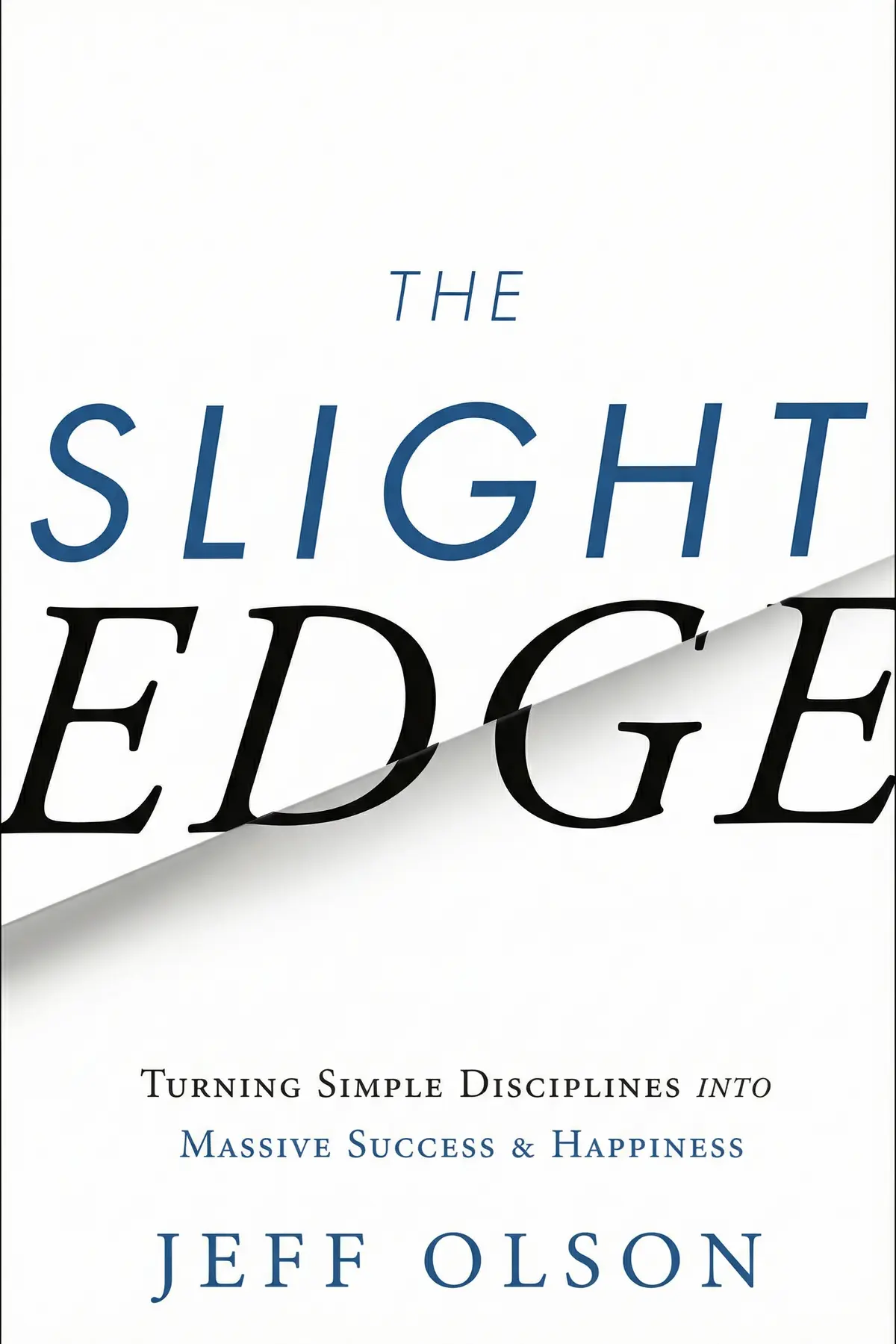
If you have ever started a year with a big resolution and dropped it by February, Jeff Olson thinks the cause was never weak effort or weak desire. In The Slight Edge, the speaker and business founder argues that success comes from simple, productive actions done again and again over a long stretch of time, and that failure is built in exactly the same way.
He calls this force the slight edge, and it never switches off. Every small choice, from what you eat at lunch to whether you read a few pages tonight, nudges your life toward success or toward failure, and the results only show years later. Ordinary disciplines, repeated until they become automatic, decide where you end up.
Along the way you will learn to check which direction your health, money and relationships are moving. You will also see how to train habits your mind runs without thinking and how to turn a vague dream into a dated plan with a first step.
1 min 52 sec
Four out of five resolutions collapse within weeks, and most people blame their own lack of drive. Olson points to a different culprit, hidden in how small and harmless the right actions feel.
1 min 50 sec
Olson insists every life is moving in one of only two directions, with no comfortable middle. Two simple clues, and one honest look at your own energy, reveal which way yours is going.
1 min 54 sec
A teenager who could not sing, dance or act became the biggest draw in stand-up comedy. A president lost again and again before he won. Both point to an attitude most people resist.
1 min 47 sec
Almost everything you do happens without conscious thought, which sounds like bad news for self-improvement. Olson turns it into the method, starting with a reading target small enough to fit any evening.
1 min 59 sec
Starting is hard, and a pile of half-finished tasks can drain the energy you built. Olson names four forces that work on your side, one of which most busy people skip almost entirely.
1 min 49 sec
Fighting a bad habit head-on usually fails. Olson offers a simpler swap, then lays out seven habits that keep you steady, ending with a question about what you do when nobody is looking.
1 min 44 sec
Most people hold dreams for years without moving closer to them. Olson’s three-step method is simple enough to start tonight, and one surprising number explains why the dates matter as much as the dream.
1 min 12 sec
Olson’s book makes time the main character. Time ignores intentions. It simply multiplies whatever you repeat, so the same years that build one person’s savings, health and skill wear down another’s, and both may feel nothing changing along the way. The difference between them is a handful of small choices that looked too minor to matter.
Olson also asks you to look around you. Birds of a feather flock together, he observes, because they are flying in the same direction. The people closest to you rub off on you, so if they are drifting toward failure you are likely to follow, and if they are climbing you probably will too. It is worth asking honestly where your closest circle is heading.
From there the practice is plain. Choose one dull action that serves a written, dated goal, such as ten pages a day or two dollars saved, and do it whether or not anyone is watching. End each day by checking whether you did it, and mark it when you did.
Fourteen dollars after a week looks like nothing. That is exactly how every fortune, and every failure, begins.
Most people know what they should do to get healthier, wealthier or happier. Few keep doing it, and four out of five New Year's resolutions are gone by mid-February. Jeff Olson argues that the problem is neither effort nor desire. In his view, success comes from simple, productive actions that are repeated steadily across time, while failure springs from those same small choices when they are left undone. Olson calls this force the slight edge. It is always working, for you or against you, and its results stay invisible until years have passed. He shows how to check which direction each area of your life is moving and why a life philosophy that respects failure and boring practice matters. He also explains how lifelong learning trains the unconscious mind to make good choices automatically. The book then offers practical tools: four allies that keep progress going, seven habits that hold you on course, and a three-step method for turning a dream into a written, dated plan with a first step you can take tomorrow.
People who set big resolutions every year and watch them fade within weeks.
Young professionals who want a steady, daily method for getting ahead in their career and finances.
Anyone whose health, savings or relationships feel slowly stuck and who wants to see which small choices are driving it.
Jeff Olson is a speaker who has addressed audiences across the United States and abroad. He worked in sales, marketing and distribution at several companies, built three sales and distribution teams from scratch and became CEO of one of them. He later founded The People's Network, a personal development training company, produced more than 900 television programs on health, finances and relationships, and has worked with Les Brown, Jim Rohn and Brian Tracy.

Listeners view this title as an essential read that provides fresh outlooks and actionable tips for advancing both personally and professionally. Its message is direct and simple to digest, making the information usable for audiences of any age. They value its ability to produce massive results, with one listener highlighting that it actually enhances the impact of other self-improvement books.
This book provides the missing link that most success manuals ignore: the fundamental philosophy behind your actions. Jeff Olson argues that while everyone knows they should eat better or save money, few actually do it because results aren't immediate. The phrase 'easy to do, just as easy not to do' has become a permanent fixture in my brain. It’s a simple concept, but the way it’s laid out here makes it feel like a genuine epiphany. I stopped looking for the big 'quantum leap' and started focusing on my daily choices instead. Truthfully, it makes every other habit book I've ever read ten times more effective because it addresses the mindset first. If you're tired of feeling like you're spinning your wheels, this is your wake-up call.
Show moreFinally got around to finishing this, and I genuinely wish I had picked it up a decade ago. The idea that your life is the sum of tiny, seemingly insignificant decisions is both terrifying and empowering. Olson doesn't offer 'new' information—he even admits that most of this stuff is common knowledge—but he provides the framework to actually use it. I particularly enjoyed the section on 'book smarts vs. street smarts' and the importance of continuous learning through doing. It’s not just about business; it applies to health, relationships, and your overall sense of fulfillment. For anyone who feels like they need a massive breakthrough to succeed, this book will show you that the 'boring' stuff is actually where the magic happens.
Show moreAs someone who has spent thousands on seminars and courses, I can say this is the foundation they all miss. The Slight Edge isn't a secret formula; it’s the understanding that your daily errors in judgment will eventually destroy you. I love how Olson emphasizes that failure isn't a single event, just like success isn't a single event. They are both processes. The book is very accessible, making it a great gift for a teenager or someone just starting their career. It takes the pressure off of finding a 'lucky break' and puts the power back in your hands. It’s the ultimate 'must-read' for anyone serious about long-term growth. You won't look at a twenty-minute walk or a five-dollar coffee the same way again.
Show moreAfter hearing several mentors mention this title, I decided to see what all the hype was about. It turns out the 'hype' is justified because the book changes how you view every single minute of your day. The distinction between the 'success curve' and the 'failure curve' is so slight at the beginning that you don't even notice the path. Olson’s examples, like the penny doubled every day or the water hyacinth, illustrate the compounding effect perfectly. It’s practical advice that you can start using five minutes after you put the book down. This is the kind of book you don't just read once; you keep it on your desk for constant reminders. It turns the 'impossible' into something that just takes a little more time.
Show moreWow, I didn't realize how much I was sabotaging myself with 'small' bad habits until I read this. The author makes a compelling case that there is no such thing as staying in one place. You are either moving toward the success curve or sliding down toward the failure curve. I found the section on the five 'happy habits' to be a great addition. It gives you immediate action items that feel manageable rather than overwhelming. It’s an emotional read if you’re honest with yourself about where you’ve been letting things slide. While the writing style is basic, the message is so vital that the fluff is easy to ignore. It’s simple, it’s direct, and it actually works if you do the work.
Show moreEver wonder why some people seem to coast toward success while others struggle just to stay afloat? Jeff Olson breaks it down to the 'Slight Edge,' which is essentially the power of compounding applied to your daily habits. While the core message is incredibly powerful and practical for anyone, I have to admit the writing is a bit repetitive. He says the same thing in about fifty different ways, which can feel like he’s trying too hard to sell you on a concept. That being said, the 'water hyacinth' metaphor is brilliant for visualizing how small changes eventually explode into massive results. It’s accessible, straightforward, and a great starting point for anyone new to personal development. I'd recommend it alongside Atomic Habits for a complete picture.
Show moreThe chapter on 'The Power of the Future' alone makes this worth the price of admission. It’s easy to get bogged down in past mistakes, but this book helps you use those as tools rather than weights. Olson’s tone is very conversational, which makes it an easy read, even if he does repeat his favorite catchphrases a bit too much. The concept that success is the 'progressive realization of a worthy ideal' really resonated with me. I’ve started applying the '1% better' rule to my morning routine, and the mental clarity I've gained is remarkable. It’s a bit verbose at times, but the underlying philosophy is absolutely life-changing for those willing to stick with it through the boring parts.
Show moreSuccess isn't a lightning bolt that strikes the lucky few, and this book does a fantastic job of debunking that myth. Jeff Olson teaches that the difference between winning and losing is often just a hair’s breadth of effort repeated over time. I appreciated the 'plant, cultivate, harvest' analogy because it reminds us that we can't skip the middle part of the process. My only gripe is that it feels a bit dated in its presentation and the testimonials after every chapter are a bit much. However, the core wisdom is timeless and serves as a perfect companion to more modern books like The Power of Habit. It’s a solid 4-star read for anyone needing a significant perspective shift in their daily routine.
Show moreLook, if you want a complex scientific breakdown of habit formation, this isn't the book for you. If you want a punchy, motivational guide that will actually make you get off the couch, then grab a copy immediately. The 'easy to do, easy not to do' mantra is simple enough for a child to understand, yet profound enough to change an adult's life. I found the discussion about 'invisible results' particularly helpful because it explains why so many people quit right before the breakthrough. It’s a bit light on substance in some chapters, leaning heavily on anecdotes, but the overall impact is undeniable. It’s a straightforward guide to taking responsibility for your life and your future outcomes.
Show moreNot what I expected given the rave reviews, and frankly, I found the delivery quite obnoxious. While the core principle—doing small things consistently leads to big results—is valid, the book is incredibly bloated. Instead of substance, we get 300 pages of the author patting himself on the back and including endless testimonials. It’s basically a watered-down version of Jim Rohn’s teachings with more filler and a weirdly self-aggrandizing prose style. If you’ve already read The Compound Effect or Atomic Habits, you can safely skip this one. The 'big idea' is helpful, but it's extremely under-developed for a book of this length. I appreciate the message, but the execution left me feeling like I was being sold a pyramid scheme.
Show moreJeff Olson argues that success comes from simple, productive actions repeated consistently over time, and that failure grows from the same small choices left undone. He calls this force the slight edge. It always works, either for you or against you, but its effects stay invisible for years, which is why most people ignore easy disciplines like saving two dollars a day or reading ten pages.
Olson says the actions that change a life are easy to do but just as easy to skip, and skipping them seems to cost nothing in the moment. Results arrive so far in the future that they feel unreal today. A week of saved coffee money is only fourteen dollars, and poor eating takes 20 or 30 years to cause serious harm.
Olson names momentum, completion, reflection and celebration. Momentum makes progress easier once you start, like steering a moving car. Completion means finishing tasks one at a time so unfinished business stops dragging you back. Reflection, through a journal, a like-minded friend or a coach, shows what needs work and what is going well. Celebration rewards small wins, which motivates further progress.
Start with an honest check of one area, such as health, and decide whether it is improving or declining. Pick one small daily action that would move it the right way and repeat it until it becomes automatic. Write your goal down with a date, read it daily, plan only the first steps, and spend time with people who are heading where you want to go.
Richard Wiseman





William B. Irvine


Andrew D. Thompson


Deepak Chopra
AUDIO SUMMARY AVAILABLE
Get the key ideas from The Slight Edge by Jeff Olson, plus 5,000+ more nonfiction titles.









