

A Promised Land
Barack Obama
 English
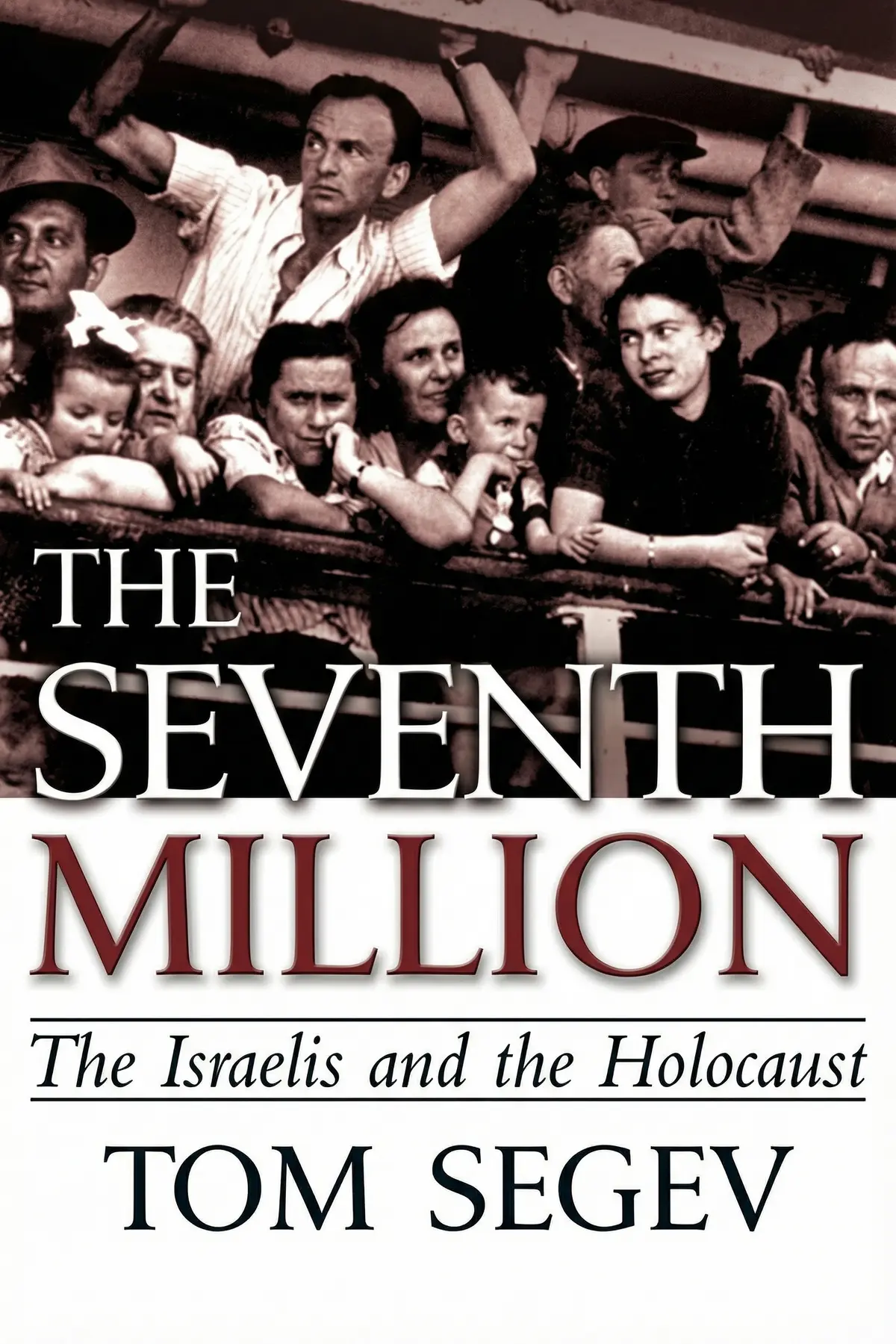
Segev traces how the murder of six million Jews shaped Israel after 1945. His account runs from refugee deals and German reparations to the Eichmann trial, wartime fear and the rituals a whole country uses to remember.
1 min 06 sec
Most people know the Holocaust as a European catastrophe that ended in 1945. In The Seventh Million, Israeli historian and journalist Tom Segev follows it into the decades after, and one early finding is unsettling. In 1942, Ha’aretz printed a report on the killing of Jews in Kharkov on page two, beneath a story about a Jewish soccer victory in Damascus.
Segev calls Israel’s Jews the seventh million: the community already in Palestine and every survivor who arrived after the war, living in the shadow of the six million murdered. His argument is that the genocide never stayed in the past for them. It decided whom they welcomed, which money they took, whom they put on trial, what they feared and how they mourn.
Follow his account and you can explain to anyone why one history still sets the terms of a nation’s politics. You also gain a lens for seeing how any society’s worst wound steers its choices long after the event.
1 min 39 sec
In the 1930s, Zionist officials traveled to Berlin and reached an agreement with the new Nazi government. The refugees it delivered to Palestine then met a welcome far colder than anyone fleeing for their lives would expect.
1 min 42 sec
Reports of mass murder reached Palestine’s Jewish newspapers during the war, yet they kept slipping away from the front page. Segev explains what made a community look past the catastrophe while it was happening.
1 min 38 sec
One young survivor arrived in Palestine with a plan to kill six million Germans. Most of the people who had lived through the camps wanted something very different, and the community around them struggled to give it.
1 min 59 sec
Protesters threw stones through parliament’s windows rather than let Israel accept money from the country that had murdered its people. Segev follows what happened after the government went ahead anyway, and what the payments built.
2 min 03 sec
A rescuer was condemned and later assassinated by his own people. A Nazi organizer was kidnapped from Argentina and tried with the whole country listening. Both cases asked Israelis who was to blame, and the answers divided them.
1 min 58 sec
Missiles paraded through Cairo, and Israelis heard an echo of Hitler. Segev traces how that fear helped shape a war, a weapons program and a hostility toward Arabs that borrowed the language of the Nazis themselves.
1 min 50 sec
Once a year, the cafes close, the radio fills with testimony and the evening news begins without its familiar greeting. Behind that silence lies a long argument about how a nation should carry its past.
1 min 18 sec
Segev’s history adds up to a portrait of a country that never got to choose whether the Holocaust would matter. It only decided how. The genocide shaped the welcome given to German refugees, the headline buried on page two, the stones thrown at the Knesset, the radios in the factories during the Eichmann trial, the comparison of Nasser to Hitler and the cello played on the radio every year. The seventh million carried the six million into every decision, sometimes as guilt, sometimes as strength and sometimes as fear turned against others.
His account trains you to notice how this works wherever a wound runs deep. When you follow debates about Israel, listen for the history under the policy: the money, the trials and the fear all lead back to 1945. When any group calls on its past suffering, ask whether that memory is guiding it toward care or toward a new cruelty, as Kahane’s voters showed it can.
Then picture the anchor on Memorial Day, opening the news without wishing anyone a good evening. A nation’s whole relationship to its past fits inside that missing greeting.
About six million Jews were murdered by Nazi Germany and its collaborators between 1933 and 1945. Tom Segev asks what that catastrophe did to the people he calls the seventh million: the Jews already living in Palestine and the survivors who joined them after the war. His answer follows the genocide out of Europe and into Israeli life. It shaped an uneasy 1930s deal with the Nazis that moved German Jews to Palestine, and the cool welcome those refugees received. It shaped the newspapers that buried early reports of mass murder, a survivor's plot for revenge and the furious fight over taking German money. It also shaped two trials that split and united the country, a fear of annihilation that fed a nuclear program and harsh treatment of Arabs, and a memorial day when the nation nearly stops. Readers get a clear, often uncomfortable account of how one history still sets the terms of a nation's politics, and a way to see how any society's deepest wound steers its choices for decades.
Readers who follow news about Israel and want the history beneath its politics.
Students of the Holocaust curious about what happened to survivors and memory after 1945.
Anyone interested in how a nation turns collective trauma into policy, trials and ritual.
Tom Segev is an Israeli historian, author and journalist, born in Jerusalem on 1 March 1945. He has written as a columnist for the Israeli newspaper Ha'aretz, the same paper whose wartime coverage he examines in this book. His other works include One Palestine, Complete: Jews and Arabs Under the British Mandate, and he has also written as a columnist for Ha'aretz.

Listeners describe the work as both profound and pleasurable, praising the author's compelling prose. Furthermore, the caliber of information is well-regarded; one listener specifically points out that the narratives help clarify the overall history. The text also offers significant historical context, as one review emphasizes its unique take on the Israeli mindset. Nevertheless, views on the historical material vary, as some find it captivating while others remain unconvinced.
Finally got around to reading "The Seventh Million" and it blew me away. Segev manages to take a subject as heavy as the Shoah and weave it into the very fabric of the Israeli state's birth. The way he details the Kastner affair is especially gripping, showing the messy reality of human choices during wartime. I appreciated how he didn't shy away from the friction between survivors and the Yishuv. It’s a dense read, sure, but the narrative flow keeps you moving through the decades. This isn't just a history book; it's a psychological profile of a nation trying to define itself against a backdrop of unimaginable trauma.
Show moreWow. This is easily one of the most provocative books I’ve read this year. Segev challenges the official narrative of Israeli history by looking at how the memory of the six million shaped the "seventh million"—those who built the state. The details about the trials and the way survivors were often viewed with a mix of pity and disdain were heartbreaking. It really made me rethink everything I knew about the early years of the country. If you want a book that makes you think instead of just nodding along, this is it. It’s brilliant, exhausting, and utterly necessary for understanding the modern Israeli mindset.
Show moreThis book is a masterclass in historical reporting. Segev has this incredible ability to take complex bureaucratic events, like the negotiations for German reparations, and turn them into a high-stakes drama. I was particularly struck by the sections on the Kastner trial; it’s a haunting reminder of how easily history can turn someone from a savior into a villain. The writing style is engaging and vivid, never becoming dry despite the heavy data and myriad of sources. It completely expanded my horizons on what the Holocaust meant to the people actually living through the creation of the Israeli state. I cannot recommend this highly enough.
Show moreAfter hearing about Segev’s reputation for years, I finally dove into this, and it lived up to the hype. The way he tracks the evolution of the Holocaust in the Israeli mind—from a source of shame to a pillar of national strength—is masterful. It’s not an easy read emotionally, but the clarity of the writing makes the difficult subject matter much more manageable. The stories of individual survivors and their struggles to find normalcy in a new land were what resonated with me the most. This is a profound exploration of memory and the burdens of history that every serious student of history should own.
Show moreSegev writes with a sharp, often critical edge that might rub some readers the wrong way. Personally, I found his revisionist approach quite refreshing, even if I didn't agree with every single conclusion he drew about David Ben-Gurion. The book is meticulously documented, using a massive amount of sources to back up its claims about the Eichmann trial and the politics of reparations. My only real gripe is that it feels a bit overlong in the middle sections. To be fair, the level of detail is necessary to understand the complexity of the German Jews—the Yekkes—and their struggle to integrate. It’s an essential piece of Israeli historiography.
Show moreAs someone who has studied this period for years, this provided a totally new lens on the aftermath of the war. Segev's focus isn't just on the tragedy itself, but on how that tragedy was used to build a national identity. The exploration of the reparations debate was eye-opening—seeing the moral versus practical arguments play out in the streets of Jerusalem was intense. Truth is, the prose is remarkably accessible for a scholarly work, making it easy to digest even when the topics are grueling. I would have liked more on the Palestinian perspective, but the book’s focus on the internal Jewish struggle is deeply informative and well-researched.
Show moreEver wonder how a nation reconciles its traumatic past with the pragmatic needs of its future? That’s the central question here, and Segev explores it through the lens of political maneuvering and cultural shifts. The chapter on the Eichmann trial is particularly strong, showing how it served as a turning point for Israeli consciousness. I found his analysis of the Holocaust’s institutionalization through monuments and schools to be very thought-provoking. While some might find his tone a bit too detached or dispassionate, I thought it helped maintain focus on the broader historical trends. A solid four stars for the depth of documentation alone.
Show moreThe chapter on the Eichmann trial alone makes this worth the price of admission. It’s a very thorough look at the internal conflicts within Israel, especially the clash between the socialist pioneers and the traumatized refugees from Europe. Segev is definitely coming from a specific political viewpoint, and he isn't afraid to go after sacred cows like Ben-Gurion or Begin. You might not agree with all of his interpretations, but the sheer volume of references makes his arguments impossible to ignore. It’s a serious, heavy book that provides a much-needed fresh perspective on the Israeli mindset. Definitely worth the time it takes to get through it.
Show moreLook, I wanted to love this given its reputation, but Segev's cynicism toward the founding fathers of Israel felt a bit much at times. While the historical facts are mostly there, he frequently jumps to conclusions regarding Ben-Gurion’s motives that seem grounded more in political bias than in the archives. The section on Yad Vashem was fascinating, but again, it felt like he was digging for dirt rather than providing a balanced view. It's a well-written book, and I learned a lot about the Haavara agreements, but you have to read it with a very critical eye. It is just too one-sided to be the definitive account.
Show moreNot what I expected based on the glowing blurbs. While the first half of the book is a masterpiece on the Yishuv's reaction to the war, the second half drags significantly. It felt a bit disjointed, like Segev was trying to cram too many disparate political anecdotes into one volume. Some of the revisionist takes felt forced, as if he was trying to be controversial for the sake of it. However, the information regarding the treatment of German Jewish immigrants was genuinely illuminating and saved the experience for me. It’s a bit of a mixed bag—richly documented but perhaps a bit too cynical and uneven for my taste.
Show moreSegev argues that the Holocaust is built into Israel’s politics, culture and identity. He calls Israel’s Jews the seventh million, meaning the community already in Palestine and the survivors who arrived after the war. He shows the genocide shaping refugee policy in the 1930s, wartime news coverage, reparations from Germany, the Kastner and Eichmann trials, fear of Arab neighbors in the 1960s and the country’s memorial rituals.
Haavara refers to a series of agreements reached in the 1930s by the Nazi authorities and the Jewish Agency, the Zionist body. Both sides wanted German Jews to leave Germany for Palestine, so officials negotiated their emigration and property. Under the deal, emigrants could take $4,000 in money and ship goods worth $5,000. Many who came were refugees rather than committed Zionists, and the existing Jewish community in Palestine received them coolly.
Many Israelis saw accepting German money as taking ransom from murderers, and during a Knesset debate on the issue protesters threw stones through the chamber’s windows. The government negotiated anyway. Germany agreed to pay about $820 million over 12 years, mostly in German goods and fuel. Segev credits the money with about 15 percent of Israel’s growth in that period and 45,000 jobs, and with slowly improving relations.
After Mossad agents captured Adolf Eichmann in Buenos Aires in 1960, his 1961 trial was broadcast live on radio across Israel. Segev describes it as a kind of national group therapy that gave Holocaust victims a voice and drew the country together. It also drew criticism: Hannah Arendt called it a show trial and argued the crimes should have been framed only as crimes against humanity.
Since 1951, Holocaust and Ghetto Rebellion Memorial Day has been held each year on the twenty-seventh of Nissan. Cinemas and cafes close, radio carries survivor testimony, and the television news runs without music or its usual greeting. Since 1980, Holocaust studies have been required in all schools, and Holocaust questions make up about 20 percent of the high school history diploma exam.
Barack Obama


Masaji Ishikawa

William J. Bernstein

John Rawls

Ben Macintyre




James Shapiro
AUDIO SUMMARY AVAILABLE
Get the key ideas from The Seventh Million by Tom Segev, plus 5,000+ more nonfiction titles.









