
11 min 18 sec
Available in: English
 ไทย
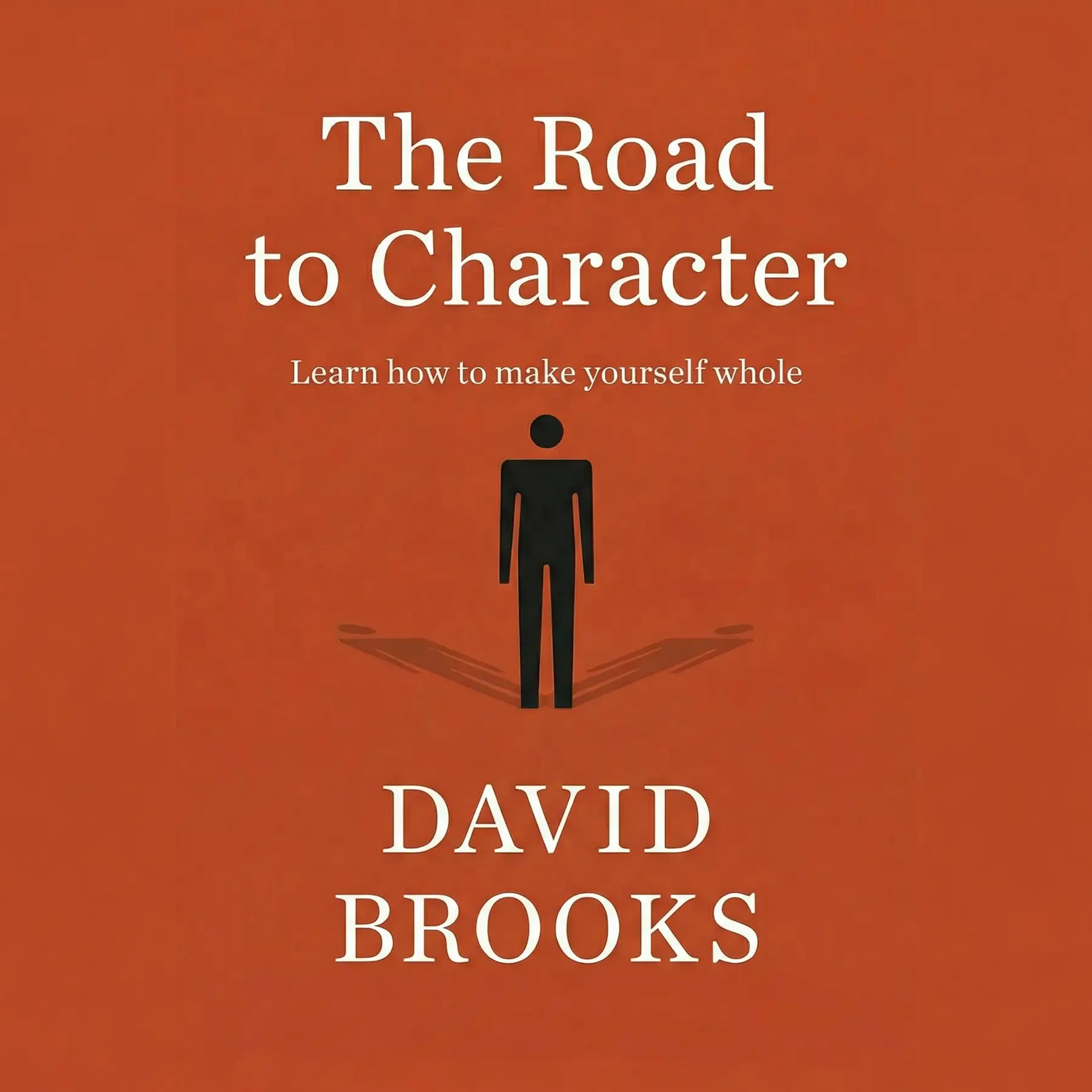
EnglishไทยThe Road to Character
By David Brooks
David Brooks explains how modern culture came to prize self-promotion over humility. He argues that character grows from admitting your flaws, letting go of pride and accepting help, with Dorothy Day and George Eliot as guides.
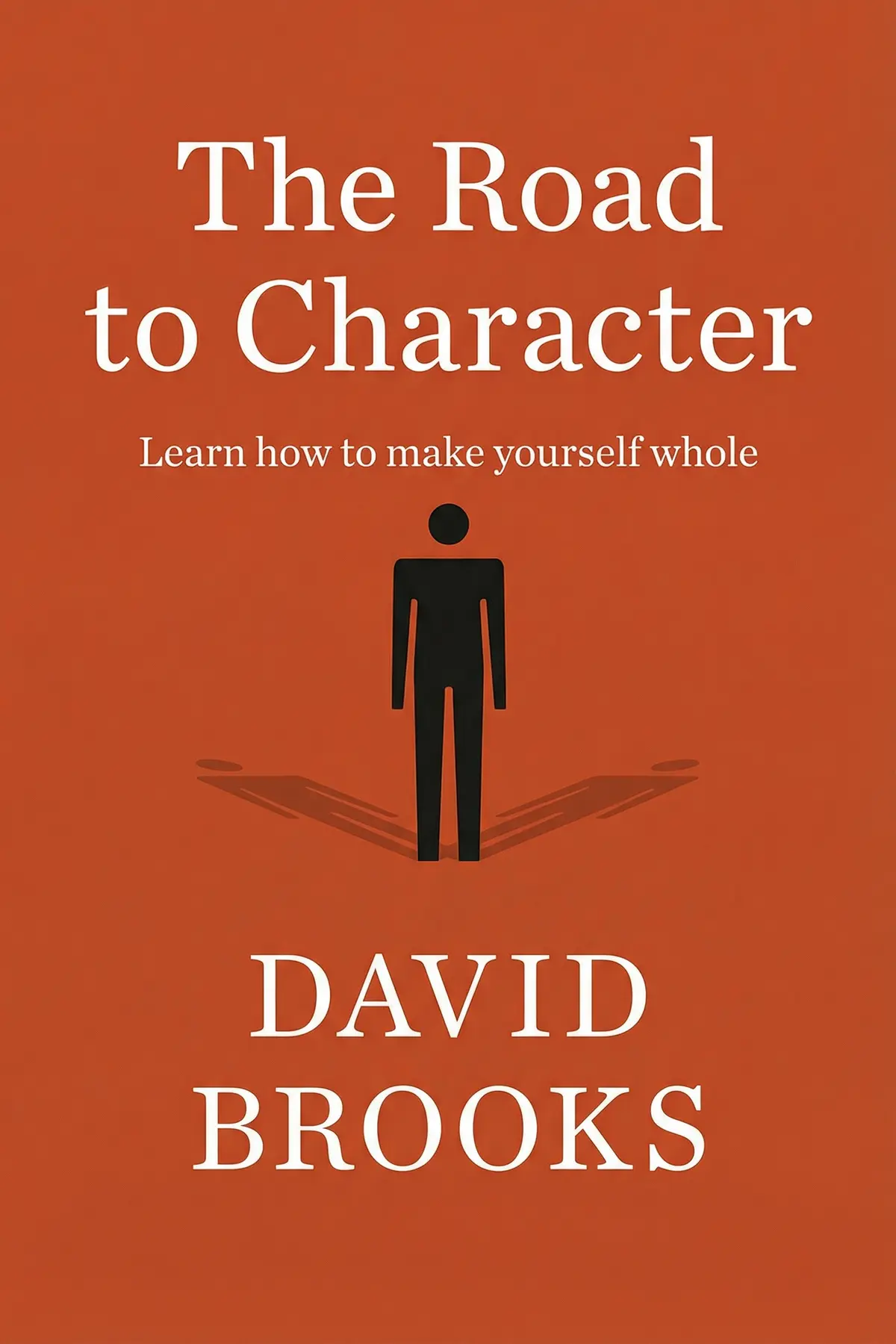
Table of Content
1. Introduction
1 min 07 sec
If your days are measured in promotions, followers and wins, you may have noticed that none of it tells you who you are becoming. In The Road to Character, journalist David Brooks, whose career runs from Chicago police reporting to The New York Times, argues that every person carries two selves. One, which he calls Adam I, faces outward and wants success. The other, Adam II, faces inward and wants to be good.
In recent decades, Brooks says, American culture has fed the first self and starved the second. The cost shows up in what we celebrate, how we raise children and what students hope to get from life. His way back runs through two unlikely guides, the newspaper founder Dorothy Day and the novelist George Eliot, and through one uncomfortable admission: everyone is flawed.
Follow his argument and you gain a way to hear which self is speaking when you chase a goal, plus a small daily test for quieting the louder one.
2. Hear the two selves competing inside you
1 min 39 sec
One part of you wants to win, and another wants to be good. A former president’s habit with his own speeches shows how differently a culture can treat those two voices.
3. Understand how culture traded humility for self-display
2 min 01 sec
Two American victory celebrations, decades apart, looked strikingly different. The gap between them tells a longer story about what societies once believed about human weakness, and what replaced that belief.
4. Ask why you achieve, not only how
1 min 59 sec
Reaching a goal can leave a strange emptiness behind. Brooks finds the same pattern in family homes and in decades of student surveys, and it points to a question most of us have stopped asking.
5. Turn your flaws into a bridge to others
1 min 44 sec
Confessing weakness sounds like a step backward. One woman who battled drinking and despair found it was the opening she needed, and she built a newspaper and a new life on what she learned.
6. Let go of pride and accept real help
1 min 44 sec
A brilliant novelist kept falling for men who did not love her back, until one partner changed everything. Her story exposes the single vice that stops most people from getting the support they need.
7. Conclusion
1 min 04 sec
Brooks places lasting joy somewhere most career advice never looks: in the long moral fight to become more loving and more humble. The dream job and the dream house belong to Adam I, and they are fine as far as they go. They cannot tell you who you are becoming. Bush striking the word I from his speeches, Day turning her loneliness into a newspaper for struggling people, Eliot finally trusting her own pages because someone believed in her: each is a picture of the inner self being given room.
The book’s most practical test fits on a phone. Before you post your next thought online, stop and ask what you want from it. If the honest answer is approval, or a chance to look clever in front of peers, let the post go and choose modesty. Then do the harder thing once this week: tell someone about a flaw, or ask for the help you have been too proud to request.
Character, in Brooks’s telling, is built in small moments like these, each one a little less about me.
About this book
What is this book about?
Careers, followers and wins have become the measure of a life, and many people quietly sense that something is missing. David Brooks argues that each of us carries two selves: Adam I, who wants status and success, and Adam II, who wants to be good. For decades, he says, American culture has fed the first and neglected the second. Brooks traces how that happened, from Augustine and the humanists, through the romantic movement and the consumer boom after World War II. He shows the cost in how parents raise children and in the shifting goals of university freshmen, fewer of whom seek a meaningful philosophy of life while more came to see wealth as an important goal. His way back is personal and demanding. Through the stories of Dorothy Day, who turned alcoholism and depression into a life of service, and George Eliot, who found her footing through the love of George Lewes, he argues that character starts with honest admission of our flaws and the courage to set pride aside and ask for support.
Book Information
Who it's for
Professionals questioning their work
Professionals who keep hitting targets yet feel their work says little about who they are.
Parents uneasy about trophy-chasing
Parents uneasy about raising children for resumes and trophies.
Hoping to resist self-promotion
Heavy social media users who want to understand, and resist, the pull toward self-promotion.
About the Author
David Brooks
David Brooks, born in 1961, began as a police reporter in Chicago and went on to write for The Wall Street Journal and The Weekly Standard before joining The New York Times. He also writes for The Atlantic, appears regularly on PBS NewsHour and has taught at Yale University. His bestselling books include The Second Mountain, The Road to Character and The Social Animal.
Ratings & Reviews
Ratings at a glance
What people think
Listeners find this work highly engaging and extensively researched, including one individual who felt unable to put it down. Additionally, the text offers significant life lessons and stimulating perspectives on building character by profiling fascinating people from history. Listeners value the prose, as one listener points out it is written with empathy and depth. On the other hand, the flow of the narrative gets a varied response, with some calling it a masterpiece while others consider it disjointed.
Top reviews
Gift
Wow. This book arrived exactly when I needed a reminder that life is about more than just checking off boxes on a career path. Brooks writes with an empathy that is rare in modern social commentary, focusing on the internal struggle between our ambitious 'Adam 1' and our soulful 'Adam 2.' I found the chapter on Dorothy Day particularly moving because it reframes suffering not as something to be avoided at all costs, but as a path to true depth. Some critics say it's disjointed, but I think the varied profiles of historical figures are exactly what give the book its weight. You can see the evolution of character in real-time through the lives of people like George Eliot and Augustine. It’s a beautifully researched piece that challenges you to look inward and ask what kind of legacy you are actually building. This isn't just a book you read; it’s one you sit with and reflect on for months.
Show moreKofi
This book feels like the longest and most profound commencement speech you'll ever receive, and I mean that in the best way possible. Brooks isn't just giving advice; he’s presenting a map for the soul that prioritizes 'eulogy virtues' over the superficial 'resume virtues' our society craves. I was particularly struck by the discussion on how institutions structure the soul and help us become better versions of ourselves. It’s a perspective that feels almost counter-cultural in an age of radical individualism and self-promotion. The writing is incredibly polished and exhibits a depth of thought that you just don't find in typical self-help books. While some might find the historical examples exhaustive, I found them to be essential anchors that prove character isn't built in a vacuum. It’s a masterpiece of moral philosophy that I’ll likely revisit whenever I feel I’ve lost my way.
Show moreRin
Picked this up on a whim and was blown away by the depth of research and the empathy in Brooks' writing. He has this incredible ability to make old stories feel immediate and relevant to the struggles we face today. I’ve always been a fan of his New York Times columns, but this book allows him to go much deeper into the 'why' of our current cultural moment. The way he describes the rise of merit-based love and the pressure it puts on children was a real eye-opener for me as a parent. It’s a thought-provoking look at how we’ve lost the language of morality and replaced it with the language of achievement. Yes, it’s a long book, and yes, it requires some effort to get through the denser historical parts, but the payoff is a much clearer understanding of what it means to live a good life. Truly inspiring.
Show moreDream
To be perfectly blunt: this is one of the most important books I’ve read in years. Brooks challenges the modern obsession with self-promotion and reminds us that true joy comes from self-forgetfulness and service to something larger than ourselves. I found his analysis of 'depressive realism' and the way suffering can shatter our superficial narratives to be particularly profound. The profiles aren't just biographies; they are case studies in how to navigate the complexities of the human soul. I’ve read a lot of stoic philosophy lately, and Brooks manages to capture that same spirit while making it accessible for a modern audience. Even the more critical reviews about the pacing don't detract from the fact that this is a deeply needed counter-weight to our 'look at me' culture. If you’re willing to put in the work, this book offers a profound road map for developing a character that is built to last.
Show moreOlivia
After hearing David Brooks speak on a podcast, I decided to dive into his exploration of moral fiber and the 'road to character.' The truth is, the book is incredibly thought-provoking even if it does feel a bit long-winded in the biographical sections. I loved the core premise that our current culture overemphasizes external achievements at the expense of our inner lives. The profiles of people like Frances Perkins and A. Philip Randolph are well-researched and provide great lessons on how to live with purpose. My only real gripe is that Brooks can be a bit selective with his facts to make a point, which occasionally undermines his authority. However, his writing style is accessible and deep, making complex philosophical ideas feel relevant to everyday life. It’s a solid 4-star read for anyone feeling burnt out by the relentless pursuit of 'success' and looking for a more meaningful path forward.
Show moreNina
The chapter on George Eliot alone made this book worth the purchase for me. David Brooks does a fantastic job of taking historical figures we think we know and stripping them down to their moral core. I appreciate that he doesn't present these people as perfect; instead, he shows how their struggles and failures were the very things that forged their character. The concept of the 'crooked timber' of humanity is a recurring theme that resonates deeply in a world that often demands perfection. While the book can feel a bit disjointed as it jumps between centuries and personalities, the underlying message remains strong. We need to focus more on our internal compass than our LinkedIn profiles. It’s a dense read that requires a lot of mental energy, but the insights into restraint and humility are incredibly valuable. I’d recommend it to anyone looking for a more substantive take on personal growth.
Show morePakpoom
As someone who usually enjoys political and social commentary, I had high hopes for this one, but the pacing was a major hurdle. There are moments of absolute brilliance where Brooks hits on a universal truth about the human condition, yet those moments are buried under mountains of dry historical data. He attempts to use historical figures as templates for virtue, but it often feels like he’s forcing them into boxes that don't quite fit their real lives. I found myself skimming the middle chapters just to get back to the more analytical parts about modern narcissism and the loss of 'sin' as a concept. Frankly, the introduction and the conclusion are the best parts of the book because they offer a condensed version of his philosophy without the fluff. It’s a decent read for a book club, but be prepared for some serious slogging through the biographical sketches.
Show morePraepimon
Ever wonder why we feel so hollow despite achieving all the things we were told would make us happy? That’s the central question Brooks tries to answer, and while his philosophy is sound, the delivery is hit-or-miss. I loved the opening sections about Adam 1 and Adam 2, which provide a really useful framework for understanding the tension between our public and private selves. However, the biographies that make up the bulk of the book are a mixed bag. Some, like the profile of Dwight Eisenhower, were fascinating, while others felt like they were just taking up space to hit a page count. The pacing is a bit of a rollercoaster—moving from insightful social critique to dry, academic history without much warning. It’s a well-researched book with plenty of life lessons, but it could have been much tighter. Good, but definitely not a 'can't put it down' kind of read for me.
Show moreTak
Finally got around to this after seeing it on so many 'must-read' lists, but I ended up feeling more lectured than inspired. David Brooks has a clear vision for what moral character should look like, yet his execution feels incredibly dry and even a bit condescending. He leans heavily on the idea that the 'greats' of the past were fundamentally better than us, ignoring the complexities of their lives. For instance, the way he glosses over Eisenhower's personal failings while praising his 'self-conquest' felt like a massive contradiction. I appreciate the distinction between resume virtues and eulogy virtues, but the middle of the book is a slog of biographical filler. It’s hard to take a moral philosopher seriously when he seems to be cherry-picking history to fit a specific 'kids these days' narrative. If you’re looking for a quick self-help guide, this isn't it; it’s more of a long-winded sermon that demands far too much patience for very little payoff.
Show moreNing
Not what I expected at all, and look, I’m disappointed by the level of sermonizing here. David Brooks seems to have a very narrow view of morality that is heavily rooted in a 'golden age' fallacy where everyone in the past was a saint and everyone today is a narcissist. His analysis of historical figures is incredibly selective; he ignores glaring character flaws to maintain his narrative of self-conquest. For example, he treats suffering as some noble pursuit, which felt incredibly tone-deaf and even perverse in certain sections. The prose is dry, the arguments are often contradictory, and the overall tone is smug and judgmental. I struggled to finish this because it felt like a 300-page lecture from someone who is convinced the world is going to hell in a handbasket. Save yourself the headache and read the original works of Marcus Aurelius or Seneca instead; they offer far more wisdom without the modern-day condescension.
Show moreQuestions about this book
What is the main idea of The Road to Character?
David Brooks argues that each person has two selves: Adam I, who wants career success and status, and Adam II, who wants to be kind, honest and devoted. Over recent decades, he says, American culture has rewarded the first and neglected the second. Character is rebuilt by admitting your flaws, letting go of pride and accepting support from others.
What are Adam I and Adam II in The Road to Character?
They are the two competing personality types Brooks describes inside every person. Adam I faces outward and thrives in a success-obsessed society, chasing careers and victories. Adam II faces inward, follows a strong moral compass and tries to become more virtuous. Brooks sees Adam II as the most human part of us and argues that today’s culture pushes it aside.
What evidence does David Brooks give that society became more self-centered?
He contrasts the loud street celebrations after Osama bin Laden was killed in 2011 with the restrained mood of Victory in Europe day in 1945. He also cites a yearly poll of UCLA freshmen: in 1977 about 80 percent sought a meaningful philosophy of life, and today fewer than half as many do. The share calling wealth important rose from 42 percent in 1966 to 74 percent in 1990.
How can I apply the ideas in The Road to Character?
Brooks suggests checking your motives before sharing on social media: if you are seeking approval or trying to look knowledgeable, choose modesty and hold back. More broadly, be honest about your flaws, as Dorothy Day was, and set aside pride to accept help, as George Eliot did with George Lewes. Asking why you pursue a goal matters as much as how.
Who should read The Road to Character?
It suits ambitious people who sense that success alone is not satisfying, parents worried about raising children for achievements, and anyone tired of a culture built around self-promotion. Readers interested in moral history get a short tour from Augustine and the humanists through romanticism to the consumer boom after World War II, told through vivid lives like those of Dorothy Day and George Eliot.
Readers also enjoyed
A Little History of Philosophy
Nigel Warburton

A Theory of Justice
John Rawls


59 Seconds: Change Your Life in Under a Minute
Richard Wiseman






A Guide to the Good Life: The Ancient Art of Stoic Joy
William B. Irvine
AUDIO SUMMARY AVAILABLE
Listen to The Road to Character in 15 minutes
Get the key ideas from The Road to Character by David Brooks, plus 5,000+ more nonfiction titles.
- 5,000+ titles
- Listen as much as you want
- 7-day free trial
- Cancel anytime









