

14 min 52 sec
Available in: English
 ไทย
EnglishไทยThe Righteous Mind: Why Good People Are Divided by Politics and Religion
Haidt shows why moral and political views begin as gut feelings, why cultures and parties weigh different moral instincts, and how to argue across those divides with more warmth and more success.
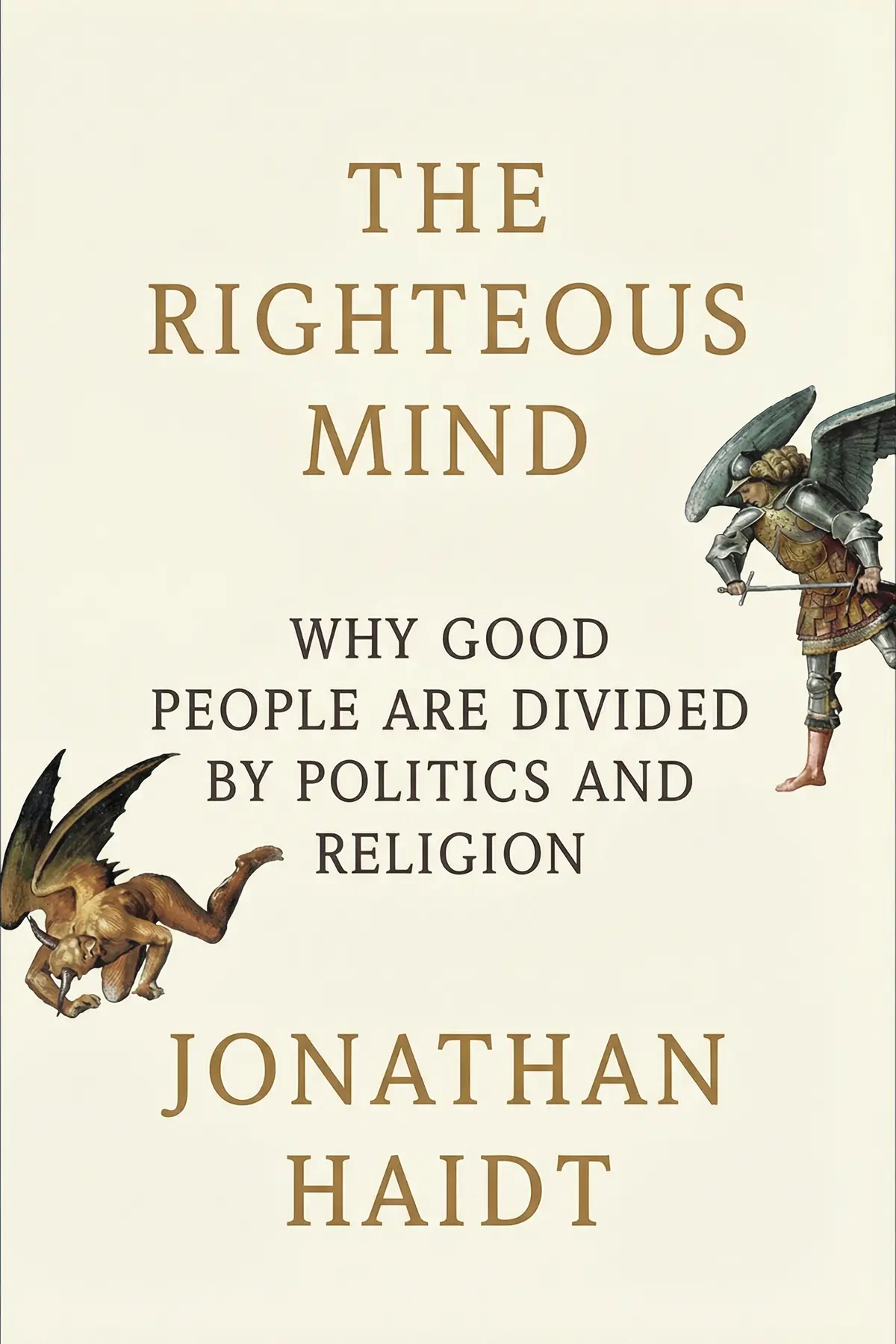
Table of Content
1. Introduction
1 min 02 sec
If you keep losing arguments about politics or religion with people who are clearly smart and decent, your logic is probably not the problem. In The Righteous Mind, social psychologist Jonathan Haidt argues that moral judgments arrive first as fast feelings, and reasoning mostly shows up afterward to defend them. That finding reframes every disagreement. People who vote and worship differently are responding to a wider or narrower set of moral instincts, shaped by evolution, culture and the groups they belong to.
The thread running through the book is that our moral minds are intuitive and built for groups, and that seeing the shared foundations under every side lets us argue less and persuade more. The evidence runs from babies watching puppets to nineteenth-century communes and a cashier who pays out too much. What you gain is a working map of why colleagues, relatives and voters read the same issue so differently, and a warmer way to talk with them.
2. Spot the gut feeling behind every moral verdict
1 min 43 sec
Patients who lost their emotions did not become perfectly logical. They became unable to care which choice they made. Their story, and a puppet show for babies, reveal what really happens first when you judge right from wrong.
3. Learn how your reasoning argues like a lawyer
1 min 40 sec
A cashier hands over too much money, and most people say nothing. Ask them one simple question, though, and the picture changes. The difference exposes two hidden forces steering your sense of right and wrong.
4. Read the moral map behind other cultures
1 min 52 sec
Ask people in different places about a strange private act that harms no one, and their answers split sharply. What the divide really shows is which populations psychology tends to sample, not who holds the correct view.
5. Make peace with your selfish and selfless sides
1 min 57 sec
The same species that competes for status also sends strangers racing toward disaster to help. Haidt traces both impulses to evolution, and to a switch in the mind that crowds, nature and even one drug can flip.
6. What religion gets right about holding groups together
1 min 37 sec
Two kinds of nineteenth-century communes set out to build a better life together. Decades later, one kind had mostly vanished while the other endured. The reason has little to do with whether their beliefs were true.
7. See why some voters put values before wallets
1 min 57 sec
Many working-class voters back the party that promises them less redistribution, and observers call it a mistake. Haidt suggests those voters are answering a different question, one about moral instincts most campaigns barely touch.
8. Let rival sides cover each other's blind spots
1 min 46 sec
Fewer people than ever call themselves moderates, and one failed vote shook markets worldwide. Haidt argues the fix is not for one camp to win, using a cleaner fuel and a classroom experiment to show why.
9. Conclusion
1 min 18 sec
The Righteous Mind leaves a humbling picture of the moral mind, and a hopeful one. Our reasoning seldom behaves like a judge weighing the facts. Far more often it acts like a lawyer, defending verdicts our intuitions reached first and guarding our reputation and interests along the way. The person across the divide is using the same equipment, tuned to a different mix of foundations.
That changes how to argue. Saying “you’re wrong” almost never works, because logic alone cannot move a conviction that began as a feeling. Haidt’s advice is to lead with warmth: smile, listen well, and show respect and openness before you make your case. Then speak to what the other person values, whether care, fairness, loyalty or the sacred.
It also changes where to look for well-being. Our species developed to live inside moral communities, and studies of social capital tie participation in local groups, teams and clubs to better personal health. So Haidt favors a sociable hobby over solitary brooding about how to be happy, because contentment grows from finding your place inside something bigger than yourself.
In an argument and in a life, change starts the same way: by moving toward other people first.
About this book
What is this book about?
Arguments about politics and religion often end with both sides convinced the other is foolish or dishonest. Jonathan Haidt, a social psychologist, offers a different explanation. Moral judgments, he argues, are fast intuitions, and the reasoning we offer for them works mostly to defend what we already feel, while protecting our reputation and our interests. From there Haidt builds a map of the moral mind. All humans share a set of moral foundations, such as fairness and authority, but cultures and political camps lean on them very differently. Western, educated, rich societies focus on individual rights, while much of the world also values community and the sacred. Evolution made us both selfish and group-minded, and institutions like religion draw on that group instinct to build trust and generosity. The payoff is practical. Readers learn why some voters choose values over economic interest, why rival political camps each see something the other misses, and why winning a moral argument starts with listening and respect, not with logic alone.
Book Information
Who it's for
Professionals tired of arguing
Professionals tired of political and religious arguments that go nowhere, at work or at family dinners.
Managers of divided teams
Managers and team leads who need people with clashing values to cooperate.
Students curious about disagreement
Students of psychology, politics and religion who want one clear theory of why good people disagree.
About the Author
Jonathan Haidt
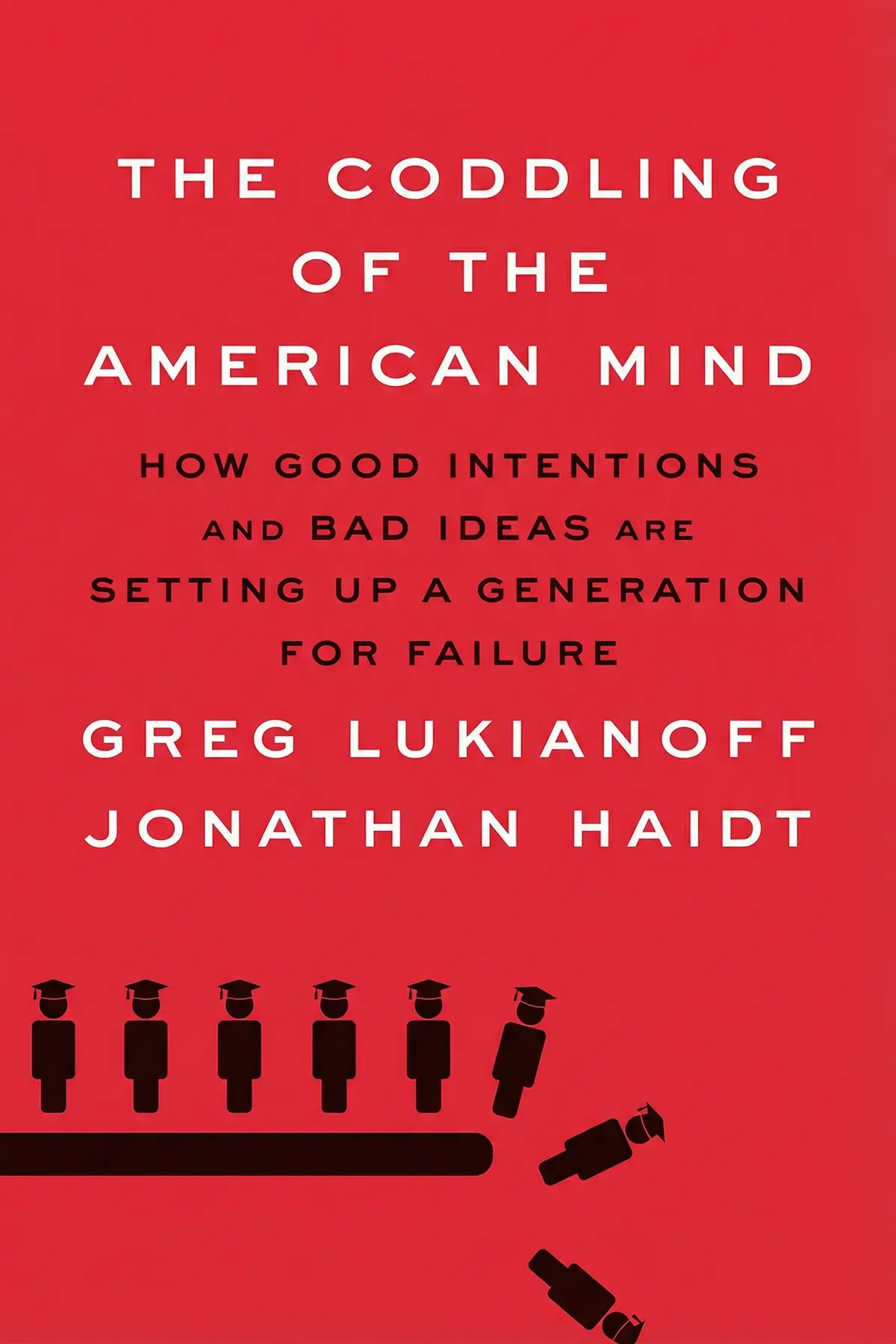
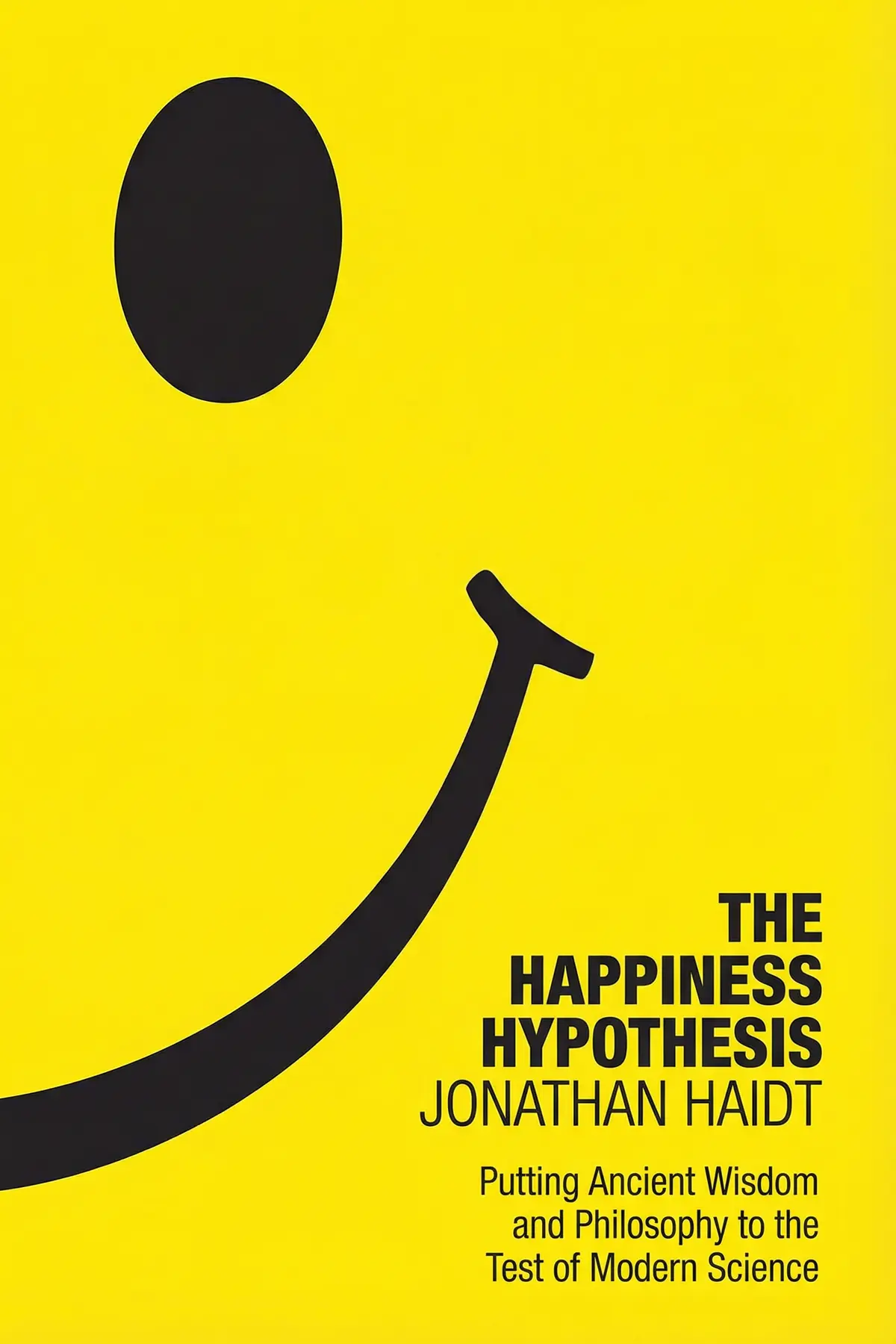
Jonathan Haidt is a social psychologist who earned his PhD at the University of Pennsylvania in 1992. After sixteen years teaching at the University of Virginia, he moved in 2011 to New York University's Stern School of Business, where he holds the Thomas Cooley Chair of Ethical Leadership. He co-developed Moral Foundations theory and co-founded Heterodox Academy, which promotes a range of viewpoints in universities. His other books include The Happiness Hypothesis, The Coddling of the American Mind, written with Greg Lukianoff, and The Anxious Generation.
Ratings & Reviews
Ratings at a glance
What people think
Listeners find this work exceptionally insightful and stimulating, serving as a powerful primer on moral philosophy that shifts their understanding of human conduct. Furthermore, the content is meticulously documented and backed by research, written in an accessible, engaging manner that simplifies complex ideas. They value how the material fosters deeper self-awareness and empathy for others, with one listener remarking that it provides enlightenment and understanding on every page.
Top reviews
Rapee
Jonathan Haidt’s work feels like a masterclass in why we just can't get along these days. By breaking down morality into six distinct foundations—like Care/Harm and Authority/Subversion—he provides a framework that finally makes sense of the shouting matches on cable news. I found the 'elephant and the rider' metaphor particularly illuminating; it explains so much about why we make gut decisions first and then scramble to find logical justifications later. Frankly, it’s a humbling read that forces you to realize your own political 'logic' is often just a lawyer for your emotions. While the sections on evolutionary biology get a bit dense, the prose remains conversational and accessible. This is the kind of book that stays with you long after you’ve put it down, fundamentally shifting how you view your neighbors and your own belief system.
Show moreEvelyn
Wow, this totally flipped the script on how I view political debates. I used to think people on the other side were either stupid or mean, but Haidt shows they just have a different 'moral palate.' The way he describes humans as being '90 percent chimp and 10 percent bee' is a brilliant way to explain our tribal nature. We are designed to bind together into groups, but those same bonds blind us to the truth of other perspectives. The book is incredibly well-researched and carefully documented, yet it reads like a conversation with a very smart friend. Not gonna lie, the section on how religion serves as a 'hive-switch' for human cooperation was the most interesting thing I’ve read all year. If you want to understand the 'why' behind our current cultural chaos, this is the essential starting point.
Show moreKiattisak
The chapter on the 'hive-switch' and group selection was worth the price of admission alone. Haidt manages to take complex evolutionary biology and turn it into a compelling narrative about why humans are the way we are. He shows that we aren't just selfish individuals; we are deeply social creatures who crave being part of something larger than ourselves. This explains everything from sports fandom to religious fervor. Personally, I found his explanation of 'moral matrices' to be one of the most useful tools for understanding human behavior I've ever encountered. The book is dense with information but never feels like a chore to read because of Haidt's narrative style. He weaves in his own personal journey of discovery, which makes the science feel much more grounded and relatable. Highly recommended for anyone interested in sociology or psychology.
Show moreSven
This book is essentially a blueprint for human tribalism. Haidt explains that our minds were designed for small-scale cooperation, and we are struggling to adapt those same moral intuitions to a massive, globalized world. The core message—that 'morality binds and blinds'—is perhaps the most important concept to understand in our current political climate. He doesn't just lecture the reader; he presents the evidence and lets you see the patterns for yourself. I appreciated how he highlighted that we are all hypocrites who are great at seeing the specks in others' eyes but not the logs in our own. It’s an enlightening, perspective-shifting read that actually provides some hope for how we might start talking to each other again. If you care about the future of our democracy, you really should give this a read.
Show moreSavannah
After hearing so much about the 'moral foundations' theory, I finally sat down with the source material and was blown away. Haidt is a brilliant storyteller as much as he is a scientist. He takes you from the streets of Brazil to the temples of India to explain how different cultures define 'the good.' What I loved most was the 'rider and elephant' analogy—it's the most accurate description of the human psyche I've ever seen. We are not rational beings; we are rationalizing beings. This realization is incredibly powerful when you're trying to navigate a disagreement. The book is long but never feels slow, and the summary points at the end of each chapter are really helpful for retaining the information. It’s a rare book that provides both intellectual depth and practical, real-world utility.
Show moreNoppadol
Ever wonder why your family dinner conversations turn into a minefield every holiday? Haidt argues that it’s because we aren’t just disagreeing on facts; we are operating from entirely different moral matrices. He explains that while liberals tend to focus on the Care and Fairness foundations, conservatives utilize a broader spectrum including Loyalty, Authority, and Sanctity. This insight was a total lightbulb moment for me. To be fair, some of the anthropological evidence from his time in India felt a little anecdotal, but the broader psychological data is robust. The writing style is engaging and avoids the dry, academic tone you might expect from a social scientist. It’s a well-documented journey through the human mind that helped me find a bit more empathy for the 'other side,' even if I still disagree with them.
Show moreEnd
As someone who identifies as quite liberal, this was a tough but necessary pill to swallow. Haidt’s central argument—that liberals miss out on several key moral foundations that conservatives hold dear—really challenged my worldview. It helped me realize that what I saw as 'blind obedience' might actually be a deeply felt moral commitment to Authority or Loyalty. The truth is, the book makes a compelling case that morality is about more than just preventing harm; it’s about binding a society together. My only gripe is that he occasionally treats the two sides as equally valid without addressing the hypocrisy that exists in modern politics. Still, the writing is clear, the research is top-notch, and the insights into human nature are truly profound. It’s a monumental piece of work that actually offers a path toward better communication.
Show moreOrathai
Picked this up on a whim after seeing Haidt on a podcast, and I’m glad I did. It’s rare to find a book that actually changes your mind about how the world works, but this one managed it. I always thought of morality as a simple matter of right and wrong, but Haidt reveals it's a complex, evolved system designed for survival. His research into 'disgust' and its role in our moral lives was particularly eye-opening. To be fair, I think he goes a bit easy on the religious and conservative side of things, but maybe that’s just my own 'elephant' reacting. The book is meticulously cited and the logic is easy to follow. It’s a great introduction to moral philosophy that doesn’t feel like a dry textbook. Every page offers a new way to look at the people around you.
Show moreAnthony
To be fair, Haidt is a much better psychologist than he is a political philosopher. On the positive side, his research into how 'WEIRD' (Western, Educated, Industrialized, Rich, and Democratic) societies are actually the outliers in moral thought is fascinating and well-researched. He successfully proves that our moral judgments are often intuitive and post-hoc. However, I found his attempt to bridge the partisan divide a bit naive. By placing conservative and progressive ideals on an equal footing, he seems to ignore the real-world consequences of some of those 'foundations' when they are used to marginalize others. The book is definitely thought-provoking and provides a great vocabulary for discussing ethics, but his 'enlightened centrist' tone occasionally misses the mark. It’s worth reading for the psychological insights, but take the political advice with a grain of salt.
Show moreTim
Look, the writing is conversational and easy to follow, but the actual logic feels dangerously flawed. Haidt spends hundreds of pages building a case for 'moral intuition' which basically suggests that we shouldn't even bother trying to be rational. It feels like a convenient excuse for people to stick to their biases. I also struggled with his 'six foundations' theory, specifically how he treats Sanctity or Authority as equal to Care and Harm. In a modern, pluralistic society, those provincial values often lead to exclusion and oppression. He brushes past the dark side of tribalism far too quickly to reach his goal of political reconciliation. While the psychological experiments he cites are interesting, the conclusions he draws feel like 'bio-babble' used to justify the status quo. I expected a more rigorous philosophical defense, but instead, I got a lot of anecdotes and speculative evolution.
Show moreQuestions about this book
What is the main idea of The Righteous Mind?
Jonathan Haidt argues that moral judgments start as quick intuitions and that reasoning mostly comes afterward to justify them, often in service of our reputation and self-interest. He adds that all humans share a set of moral foundations, such as fairness and authority, but cultures and political camps weigh them differently. Understanding those foundations, he suggests, helps people disagree more constructively.
What are the moral foundations Haidt describes for liberals and conservatives?
Haidt describes liberal morality as resting on care, fairness and liberty. Conservatives share those three but read them differently, caring most for those who sacrificed for the group, defining fairness as reward in proportion to contribution and liberty as less government. Conservatives also draw on loyalty, authority and sanctity, which Haidt says gives them a wider range of moral appeals in campaigns.
What does WEIRD mean in The Righteous Mind?
The acronym WEIRD refers to Western, educated, industrialized, rich and democratic societies. Haidt notes that nearly all psychology research studies people from such societies, even though they are unusual. Their morality centers on individual rights, while people in many other cultures also value community and the sacred. In one example, WEIRD participants called an odd private act a person’s right, while others condemned it as degrading.
How can I use The Righteous Mind to persuade someone?
Haidt’s advice is to avoid telling people they are wrong, since purely rational arguments rarely change convictions that began as feelings. Start with warmth instead: smile, listen carefully and show respect and openness before presenting your own case. Then appeal to the moral concerns the other person actually holds, whether care, fairness, loyalty, authority or sanctity.
What does The Righteous Mind say about happiness?
Haidt argues that humans evolved to live in moral communities, so happiness depends on connection with something larger than ourselves. He points to research on social capital linking local groups, teams and clubs to individual health, and suggests taking up a more sociable hobby. Group activities, in his account, do more for satisfaction than turning inward and thinking hard about how to be happy.
Readers also enjoyed


A River in Darkness: One Man’s Escape from North Korea
Masaji Ishikawa

Acting with Power: Why We Are More Powerful Than We Believe
Deborah Gruenfeld

A Theory of Justice
John Rawls



Age of Propaganda: The Everyday Use and Abuse of Persuasion
Anthony Pratkanis



A Warning
Miles Taylor
AUDIO SUMMARY AVAILABLE
Listen to The Righteous Mind in 15 minutes
Get the key ideas from The Righteous Mind by Jonathan Haidt, plus 5,000+ more nonfiction titles.
- 5,000+ titles
- Listen as much as you want
- 7-day free trial
- Cancel anytime









