
14 min 41 sec
Available in: English
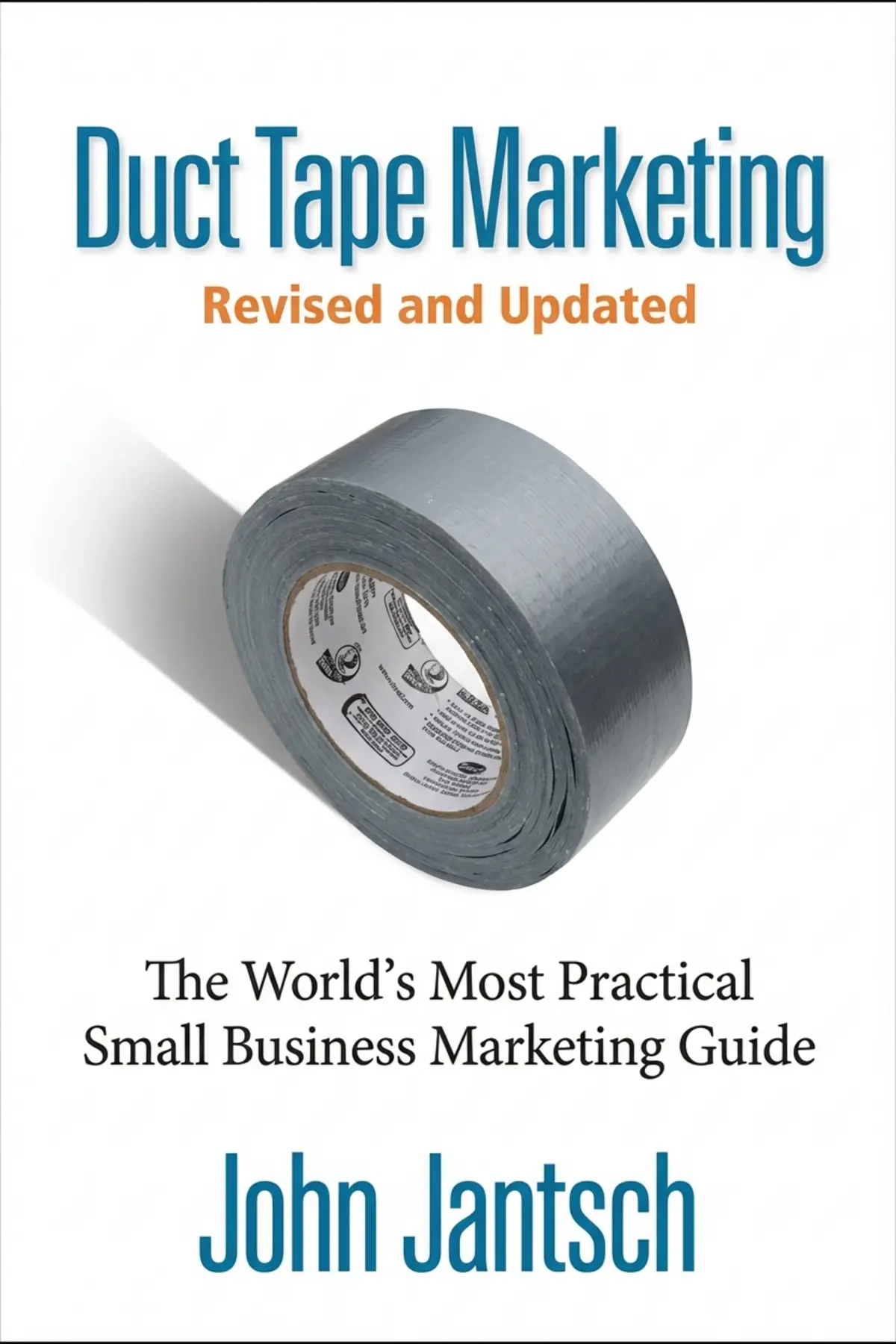
The Referral Engine: Teaching Your Business to Market Itself
By John Jantsch
Shows small business owners why people recommend a company and how to build a repeatable system of trust, useful content, loyal customers and partner businesses that keeps new referrals coming.
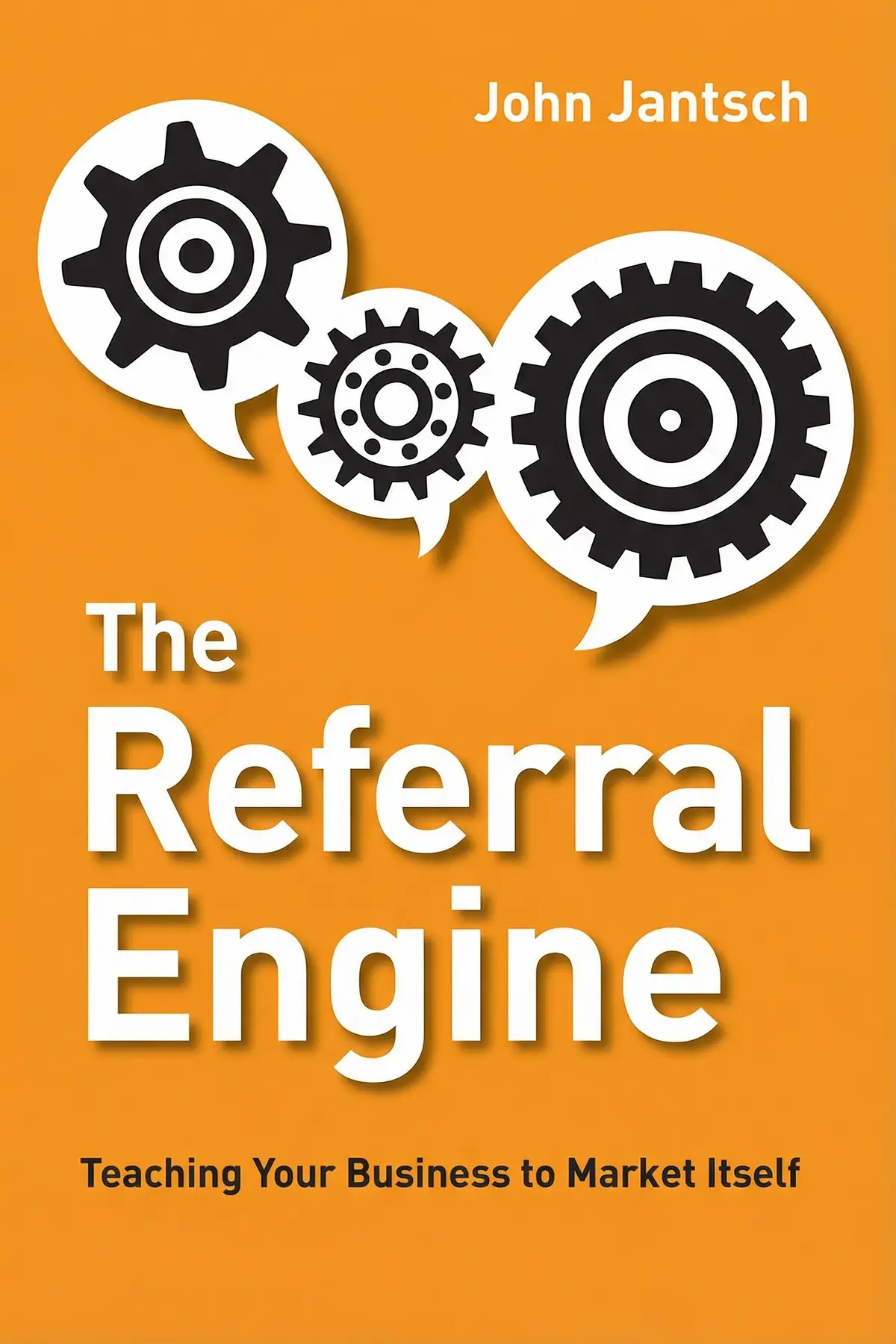
Table of Content
1. Introduction
47 sec
Most small businesses wait for word of mouth to arrive on its own, then wonder why it comes in a trickle while a few rivals seem to be recommended everywhere. In The Referral Engine, marketing consultant John Jantsch argues that referrals are not luck. People recommend a business because doing so makes them look good, and a company can be built so that recommending it feels safe, easy and rewarding.
Jantsch calls that system a referral engine. It moves from the instinct behind every recommendation to the customers worth attracting, the content that teaches before it sells and the partner businesses that share your market. By the end there is a working plan for asking for referrals, following up on each one and thanking the people who send them.
2. Make recommending you safe for the referrer
1 min 37 sec
Telling a friend about a business looks like a simple kindness. Jantsch traces it back to tribal survival, and that origin explains why so many satisfied customers still never send anyone your way.
3. Give people a small difference worth repeating
1 min 32 sec
A pizza shop in California has a line around the block every day, and it offers far less than its competitors. The reason shows how ordinary businesses can become the one people mention.
4. Fewer, better customers bring more referrals
1 min 34 sec
Chasing every possible buyer feels like growth. Jantsch argues it can shrink the word of mouth you get, and he offers a sharper way to decide who your business is really for.
5. Teach first with one white paper
1 min 31 sec
A single short document has racked up hundreds of thousands of downloads and serves as its author’s main tool for turning leads into clients. Jantsch explains how a single piece of teaching can feed almost everything else you publish.
6. Turn ads, press and talks into trust
1 min 42 sec
Many owners dismiss online ads because few clicks become sales. Jantsch thinks they are judging the wrong thing, and he applies the same logic to journalists, conference stages and blogs.
7. Set up new customers to become champions
1 min 40 sec
Most businesses go silent right after winning a sale. Jantsch sees those first days as the moment referrals are decided, and a box of free business cards shows what he means.
8. Partner with businesses that serve your customers
1 min 42 sec
An IT firm hiring accountants handed out free massages at its recruiting event. The stunt worked for more than one company, and it shows how businesses sharing a customer can grow together.
9. Ask for, follow up and thank every referral
1 min 38 sec
A referral that arrives and gets no reply can cost you the person who sent it. Jantsch lays out what to do from the moment you ask until long after the new client walks in.
10. Conclusion
58 sec
Jantsch’s larger point is that people refer for their own sake. A recommendation lets them look helpful and wise in front of people they care about. Every part of his engine serves the referrer: the trust that protects their reputation, the difference that gives them a story, the card they can hand over, the public thanks that makes them feel seen.
So start from where the referrer stands. Identify the client who earns you the greatest profit and sends the most referrals, then shape your profile around that individual. Choose one simple difference you already offer or could offer, the way Cheeseboard settled on a single pizza a day. Ask for a referral at the moment someone tells you they are impressed, and thank them in public whether or not it leads to a sale.
The tribe member who pointed out the fishing spot was earning the respect of the group. The businesses that get talked about give their customers that same chance, every time.
About this book
What is this book about?
Most small businesses treat word of mouth like weather: welcome when it comes, impossible to plan. Marketing consultant John Jantsch disagrees. In his view, people make recommendations to win respect from the people around them, so they refer only businesses they trust to make them look good. A company that understands this can design itself to be referred. Jantsch calls the result a referral engine. It starts with a difference people want to talk about and a clear profile of the customers who fit best. It runs on educational content, above all a single white paper that feeds guides, talks and blog posts, and on testimonials gathered from your happiest clients. Exposure through targeted ads, press relationships and speaking brings visitors to that content. The second half is the system itself: a customer bill of rights for new buyers, surprise extras, referral cards for loyal champions, and partnerships with businesses that serve the same customers. Readers finish with a concrete plan for when to ask for a referral, how to follow up and how to thank the people who send new business their way.
Book Information
Who it's for
Businesses with unpredictable referrals
Small business owners who rely on word of mouth but cannot predict when it will come.
Service businesses wanting referrals
Consultants, designers and trades businesses that want a repeatable way to win clients through recommendations.
Owners seeking partner businesses
Owners ready to team up with businesses that serve the same customers.
About the Author
John Jantsch
John Jantsch is a marketing consultant, speaker and Wall Street Journal bestselling author who specializes in small businesses. He created the Duct Tape Marketing System and a consulting network that trains and licenses marketing consultants serving small businesses worldwide. He also works directly with small and mid-sized companies on marketing plans and organized systems for steady growth. His other books include Duct Tape Marketing, Duct Tape Selling, The Commitment Engine and The Ultimate Marketing Engine.
Ratings & Reviews
Ratings at a glance
What people think
Listeners find this book packed with useful tips and excellent information, viewing it as essential reading for business professionals. The material is accessible and offers a solid marketing structure, with one listener specifically noting its emphasis on modern marketing technologies. They also value the hands-on content, with one review highlighting "six totally actionable plans," and generally consider the guide well worth the money.
Top reviews
Ford
The concept of a systematic referral engine is exactly what my service-based business was missing. Jantsch breaks down the customer lifecycle into a clear progression: know, like, trust, try, buy, repeat, and finally, refer. This roadmap helped me identify exactly where I was losing people in the funnel before they ever reached the point of advocating for me. One of the best nuggets was the reminder that you aren't asking for a favor when requesting a referral; you’re offering a way for your client to help a friend. I’ve already started mapping out my touchpoints based on Chapter 3, and the results are promising. Even though it's an older title, the psychology behind why people make referrals remains unchanged. It’s a mandatory read for anyone who wants to stop chasing leads and start attracting them through social capital.
Show moreRatchanee
Wow, Jantsch really delivers a masterclass on how to guide prospects to your door without being pushy. The book argues that if you focus on being interesting and providing value, the referrals will naturally follow your systems. I was struck by the idea of creating turnkey tools for your referral sources so they know exactly how to talk about your services. This approach takes the pressure off the client and makes them feel like a hero for sharing your expertise with their own network. While it's true that some of the online examples have aged poorly, the advice on trigger phrases is absolutely brilliant. Once you learn to recognize when a prospect is signaling a need, your conversion rates will skyrocket. It’s a great read that shifts the focus from selling to serving, which is exactly how business should be.
Show moreYok
Finally got around to reading this, and it’s easily one of the most practical marketing books in my collection. I loved the Speed vs. Die Hard on a bus comparison for defining your business’s unique story—it’s such a simple way to stand out. The book is packed with real-world examples, like the IT firm that provided massages or the insurance agent who interviewed his best clients. These stories illustrate that you don't need a massive budget to be interesting; you just need a system. Truth is, most businesses are boring, so being even slightly different gives you a massive advantage. I’ve already started drafting my core talkable difference and re-evaluating my ideal customer profile based on Jantsch’s prompts. This isn't just a book about referrals; it’s a guide to running a better, more human-centric business.
Show moreSuthee
Ever wonder why some businesses seem to grow effortlessly while others struggle for every lead? This book provides the answer by explaining how to build a business that automatically refers business to itself. Jantsch’s focus on educational content is a game-changer for those of us who hate traditional, high-pressure sales tactics. By becoming a go-to resource, you build the kind of trust that makes a referral inevitable rather than an awkward request. In my experience, the strategic partner network advice is the most valuable part of the whole book, as it shows you how to leverage other people's audiences. While you'll need to ignore some of the older software recommendations, the psychological principles are rock solid. It’s well worth the money for the know, like, trust framework alone, which I've already started applying to my LinkedIn strategy.
Show moreHannah
Picked this up after hearing Jantsch on a podcast, and I have to say, the framework for building a systematic referral engine is genuinely solid. Instead of the tired old 4 Ps of marketing, he pivots to the 4 Cs: content, context, connection, and community. This shift feels much more aligned with how modern small businesses actually operate today. To be honest, some of the digital strategies mentioned feel like relics of a bygone era, especially the specific tools from the early 2010s. However, the core philosophy that educational content minimizes the need for selling is an evergreen truth that every entrepreneur should internalize. If you can get past the slightly dated tech references, there are at least half a dozen actionable plans you can implement immediately. It’s less about academic theory and more about street-level tactics for getting people to vouch for you.
Show moreSuthinee
As a small business owner, I found the practical nature of this book incredibly refreshing. It doesn't get bogged down in abstract concepts, but instead focuses on how to make your business talkable through specific, daily actions. I particularly liked the example of the restaurant that only serves one type of pizza per day to simplify the customer experience. Not gonna lie, it’s rare to find a business book that provides such a clear framework for delegation and process documentation. The open book management section was a bit of a curveball, yet it makes sense when you consider that empowered staff are more likely to generate buzz. My only gripe is that some of the website advice is ancient by today's standards. Still, the core message about building trust through education is something I will be implementing immediately.
Show moreTim
After hearing about this for years, I finally sat down with a copy, and the actionable content is indeed impressive. The book provides at least six totally actionable plans for different industries, ranging from financial planners to IT firms. I love the specific suggestion of Make-a-Referral Monday to build a habit of generosity within your professional circle. It reinforces the idea that the company takes care of the staff, and the staff takes care of the customer. Gotta say, the section on using PR to get buzz was surprisingly useful, even if the helpareporter site mentions are a bit dated now. Jantsch is a master at showing how to build a brand that people actually want to talk about. It’s a solid 4-star read for anyone looking to build a more sustainable lead generation system.
Show moreRuangrat
Is this book still relevant in 2024? That was the question on my mind as I flipped through chapters discussing outdated monitoring tools and blog tactics. Personally, I think it’s a mixed bag of evergreen wisdom and obsolete technical advice. The chapters on strategic partner networks are worth the price of admission alone, as they provide a blueprint for collaborating with complementary businesses. Yet, the writing can feel a bit repetitive, and the last few sections felt like they could have been condensed into a few blog posts. I did enjoy the mash-up phrase exercise for defining a core talkable difference—it really forced me to simplify my elevator pitch. If you are a fan of Jantsch’s Duct Tape Marketing, you’ll find some good reminders here, but don’t expect a cutting-edge digital strategy.
Show moreFinn
Frankly, I struggled to get through the first few chapters because the tone feels a bit too much like street-talk rather than a professional marketing guide. While some might find the casual style approachable, I was looking for a more rigorous academic perspective on consumer behavior. Much of the advice boils down to be interesting and do good work, which feels like common sense rather than a revolutionary system. Truth is, the book spends a massive amount of time on services and platforms that simply aren't relevant in the current social media landscape. I did appreciate the idea that your staff should be treated as your first line of marketing, but that wasn't enough to save it for me. It might be a decent entry point for someone brand new to the concept of networking, but seasoned owners will likely find it lacking.
Show moreIff
Look, I wanted to like this more, but I couldn't get past the feeling that I was reading a time capsule from 2010. The strategies for SEO and social media are so far behind the current curve that they almost feel misleading to a novice. To be fair, the author has a great reputation, and his Duct Tape philosophy is legendary, but this specific volume needs an update. There are some good insights about treating your best customers like a volunteer sales force, but they are buried under fluff. I found the layout of the book a bit disjointed, especially toward the end where it devolves into a list of oddball partnerships. It’s not a total waste of time, but you could probably get the same value from a 15-minute summary online. I’d recommend looking for more contemporary titles on referral marketing.
Show moreQuestions about this book
What is the main idea of The Referral Engine?
John Jantsch argues that referrals can be designed instead of hoped for. People recommend businesses to earn respect, so they only refer companies they trust not to embarrass them. A business that earns that trust, offers a difference worth talking about and builds a system with customers and partners becomes what he calls a referral engine, steadily bringing in new business through recommendations.
Why does John Jantsch say more customers is not always better?
Customers who fit your business have better experiences, and good experiences are what people talk about. Poor fits tend to cause problems instead of buzz. Jantsch suggests building a detailed profile of your ideal customer, starting from a current client who brings the most profit and referrals, and asking existing referrers why they recommend you.
What content does The Referral Engine recommend creating?
The core piece is an educational white paper of five to 20 pages based on your business’s main principles. Jantsch turned his book Duct Tape Marketing into a seven-step paper that was downloaded hundreds of thousands of times. From it you can create guides, e-books, case studies, talks and blog posts, and add customer testimonials recorded at a party for your best clients.
How do you ask for and handle referrals according to Jantsch?
Ask when a key customer says how impressed they are. Involve employees, and give referrals to receive them, for example through a weekly make-a-referral Monday. When a referral arrives, acknowledge who sent it and add a small special extra. Keep referrers updated, explain your ideal customer when a referral does not fit, and thank referrers publicly.
Who should read The Referral Engine?
It suits small and mid-sized business owners, consultants and service providers who get some word of mouth but want it to be steady. It is especially useful for businesses that can partner with others serving the same customers, such as a plumber, an electrician and a heating company sharing materials and coupons.
Featured in
Readers also enjoyed





AUDIO SUMMARY AVAILABLE
Listen to The Referral Engine in 15 minutes
Get the key ideas from The Referral Engine by John Jantsch, plus 5,000+ more nonfiction titles.
- 5,000+ titles
- Listen as much as you want
- 7-day free trial
- Cancel anytime









