
13 min 40 sec
Available in: English
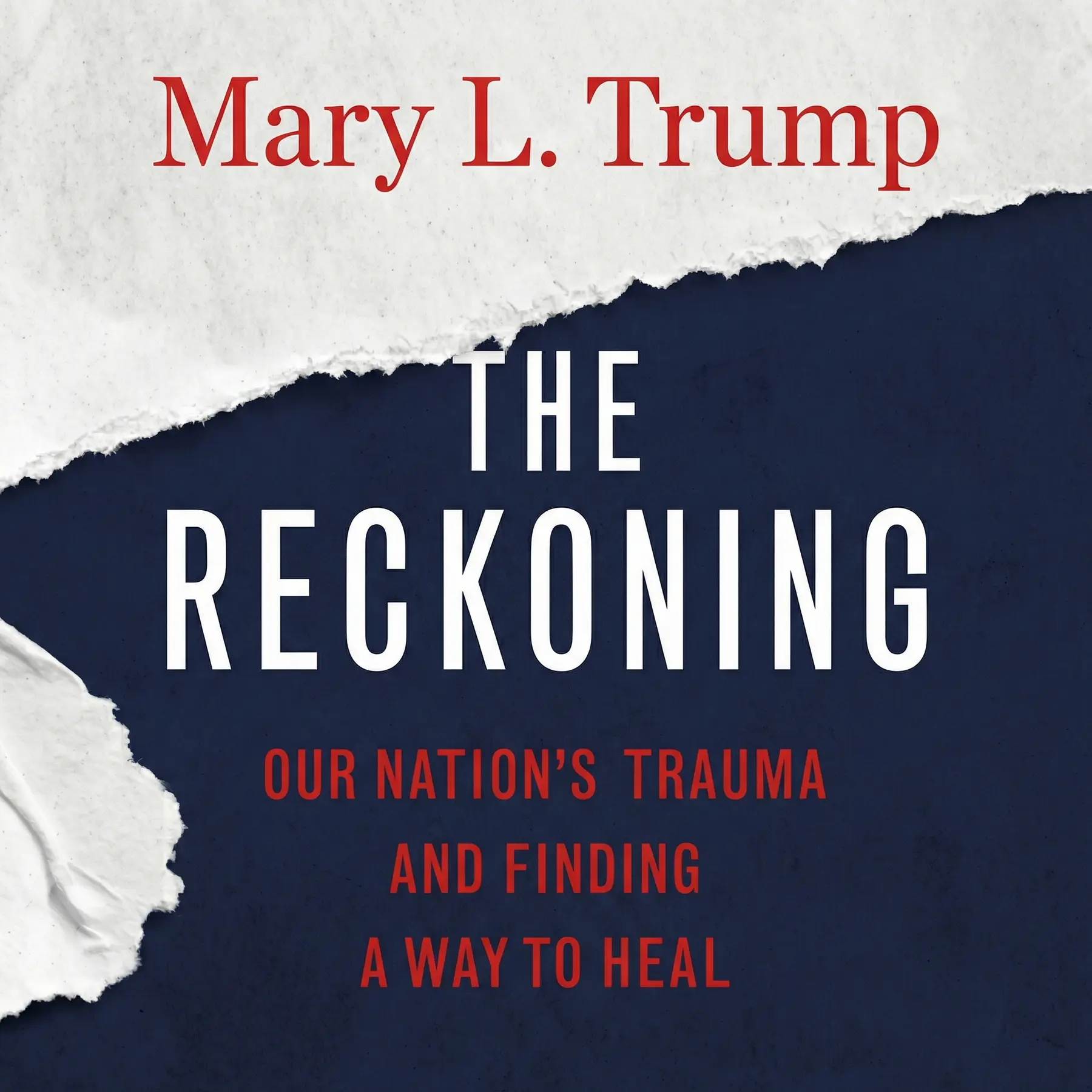
The Reckoning: Our Nation's Trauma and Finding a Way to Heal
Clinical psychologist Mary L. Trump traces America's recent political crises to old racial wounds and to leaders who were never held to account. She argues the country can heal only by facing both.
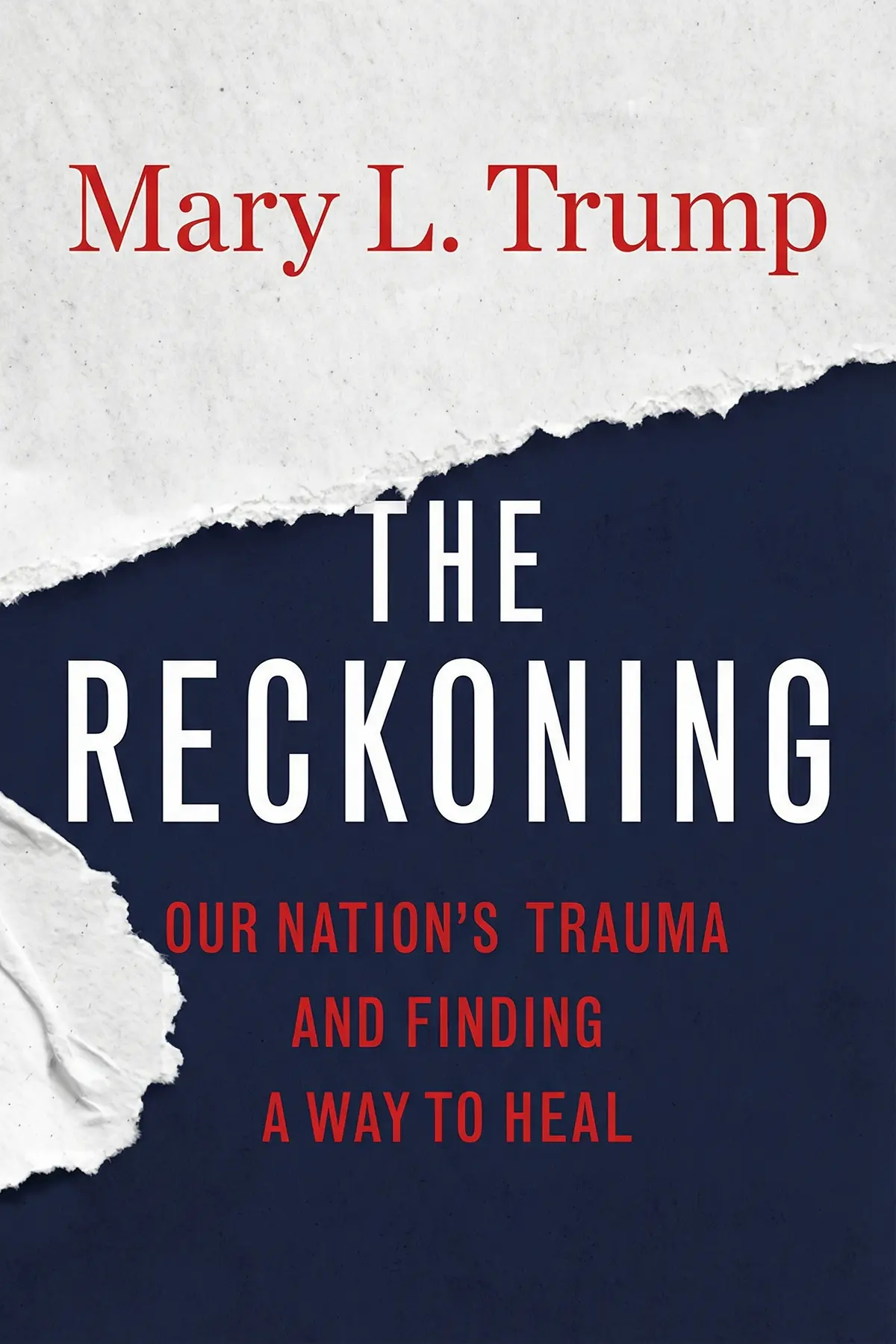
Table of Content
1. Introduction
1 min 08 sec
Headlines about American politics can feel like a string of unrelated shocks, from a contested election to a riot at the Capitol. In The Reckoning, clinical psychologist Mary L. Trump, niece of Donald Trump, argues that they are one story: a nation reliving wounds it has never treated. Her first piece of evidence is hard to forget. In 1904, decades after slavery ended, a crowd of more than 600 people in Mississippi watched a Black couple tortured and burned alive, and theirs was far from the only such killing.
Trump’s throughline is that America keeps repeating its harms because it refuses to face its past or punish its powerful, and that healing begins only with that reckoning. She links Reconstruction, Tulsa and the GI Bill to wealth gaps, drug arrests and highway routes, then to her uncle’s presidency and January 6. Follow her thread and today’s news starts to read as the latest chapter of an old pattern, and the choices that could break it come into focus.
2. See how freedom was rolled back after 1865
1 min 56 sec
Three constitutional amendments promised freed people citizenship and the vote. Within a generation, Southern lawmakers had found legal ways around every one of them, and the methods they chose still reveal how a promise can be emptied from inside.
3. Trace how old injuries pass between generations
1 min 56 sec
A thriving district burned in a single outbreak of violence, and a postwar program built the middle class for some families and not others. A psychologist’s lens explains why such damage does not fade when the event ends.
4. Spot yesterday's racism in today's numbers
1 min 51 sec
Most Americans reject reparations because they believe racism is mostly behind them. Three sets of figures, about money, arrests and the air people breathe, suggest the past is still doing its work in plain sight.
5. See how unpunished leaders keep going further
1 min 52 sec
A Confederate general got his citizenship back a century after his death, and a disgraced president never saw a courtroom. Trump argues these acts of national forgiveness carried a price that is still being paid.
6. Read small lies as warnings of bigger ones
1 min 58 sec
On his first afternoon in office, a new president described sunshine that never appeared and a crowd that was not there. His niece treats that trivial falsehood as an early signal of everything that followed.
7. Choose differently at the next turning point
1 min 46 sec
Twice before, the country reached a moment when it could have repaired old damage, and twice it looked away. Trump argues a third such moment has arrived, and names exactly what she thinks it demands.
8. Conclusion
1 min 13 sec
The Reckoning reads like a case history written by a clinician for a whole country. The symptoms are recent: a president who lied from his first day, a pandemic handled as a political fight, a mob in the halls of Congress. The cause, Mary Trump argues, is old. A nation that freed four million people and then let Black Codes, Plessy, the burning of Tulsa and a whites-only GI Bill undo much of that freedom never treated the wound. A nation that pardoned Nixon and restored Lee’s citizenship taught its powerful that consequences are optional.
What she asks of leaders and ordinary citizens comes down to two habits. One is honest memory: when you meet a gap in wealth, health or arrests, trace it back to the policy that made it before blaming the people who live with it. The other is accountability: back the enforcement of rules against the powerful, in a nation or in the office where you work, because each excused offense invites a larger one.
The Holberts died long after slavery was abolished on paper. Trump’s point is that paper was never enough, and that a country heals only when it stops looking away.
About this book
What is this book about?
American politics after 2016 can look like a run of separate shocks: a surprise election, a chaotic presidency, a pandemic, a mob inside the Capitol. Mary L. Trump, a clinical psychologist and Donald Trump's niece, argues these are symptoms of one condition. The country has never treated the wounds left by slavery and racism, and it has rarely punished leaders who abused their power. She builds the case from history to the present. Reconstruction's promises were undone by Black Codes and Plessy versus Ferguson. Tulsa's Black business district was burned, and Black veterans were shut out of the GI Bill. She follows those injuries into today's wealth gaps, drug arrests and highway routes. Then she turns to accountability, from Robert E. Lee's restored citizenship and Nixon's pardon to her uncle's presidency and January 6. Readers get a clear way to connect current events to their historical roots. The book also offers her prescription for the turning point she believes the nation now faces: honest memory and real consequences for those in power.
Book Information
Who it's for
Confused by American politics
Readers confused by recent American politics who want to see its historical roots.
Studying race, policy, democracy
Students and professionals studying race, policy or democracy who want one argument linking Reconstruction to January 6.
Curious about America's trauma
People curious how a psychologist inside the Trump family reads the country's trauma.
About the Author
Mary L. Trump
Mary L. Trump was born in New York City in 1965 and holds a PhD in clinical psychology from the Derner Institute of Advanced Psychological Studies at Adelphi University. She is Donald Trump's niece. Her first book, Too Much and Never Enough, published in 2020, drew on her years growing up in the Trump family. The Reckoning followed in 2021 and the memoir Who Could Ever Love You in 2024. She also writes the newsletter The Good in Us and hosts The Mary Trump Show on YouTube.
Ratings & Reviews
Ratings at a glance
What people think
Listeners perceive this work as a detailed historical education built on meticulous research, with one listener calling it an exceptional condensation of American history. Additionally, the writing is high-quality, and listeners believe it should be mandatory reading for every citizen. They value the book’s clarity, compassion, and sincerity, while one listener emphasizes its case for reparations to descendants of slaves. The content is simple to follow, though perspectives on how gripping the narrative is remain divided.
Top reviews
Tom
Mary Trump writes with a kind of searing intensity that is hard to look away from, even when the subject matter is painful. While her first book was a deep dive into her dysfunctional family, this follow-up turns that same clinical lens toward the entire country. The introduction is particularly moving, as she recounts her own battle with PTSD following the 2016 election and her subsequent time in a treatment facility. By connecting her personal psychological struggles to the broader national trauma, she makes the history of white supremacy and systemic failure feel visceral. Some might find her tone aggressive, but I think the muscular clarity of her prose is exactly what the moment requires. It is an unapologetic demand that we stop lying to ourselves about our origins. I finished the book feeling validated and more aware of how the past continues to haunt our present policies.
Show moreJiraporn
The argument for reparations presented here isn't just a political talking point; it's presented as a moral and clinical necessity rooted in the reality of trauma. Mary Trump manages to weave together the history of slavery, the pandemic, and the January 6th insurrection into a single, cohesive narrative of national neglect. I was particularly impressed by how she calls out leadership on both sides of the aisle for their collective 'willful blindness' toward systemic inequality. Her writing is accessible and remarkably clear, making complex concepts like epigenetics and critical race theory easy to grasp for the average reader. It’s rare to find a book that is both this academic and this emotional at the same time. This should be required reading in every high school history class because it fills in the gaps that traditional textbooks often ignore. Frankly, it’s the most honest book about the American psyche I’ve read in years.
Show moreFelix
Wow, it felt so incredibly grounding to have a professional psychologist validate the collective exhaustion we have all been feeling lately. Mary Trump doesn't just list historical facts; she explains how our history of violence and denial has physically and mentally damaged the American people. I was moved by her discussion of 'post-traumatic slave syndrome' and how the brutality of the past is baked into our modern institutions. This isn't just a 'Trump book,' it's a book about us and our failure to acknowledge the truth of our own story. Her writing is fierce and medicinal, providing a sense of clarity that is rare in today’s media landscape. I found the section on our re-emergence from COVID isolation particularly helpful for my own mental health. This is truth-telling at its finest, and I am a bigger fan of hers now than I was before. Truly an essential piece of writing for these volatile times.
Show moreLandon
Finally got around to reading this and I am struck by how well Mary Trump synthesizes complex historical patterns into something digestible. She bridges the gap between the clinical world and the political world in a way that feels completely organic. The chapters on how trauma is literally encoded in our DNA were eye-opening and provided a new lens for viewing the racial divide in this country. I love that she calls her uncle 'Donald' throughout, stripping away the titles to show the man as a manifestation of our national defects. This book is a fearless demand for accountability and repair, especially concerning the economic gap created by centuries of oppression. It is a short, sharp shock to the system that doesn't waste a single word. If you care about the future of this democracy, you need to read this book. It’s a powerful, empathetic, and deeply researched look at where we went wrong.
Show moreMontri
Picked this up expecting more gossip about her famous uncle, but found a surprisingly dense and scholarly history lesson instead. The book serves as an excellent distillation of American history, tracing our current divisions back to the failures of Reconstruction and the horrors of the Jim Crow era. Mary uses her background as a psychologist to explain how trauma is passed down through generations, which adds a layer of depth you don't usually get from standard political commentary. My only real complaint is the length; at under 200 pages, it feels more like an extended essay than a comprehensive historical volume. She touches on the mortgage crisis and institutional racism with great empathy, though I found myself wishing she had more room to breathe. Despite the brevity, it’s a necessary read for anyone trying to make sense of why our democracy feels so fragile right now.
Show moreSophia
Ever wonder how we actually got to this point of total national fracture? This book provides a very readable roadmap from the founding of our nation to the chaos of the current political climate. To be fair, if you’ve already read extensively on anti-racism or authors like Isabel Wilkerson, there might not be a ton of brand-new information here for you. However, Trump’s unique perspective as a psychologist allows her to frame these historical events as a series of unhealed wounds that continue to fester. I appreciated her bluntness regarding her uncle’s role in exacerbating these issues, though he is more of a symptom than the primary focus of the book. The prose vibrates with a sense of urgency that is infectious. While it’s a quick read, the emotional weight of her observations stayed with me long after I put it down. It is a sobering, necessary autopsy of our social fabric.
Show moreGai
In my experience, books by family members of political figures are usually just fluff, but this is a blunt autopsy of the American spirit. Mary Trump avoids the trap of making this all about her uncle, focusing instead on the long-term systemic failures that allowed him to rise to power in the first place. Her critique of the justice department and even figures like Obama and Biden for their roles in maintaining the status quo is surprisingly bold. The writing is incredibly well-crafted, though the pace can feel a bit breathless because she covers so much ground in such a small amount of space. I think her argument that we cannot heal without first facing the pain of our history is spot on. It’s a challenging read emotionally, but the readability of her prose keeps you moving through the darker chapters. I highly recommend the audiobook version, which she narrates herself with great passion.
Show moreTitiluck
To be fair, the book is quite short, yet it manages to pack a significant punch regarding the systemic failures of our democracy. I found her analysis of the January 6th insurrection through the lens of historical fascism to be particularly convincing and well-documented. Mary Trump has a way of cutting through the political noise to get to the psychological heart of why we are so divided. While I would have liked more specific 'how-to' steps for the 'finding a way to heal' part of the title, her diagnosis of the problem is flawless. The transition from the mortgage crisis to institutional racism felt a bit fast, but her overarching point about 'willful blindness' remains strong. It is a concise, well-constructed narrative that serves as a harsh but necessary reminder of our national responsibilities. A very solid 4-star read that I’ve already recommended to several friends.
Show moreIsabella
After hearing so much buzz about her first book, I found this follow-up to be a bit of a mixed bag. On one hand, her analysis of national trauma is fascinating, and she clearly did her homework when it comes to the history of Reconstruction. On the other hand, the book is incredibly short for the price point, and it often feels like a summary of other, better books on the subject. I kept waiting for her to dive deeper into the psychological aspects of the pandemic or the specifics of how we heal, but she stays fairly high-level throughout. It’s well-written, but it lacks the 'insider' hook that made her previous work so compelling. If you are new to the study of systemic racism, this is a great starting point. But for those who have been following these issues closely, it might feel a little redundant. It’s a decent primer, just not the deep dive I was hoping for.
Show moreOlivia
Not what I expected from someone whose primary claim to fame is her family drama, and honestly, I found it a bit patronizing. While I respect her education, there is something uncomfortable about a woman of her extreme privilege lecturing the public on the struggles of Native Americans and Black history. The book reads more like a grad student's term paper than an original work of scholarship, and the constant references to other authors made me wish I was just reading them instead. She barely touches on her uncle, which was the only area where she actually had a unique perspective to offer. At nearly thirty dollars for less than 200 pages, the value just isn't there for me. It feels like a rushed attempt to capitalize on her previous success rather than a thoughtful contribution to the conversation. I'll stick to historians who have a deeper, more lived-in understanding of these complex issues.
Show moreQuestions about this book
What is The Reckoning by Mary L. Trump about?
Mary L. Trump argues that America’s recent crises, from her uncle’s presidency to January 6, are symptoms of untreated national trauma. She traces racism from the collapse of Reconstruction through Tulsa and the GI Bill to today’s wealth and arrest gaps, and she shows how leaders from Robert E. Lee to Nixon escaped accountability. Healing, in her view, requires facing that history and holding wrongdoers responsible.
What does Mary Trump say about accountability in The Reckoning?
She argues that America habitually lets disgraced leaders off. Congress restored Robert E. Lee’s citizenship in 1975, Gerald Ford pardoned Nixon after Watergate, and Obama declined to investigate the Bush administration’s torture program. Drawing on historian Douglas Brinkley, she argues that pardoning Nixon established a dangerous precedent that presidents stand above the law, and that leaders who escape consequences keep pushing further.
What evidence does The Reckoning give that racism still shapes America?
Trump points to a 2021 Federal Reserve report on the large wealth gap between white and Black families. She notes that from 1980 to 2007 Black Americans were about five times as likely to be arrested for drug possession despite similar usage rates. She also shows how highways built through Black neighborhoods from the 1950s left Black families living beside polluted roads.
What solutions does The Reckoning propose?
Trump urges Democratic leaders to make voting rights laws stronger and to bring charges against the far-right extremists responsible for the January 6 riot. More broadly, she asks Americans to face the country’s racist past honestly, recognize how old policies still harm Black communities, and stop excusing powerful people who break the law, so the nation does not repeat its earlier wrong turns.
Who should read The Reckoning?
It suits readers who want to connect current American politics to its historical roots, especially the legacy of slavery and segregation. Students of history, race or public policy will find a single argument linking Reconstruction, Tulsa and the GI Bill to the Trump years. Readers interested in a psychologist’s view of collective trauma, from inside the Trump family, will also find it useful.
Readers also enjoyed

All About Love: New Visions
bell hooks


A Promised Land
Barack Obama

A River in Darkness: One Man’s Escape from North Korea
Masaji Ishikawa

A Theory of Justice
John Rawls



A Warning
Miles Taylor

AUDIO SUMMARY AVAILABLE
Listen to The Reckoning in 15 minutes
Get the key ideas from The Reckoning by Mary L. Trump, plus 5,000+ more nonfiction titles.
- 5,000+ titles
- Listen as much as you want
- 7-day free trial
- Cancel anytime









