

A Promised Land
Barack Obama
 English
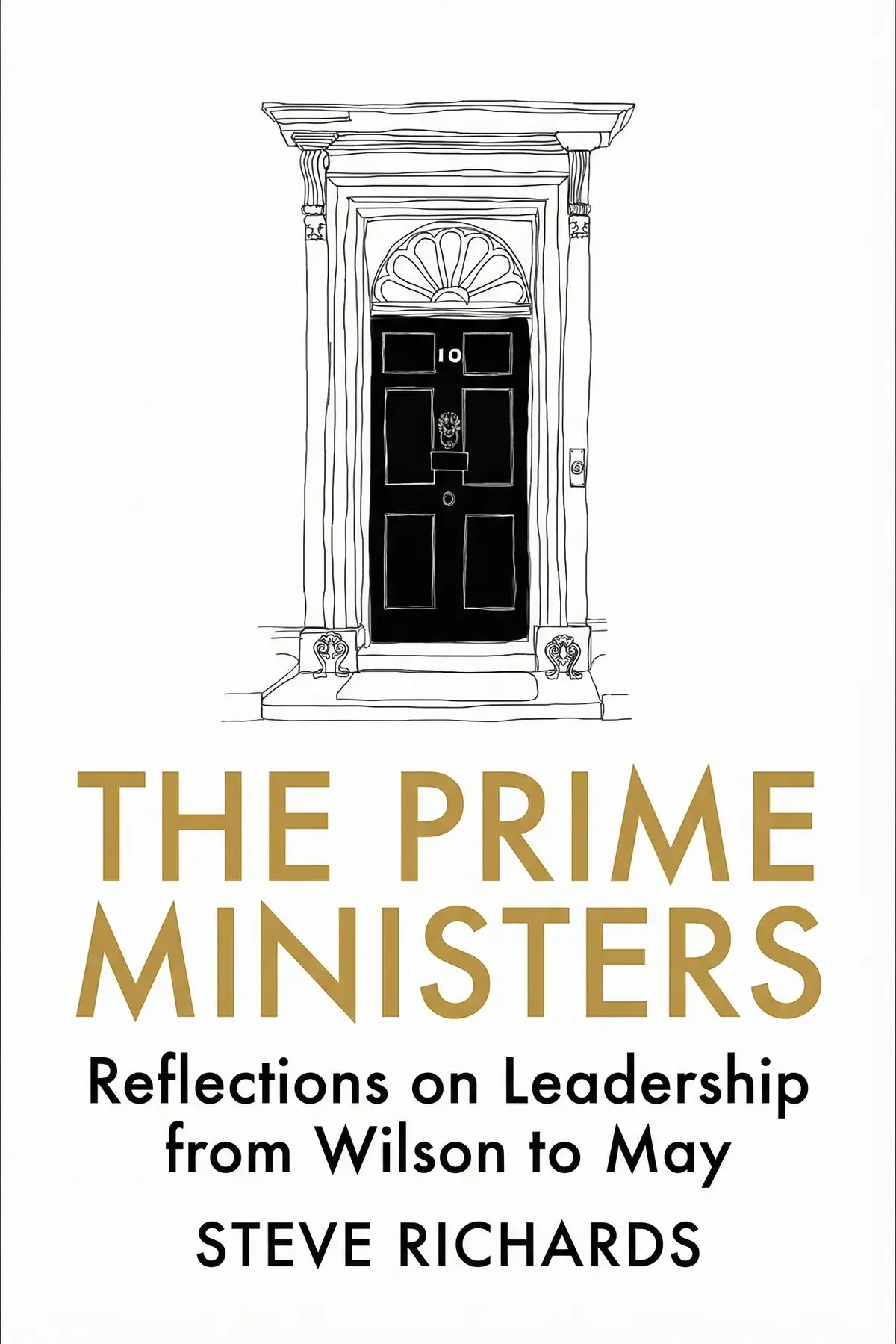
Steve Richards profiles British prime ministers from Harold Wilson to Theresa May. He shows that lasting power depends on communication, media skill, party management and reading the public, and explains how Europe broke three Conservative leaders.
1 min 02 sec
Most people assume the cleverest or most principled politician makes the best leader, but Britain’s recent history keeps proving them wrong. In The Prime Ministers, political columnist and broadcaster Steve Richards studies the leaders who ran the United Kingdom from Harold Wilson to Theresa May. He finds that intellect alone sank some of them. Gordon Brown, in his account, was one of the most thoughtful people in British politics, and the public still judged him too dour and voted him out at the first chance.
Richards argues that staying in power takes a rare blend of skills: explaining big ideas simply, turning hostile news around, holding a divided party together and reading the public mood. Leaders who had that blend shaped the country for decades. Those who lacked it, often over Europe, fell hard. These portraits explain how modern Britain was made, and they double as a checklist for judging any leader, including yourself when you run a team.
1 min 55 sec
One of the most thoughtful minds in modern British politics reached the top job and lost it at his first election. What did his more successful rivals have that he was missing?
1 min 48 sec
An aging, gray politician was reading out promises in a flat voice, and even his admirers began to doubt him. Then a protester threw something, and the room saw a different man.
1 min 49 sec
A prime minister wanted to win a national vote and keep his feuding ministers on board at the same time. His solution meant letting his own cabinet campaign on opposite sides and then all but disappearing himself.
1 min 53 sec
Humble beginnings in a Midlands town gave Britain the outsider who toppled her own party’s leader and then the country’s economic order. Her real advantage lay in the story she told about the decade before her.
1 min 49 sec
A future prime minister sat through years of crushing losses and took notes. By the time his chance came, he had tested every message for weaknesses, yet he still did not trust the polls.
1 min 52 sec
A polished young leader was sure the polls and his winning streak would carry him through a national vote. He forgot a lesson an older prime minister had used forty years earlier.
1 min 50 sec
Two Conservative prime ministers began with real goodwill and ended with their authority in pieces. One faced rebels on his own benches; the other misjudged a tired nation and a changed Parliament.
1 min 06 sec
Richards’s portraits add up to a sober account of power. The prime ministers who shaped Britain most were not always the cleverest or the most principled. They could turn a hard idea into a simple word, meet a hostile headline with a calm explanation and keep rivals inside the same government. Wilson stepped out of sight to win a vote he cared about. Cameron stepped into the spotlight and lost the referendum he had called. Between those two choices sits much of modern Britain, from its free-market economy to its long argument about Europe.
The book also asks for fairness. None of these leaders matched the cartoon on the front page, and the dull Wilson of the newspapers was the same man who lit up a hall with egg on his face.
So judge leaders by their record before their label. If you lead others, find the skill you are weakest in, test your plans against the ways you have failed before, and before you stake everything, ask whether people will judge the question or judge you. In the end, one thrown egg showed more of Wilson than years of headlines.
British politics is famous for its drama: leaders who ride a brief wave of popularity before the tide turns against them. Few prime ministers leave office happily. Political columnist and broadcaster Steve Richards asks what separated the ones who lasted from the ones who fell, and what their choices did to the country. His answer is that the job demands much more than brains or conviction. Richards follows Harold Wilson's survival tricks, Margaret Thatcher's overthrow of the old order and Tony Blair's careful study of defeat. He also traces how John Major, David Cameron and Theresa May were each undone by the question of Europe. Along the way he pushes back on the newspaper cartoons that stuck to these leaders, from Wilson the dull to Major the weak. Readers get a clear, character-driven account of how modern Britain was shaped, from its free-market economy to Brexit. They also get a practical lens for judging leadership anywhere: whether a leader can explain, adapt, unite their side and tell when their own unpopularity has become part of the story.
Readers who want to understand how modern Britain, Thatcherism and Brexit came about through the people who led it.
Managers and team leads curious what holds a divided group together and what breaks it.
News followers tired of one-word verdicts on politicians who want a fairer way to judge them.
Steve Richards, born in 1960, is a British political columnist and presenter. He has written for the Guardian, the Independent and the New Statesman, where he was political editor for a time. He regularly presents Week in Westminster on BBC Radio 4 and has fronted BBC series about Tony Blair, Gordon Brown, David Cameron and Theresa May. He also hosts a podcast and a one-man show, Rock N Roll Politics. His other books include The Prime Ministers We Never Had and Turning Points.

Listeners find this work to be a perceptive and easy-to-follow guide to contemporary British history, centered on the distinct traits and pressures of leading a nation. Even though some listeners believe the writer’s own political leanings sometimes influence the study, they value the mostly fair outlook and "insistent generosity of spirit" expressed toward the figures. Furthermore, they appreciate the way the content disputes established cliches, as one listener pointed out that the rehabilitative assessments of Edward Heath and Gordon Brown are especially stimulating. Also, the prose is lauded for its clarity and appeal; they likewise state that it offers a seemingly honest, expert insider’s perspective on the characters inside 10 Downing Street.
After hearing Richards on the BBC, I had high hopes for this book, and it didn't disappoint. It is essentially a masterclass in political character study that avoids getting bogged down in the minutiae of every single policy. Instead, we get a deep dive into the psychological toll of the office and how media has fundamentally changed the requirements for the job. To be fair, you can tell he has a soft spot for the 'giants' of the past, but his breakdown of Margaret Thatcher's leadership style was surprisingly balanced. He manages to humanize these figures without excusing their failures, which is a rare feat in today's polarized climate. The way he describes Gordon Brown's struggle with the media age actually made me reconsider my previous views on his premiership. This isn't just for political geeks; it’s for anyone who wants to see the human being behind the podium.
Show moreThe chapter on Gordon Brown was a total revelation for me. Most media coverage of that era was so focused on his personality flaws, but Richards looks at the actual substance of his leadership during the financial crisis. This book is brilliant because it challenges the stereotypes we’ve all accepted as fact for decades. It’s clear that Richards has spent a lifetime observing these people up close. He writes with a sense of empathy that you don't often find in political journalism. I loved how he compared the relative stability of the early Wilson years to the fractured landscape Theresa May had to navigate. Whether you love or hate the figures involved, you'll come away with a much deeper understanding of the institutional constraints that make being PM such a nightmare. Highly recommended for a thoughtful Sunday read.
Show moreFinally got around to finishing this, and I’m struck by the 'insistent generosity' the author shows to his subjects. In an age where we’re taught to despise every politician, Richards reminds us that the office of Prime Minister is a grueling, often thankless task. He manages to find something of value in everyone from the 'hapless' Jim Callaghan to the polarizing Margaret Thatcher. The insights into how the media cycle has compressed the time leaders have to think are especially poignant today. His writing is crisp, professional, and never boring. I particularly appreciated the way he debunked some of the myths surrounding Edward Heath’s time in office. This is a must-read for anyone interested in the mechanics of power and the human cost of high office. It’s easily one of the best political books I’ve picked up this year.
Show moreSteve Richards brings a really fresh eye to the occupants of Number 10, moving past the usual caricatures we see in the daily tabloids. He frames his analysis around the 'television era,' starting with Harold Wilson and ending with the chaotic resignation of Theresa May. Frankly, I found his attempt to rehabilitate the reputations of figures like Edward Heath and Gordon Brown to be the most compelling parts of the narrative. While Richards clearly has his own political leanings, he tries his best to maintain a level of 'insistent generosity' toward every subject, even those he likely disagrees with fundamentally. The writing is punchy and accessible, feeling more like a high-level briefing from an insider than a dry academic text. My only real gripe is that the chapters on more recent leaders felt slightly rushed compared to the heavyweights of the 70s and 80s. It’s a great primer for anyone wanting to understand the impossible burdens of modern leadership.
Show morePicked this up on a whim, despite not usually being a massive political junkie. I was pleasantly surprised by how much I enjoyed the narrative flow; it never feels like a slog or a textbook. Richards focuses heavily on the 'media age' and how different leaders navigated the 24-hour news cycle, which is a fascinating lens to look through. Some of the anecdotes about the figures who never quite made it to the top, like Tony Benn or Michael Heseltine, added some great flavor to the main profiles. I particularly liked the chapter on John Major, as he is so often overlooked in favor of Blair or Thatcher. Richards gives him his due. The book does lean a bit toward the left, but the author is honest about his perspective, which I appreciate. It’s an insightful, professional look at the crushing weight of power.
Show moreAs someone who lived through the Thatcher years, I found the author's attempt at a balanced assessment quite refreshing. It’s easy to be partisan about that era, but Richards looks at her through the lens of leadership qualities rather than just ideology. He makes a great point that her decision regarding the Falklands was essentially a gamble for her political life. The book is full of these little 'insider' observations that make the history feel alive. I did find the later sections on Brexit and the recent PMs to be a bit less polished, probably because we are still living through the fallout. However, his core thesis—that all these people were genuinely trying to do good in a near-impossible role—is a welcome change from the usual cynicism. It’s a solid, well-researched book that kept me turning the pages.
Show moreRichards writes with the authority of someone who has spent decades watching these figures from the front row. The book is structured beautifully, giving each PM enough space to breathe without overstaying its welcome. I loved the focus on the specific 'qualities' of leadership, even if I didn't always agree with his conclusions. For instance, his take on the 2017 election and the 'danger' of early elections was proven wrong almost immediately by Boris Johnson's majority, but that’s the risk of writing contemporary history. Look, it’s a journalist’s book, so it’s heavy on narrative and light on academic theory, but that makes it much more readable for the average person. It’s a fascinating look at the evolution of the British premiership over the last fifty years. Definitely worth a spot on your shelf.
Show moreIs the job of Prime Minister actually impossible? That seems to be the central question Richards explores, but the results are a bit of a mixed bag for me. On one hand, the prose is incredibly engaging and he packs a lot of insight into forty-page snapshots. However, the author’s personal biases definitely start to leak through once we reach the David Cameron and Theresa May years. I felt he was far more forgiving of Jim Callaghan’s economic struggles in the 70s than he was of the challenges faced by more recent Conservative leaders. Truth is, his argument that politicians used to be 'giants' compared to today's 'pygmies' felt more like nostalgia than rigorous analysis. It’s a decent read for a quick overview of modern British history, but take some of the 'leadership lessons' with a grain of salt.
Show moreNot what I expected from a book about political history, but it grew on me. It’s less about the dates and more about the personalities in the room. Richards is a veteran journalist, and it shows in his smooth, conversational style. I enjoyed the bits about Tony Blair’s early charisma and the subsequent fallout from the Iraq War, though I wish there was more on the actual policy shifts. The main drawback for me was the inconsistency in tone between the older PMs and the modern ones. He seems to have much more respect for the politicians of the 1960s and 70s, which makes the chapters on Cameron and May feel a bit dismissive by comparison. It’s an easy read and provides a good bird’s-eye view, but it doesn't quite reach the depths I was hoping for.
Show moreTo be fair, I expected a more rigorous historical analysis than what is essentially a series of expanded character sketches. The author’s 'leadership lessons' at the end of each section felt a bit repetitive and, at times, quite shallow. I also found the exclusion of Harold Macmillan to be a strange choice just because he didn't fit into the 'television era' as neatly. While the writing is clear, the insights often feel like recycled journalist gossip rather than deep political science. Not gonna lie, I was disappointed by the lack of hard data or economic context for the decisions being made. It's okay as a light introduction for someone who knows nothing about British PMs, but if you’re looking for a serious history of the era, you might want to look elsewhere. The bias against recent leaders is also a bit too obvious to ignore.
Show moreIt profiles British prime ministers from Harold Wilson to Theresa May and asks what made some last while others fell. Richards argues that intellect and ideology are not enough. Leaders also need to explain ideas simply, handle hostile media, unite a divided party and read the public mood. He also shows how the question of Europe destroyed John Major, David Cameron and Theresa May.
Richards names three clear ones, alongside harder-to-define gifts like luck and an instinct for the national mood. Thatcher shows the power of communication, selling radical reforms as choice and freedom. Blair shows media agility, calming reporters at regular press conferences. Callaghan shows party management, giving senior posts to leaders on both sides of the Europe debate. Gordon Brown, despite his intellect, struggled because he lacked the first two.
Richards argues that Cameron lacked the hard early experience that tempers a leader and was overconfident. Expecting an easy win from favorable polls and his 2015 majority, he made himself the face of the remain campaign. Harold Wilson had done the opposite in 1975, keeping out of sight because he knew he was unpopular. Part of the leave vote’s appeal turned out to be a protest against Cameron himself.
During the 1975 vote on the European Common Market, Wilson let ministers campaign on either side, so figures like Tony Benn and Roy Jenkins could disagree openly without splitting the party. With the unions, he let each industry set its own pay raises but threatened emergency rules if deals broke sensible limits. That let him appear supportive while keeping union demands under control.
The portraits suggest several habits. Give a divided team room to disagree, as Wilson did, instead of forcing false unity. Study past failures and test plans against them, as Blair did after Labour’s 1980s defeats. Notice when your own unpopularity could turn a decision into a verdict on you. And adapt when circumstances change, which Theresa May failed to do after losing her majority.
Barack Obama


Masaji Ishikawa

William J. Bernstein

John Rawls

Ben Macintyre




James Shapiro
AUDIO SUMMARY AVAILABLE
Get the key ideas from The Prime Ministers by Steve Richards, plus 5,000+ more nonfiction titles.









