


9 min 25 sec
Available in: English
The Practicing Mind: Developing Focus and Discipline in Your Life
Shows how to replace performance anxiety with steady progress by keeping attention on the task in front of you, breaking big goals into timed pieces, slowing down and catching worry with a three-step method.
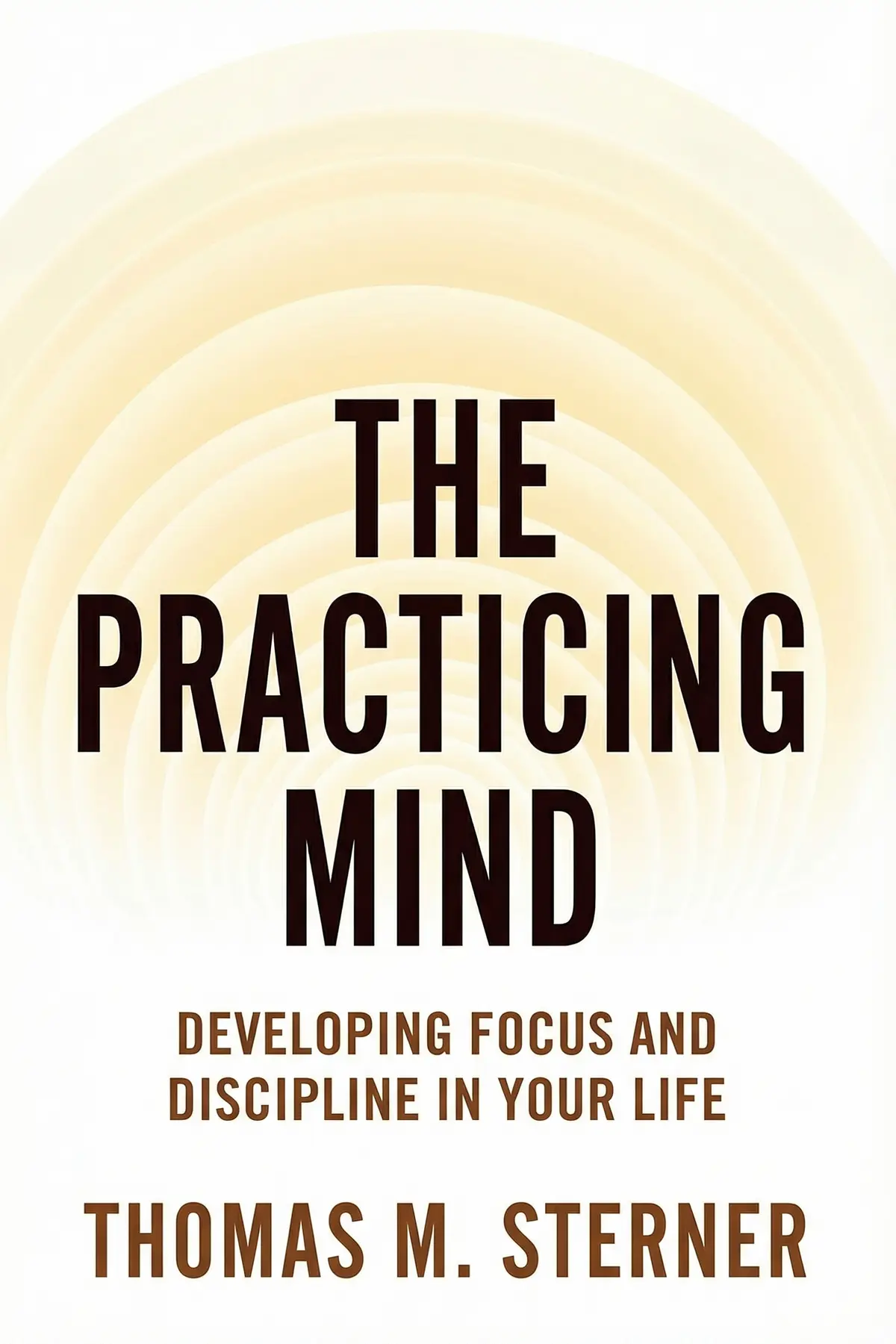
Table of Content
1. Introduction
1 min 04 sec
If you feel anxious every time a deadline looms, or never satisfied even after hitting a target, the cause may be the way you hold your goals. In The Practicing Mind, Thomas M. Sterner, who spent 25 years as a piano technician preparing concert instruments, argues that we raise the bar every time we clear it, so we never get to enjoy arriving.
His alternative is what he calls a practicing mind: attention placed on the task in front of you, with the goal kept in the background as a guide. The whole argument rests on one claim. Anxiety comes from staring at the distance to the finish, and calm, steady progress comes from working inside the present step.
Sterner turns that claim into a handful of habits: breaking work into small pieces with time limits, slowing down on purpose, and a three-step technique for catching your mind when it wanders into worry. Each one is small enough to try on the next task you have been avoiding.
2. Stop chasing a finish line that keeps moving
1 min 47 sec
Every target you hit seems to be replaced by a higher one the same afternoon. Sterner traces that endless dissatisfaction to a habit nearly everyone shares, and to the images that keep feeding it.
3. Steer by your goal while you work the present
2 min 08 sec
Deadlines have a strange way of making us worse at working. A missed strike at the bowling alley shows why fixing your eyes on the finish slows you down, and what to watch instead.
4. Shrink any big job into calm, timed pieces
1 min 43 sec
A cluttered garage can sit untouched for years. Sterner’s way of clearing it involves a time limit and one corner of shelving, plus a piece of advice about speed that runs against most people’s instincts.
5. Catch a wandering mind with Do, Observe, Correct
1 min 43 sec
Worry about an exam result can make studying for it impossible. Sterner’s three-step method turns that spiral into something you can watch from the outside, and it gets easier each time you use it.
6. Conclusion
1 min 00 sec
The Practicing Mind adds up to a different relationship with ambition. Sterner never asks you to want less. He asks you to stop measuring yourself against a target that moves every time you get close, and to put your attention where effort actually happens: on this shelf, this exam page, this next ball down the lane. The goal stays, as a rudder in the background, and the anxiety that came from staring at the distance begins to fade.
What follows is practical and small. When a task feels heavy, carve off one piece, give it a fixed stretch of time, and work slower than feels natural. When worry breaks in, notice it, watch it like a spectator, and steer back to the work. And when you reach something you aimed for, let yourself feel it before you raise the bar again.
The garage gets clean one shelf at a time, and the person cleaning it grows a little calmer with every shelf.
About this book
What is this book about?
Many capable people feel they are never good enough. They reach a target, set a higher one at once, and feel anxious and stuck whenever a deadline gets close. Thomas M. Sterner argues that the trouble lies in where attention goes. We compare ourselves with polished images from media and advertising, with colleagues and with strangers, and we fix our eyes on a finish line that keeps moving away. His answer is the practicing mind: attention held on the present step, with the goal kept in the background as a rudder that sets direction. From there Sterner builds simple habits. Big projects are broken into small objectives, such as the shelves in one area of a garage, worked on for a set time each day. Work is done slowly on purpose, because rushing breeds stress. And a three-step technique called Do, Observe, Correct helps you notice when worry takes over, watch it like a spectator and steer back to the task. Readers get a calmer way to approach exams, chores, long projects and new skills, and permission to feel satisfied with progress along the way instead of only at the end.
Book Information
Who it's for
Stuck as deadlines approach
Students and professionals who freeze or procrastinate as deadlines approach.
Unsatisfied after each goal
High achievers who reach their goals but never feel satisfied for long.
Putting off big tasks
People facing a large chore or long project they keep postponing.
About the Author
Thomas M. Sterner
Thomas M. Sterner worked for 25 years as a piano technician, including as chief concert piano technician at a major performing arts center, where he prepared instruments for artists such as Van Cliburn, Pavarotti and Ray Charles. He has studied Eastern and Western philosophy along with modern sports psychology, made a radio show on the theme of the practicing mind, and teaches his methods to businesspeople and at sports clinics.
Ratings & Reviews
Ratings at a glance

What people think
Listeners find this book accessible and clear, offering useful guidance and concrete methods for improving skills. Furthermore, the prose is expertly written, and listeners value the way it fosters tranquility while lowering anxiety and stress levels. The content also promotes finding joy in the present moment; listeners call it transformative, with one listener highlighting how it facilitates a mental paradigm shift.
Top reviews
Wanphen
The concept of the 'practicing mind' completely shifted how I approach my daily work as a designer. Instead of obsessing over the final render, I’ve started focusing on the brushstrokes and the immediate decisions, which has oddly made the work faster and less stressful. Sterner’s writing style is well-crafted and encouraging, offering a way to achieve inner peace by simply letting go of the horizon. He uses this great analogy about a sailor never reaching the horizon, which perfectly describes the futility of only being happy once a goal is reached. Not gonna lie, I was skeptical of the Eastern philosophy bits at first, but the way he blends it with performance psychology makes it very relatable. This book is a life-changing resource for anyone looking to reduce anxiety and actually enjoy their life as it is right now. It is truly a masterclass in discipline.
Show moreClara
Wow, this was exactly the mental reset I needed during a particularly stressful month of career transitions. Sterner manages to take complex ideas from Zen practice and turn them into a clear-cut strategy for everyday discipline. I’ve always been someone who looks at a giant pile of pending work and freezes, but his advice to simplify and shorten the duration of effort has been a total game-changer. The writing is clean and devoid of the usual self-help fluff, focusing instead on how to quiet the mind through deliberate practice. It really helps you realize that the anxiety we feel isn't from the work itself, but from our judgment of it. After finishing this, I felt a sense of tranquility I haven't had in years. If you want to acquire new skills without the usual frustration, read this book.
Show moreOmar
After hearing about this book on a productivity podcast, I decided to give it a shot, and it’s easily one of the most impactful things I’ve read this year. It isn't just about getting things done; it’s a deeply spiritual look at how we relate to ourselves and our time. Sterner shows us that all of life is practice, whether we are washing dishes or performing a concert. This perspective shift helps eliminate the 'I'll be happy when...' mentality that keeps so many of us miserable. The advice on using goals as a rudder rather than a destination is a brilliant way to maintain focus without becoming attached to the outcome. It’s a short, easy read that packs a punch. Truly a life-changing book for the modern age.
Show moreEye
This book provides a masterclass in staying in the present moment without the typical fluff found in modern mindfulness guides. Sterner’s background in music and technical work gives him a unique perspective on the 'mechanics' of practice that many spiritual authors lack. By shifting the goal from the final product to the practice itself, he offers a way to find joy in even the most mundane tasks. I noticed a significant reduction in my daily stress levels almost immediately after implementing his suggestions. The writing is straightforward and the tone is incredibly supportive throughout the entire journey. It's the kind of book you'll want to keep on your shelf and revisit whenever you feel your focus starting to fracture. Highly recommended for entrepreneurs and athletes alike.
Show moreChee
Finally got around to reading Sterner’s take on mindfulness, and I’m glad I did despite the repetitive nature of the middle chapters. The author, who draws a lot from his time as a piano technician, argues that we should treat every activity as a practice session rather than a means to an end. This shift from product to process sounds simple, but it’s actually quite difficult to implement when you're used to chasing goals. I particularly liked the 'Four S Words'—simplify, small, short, and slow—as they offer a concrete way to break down overwhelming projects. To be fair, he does wander into some stream-of-consciousness tangents about golf and music that don’t always land. However, the core message about staying in the present moment is incredibly valuable for anyone feeling burnt out by their own expectations. It's a solid, practical guide that helps reduce the frustration of learning something new.
Show moreBird
As someone who has struggled with perfectionism for years, I found this book incredibly grounding and surprisingly accessible. Look, the idea of focusing on the journey isn't new, but Sterner frames it in a way that feels actionable for a modern, busy person. He explains how our attachment to the 'product' creates a cycle of impatience and boredom that eventually leads us to quit. By breaking tasks into subtasks and focusing only on the current movement, I’ve found I can work longer without feeling that heavy mental fatigue. I did feel the book was a bit longer than it needed to be, and some anecdotes felt like filler. Regardless, the paradigm shift it offers regarding how we view 'work' versus 'play' is worth the price of admission. It's a straightforward read that delivers real techniques for skill development.
Show moreVimolwan
Ever wonder why you lose interest in a hobby the moment it gets difficult or the initial 'honeymoon' phase wears off? This book answers that question by highlighting our cultural obsession with end results rather than the act of doing. I've been applying the 'process-oriented' mindset to my fitness routine, and it has completely removed the dread I used to feel before a workout. Personally, I think the chapter on the 'Four S Words' is the most practical part of the whole book. My only gripe is that the author sometimes comes off as a bit of a 'know-it-all' when discussing his personal habits. If you can ignore that slight intellectual elitism, the actual advice is top-tier. It provides a helpful framework for anyone dedicated to becoming good at their craft.
Show morePick
To be fair, the core message here is solid, but the execution feels a bit like a padded-out blog post. The author has a warm, encouraging tone, but he tends to repeat his main points until they lose their impact. I listened to the audiobook version, and I have to agree with other reviewers that the narration was somewhat preachy and over-enunciated. It made a three-hour listen feel much longer. The autobiography elements regarding his career as a piano tuner were interesting, yet they often felt disconnected from the 'performance psychology' he was trying to teach. Is it helpful? Yes, especially the parts about staying present to reduce stress. Is it the best book on the subject? Probably not, as there are deeper dives into Eastern philosophy that cover this more elegantly. It’s a decent starting point for beginners.
Show morePita
In my experience, books that try to blend autobiography with philosophy often struggle with organization, and this one is no exception. While the central theme of 'no mind' and focusing on the present is powerful, the book meanders through topics like golf and piano tuning without a clear roadmap. I often found myself skimming pages because the points were being rehashed for the third or fourth time in a row. To be fair, the advice on breaking down huge tasks into small, manageable subtasks is great for people with focus issues. However, I didn't feel like I was learning much new after the first three chapters. It’s a nice, light read if you need a reminder to slow down, but don't expect a deep academic study on the mechanics of discipline.
Show moreNoo
Not what I expected after seeing all the glowing recommendations online, especially given the author’s occasionally elitist tone. Frankly, the book feels like a disorganized collection of random thoughts about piano tuning and golf rather than a structured self-help guide. He makes contradictory claims about his own academic history and television habits that made it hard for me to take his 'discipline' advice seriously. While the central idea of focusing on the process is okay, it’s nothing you won't find in 'Zen in the Art of Archery' or any basic yoga class. The writing is very stream-of-consciousness, and I found the repetition of basic concepts to be quite grating after the first fifty pages. If you want a book that describes a problem with supporting evidence and a clear hypothesis, look elsewhere. This felt more like a biography of his own narrow interests than a universal manual for focus.
Show moreQuestions about this book
What is the main idea of The Practicing Mind?
Thomas M. Sterner argues that performance anxiety comes from fixing our attention on distant goals that we keep raising, and from comparing ourselves with idealized images. His alternative is a practicing mind: keep the goal as a rudder that sets direction, but put your full attention on the step in front of you. When thoughts stay in the present, he says, anxiety drops and progress becomes visible and motivating.
What is the Do, Observe, Correct technique?
It is Sterner’s three-step method for regaining focus. Do is noticing that your attention has drifted from the task, for example into worry about an exam result. Observe means looking at that behavior like an uninvolved spectator, without judging yourself, so you see how emotion makes things seem worse. Correct means letting go of the fearful feelings as far as you can and returning to the work. With practice it becomes automatic.
How do you apply The Practicing Mind to a big project?
Break the project into small, simple objectives, the way Sterner suggests cleaning only the shelves in one area of a garage instead of the whole garage. If even that piece is large, set a daily time limit, such as 45 minutes. Allow yourself satisfaction when each piece is done, and resist rushing, since working slowly keeps you in the present and reduces stress.
Does The Practicing Mind say you should lower your goals?
No. Sterner says ambitious goals and high expectations can inspire you to work harder. The problem is using them as measuring sticks for comparison or as a gauge of daily progress, which only discourages you. Big goals are fine as long as you break them into smaller objectives and let the goal guide your direction while your attention stays on the present task.
Readers also enjoyed




A Guide to the Good Life: The Ancient Art of Stoic Joy
William B. Irvine


A High-Performing Mind: Strengthen Your Mind and Live Your Best Life
Andrew D. Thompson


Abundance: The Inner Path to Wealth
Deepak Chopra

AUDIO SUMMARY AVAILABLE
Listen to The Practicing Mind in 15 minutes
Get the key ideas from The Practicing Mind by Thomas M. Sterner, plus 5,000+ more nonfiction titles.
- 5,000+ titles
- Listen as much as you want
- 7-day free trial
- Cancel anytime









