

13 min 35 sec
Available in: English
The Personality Brokers: The Strange History of Myers-Briggs and the Birth of Personality Testing
By Merve Emre
Merve Emre traces the Myers-Briggs test to a mother, a daughter and their devotion to Carl Jung. She shows why it fails as science and why millions still find comfort in it.
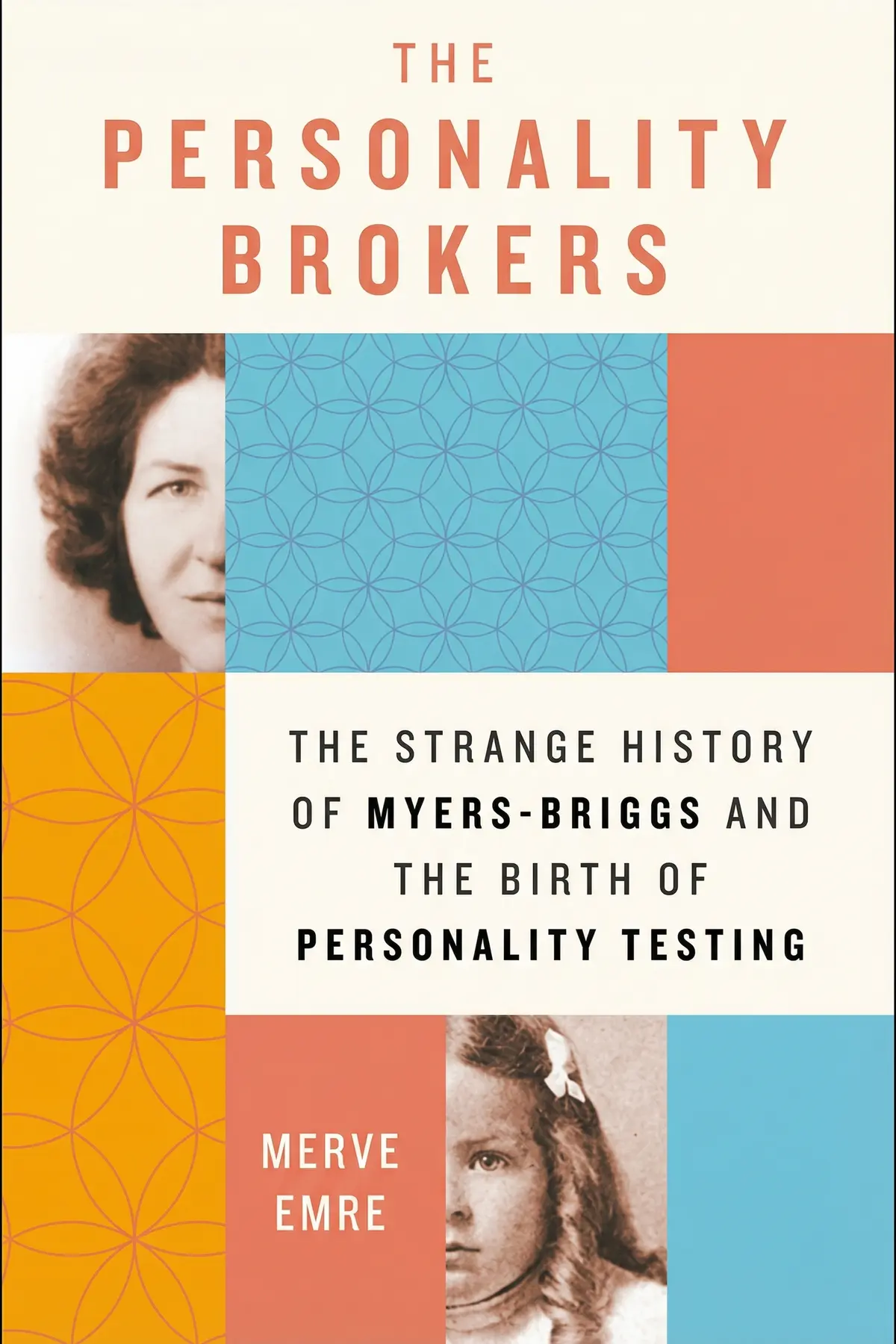
Table of Content
1. Introduction
59 sec
If you have been handed a four-letter personality type at work or in school, you may have wondered how much it really knows about you. In The Personality Brokers, literary critic and academic Merve Emre traces the world’s best-known personality test to its origins, and the first surprise is who made it. It was the work of a mother and daughter, Katharine Briggs and Isabel Myers, who built it from the writings of Carl Jung.
About two million people take their questionnaire each year, in companies, universities and self-help programs. Emre’s history shows a test with weak scientific footing that still endures, because what it really offers is reassurance about who you are. Her story runs from a pile of notes burned after a dream to a business worth more than two billion dollars. By the end you can judge your own four letters clearly, knowing what they can explain about you and what they never could.
2. Read your four letters the way the makers intended
1 min 59 sec
Many people meet this questionnaire while applying for a job, while others take it simply to get to know themselves better. Its creators made one design choice that changes how every result should be read.
3. Trace the four pairs back to Jung's myths
2 min 03 sec
The test’s publisher proudly names a famous psychologist as its source. Look closely at how that psychologist built his theory, and the pedigree starts to look very different.
4. See the private devotion behind a global test
1 min 54 sec
One morning in 1923, the woman who started the questionnaire woke from a dream and set fire to years of her own work. What came next would shape a tool used around the world.
5. See how the 1920s hunger for self-discovery took hold
1 min 52 sec
A cheerful magazine article from 1926 asked readers to sort colored index cards. It met a hunger that radio hosts, newspaper columnists and churches were all struggling to satisfy.
6. Hear the sharpest case against labeling people
1 min 56 sec
While Isabel Myers refined her mother’s questionnaire, Europe was at war and a German philosopher was drawing a disturbing line from personality types to the politics of the age.
7. Keep the comfort and drop the certainty
1 min 43 sec
Take the test twice within a month and there is a good chance you will be told you are someone else. Yet devotion to it has barely wavered, and Emre thinks she knows why.
8. Conclusion
1 min 09 sec
The Personality Brokers ends up as a story about two kinds of truth. Judged by science, the Myers-Briggs is weak. It is built on Jung’s untested opposites, shaped by a woman who burned her notes after a dream, and unstable enough that many people change type within a month. Judged by what people want from it, it works. It tells an anxious person that they were made this way, that no type is lesser, and that their choices make sense.
Emre’s history lets you hold both truths at once. When someone hands you four letters, think of the paint box and the index cards of 1926, a cheerful invitation to know yourself, written by a believer. When a workplace starts sorting people by type, remember Adorno’s warning about what labels can become once they decide who belongs where. And when your own result brings relief, accept it honestly, as comfort rather than proof.
Katharine Briggs never met the man she worshipped from afar, yet she built a mirror that millions still look into. The picture it shows is real enough to comfort. It was never sharp enough to define you.
About this book
What is this book about?
Every year about two million people answer the Myers-Briggs questions and get a four-letter type back. Companies use it to hire. Universities and self-help programs use it to guide people. Yet few of those test takers know where it came from. Merve Emre tells that story. The test was created by Katharine Briggs and her daughter Isabel Myers, and it rests on Carl Jung's theory of opposing personality types, a theory Jung refused to test and built partly from ancient myths. Briggs revered Jung so completely that she burned her notes after dreaming of him. Her questionnaire first reached the public in 1926, when Americans wanted psychological guidance but no longer wanted the church's judgment. Critics such as the philosopher Theodor Adorno saw something darker in the urge to sort people into types. Readers get the hidden history behind a famous label and a clear view of the evidence against it. Emre also explains why the test endures: it gives people a way to accept who they are.
Book Information
Who it's for
Professionals typed at work
Professionals who have been typed at work and want to know what the label is worth.
Managers and HR staff
Managers and HR teams who use personality tests in hiring or team building.
Curious about pop psychology
Readers curious about the odd history behind popular psychology and self-help.
About the Author
Merve Emre
Merve Emre is an author, academic and literary critic. She earned an MPhil and a PhD at Yale University, taught at McGill and Oxford, and moved to Wesleyan University in 2023. Her essays and articles have appeared in The Atlantic, Harper's Magazine and The New York Times Magazine. The Personality Brokers, published in 2018, followed her earlier book Paraliterary and examines how the Myers-Briggs test and personality testing began.
Ratings & Reviews
Ratings at a glance

What people think
Listeners find this work extensively researched and articulately composed, with an intriguing narrative regarding the history of the MBTI. They also enjoy its engaging nature and deem it a valuable read, with one listener highlighting how helpful it is for gaining personal insight. Nevertheless, opinions are divided on the quality of information and personality-focused content; some feel it is educational while others do not, and several listeners mention that it is not a personality assessment.
Top reviews
Woramet
The Personality Brokers is a masterful piece of intellectual history that reads like a character study. I was absolutely gripped by the bizarre saga of the Briggs family and their persistence in bringing this indicator to the world. Emre’s wit is sharp. She never talks down to the reader, even when describing the more eccentric aspects of her subjects' lives. The chapter on the house-party testing with celebrities like Truman Capote was particularly brilliant. It perfectly illustrates the mid-century obsession with categorization. This book is for anyone who enjoys seeing how ideas take root in culture. It is beautifully researched and written with a narrative flair that is rare in non-fiction. Even if you hate the MBTI, you have to respect the hustle of the women who created it. An amazing and illuminating read that stayed with me long after I finished it.
Show moreSaovapa
Wow, I had no idea the origins of the Myers-Briggs were so strange and almost cultish. Merve Emre has a gift for making history feel urgent and alive. The way she weaves together Jungian theory, corporate greed, and the personal ambitions of Katharine and Isabel is just spectacular. I loved the wittiness of the prose; it’s sharp without being mean-spirited. The book really makes you think about why we are so desperate to be put into boxes. It’s a fascinating look at the 'technology of the self.' Even though the science behind the test is basically non-existent, the story of its creation is a classic American tale of reinvention. I finished it in three days and have been telling everyone about it. Essential reading for anyone who has ever felt defined by a four-letter code.
Show moreSawit
As someone who grew up obsessed with my INTJ label, I went into this expecting a total takedown. Instead, I found a deeply researched and incredibly sharp history of how the MBTI came to be. Merve Emre is a fantastic writer. She manages to make the strange, almost cultish origins of the test feel both bizarre and inevitable. The corporate history, especially the part about how it was used to manage the post-war white-collar workforce, was eye-opening. To be fair, it’s less about the 'science' of personality and more about the people who sold us on the idea. I did find the middle chapters about the creators' domestic lives a bit long-winded. However, the prose is so elegant that it kept me moving through the slower parts. If you want a book to tell you more about your 'type,' this isn't it. If you want to know how we all became obsessed with these four letters, it's a must-read.
Show moreChai
Finally got around to reading this, and the historical context of the MBTI as a capitalist tool is fascinating. It is amazing how a test created by two 'housewives' managed to infiltrate the military, churches, and top-tier corporations. Emre does a great job showing the darker side of this, including the classist and racist views held by the creators. My favorite part was the description of the 're-education' camp the author had to attend to get certified. It really highlights the cult-like nature of the modern MBTI community. My only real gripe is that the book wanders into some very detailed tangents about side characters that don't always feel relevant. Still, the core narrative is strong. It’s a worthwhile read for anyone interested in how we construct our identities in a corporate world. Well-written and very informative throughout.
Show moreJulian
After hearing about the controversy surrounding this book, I had to see for myself. It’s definitely well-researched, though it leans heavily into the 'character' aspect of the creators. Emre doesn't pull any punches regarding the lack of scientific validity, which I appreciated. Personally, I enjoyed the deep dive into the 1940s corporate culture and how they used these tests to screen for 'ideal' employees. It does suffer slightly from 'character capture,' where the personal lives of the women overshadow the broader implications of the test itself. But the writing is so good that I didn't mind too much. It’s a fascinating, middlebrow intellectual history that is both entertaining and slightly disturbing. It makes you realize how much of our modern world is built on very shaky foundations. Definitely worth your time if you like history with a side of skepticism.
Show moreWei
Ever wonder where that four-letter code on your LinkedIn profile actually came from? This book provides the answer, though it takes a very academic route to get there. It’s part biography and part social critique, tracing the mother-daughter duo behind the world’s most famous personality test. The truth is, the history is quite strange. Katharine Briggs had a quasi-religious obsession with Carl Jung that feels more like a fever dream than psychology. The writing is good, but it’s definitely not a quick read. At times, the tone feels a bit condescending toward people who actually find value in the test. I would have liked more data and less 'humanist' philosophical maundering. It’s a decent piece of history, but it feels like it’s missing a core argument. It sits in a weird middle ground between being a biography and a scientific critique without fully committing to either.
Show moreCherry
Picked this up because I’ve taken the MBTI at every job I’ve ever had. It’s a solid, if somewhat dry, history of the test's evolution. The author is clearly a talented researcher, and the details about the Education Training Service’s role were new to me. However, the book feels a bit disjointed. It jumps from being a biography to a corporate history to a personal memoir. Not gonna lie, I skipped a few of the more academic chapters in the middle. The truth is, it’s more of a history book than a personality assessment. It won't help you understand yourself better, but it will help you understand why your HR department is obsessed with you being an ENFP. It’s an okay read, but it could have used a much tighter edit to keep the momentum going.
Show moreLincoln
This was such a disappointment after that killer introduction. The author starts with this fascinating story about spending $2,000 just to access the MBTI archives, which set the stage for a real investigative thriller. But then the book just devolves into a dry, overlong biography of Katharine Briggs and Isabel Myers. Look, their lives just aren't that interesting. I wanted to understand the modern industry behind personality testing. Instead, I got endless details about their house chores and what they ate. Emre dismisses the question of whether the test actually works as something for 'scientists' to worry about. Frankly, that feels like a cop-out. I finished the book knowing very little about the actual validity of the MBTI and way too much about the mundane habits of two 20th-century housewives. It’s basically an overgrown New Yorker article that loses its way.
Show moreBam
Not what I expected based on the marketing. I thought this was going to be an exposé on the multi-million dollar personality testing industry. Instead, it’s mostly a domestic history of two women who had no formal training in psychology. The author promises a lot of drama in the intro, claiming the test cost these women their marriages, but the actual text doesn't back that up. It seems like their husbands were just slightly annoyed. Personally, I found the writing style a bit too dense for the subject matter. There’s a lot of middlebrow intellectual gloss—references to Foucault and Adorno—that doesn't really add much to the story. I also hated the weird hypothetical section at the end where the author imagines lives for different 'types.' It felt like filler in a book that was already dragging. Just didn't hit the mark for me.
Show moreRungrat
What a slog. I wanted a book about personality psychology, not an over-the-top, boring biography of two women I don’t care about. The writing is incredibly academic and slow. The author even admits in interviews that she doesn't care about the validity of the test because she's a 'humanist.' That is exactly the problem with this book. If you're going to write about a psychological indicator, you need to talk about the data. Instead, we get pages of description about what these women wore. It’s frustratingly vague where it should be clinical. I learned more about the flaws of the MBTI from a five-minute Google search than I did from this entire 300-page book. If you want to actually learn about personality testing, go elsewhere. This is just an over-inflated biography that misses the most interesting questions about the subject.
Show moreQuestions about this book
What is The Personality Brokers by Merve Emre about?
It tells the history of the Myers-Briggs Type Indicator. A mother and daughter, Katharine Briggs and Isabel Myers, built it from Carl Jung’s theory of opposing personality types. Emre follows Briggs’s near-religious devotion to Jung, her first magazine version of the test in 1926, the criticism of personality typing by thinkers such as Theodor Adorno, and the test’s growth into a global industry.
Is the Myers-Briggs test scientifically valid?
According to the book, no. Its theory rests on Jung’s types, which Jung refused to test and drew partly from Greek and African mythology. Many psychologists consider those types baseless. Recent studies Emre cites found that more than half of people who retake the test, even within a month, get a different type, and critics say the 16 types are loose enough to fit anyone.
Why do people still trust the Myers-Briggs test?
Emre argues that its appeal is emotional more than scientific. The idea that personality is innate and fixed lets people stop trying to remake themselves and accept who they are. A type can also justify past choices and explain painful events such as a divorce. Every type is presented as equal, so nobody is told they are inferior.
Who created the Myers-Briggs Type Indicator?
Katharine Briggs and her daughter Isabel Myers. Briggs had long believed personality types were innate, but her questionnaire only took shape after she read Jung’s Psychological Types, published in 1921, and a first version appeared as a personality paint box in the New Republic in 1926. Myers kept developing the questionnaire during the Second World War. Both women had died by 1980.
How should I use my Myers-Briggs result?
The book supports treating it as a source of reflection and reassurance, not as evidence. The four letters describe preferences, and no type ranks above another. Because results often change on retest and the categories come from untested theory, it is unwise to let a type decide someone’s role or judge what they can do, a risk Adorno’s critique of labeling makes vivid.
Readers also enjoyed


Alexander Hamilton
Ron Chernow


Alexander the Great
Philip Freeman

A Liberated Mind: How to Pivot Toward What Matters
Steven C. Hayes



A History of Iran: Empire of the Mind
Michael Axworthy
AUDIO SUMMARY AVAILABLE
Listen to The Personality Brokers in 15 minutes
Get the key ideas from The Personality Brokers by Merve Emre, plus 5,000+ more nonfiction titles.
- 5,000+ titles
- Listen as much as you want
- 7-day free trial
- Cancel anytime









