
15 min 24 sec
Available in: English
The Optimism Bias: A Tour of the Irrationally Positive Brain
By Tali Sharot
Explains why most people's brains expect a better future than the odds allow, how that hope improves motivation, learning and mood, and when to check it before it ignores warnings or wrecks a budget.
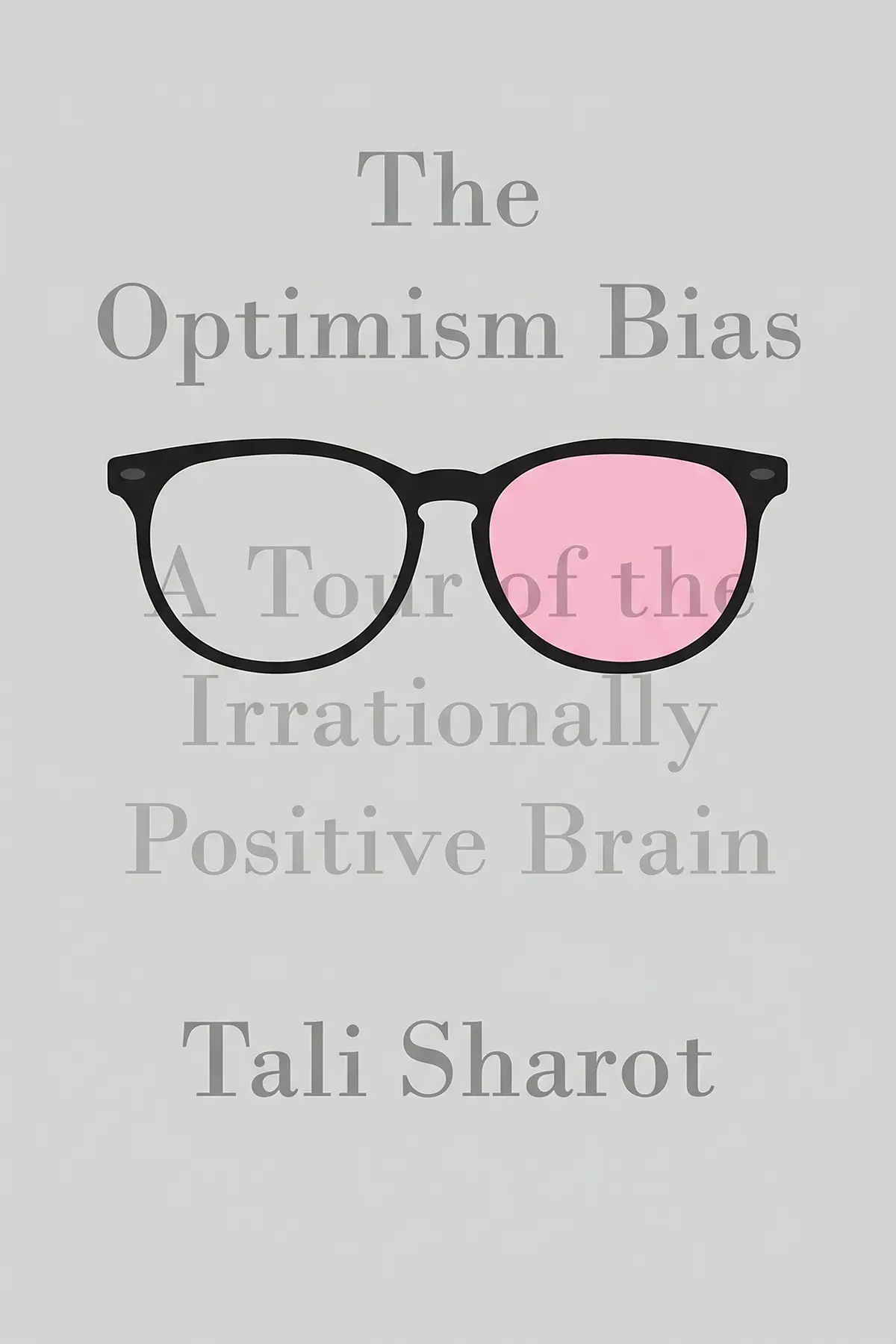
Table of Content
1. Introduction
58 sec
Many people keep their hopes low on purpose, believing it will soften the blow when things go wrong. Sharot points to a study showing that this shield does not work: students who expected little from an exam felt just as bad after doing poorly as those who expected a lot. In The Optimism Bias, Sharot, a professor of cognitive neuroscience at University College London, shows that about 80 percent of us see our own future more brightly than the facts allow.
That tilt is built into the brain. It makes us happier, keener to try and calmer about our choices, but it also lets us brush aside bad news, so it serves us best in moderation. Along the way come a basketball coach who promised a title, a dictator who ignored his spies and an opera house that ran wildly over budget. The reward is knowing when to trust your hopeful brain and when to check it.
2. Spot the rosy errors in how you see yourself
2 min 15 sec
Most people believe they would instantly notice if someone switched the photo they had just chosen. Most of them are wrong, and the same blind confidence shapes how they picture their health, their marriage and their future.
3. See what your brain does to brighten tomorrow
1 min 56 sec
A weekend barbecue appears in your mind in sharp, tasty detail, while cleaning the apartment stays a blur. That difference is no accident, and it shifts in a revealing way when someone is depressed.
4. Raise expectations to perform and learn more
2 min 01 sec
A basketball coach made a bold public promise and his team kept it. Behind that story sits a finding about failure that makes the popular habit of expecting little look like a poor bargain.
5. Face dreaded tasks early and savor good ones
1 min 41 sec
Putting off the dentist feels like sparing yourself pain. The brain keeps a different account, and it explains why optimists enjoy the days before an event more, whether that event is a holiday or a root canal.
6. Feel settled about choices and setbacks faster
1 min 50 sec
People asked to pick between two holiday spots they liked equally walked away liking them unequally. The brain change behind that shift offers a simple way to build loyalty at work and calm after hard decisions.
7. Learn how to take in bad news
1 min 47 sec
Stalin’s spies told him the exact date of the invasion, and he still did not act. A modern brain-scan experiment suggests his failure was ordinary, and that your own mind treats bad news the same way.
8. Aim for moderate optimism in money and plans
1 min 52 sec
Pessimists and extreme optimists both made worse life choices than one middle group. An opera house that took years longer than planned shows what happens when the hopeful setting runs too high.
9. Conclusion
1 min 04 sec
Sharot’s picture of the mind is a strange one: a brain that misreads the odds about its owner’s future, and is usually better off for it. The same wiring that makes newlyweds rule out divorce also keeps students learning from mistakes, lets a coach promise a title and win it, and helps someone who has lost a great deal find what is left. Its blind spot is bad news, which slides past the frontal lobe as if it were meant for someone else.
So the aim is to keep the bias and manage it. Keep your expectations high, since low ones buy no protection against disappointment. Get dreaded tasks over with early, and give yourself good things to look forward to. When a forecast concerns you, look hard at the warnings you would rather skip, and pad your cost and time estimates before you commit. After a hard choice, at work or at home, remember that you made it.
Pessimism will not spare you the sting. A measured dose of hope will carry you further.
About this book
What is this book about?
Many people keep their expectations low on purpose, thinking it will protect them from disappointment. Neuroscientist Tali Sharot argues that this does not work, and that about 80 percent of us hold an unrealistically rosy view of our own future anyway. About 80 percent of people see their own future more brightly than the statistics allow, and the tilt is built into the way the brain handles emotion and imagination. Sharot draws on brain scans, experiments and real events to show what this optimism bias does. It raises motivation and helps us learn from mistakes. It makes the wait for good things sweeter. It settles our minds after hard choices and helps us cope after losses. It also has a blind spot: the brain updates its beliefs readily after good news and barely moves after bad news, which helps explain a dictator ignoring his spies and an opera house going far over budget. Readers get a clear model of the hopeful brain and practical ways to use it. Keep expectations high, face dreaded tasks early, remind people of their own choices, and correct rosy forecasts before committing time or money.
Book Information
Who it's for
Cautious expectation setters
Professionals who keep expectations low to avoid disappointment and want to know whether it helps.
Team leaders and planners
Managers and planners who need to motivate teams but keep budgets and timelines honest.
Brain science fans
Readers curious how the brain shapes mood, hope and decisions.
About the Author
Tali Sharot
Tali Sharot is a professor of cognitive neuroscience at University College London, where she founded and directs the Affective Brain Lab. Her research studies the brain basis of emotion, decision-making and optimism, with the aim of improving well-being. She holds degrees in economics and psychology, worked in finance for a few years and served in the Israeli air force. She gave a 2012 TED Talk based on The Optimism Bias and also wrote The Influential Mind.
Ratings & Reviews
Ratings at a glance
What people think
Listeners find the book highly accessible and value the excellent quality of the writing. They also characterize it as engaging, with one listener highlighting it as a mind-bending journey into positivity. On the other hand, the standard of information gets a divided response, with some admiring the solid research and others noting a deficit in scientific debate. Perspectives on the mental health elements are similarly mixed.
Top reviews
Suda
Wow. This book is a total mind-bending journey into why humans are such irrational creatures when it comes to the future. Sharot explains that we aren't just being naive; our brains have actually evolved to be overly positive because it helps us survive and stay motivated. The chapter on the 'free choice paradigm'—showing how we value things more simply because we chose them—blew my mind, especially the part about monkeys doing it too. While some critics might find it a bit light on technical jargon, I appreciated the conversational tone that made complex concepts feel reachable. It changed how I view my own decision-making process and my occasional bouts of anxiety. We are literally out-smarting ourselves to stay happy, which is both hilarious and deeply profound when you think about it.
Show moreLeila
This book is a fascinating exploration of the internal machinery that keeps us looking on the bright side. Sharot does a brilliant job explaining how our brains don't just see the world as it is, but rather how we need it to be for our own sanity. I was especially taken with the research on 'flashbulb memories' and how our emotional state can completely rewrite our history without us realizing it. The logic behind why we overestimate our own leadership qualities or friendliness is explained with such clarity that it's hard not to laugh at our own vanity. While the author does occasionally drift into personal narratives, they usually serve to humanize the science. It’s an essential read for anyone who wants to understand why we stay hopeful even when the evidence suggests we shouldn't.
Show moreJeeranan
Finally got around to reading this, and I'm so glad I did because it's a total game-changer. The writing style is conversational and engaging, making it one of those rare science books that you can actually read for fun. I loved the section on why we are so bad at predicting what will actually make us happy—it explains so much about our consumer culture and failed relationships! Sharot manages to take complex neurological functions and explain them using everyday examples that actually make sense. There’s a perfect balance between the 'hard science' of brain scans and the 'soft science' of human behavior. Even the minor detours into public despair and group optimism provided a lot of food for thought. Highly recommended for anyone who wants to peek under the hood of their own mind.
Show moreVarinee
Ever wonder why we keep making the same mistakes despite knowing better? Tali Sharot offers a fascinating glimpse into the 'optimism bias'—that innate tendency to assume things will just work out for us personally. I found the section on how our memories of 9/11 are actually quite fallible to be particularly gripping and well-researched. While the prose is wonderfully accessible and moves at a brisk pace, I occasionally felt like the author leaned too heavily on anecdotes rather than rigorous data. It’s definitely more pop-science than a dense academic text, but the insights into how our brains are 'hardwired' for hope are genuinely enlightening. If you enjoy books that challenge your perception of reality without being too dry, this is a solid pick for your weekend reading list.
Show moreArnav
After hearing about Tali Sharot’s TED talk, I decided to give the full book a go to better understand my own habits. The core argument that our brains are essentially 'rose-tinted' by default is presented through a series of engaging and often surprising studies. I particularly liked the exploration of why Friday feels better than Sunday—it’s all about that sweet anticipation versus the dread of the work week! To be honest, some of the sections on the 2008 financial crisis felt a bit simplistic compared to the rest of the neuroscience, but the overall message is powerful. It’s a wonderful reminder that a little bit of irrationality is actually what keeps us healthy and moving forward in a chaotic world. The writing is smooth and never feels like a slog, which I really appreciated.
Show moreJulian
As someone who struggles with a more pessimistic outlook, I found this to be a surprisingly comforting read. Sharot argues that optimism isn't just about being 'happy-go-lucky,' but is actually a vital evolutionary tool for survival and health. The data showing how optimists live longer and recover faster from illness was eye-opening and grounded the theory in reality. My only real gripe is that the book gets a little repetitious toward the end, and some of the examples felt a bit dated. Still, the way she ties together 9/11 memories with future predictions is clever and makes for a very cohesive narrative. It's a great choice for anyone interested in the intersection of psychology and biology, offering a much-needed perspective on how we perceive risk and reward.
Show moreManop
Interesting topic, but the treatment felt somewhat flat and repetitive by the halfway point. Dr. Sharot clearly knows her stuff, yet she spends an awful lot of time on pop-culture references like the Lakers and Lance Armstrong instead of the raw data I was craving. Truth is, it frequently felt like a long-form magazine article that had been stretched out to fill a book-length manuscript. I did enjoy the discussion on how optimism acts as a shield against clinical depression, but the lack of a technical appendix or a deeper look into the limitations of current research was a letdown. It's a quick, worthy read if you're new to psychology, but seasoned science buffs might find the superficial approach a bit frustrating. Not a bad book, just not the definitive work I was hoping for.
Show moreOm
The information quality in this book is a bit of a mixed bag, though the central premise remains captivating throughout. On one hand, you get some great research on the amygdala and frontal cortex; on the other, you get long-winded stories about the author's travels. Frankly, I think the book could have been about fifty pages shorter if she had trimmed the anecdotal fat. I found the 'Thatcher illusion' diagram and the discussion on cognitive dissonance to be the highlights, but the lack of a glossary made some of the terms hard to track. It’s definitely accessible to the masses, but if you're looking for a dense academic breakdown of neural pathways, you might be disappointed. It’s more of a fun, insightful introduction to the concept of psychological bias than a heavy-duty textbook.
Show moreApichat
Picked this up expecting a rigorous deep dive into neuroscience, but I was quickly disappointed by the excessive political detours and irrelevant personal stories. Within the first twenty pages, the author is already name-dropping the Kennedys and making strange comparisons about Margaret Thatcher's appearance. What does any of that have to do with the actual mechanics of the human brain? To be fair, the concept of the optimism bias is compelling, but the execution here feels scattered and strangely biased for a book about scientific objectivity. The anecdote about the pilot risking lives based on a whim felt completely out of place and poorly explained. I’d much rather stick to Oliver Sacks for my neurology fix since he stays focused on the patients rather than his own worldview.
Show morePaisley
Not what I expected at all. I wanted a serious book on neuroscience, but what I got was a collection of incoherent political rants and 'look-at-me' travel logs. Why are we talking about Barack Obama and the Kennedys in a book that is supposed to be about the biological basis of optimism? It felt like the author was more interested in being a media personality than a scientist, which is a shame because the topic is so important. The science that is there feels buried under mountains of filler and kitschy analogies that don't actually clarify the material. I honestly felt like my time was wasted, and I ended up skimming the last few chapters just to be done with it. If you want real neuroscience, skip this and find a book that respects the reader's intelligence instead of trying to be trendy.
Show moreQuestions about this book
What is the optimism bias according to Tali Sharot?
It is the tendency to expect a better personal future than the facts support. Sharot cites a study by Yale psychologist David Armor finding that about 80 percent of people have it: they overrate their chances of good events, such as a promotion, and underrate their chances of bad ones, such as a car crash. The bias is about our own lives and our loved ones, and much less about other people.
Do low expectations protect you from disappointment?
Sharot argues they do not. In a study of students after a psychology exam, those who had expected little felt just as bad about a poor result as those who had expected a lot. High expectations also bring benefits: they raise motivation, and they help the brain notice and learn from mistakes, as Sara Bengtsson’s priming study with students showed.
Where does optimism come from in the brain?
Sharot links the bias to two regions: the amygdala, which processes emotion and fear, and the rostral anterior cingulate cortex, or rACC, which regulates emotional areas and dampens fear signals. A tight connection between them makes positive future events feel vivid and negative ones blurry. In depression the connection works poorly, and mildly depressed people tend to lack the bias altogether.
What are the dangers of being too optimistic?
The optimistic brain updates its beliefs after good news but barely after bad news, which Sharot showed in an experiment about cancer risk. That helps explain Stalin ignoring warnings of the 1941 German invasion and the Sydney Opera House rising from a $7 million estimate to $102 million. Economists Manju Puri and David Robinson found that moderate optimists made more sensible life choices than extreme optimists or pessimists.
How can I apply The Optimism Bias at work?
Remind employees and customers that they chose your company or service, since recalling a choice makes people value it more. When planning projects, follow the idea behind the British government’s Green Book and add deliberate adjustments to your cost, benefit and time estimates. Set team expectations high enough to motivate and teach, and pay special attention to warning signs that a plan is too rosy.
Readers also enjoyed

A Short History of Nearly Everything
Bill Bryson


A Thousand Brains: A New Theory of Intelligence
Jeff Hawkins



A Liberated Mind: How to Pivot Toward What Matters
Steven C. Hayes


Acting with Power: Why We Are More Powerful Than We Believe
Deborah Gruenfeld


AUDIO SUMMARY AVAILABLE
Listen to The Optimism Bias in 15 minutes
Get the key ideas from The Optimism Bias by Tali Sharot, plus 5,000+ more nonfiction titles.
- 5,000+ titles
- Listen as much as you want
- 7-day free trial
- Cancel anytime









