

16 min
Available in: English
The One Device: The Secret History of the iPhone
Shows that the iPhone grew from a small team at Apple and a century of earlier inventions, and that it still depends on deadly mines and harsh factories that most of its users never see.
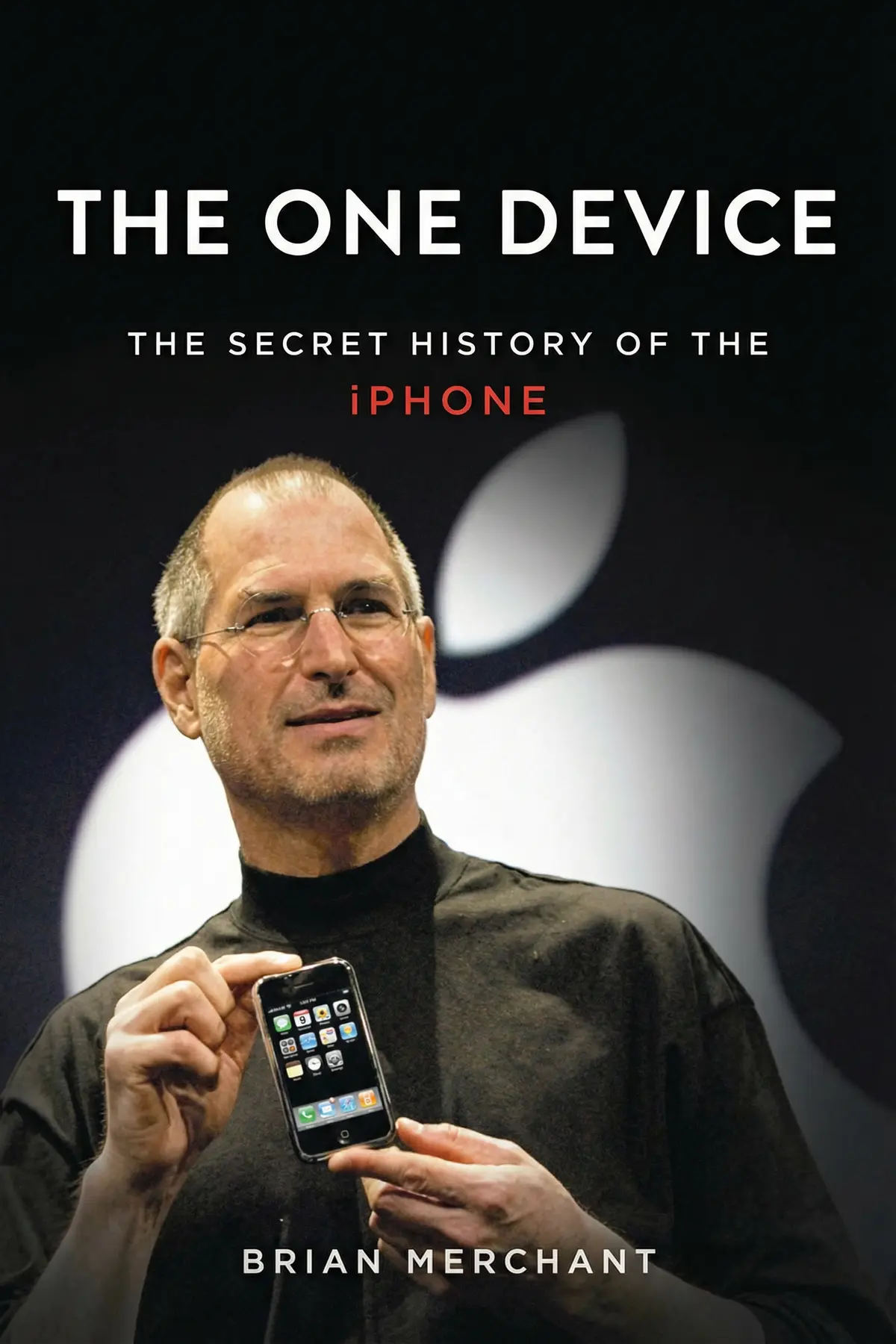
Table of Content
1. Introduction
58 sec
Most of us use an iPhone every day and know almost nothing about where it came from, or who paid for it. In The One Device, technology journalist Brian Merchant shows that the phone credited to Steve Jobs actually started with a few Apple engineers experimenting without his knowledge. Its family tree goes back even further, to a Swedish car phone from 1910.
Merchant’s case is that the iPhone is not one man’s invention. It is the visible end of a century of borrowed breakthroughs, from batteries to speech recognition, and of hidden labor in Bolivian mines and Chinese factories. Follow that thread and a sleek object turns into a long chain of people.
By the end, you will be able to tell the real story of the most successful product of our time. You will also have a habit worth keeping: asking who stands behind anything that looks like the work of a lone genius.
2. Give credit to the team behind the genius
1 min 58 sec
The iPhone outsold Harry Potter by hundreds of millions and beat Marlboro on profit. Yet the people who first imagined it were meeting in a room their famous boss did not know about.
3. Good ideas wait decades for the right parts
1 min 49 sec
A wireless flip phone existed during the First World War, and a touchscreen smartphone with apps appeared in the 1990s. Both came long before Apple’s. So what held them back for so many years?
4. Today's emergencies fund tomorrow's breakthroughs
1 min 59 sec
The battery that gets you through the day traces back to soaring fuel prices and an oil company’s research budget. Its first versions had a habit that would have made them impossible to carry.
5. Never judge a feature by its first version
1 min 56 sec
In 2007, cheap Nokia phones took better pictures than Apple’s new device, and Apple was not even sure it needed a camera. A front-facing lens added three years later changed how the world photographs itself.
6. Decades of research taught your phone to listen
1 min 58 sec
Siri answers billions of questions a week and seems to have appeared out of nowhere. Its real starting point was a giant computer, a young researcher’s love of language and a vocabulary of a few hundred words.
7. See the human price inside your phone's metal
1 min 56 sec
A tiny amount of tin holds your phone’s circuits together. Merchant traced where it comes from, and found a mountain with a grim local nickname and an island where the ground itself kills.
8. Look behind the walls where phones get built
2 min 05 sec
One factory near Shenzhen once housed more workers than many cities have residents. What happened there in 2010, and how the companies responded, says a great deal about what they chose to protect.
9. Conclusion
1 min 21 sec
Hold an iPhone and you are holding a crowd. There is the Swedish inventor with his wired car phone, the IBM engineer whose brick-sized Simon came too early, the chemist and the physicist who turned an oil scare into a battery that no longer catches fire, and the Stanford researcher who taught a giant computer around 560 words. There are also people the story rarely mentions: children in the tunnels of Cerro Rico, miners under the unstable walls of Bangka Island, assembly workers at a Shenzhen plant where nets went up to catch falling workers, and Shanghai suppliers sealed off by guards and barbed wire. Merchant takes the myth of one man and one moment and replaces it with a long chain of invention and suffering.
That picture is useful well beyond phones. When a success is credited to a single leader, look for the small team that tinkered first, as Strickon, Christie, Chaudhri and Ording did. When an idea of yours stalls, ask whether its parts are ready, the way the Simon’s were not. And when a product feels like magic, follow one of its materials back to the ground it came from.
The device in your pocket was never the work of one person, and its true price was never only the one on the receipt.
About this book
What is this book about?
The iPhone is one of the best-selling and most profitable products ever made, and the usual story of its creation fits in two words: Steve Jobs. Technology journalist Brian Merchant argues that the real story is much larger, and much less comfortable. Merchant traces the phone back to a small group of Apple engineers who experimented with touch interfaces without Jobs knowing. He goes further back still: to a wired Swedish car phone from 1910, an IBM smartphone the size of a brick, a battery born from the 1970s oil crisis, a self-portrait from 1839 and a speech-recognition program built at Stanford and Carnegie Mellon decades before Siri. Then he follows the materials and the labor. The tin in an iPhone's solder may come from a Bolivian mountain where millions have died, and the phones are put together in Chinese factories where workers took their own lives in 2010. Readers come out able to tell the true history of the device in their pocket. They also get a sharper habit of mind: looking for the many people behind any success credited to one person, and asking what any product really costs.
Book Information
Who it's for
Curious who built smartphones
Tech users who want to know who really built the phone they use every day.
Founders and product teams
Founders and product people curious how one famous device grew out of decades of half-ready ideas.
Questioning tech's human cost
Readers who wonder what their gadgets cost the miners and factory workers who make them.
About the Author
Brian Merchant
Brian Merchant is an American technology journalist whose reporting looks at the social and environmental side of technology and the companies behind it. His work has appeared in The New York Times, Wired, The Atlantic and The Guardian. The One Device, published in 2017, became a bestselling history of the iPhone. He later wrote Blood in the Machine, wrote a technology column for the Los Angeles Times, co-founded Vice Media's speculative fiction project Terraform and runs a newsletter on how big tech and generative AI affect workers and consumers.
Ratings & Reviews
Ratings at a glance
What people think
Listeners find the book holds their attention and is exceptionally detailed, with one review highlighting its comprehensive look at various inventions. Furthermore, the historical outlook is well-regarded; one listener describes the book as a stunning achievement of modern history. The prose style, however, generates varying feedback, with some considering it beautifully written while others express disappointment. Finally, the book’s intellectual depth and value for time receive mixed reactions.
Top reviews
Zoe
Ever wonder how that glass slab in your pocket actually came to be? This isn’t just another hagiography of Steve Jobs; instead, it’s a deep dive into the messy, global, and often dark history of the iPhone. Merchant traveled everywhere from the salt flats of Bolivia to the guarded gates of Foxconn to track down the materials and labor that make the “Jesus Phone” possible. I was particularly gripped by the sections on the evolution of multi-touch technology, which apparently dates back way further than 2007. While some might find the heavy focus on raw mineral mining a bit much, it provides a sobering perspective on the environmental cost of our gadgets. It’s a stunning achievement of modern history that forced me to look at my screen differently. Truth is, the story of innovation is far more collaborative than the marketing leads us to believe.
Show morePensri
The chapter on Siri alone is worth the price of admission. I’m a total techie, and even I was surprised by the 'secret history' revealed here. It’s wild to think that Steve Jobs actually resisted the iPhone project for years! Merchant’s writing is punchy and funny, making complex topics like human-computer symbiosis feel accessible to a layperson. I couldn't believe the stories about the Foxconn 'suicide nets' and the intense pressure the assembly workers face; it really makes you rethink your relationship with your phone. Some might call it a bit hyperbolic when he says the iPhone is the 'foundational instrument of modern life,' but after reading this, it’s hard to disagree. It’s a fun, fast-paced ride through the history of the world's most profitable product.
Show moreWatcharaporn
Wow, what a massive undertaking this book must have been for Merchant. He managed to crack the vault of Apple’s secrecy and tell a story that is as much about human perseverance as it is about technology. I loved the 'everything-iphone' approach. From the scavengers in third-world dumps to the high-level executives, he covers the entire lifecycle of the device. The language is plain enough that you don't need a PhD in computer science to follow along, yet it never feels like it's 'dumbing down' the history. It is a stunning achievement that provides a microcosm of how innovation actually happens in the real world. If you enjoyed the Steve Jobs biography by Isaacson, you need to read this for the other side of the story.
Show moreSun
Brian Merchant takes 'investigative journalism' to a whole new level here. The sheer scale of his research—8,000 photos and 200 hours of interviews—is evident on every single page. I loved the way he challenged the myth that Steve Jobs personally invented every facet of the device; the reality of the 'misfit crew' of designers working in secret is much more compelling. The writing style is generally engaging, though it occasionally dips into being a bit preachy regarding the ethics of capitalism. Still, the anecdotes about the internal 'Purple' team and their paranoid secrecy are gold. It’s a thought-provoking read that balances the high-tech glamour of Silicon Valley with the gritty reality of the global assembly line. Definitely worth your time if you want the full picture, not just the PR version.
Show morePun
Finally, a book that deconstructs the 'lone genius' narrative surrounding Apple. While Jobs’ volcanic temper and marketing brilliance are present, the real stars here are the engineers who risked their jobs to work on the device in secret. Merchant does a fantastic job identifying the contributors who are usually erased from the corporate history books. The section on the development of Siri was particularly fascinating, revealing a surprisingly intimate relationship between the creator and the AI. I did find the book a little long-winded at times, especially when it goes into the deep history of every single mineral used in the screen. However, for anyone interested in how innovation actually happens in a vacuum of secrecy, this provides a rare, honest look behind the curtain.
Show moreMo
As someone who follows tech news closely, I was surprised by how much I didn't know about the iPhone's ancestry. This isn't just about 2007; it's about a century of antecedents that led to the 'Jesus Phone.' Merchant is an interesting guy who clearly put his boots on the ground to get this story. He captures the paranoid atmosphere of the 'Purple' project perfectly, describing how the secrecy actually impeded progress by siloing talented engineers. My only real gripe is that the tone can get a bit preachy when discussing the environmental impact. We get it—mining is bad. Still, the historical perspective is brilliant and the prose is far more polished than your average business book. It's a comprehensive account that every iPhone user should probably glance through.
Show moreSue
The narrative structure is fascinating, weaving together the 'secret' Apple meetings with the brutal reality of lithium mines. Merchant manages to avoid the trap of just writing a 'Jobs was a genius' story. Instead, he highlights the hardware hackers and software designers who did the heavy lifting. I found the sections on the 'around-the-world' trip to be some of the most eye-opening parts of the book, even if they occasionally felt like a travelogue. It’s a bit over my head at times when it gets into the chemistry of the electronics, but the human stories kept me turning the pages. The book is definitely long, but it feels necessary to cover the sheer scale of the iPhone's impact on our planet.
Show moreDing
This book wasn't exactly what I signed up for when I hit 'buy'. I was looking for a detailed technical breakdown of the original iPhone creation process within the walls of Cupertino, but that only makes up about a quarter of the text. Instead, you get chapters upon chapters of esoteric trivia about 1950s touch screens and the specifics of rare earth mineral excavation in third-world countries. Look, the journalism is solid, but the pacing felt incredibly dragged out in the middle sections. Merchant is clearly a talented writer, but his tendency to veer off into the supply chain makes the book feel like a general electronics overview rather than a focused Apple history. It’s okay if you’re a complete novice to tech politics, but seasoned technophiles might find themselves skimming to get to the 'meat' of the Apple interviews.
Show moreWachira
To be fair, the research on display in The One Device is staggering, yet it often feels unnecessarily bloated. I appreciated the deep dives into the 1917 Finnish patents and the 1994 IBM smartphone, but did we really need a hundred pages on the logistics of lithium mining? The book suffers from a bit of an identity crisis—is it an Apple exposé or a manifesto on the horrors of the global supply chain? Merchant's access to former Apple employees is impressive, considering how tight-lipped they usually are, but those insights are buried under mountains of trivia. It’s a decent enough read for a flight, but I wish it had been edited down to a leaner, more focused narrative. Not a bad book, just a bit of a slog in the middle.
Show moreNina
I really wanted to like this, but the author's bias is distracting. Merchant spends a significant portion of the book implying that Apple is uniquely culpable for the systemic issues of global mining and labor, which feels like a bit of a stretch given that these are industry-wide problems. Frankly, his credibility took a hit for me when I noticed several technical statements that felt contested or just plain wrong. If you want a book that actually explains how the iPhone was engineered, keep looking. This is more of a sociological critique disguised as a tech history. The narrative is disjointed, jumping from Bolivian mines to 19th-century patents without much of a cohesive thread. It felt like a paid 'around-the-world' vacation for the author that resulted in a bloated, disappointing mess.
Show moreQuestions about this book
What is The One Device by Brian Merchant about?
It is a history of the iPhone that goes far beyond Steve Jobs. Merchant traces the phone to a small Apple team experimenting with touch interfaces, then to earlier inventions such as a 1910 Swedish car phone, IBM’s Simon smartphone, the lithium-ion battery and early speech recognition. He also reports on the mines and factories where the phone’s materials are dug and its parts assembled.
Did Steve Jobs invent the iPhone?
Not alone, according to Merchant. In the early 2000s a group of Apple employees, including Joshua Strickon, Greg Christie, Imran Chaudhri and Bas Ording, met without Jobs knowing to explore new ways of using computers, especially multitouch. Their crude prototype became the starting point for the iPhone, which itself rested on a century of work by other inventors.
What was the first smartphone before the iPhone?
Merchant names the Simon Personal Communicator, built in the 1990s by IBM engineer Frank Canova Jr. It was the first mobile phone with a computer inside, and it had a touchscreen and apps. Canova wanted to add GPS and a stock ticker, but the hard drive could not hold them, and the phone was already the size of a brick. Its successor, the Neon, never went on sale.
What does the book say about the human cost of the iPhone?
Merchant traces the tin in the phone’s solder to Cerro Rico in Bolivia, where four to eight million people have lost their lives since the sixteenth century, and to deadly pits on Indonesia’s Bangka Island. He also describes the Foxconn plant near Shenzhen, where 14 workers took their own lives in 2010, and supplier sites in Shanghai guarded by barbed wire and facial-recognition cameras.
Readers also enjoyed



7 Powers: The Foundations of Business Strategy
Hamilton Helmer






Alibaba: The House That Jack Ma Built
Duncan Clark
AUDIO SUMMARY AVAILABLE
Listen to The One Device in 15 minutes
Get the key ideas from The One Device by Brian Merchant, plus 5,000+ more nonfiction titles.
- 5,000+ titles
- Listen as much as you want
- 7-day free trial
- Cancel anytime









