
13 min 28 sec
Available in: English
The Motive: Why So Many Leaders Abdicate Their Most Important Responsibilities
Explains why so many capable leaders avoid the hardest parts of their job. It shows how choosing responsibility over reward changes five duties: building the team, coaching, hard conversations, meetings and repetition.
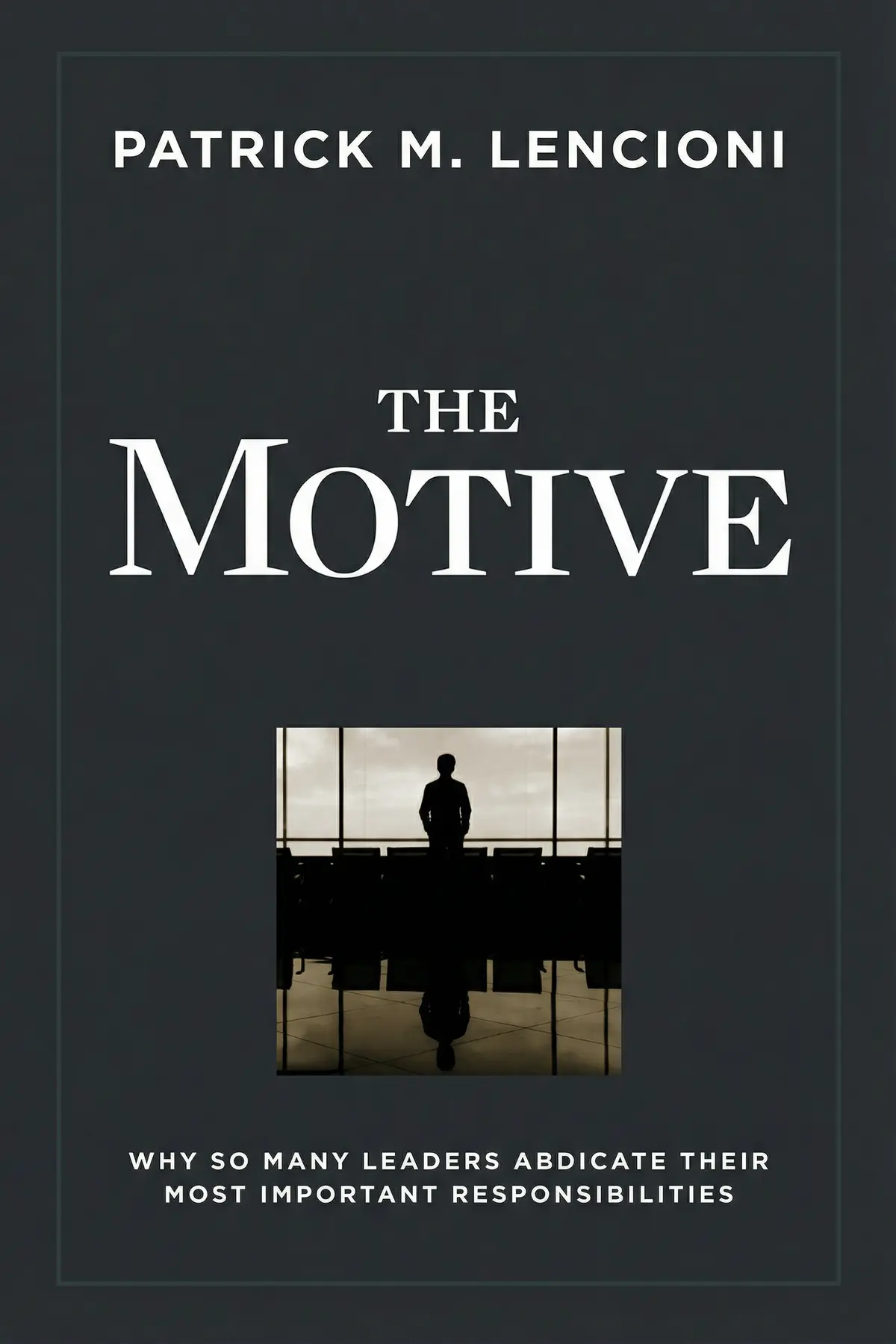
Table of Content
1. Introduction
1 min 00 sec
Many managers put real effort into strategy and numbers, yet keep dodging the awkward parts of the job, and their teams pay for it. In The Motive, consultant Patrick M. Lencioni traces all that dodging back to one root: the reason a person chose to lead. Leaders who see the role as a reward, with its power, money, status and fun, skip the unglamorous work. Leaders who see it as a responsibility do that work, and their organizations show the difference.
Lencioni makes his case through a fable about two rival security company bosses. He then names five duties that reveal which motive is really in charge. The idea running through everything is simple: how you lead follows from why you lead, and the proof is whether you take on the jobs nobody applauds. Those five duties also work as a mirror. Check your own week against them and you can see where comfort has been making your decisions for you.
2. Spot the motive behind how you lead
1 min 59 sec
A struggling chief executive goes looking for a consultant and meets his most successful rival instead. What that rival tells him has nothing to do with strategy, and it reframes what a leadership title is for.
3. Own the job of building your top team
1 min 37 sec
Chief executives praise their leadership teams in almost every speech. Then many of them hand the work of shaping that team to someone else, for reasons that say more about the leader than about the team.
4. Trust your people and still manage them well
1 min 48 sec
Many senior leaders proudly say they trust their teams too much to manage them. Lencioni hears that line differently, and he explains what management really involves once the paperwork is set aside.
5. Say the uncomfortable thing before it grows
1 min 47 sec
Leaders often tell themselves they avoid awkward feedback out of kindness. Lencioni names the real reason, and a Ford chief executive shows how directness and warmth can work together in the same conversation.
6. Meetings and messages that keep a team aligned
2 min 06 sec
Most leaders find meetings tedious and repeating themselves embarrassing. Lencioni argues both feelings lead them astray, and a Southwest Airlines chief executive shows what saying the same thing many times can achieve.
7. Make service the standard you expect from leaders
1 min 58 sec
Lencioni ends by moving from the boardroom to society. He fears a generation learning leadership from self-serving bosses, and he gives employees, executives and ordinary citizens a part in changing what we accept.
8. Conclusion
1 min 13 sec
Lencioni’s argument turns leadership into a question of honesty with yourself. Skills, strategy and charisma all count, but they rest on an earlier choice about why you took the job. Take it for the rewards and the hard parts slip away one by one, often without your noticing. Take it as a responsibility and the hard parts become the job.
That is why Liam Alcott’s advice to a struggling rival starts with motive. Shay Davis wanted a consultant’s playbook. What he needed was a reason to do the unglamorous work: building his team himself, coaching each direct report, raising the awkward issue, fixing his meetings and repeating the same message until people believe it.
If you lead others, the book points to a simple audit. Look at your calendar for last week, find the duty you handed to someone else or put off, and take it back. If you do not lead yet, notice which bosses ask what they will gain and which ask how they can help, and speak up for the second kind.
Lencioni’s best rookie understood this on his first day. Making the team is where the work begins, and a leadership title marks the same starting line.
About this book
What is this book about?
Plenty of executives are smart, strategic and hardworking, yet their teams still feel adrift. Patrick M. Lencioni traces the problem to something few leaders examine: their reason for leading at all. Some see the role as a reward, a source of power, money, status and fun. Others see it as a responsibility to the people they lead. Lencioni tells the story through a fable. Shay Davis, a struggling new chief executive at Golden Gate Security, goes looking for a consultant and ends up face to face with his most successful rival, Liam Alcott of Del Mar Alarm. From that meeting comes the book's test. Leaders who are in it for the rewards tend to skip five duties: building their own leadership team, managing their direct reports, holding uncomfortable conversations, running good meetings and repeating key messages until people act on them. Readers get a mirror for their own habits and a practical picture of the alternative, drawn from examples such as Alan Mulally at Ford and Gary Kelly at Southwest Airlines. Lencioni also makes a wider plea: employees, executives and citizens should all expect leaders who serve.
Book Information
Who it's for
CEOs and founders
Chief executives and founders whose teams seem to drift despite a sound strategy.
First-time and middle managers
New and mid-level managers who suspect they avoid feedback, coaching or meetings.
Wanting words for leadership
Employees who want language for what good leadership should look like and the confidence to ask for it.
About the Author
Patrick M. Lencioni
Patrick M. Lencioni founded The Table Group in 1997 to help organizations become healthier, and he consults to chief executives and their leadership teams. His clients have ranged from companies and sports teams to the military, nonprofits, universities and churches. He earlier worked at Sybase, Oracle and Bain and Company, and he served on the national board of the Make-A-Wish Foundation of America. He is best known for The Five Dysfunctions of a Team, a business fable about teams that became a New York Times best seller.
Getting Naked: A Business Fable About Shedding The Three Fears That Sabotage
Patrick M. Lencioni

The Advantage: Why Organizational Health Trumps Everything Else in Business
Patrick M. Lencioni
The Five Dysfunctions of a Team: A Leadership Fable
Patrick M. Lencioni
Ratings & Reviews
Ratings at a glance

What people think
Listeners describe this work as accessible and straightforward, featuring clearly presented ideas and brief chapters that facilitate a fast pace. They value the revelatory viewpoint on why people lead and how the text pushes them to evaluate their own intentions. Listeners prize the book's functional advice and find the material absorbing, with one listener highlighting how it captures attention right from the beginning.
Top reviews
Chloe
Ever wonder why some leaders seem to flourish while others just coast on their titles? Lencioni hits the nail on the head by distinguishing between reward-centered and responsibility-centered motives. It’s a short, punchy read that challenges you to look in the mirror and ask why you actually want the job. Most people want the status and the office, but few want the grueling work of managing individuals and having those awkward, difficult conversations that actually move the needle. While the fable format is a bit simplistic, the message about being a 'service-centered' leader is vital. I finished it in one sitting and immediately started rethinking my approach to our weekly team meetings and how I hold my staff accountable.
Show moreSing
This book is a swift kick in the pants for anyone who thinks they’ve 'made it' just because they have a fancy title. The concept of the Chief Reminding Officer (CRO) really resonated with me because I’ve definitely been guilty of under-communicating my vision to the team. Lencioni argues that a leader's job is often repetitive and tedious, involving constant reminders and difficult accountability sessions rather than just glamorous strategy. It isn't about the perks; it’s about the sacrifice required to help your team actually succeed. I appreciated how palatable the information was, even if some of the examples felt a little too perfect for real-world application. Definitely a must-read for new managers.
Show moreVipawan
To be fair, I initially scoffed at the idea of a 'leadership fable,' but I was hooked by the end of the first chapter. The way Lencioni contrasts Shay’s failing leadership with Liam’s service-oriented approach provides a very clear roadmap for what a CEO should actually be doing. It’s not about the prestige or the board meetings; it’s about the 'shit' work that nobody else wants to do. I particularly liked the section on the five omissions of reward-centered leaders, especially the point about avoiding difficult conversations. It’s uncomfortable to confront people, but avoiding it just sows the seeds of failure. This is a very insightful and practical guide for anyone in charge.
Show morePooja
Honestly, this should be required reading for every person currently sitting in a C-suite or aspiring to get there. It’s a sobering look at the true cost of leadership and the sacrifice it requires of your time, energy, and ego. Many people view a promotion as a chance to do less work, but Lencioni argues it’s actually an invitation to do the hardest work of all. The focus on 'responsibility-centered' leadership is a refreshing change from the typical 'hustle culture' business books. It’s about serving the human beings who depend on the company. It’s an easy read, but it carries a very heavy and necessary message for today's bosses.
Show moreEthan
I've been managing people for over a decade, and yet this little book managed to point out several blind spots I didn't even know I had. I’ve definitely been guilty of avoiding those awkward corrective feedback sessions because they’re just so draining. But reading about the 'motive' behind that avoidance was a real wake-up call for me. The fable about Golden Gate Security is an engaging way to digest the theory, making the lessons feel much more practical than a dry textbook. It’s a great, quick read that challenges you to be a more 'executing' officer rather than just an executive. Highly recommended for any level of management, from CEOs to team leads.
Show moreBoy
As a long-time fan of Lencioni’s work, I found this to be one of his most convicting books yet. Most leadership books focus on *how* to lead, but this one forces you to examine *why* you are leading in the first place. The distinction between viewing leadership as a reward versus a responsibility is a game-changer for organizational health. Truth is, many of us avoid running meetings or managing subordinates because it’s exhausting work that doesn't feel 'strategic.' However, Lencioni proves that these are the very things only a leader can do. The book is short enough to read on a flight but deep enough to keep you thinking for weeks about your true purpose.
Show moreMattanee
The dialogue between Shay and Liam feels a bit forced at times, but the underlying message about the motive of leadership is absolutely undeniable. I’ve seen so many executives abdicate their responsibility for developing their leadership teams because they’d rather focus on the 'fun' parts of the business. This book exposes that behavior for what it is: selfishness disguised as being 'too busy.' It’s an eye-opening perspective that shifts the focus from 'me' to 'we.' I do wish there was a bit more 'meat' in the middle of the book, as it feels a little light on data. Still, the practical advice on holding people accountable is worth the price of admission alone.
Show moreHom
Look, the content here is gold even if the fictional wrapper is a bit thin and repetitive. I've worked for several 'reward-centered' bosses who only cared about their compensation and perks, and this book perfectly describes why their departments eventually crumbled. The idea that a leader must be the Chief Reminding Officer is such a simple but profound takeaway for anyone managing a team. We often think we've communicated enough, but Lencioni reminds us that we have to say it again and again. My only real gripe is that the book is so short for the price. You can finish it in about ninety minutes, but the lessons will definitely stick with you.
Show moreEleni
Finally got around to reading this, and while the leadership insights are top-tier, the 'fable' part was a struggle. The dialogue between the two CEOs, Shay and Liam, felt incredibly stilted and at times just plain cheesy. I found myself rolling my eyes at the constant nodding and smiling during their intense strategy sessions; it felt like bad fiction 101. It’s a very quick read—maybe too quick for the $15 price tag on Kindle—but I can't deny that the 'five omissions' section at the end is pure gold. It makes you realize how many leaders avoid the 'messy' stuff like giving corrective feedback or running effective meetings. Good content, but the fictional wrapper needs work.
Show moreWilliam
Not what I expected given the massive hype around Patrick Lencioni's other titles. Frankly, I found the story of Shay Davis and his struggling security company to be pretty thin and the writing style was basic at best. It felt like a 20-page essay padded out into a 160-page book with a lot of 'bad fiction' filler that didn't add much value. If you strip away the cheesy fable, the actual advice is just common sense: work hard, talk to your employees, and don't be a jerk. I don’t think it’s worth the high price for such a short, simplistic read. There are much better, more comprehensive leadership books out there.
Show moreQuestions about this book
What is The Motive by Patrick Lencioni about?
Lencioni argues that a leader’s reason for leading shapes everything they do. Leaders who treat the role as a reward, a source of power, money, status and fun, avoid the unglamorous work. Leaders who see it as a responsibility take that work on. He makes the case through a fable about Shay Davis of Golden Gate Security, who looks for a consultant and meets his successful rival, Liam Alcott of Del Mar Alarm.
What are the five responsibilities in The Motive?
Lencioni names five duties that reward-driven leaders tend to skip. They are building their own leadership team instead of handing it to human resources, managing their direct reports and making sure those reports manage their own people, holding uncomfortable conversations, running engaging meetings that lead to good decisions, and communicating key messages again and again. He cites studies suggesting employees need to hear an important message at least seven times.
How can I tell if I lead for the wrong motive?
Look at which of the five duties you avoid. If you think working on team relationships is pointless, rely on trust as a reason not to manage people, put off hard feedback to spare your own discomfort, dread meetings or dislike repeating yourself, Lencioni would say the reward motive may be in charge. His fix is to reclaim those duties one at a time.
Who should read The Motive?
It suits chief executives, founders and managers at any level who want to check whether they are doing the hard parts of leading. It also speaks to employees and citizens, because Lencioni asks everyone to expect leaders who serve. Readers who like learning through a story will find the fable of two rival security company bosses easy to follow.
Readers also enjoyed




A Year with Peter Drucker: 52 Weeks of Coaching for Leadership Effectiveness
Joseph A. Maciariello



Acting with Power: Why We Are More Powerful Than We Believe
Deborah Gruenfeld

All In: How Great Leaders Build Unstoppable Teams
Mike Michalowicz


AUDIO SUMMARY AVAILABLE
Listen to The Motive in 15 minutes
Get the key ideas from The Motive by Patrick M. Lencioni, plus 5,000+ more nonfiction titles.
- 5,000+ titles
- Listen as much as you want
- 7-day free trial
- Cancel anytime









