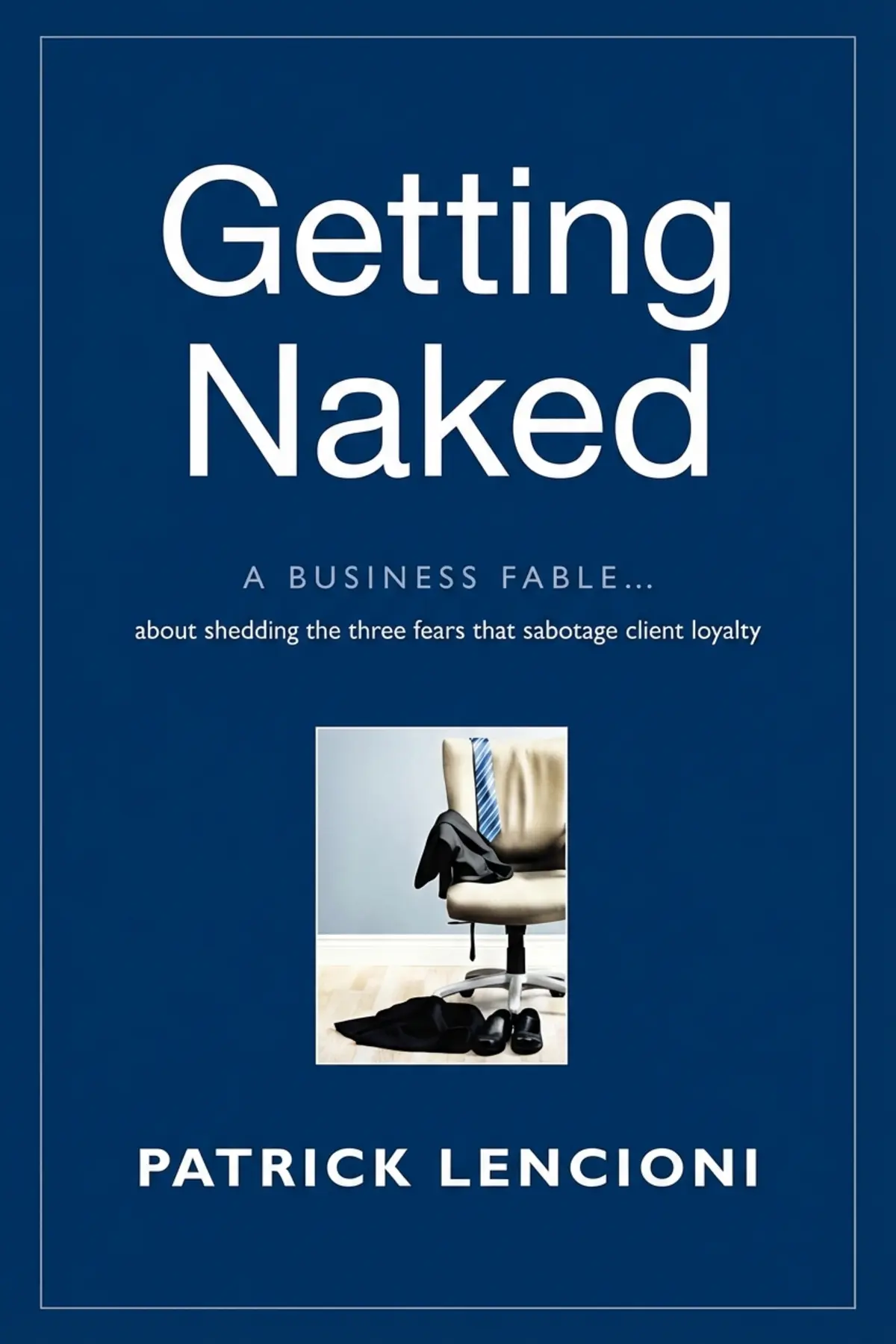
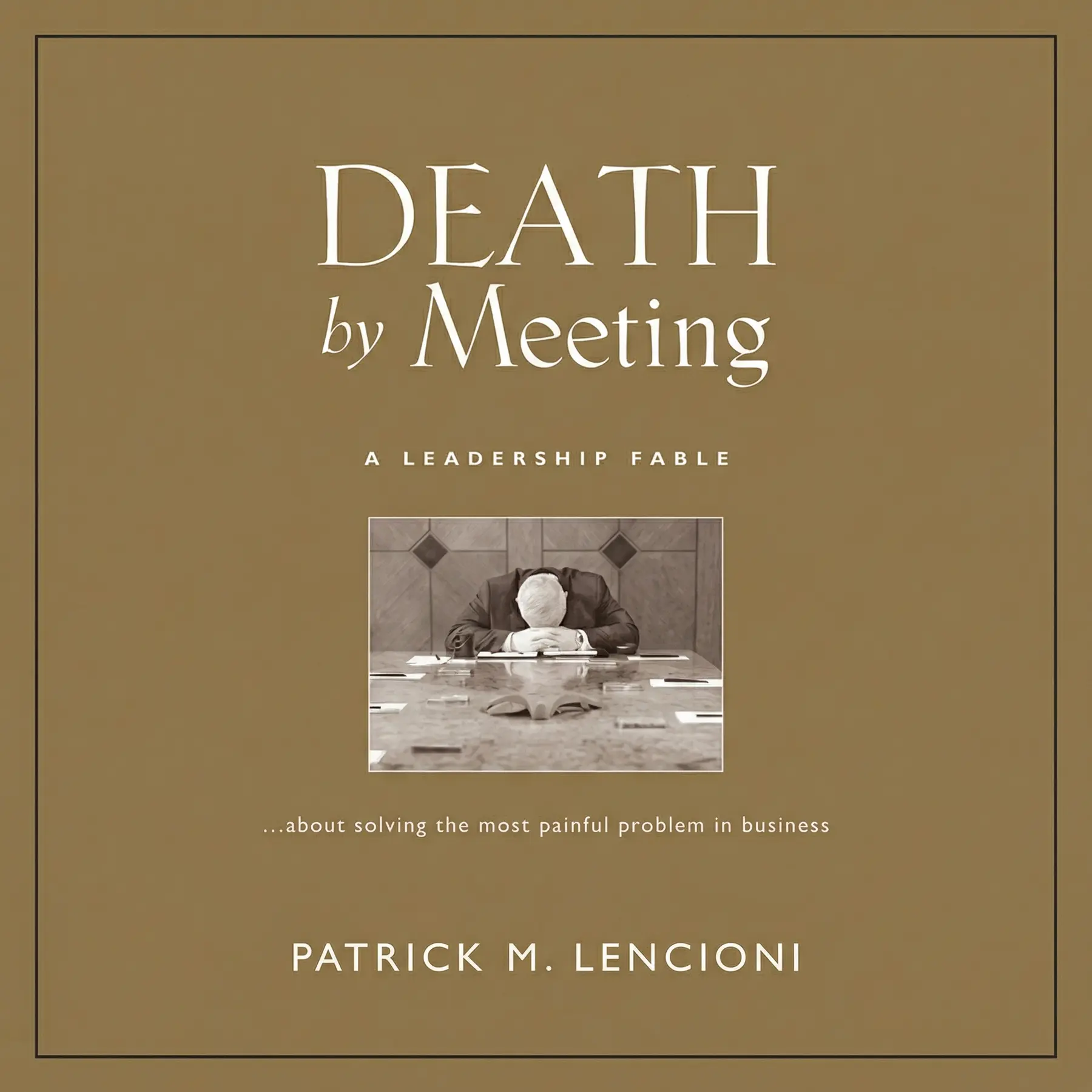
Getting Naked: A Business Fable About Shedding The Three Fears That Sabotage
Patrick M. Lencioni
 English
 ไทย
Shows why most meetings feel like wasted hours and how to fix them by surfacing honest disagreement early and giving daily, weekly, monthly and quarterly meetings their own distinct purpose and format.
1 min 01 sec
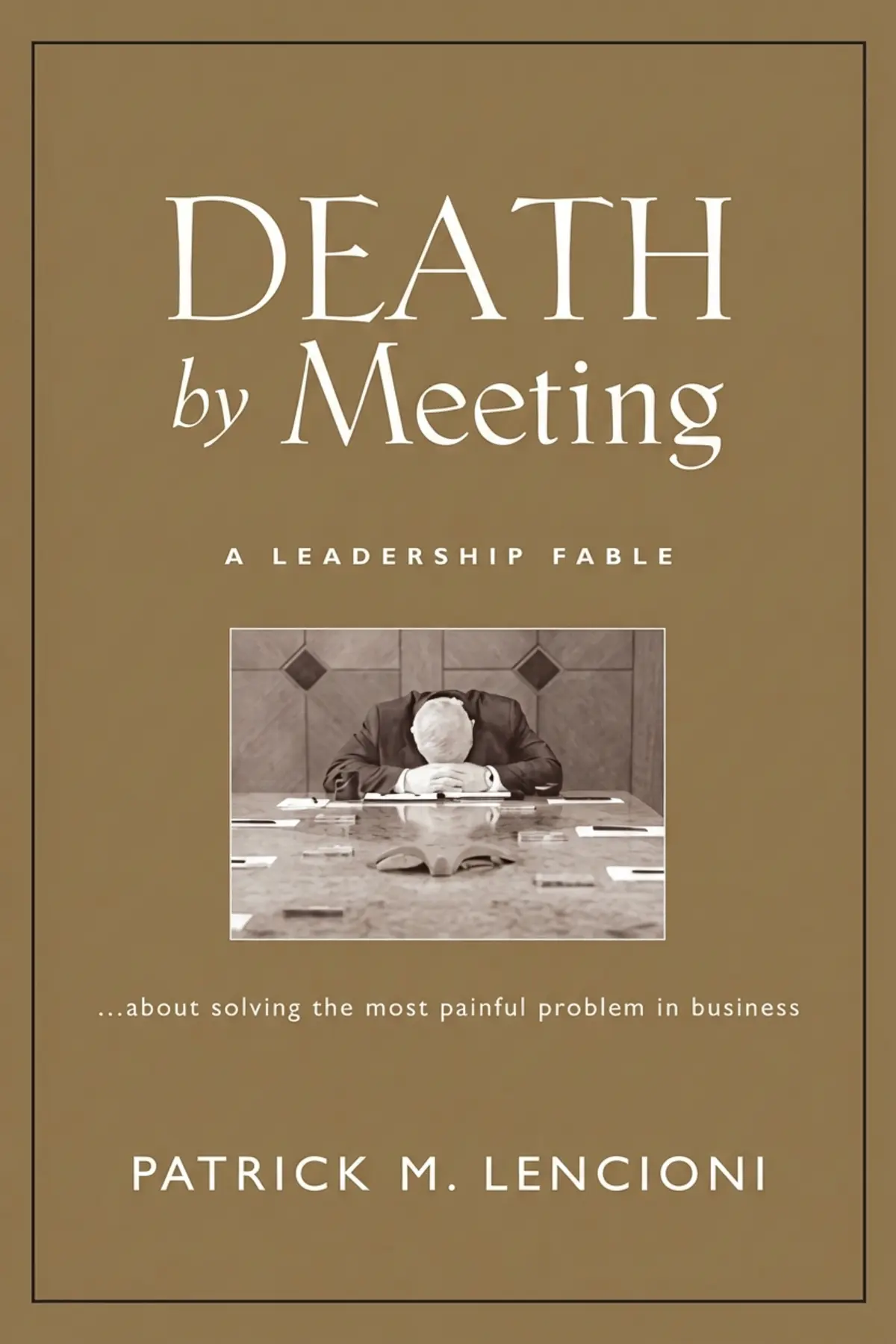
If your week is full of meetings that drain you and decide nothing, the fix is probably not fewer meetings. In Death by Meeting, consultant Patrick Lencioni argues that meetings bore people for the same reason a bad film does: nothing is at stake, and nothing gives the story a shape.
He tells this through a business fable about Casey McDaniel, a former college golfer whose software company is losing its spark, and the assistant who saves his job with an idea borrowed from screenwriters. The throughline is simple. Meetings become useful when leaders deliberately bring disagreement to the surface and give each kind of conversation its own format, length and purpose.
Follow Casey’s story and Lencioni’s method, and the weekly status session you dread can become the place where real decisions get made. You will also know which conversations belong in a morning huddle of a couple of minutes and which deserve a quarterly off-site away from daily pressures.
2 min 17 sec
A founder with a hit product, a loyal assistant and a generous buyer still found his job in doubt. What gave him away was not his sales figures but something he did every single week without thinking about it.
1 min 59 sec
A film can hold an audience through its whole story in less time than a weekly meeting that settles nothing. One late night with old textbooks revealed the two ingredients that make the difference.
2 min 07 sec
Most leaders keep meetings calm to protect morale. Lencioni argues that this very instinct is what empties the room of energy, and he shows how a leader can bring the right kind of tension back in.
2 min 06 sec
Budget figures, wild brainstorming and side stories all squeezed into one afternoon: most teams know this meeting well. Separating it by purpose sounds like more work, yet it is what gives people their attention back.
2 min 12 sec
The issues that shape a team’s future keep getting crushed between status updates and deadlines. Two less frequent meetings, held on a reliable rhythm, give them room without letting them take over the rest of the week.
1 min 57 sec
The executives at first resisted Will’s plan, and a powerful visitor was about to judge them. What happened in the weeks before that visit, and the twist that followed, shows how a team actually changes its habits.
1 min 23 sec
Casey McDaniel kept his company, but the change that saved him was modest and easy to copy. A team that had drifted through two-hour sessions learned to say what each meeting was for and to argue openly inside it. Lencioni does not blame meetings for the hours they waste. He blames their shape: nothing at stake, and every topic poured into the same long session. Fix the shape, and the same people in the same room start making decisions and leaving with energy.
The image worth keeping is the DVD case at Will’s parents’ house. A complete story fit into less time than a meeting that settled nothing, because the story had tension and a clear form.
So before your next meeting, decide which kind it is: a two-minute morning huddle, a tactical session built from live updates, a monthly strategic discussion of a few big issues, or a quarterly day away. Open it by stating what a wrong decision would cost. When someone disagrees, take it as a sign the meeting has started to work.
A film gets through its entire story in less time than one of Yip’s weekly meetings, and it keeps its audience watching the whole way. They can learn to sit through a meeting the same way, once something real is happening in it.
Few people look forward to their meetings, yet they are where a team's most important conversations should happen. Patrick Lencioni argues that the problem is not meetings themselves but how they are run: they lack drama, and they lack a structure that fits their purpose. He makes the case through a business fable. Casey McDaniel, a former college golfer, built a successful golf video game company, but after it is bought by a larger firm, an executive sits in on one of his flat, directionless two-hour meetings and questions whether Casey should keep his job. Casey's assistant, Will, finds the answer while looking at a DVD case: a film holds an audience by bringing in conflict early and following a clear structure, and Yip Software's meetings had neither. From that story, Lencioni draws a practical method. Leaders name what is at stake at the start and actively invite disagreement. They also replace one long, mixed meeting with four kinds: a brief daily check-in, a tactical meeting built on live updates, a monthly strategic session on a few big issues, and a quarterly off-site. Readers get a clear model for turning dreaded meetings into engaging, decisive ones.
Team leads and managers who run weekly meetings that drift and decide nothing.
Founders and executives whose leadership sessions mix updates, strategy and side topics in one long block.
Professionals who avoid disagreement in meetings and want a reason and a way to raise it.
Patrick M. Lencioni founded The Table Group in 1997, a firm that helps organizations become healthier. He consults to chief executives and their leadership teams, with clients ranging from companies and sports teams to the military, nonprofits, universities and churches. Earlier he worked at Sybase, Oracle and Bain & Company, and he served on the national board of the Make-A-Wish Foundation of America. He is best known for The Five Dysfunctions of a Team, a business fable about team dynamics that became a New York Times best seller.
Patrick M. Lencioni

Patrick M. Lencioni
Patrick M. Lencioni
Listeners find this book to be an accessible read and essential material for business students, offering practical resources for improving meeting efficiency. The text explores the necessity of productive gatherings and delivers vital takeaways, with one listener highlighting the way it differentiates between various meeting categories. They value the narrative approach and find the content stimulating, noting that the material is clearly organized with recap sections at the conclusion. Listeners feel it is a valuable investment.
Ever wonder why you leave every office gathering feeling like your soul has been drained of all energy? Lencioni argues that the problem isn't the meetings themselves, but rather our pathological fear of conflict and drama. This book completely flipped my perspective by comparing a good meeting to a compelling movie where the stakes are actually high. I've started 'mining for conflict' in our weekly tacticals, and the results have been immediate and incredibly transformative for my staff. We used to sit in silence, but now we’re actually debating the strategic issues that affect our bottom line. I love that he provides a clear summary at the end for those who want to skip the fluff. It’s rare to find a business book that is this practical while also being entertaining enough to read in a single weekend. Essential reading for anyone in a leadership position.
Show moreThe concept of 'meeting stew' changed my entire perspective on how our executive team operates on a day-to-day basis. We were constantly trying to solve long-term strategic problems during our short tactical updates, and it was causing massive friction. Lencioni’s solution of separating these into different forums—the daily huddle, the weekly tactical, and the monthly strategic—is brilliant. Not gonna lie, I actually enjoyed the fable because it made the concepts feel less like a lecture and more like a real-world application. The way the characters learn to 'mine for conflict' and grant 'real-time permission' for debate is a game-changer for passive-aggressive cultures. My team is now more productive and efficient because we actually know what each meeting is supposed to achieve. This is a must-buy for any manager who feels like their schedule is out of control.
Show moreWow, I never thought I would say that a book about meetings was actually engaging and even a bit fun to read. Lencioni understands that the biggest problem in corporate America isn't the number of meetings, but the lack of intensity. He teaches you how to keep people engaged by focusing on the stakes, just like a screenwriter would do in a movie. The lightning round and progress review sections have already saved us hours of wasted time every single week. I love how he breaks down the four distinct types of meetings so you don't end up with a confusing mess. It’s thought-provoking, well-presented, and offers a specific plan that any team can implement immediately. This is worth every penny for the time you'll save in the long run.
Show moreNot what I expected from a business book, but the emphasis on mining for conflict is a total game-changer for our leadership. Most of us are trained to avoid tension at all costs, but Lencioni proves that tension is exactly what makes a meeting productive. The story format helps illustrate how these principles work in a high-pressure environment, which is much more effective than just reading a list of bullet points. I particularly liked the section on quarterly off-sites; we used to treat them as boondoggles, but now they are focused strategy sessions. By separating tactical issues from strategic debates, we’ve regained hours of our week. The writing style is short and uncluttered, making it very easy to digest during a flight or a commute. This is a classic for a reason, and it belongs on every manager's bookshelf.
Show moreFinally got around to reading Lencioni's take on corporate culture, and I'm genuinely impressed by the 'fable' approach. While some find the story of Will and his struggle to save a fictional company a bit cheesy, it actually helped me visualize the implementation of his strategies. The distinction between a daily huddle and a monthly strategic session is something my team desperately needed to understand. We were suffering from what the author calls 'meeting stew,' where every topic gets thrown into one pot and nothing actually tastes good. To be fair, the book feels a little long for the amount of actual advice given, but the narrative makes the lessons stick. If you can look past some of the slightly dated tropes in the story, the structural advice is top-tier for any manager. It’s a quick read that offers a blueprint for turning boring sessions into productive debates.
Show moreLook, the advice inside is gold, even if the delivery feels a bit like a forced corporate training video from the early 2000s. I particularly appreciated the section on the 'Weekly Tactical' and how to set a real-time agenda based on the lightning round. Most managers spend hours prepping agendas that no one cares about, so this shift towards immediate priorities was a revelation for me. The book identifies exactly why we're bored: we avoid the very tension that makes business interesting. While the story elements involving golf and traditional office hierarchies are a bit eye-rolling, the underlying methodology for conducting meetings is solid. I’ve already recommended it to my department head because we spend way too much time on 'informational sermons' that could be emails. It’s a solid four-star resource that actually provides tools you can use on Monday morning.
Show moreAs someone who manages a remote team, the daily check-in and weekly tactical advice provided an immediate boost to our team cohesion. We were struggling with communication gaps, and these short, focused interactions have helped us stay aligned without the dreaded 'email chains from hell.' The author does a respectable job of identifying why meetings are usually ineffective, pointing toward the lack of drama and structure. I do agree with other reviewers that the fable feels a little dated, particularly the way it handles some of the side characters. However, the tactical advice on setting a real-time agenda is something I haven't seen in other business books. It’s an easy, quick read that delivers practical solutions for a problem every professional faces. Definitely worth picking up if you're tired of wasting your life in a conference room.
Show moreThis book is definitely a staple for business majors, yet the narrative format won't appeal to everyone who prefers direct facts. Personally, I found the story of the protagonist's career arc to be a distraction from the otherwise brilliant four-meeting model. The daily check-in and quarterly off-sites are concepts I can get behind, but I didn't need 200 pages of fiction to get there. It feels like the ideas could have been conveyed in a long-form article or a very concise PDF. Frankly, some of the subtext in the fable felt a bit 'old school' in a way that didn't age particularly well for a modern workforce. However, the core message about eliminating 'meeting stew' is undeniably valuable and has helped me organize my own calendar better. It’s a mixed bag of great advice wrapped in a mediocre YA-style novel.
Show moreTo be fair, Lencioni could have condensed this into a twenty-page whitepaper without losing any of the core message or impact. The story is a bit of a boondoggle, taking far too long to get to the point about contextual structure and drama. I understand that narrative helps some people retain information, but for me, it just felt like unnecessary filler to justify a book price. That being said, the ideas about the 'Daily Check-In' and the importance of 'The Hook' in a meeting are genuinely helpful. We’ve started keeping our tactical meetings to 90 minutes max, and the clarity has improved significantly. It’s a decent resource if you have the patience to dig through the fiction to find the nuggets of wisdom. Just don't expect a masterpiece of literature; it's a business tool first and foremost.
Show moreAfter hearing so much hype about Lencioni, I found the story of Will and his struggling company to be a major slog. The 'fable' is filled with problematic subtexts—like the weird focus on golf and the somewhat dismissive attitude toward certain employees—that made me uncomfortable. It felt like being trapped in a bad meeting about meetings, which is ironic considering the title. Why do business authors feel the need to sugarcoat their insights with these awkward, fictionalized scenarios instead of just giving us the data? The actual framework for the four types of meetings is only a few pages long and could have been a blog post. I’d rather have the cold, hard facts than a 200-page story that feels painfully outdated in today's diverse workplace. Two stars because the meeting structure itself isn't terrible, but the delivery is just not for me.
Show morePatrick Lencioni argues that meetings feel painful for two reasons: they lack drama, meaning honest conflict about something that matters, and they lack structure suited to their purpose. Leaders fix this by naming what is at stake at the start, inviting disagreement, and separating meetings by type instead of cramming every topic into one long session. He makes the case through a fable about a software founder whose job depends on running a better meeting.
Lencioni describes a daily check-in, where the team stands for a couple of minutes to share top priorities; a tactical meeting every week or two, built from quick updates and an agenda set on the spot; a strategic meeting at least monthly on one to three significant issues; and a quarterly off-site with a small group to review progress, goals and new directions, ideally with an outside facilitator.
Drawing on the way screenwriters hold an audience, Lencioni argues that without tension a meeting turns dull and people tune out. Open disagreement makes them active participants who feel real decisions are at stake, and clashing views often lead to better ideas. Leaders who avoid conflict to protect morale end up with boring discussions and problems that resurface later, so he urges them to surface disagreement early and encourage people to speak up.
Start by deciding what kind of meeting each one is, then match its length and format. Add a short daily huddle at a fixed time and place, run tactical meetings from live updates, and park big questions for a monthly strategic session. Open each meeting by naming the cost of a wrong decision and inviting objections. If the team is skeptical, try it for a few weeks, as Casey’s executives did.
It suits anyone who leads or regularly sits in meetings that run long and settle little: team leads, executives and founders in particular. Because it is told as a story, about a golf video game company and an assistant who borrows ideas from screenwriting, it is also an easy way to introduce a whole team to a shared model for better meetings.


Margaret Heffernan





Joseph A. Maciariello



Deborah Gruenfeld
AUDIO SUMMARY AVAILABLE
Get the key ideas from Death by Meeting by Patrick M. Lencioni, plus 5,000+ more nonfiction titles.