

14 min 13 sec
Available in: English
The Monopolists: Obsession, Fury and the Scandal Behind the World's Favorite Board Game
By Mary Pilon
The real history of Monopoly. It began as a game that warned against greed, players improved it over decades, and then one company claimed it with an invented founder and a stack of patents.
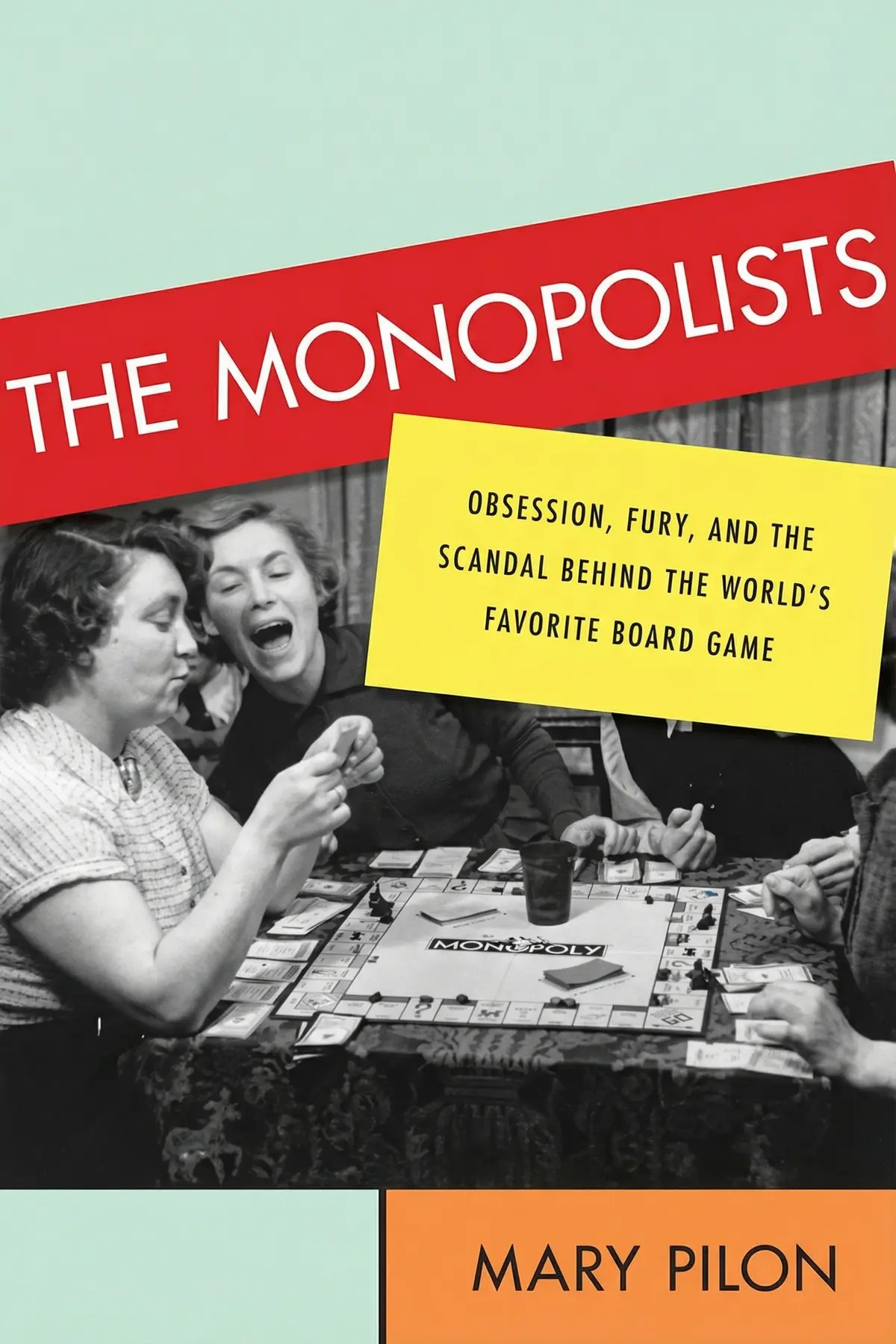
Table of Content
1. Introduction
1 min 02 sec
Most of us accept the tidy founding stories that come with famous products and rarely ask who benefits from them. Monopoly’s owner long claimed that the game was invented by one broke man during the Great Depression. In The Monopolists, journalist Mary Pilon shows that it actually began in 1904 as a game by a woman named Lizzie Magie, built to warn players about the harm monopolies do.
Pilon’s story is about ownership. Many players shaped the game over decades, and it carried a political message. Then one company claimed it through a convenient myth, patents and private payments. It took a stubborn economics professor and a long court fight to bring the real history back into view. Follow the trail and you will get better at spotting when a company’s version of its past is really a business strategy. You will also see how much a famous product can owe to people whose names were left off the box.
2. See the business plan inside an origin myth
1 min 42 sec
A poor man invents a game in the Depression, gets rejected and then strikes it rich. It is a perfect story, and the company that told it had very practical reasons for wanting you to believe it.
3. Meet the woman who drew the board first
1 min 40 sec
Thirty years before Darrow’s supposed invention, a poet and campaigner patented a game with jail, railroads and play money. Her rules carried a message that today’s players would find startling.
4. Great products often grow from many hands
1 min 42 sec
Between Magie’s patent and the box in your cupboard, a small Delaware town, a famous social critic and the players of Atlantic City all reshaped the game. Each one left a mark.
5. See how a company bought up its own past
1 min 43 sec
A patent approved in record time, a payment to stay silent and a promise to an aging inventor: Pilon pieces together how one firm turned a shared pastime into private property.
6. When a giant tells you to stop, look backward
1 min 50 sec
An economics professor made a board game about breaking up monopolies, and it started to sell. Then a letter arrived from a large and powerful company in the business.
7. Turn a buried history into your best argument
1 min 47 sec
A line in an obscure book, a family’s spelling mistake and a dead inventor’s patent gave one man a case against a corporation. He also faced an offer most people would have taken.
8. What winning in court can and cannot fix
1 min 48 sec
The highest court in the United States finally sided with the professor. Yet decades later, the company’s own timeline still told a curiously shortened version of the story.
9. Conclusion
59 sec
A game of Monopoly ends with one player owning everything, and Pilon shows that the game’s own history went the same way. Lizzie Magie designed the board to warn against concentrated wealth. Players in Arden and Atlantic City improved it, and so did Daniel Layman. Then it became one company’s property, wrapped in the story of a lone inventor. The truth came out only because Ralph Anspach turned down half a million dollars and kept digging.
There is a habit worth keeping here. When a brand offers you a heroic founder, ask who else built the thing and who gains from forgetting them. If you make something with other people, write down who added what. The record you keep may be the only one that survives, the way one family’s spelling mistake outlived decades of corporate storytelling.
The next time someone lands on Go To Jail, remember that a woman drew that square in 1904, to teach the opposite lesson.
About this book
What is this book about?
For decades, Monopoly came with a tidy origin story: Charles Darrow, broke during the Great Depression, invented the game and sold it to Parker Brothers. Journalist Mary Pilon shows that almost none of this is true. The game began in 1904 as Lizzie Magie's Landlord's Game, designed to spread the economic ideas of Henry George and to show how monopolies harm a society. Pilon follows the game as players in Arden, Atlantic City and beyond added their own streets, cards and houses. She then shows how a struggling Parker Brothers secured the rights to it through a fast patent, quiet payments and the purchase of rival versions. The hidden history only resurfaced in the 1970s, when economics professor Ralph Anspach created Anti-Monopoly. He was sued, he dug into the past, and his case went all the way to the Supreme Court. Readers get a gripping corporate detective story and a sharper eye for founding myths. They also see how trademarks, generic words and company storytelling decide who gets credit for an idea.
Book Information
Who it's for
Tabletop gamers
Board game fans who want the true story behind the box on their shelf.
Entrepreneurs and makers
Founders and creators who want to understand how patents, trademarks and origin myths decide who gets credit.
Corporate mystery fans
Readers who enjoy corporate detective stories about one person against a powerful company.
About the Author
Mary Pilon
Mary Pilon grew up in Eugene, Oregon, and started reporting as a teenager for her hometown paper, the Register-Guard. She went on to work as a staff reporter on the sports desk at The New York Times and to cover business and finance at The Wall Street Journal. Her work has appeared in The New Yorker, Bloomberg Businessweek, Esquire and Vice. She also wrote The Kevin Show, co-hosted the audio series Twisted and has taught investigative reporting at New York University.
Ratings & Reviews
Ratings at a glance
What people think
Listeners find the narrative captivating and elegantly crafted, highlighting a rich and compelling history behind the game of Monopoly. The depth of research is also quite exhaustive, offering significant perspectives on its evolution, and one listener calls it the most important game of the 20th century.
Top reviews
Gin
Ever wonder why a game about ruthless capitalism was actually created by a feminist Quaker? It turns out the history of Monopoly is far more scandalous than any family game night fight. Mary Pilon does an incredible job of digging up the lost story of Lizzie Magie. Frankly, it is infuriating to see how her original message was co-opted and her name erased by corporate greed. The book reveals how Parker Brothers built a myth around a 'lone genius' who didn't even invent the concept. This is a meticulously researched account that changes how you look at every hotel on Boardwalk.
Show moreChanpen
As someone who grew up playing this game, I found this deep dive into its hidden history absolutely riveting. Pilon masterfully exposes the irony of a game designed to warn against monopolies becoming the ultimate tool for corporate wealth. The truth is that women have often been sidelined in the history of innovation, and Lizzie Magie is a prime example. Seeing her 'Landlord's Game' evolve through various Quaker communities before being stolen was both heartbreaking and intellectually stimulating. This is easily one of the most important books on popular culture that I have read in the last few years.
Show moreKaen
This book provides an eye-opening look at the legal tangles and trademark battles behind our most famous board game. I was fascinated by the way Pilon traces the game from its communal, folk origins to the corporate boardroom. To be fair, the technical details about patent law can get a bit dense in the middle sections. However, the narrative picks up significantly once Ralph Anspach enters the scene with his Anti-Monopoly lawsuit. It is a classic David versus Goliath story that feels particularly relevant in today’s economic climate. You will never view the Parker Brothers logo the same way again after finishing this.
Show moreAkira
The chapter on Ralph Anspach and his crusade to save his Anti-Monopoly game was definitely the highlight of this entire book. His ten-year legal battle against the giants at Parker Brothers reads like a legal thriller that you cannot put down. While the earlier sections about the 1900s are a bit slower, they provide necessary context for the eventual courtroom showdown. Pilon manages to take a seemingly boring subject like trademark law and turn it into a compelling human drama. I took off one star because the transition between the historical eras felt a little bit clunky at times.
Show moreApichat
Truth is, I had no idea that the quintessential American game was actually rooted in Henry George’s radical economic theories. Mary Pilon does a fantastic job of illustrating how a tool for social education was transformed into a celebration of greed. The legal battles over the name Monopoly are described with such clarity that even a layperson can follow the complex arguments. I did feel that the book dragged a bit when discussing the specific logistics of the early 20th-century patent office. Still, the overall message about the myth of the 'lone inventor' is powerful and remains incredibly relevant to our modern world.
Show morePing
Mary Pilon has clearly spent a vast amount of time in the archives to bring this specific piece of history to light. Her research is incredibly thorough and she manages to debunk the Charles Darrow myth with precision and sharp analytical skill. Look, the book isn't a fast-paced thriller, but it offers a profound look at how we memorialize certain figures while ignoring others. I appreciated the inclusion of the early game boards and the detailed descriptions of how the rules evolved over several decades. It is a solid piece of investigative journalism that deserves a spot on the shelf of any serious board game collector.
Show moreNim
Picked this up because I love history, but the disjointed narrative made it quite difficult to stay fully engaged. The first half jumps around between different eras and characters without much clear connective tissue to hold it together. While the story of the Landlord’s Game is vital, the writing felt more like an elongated magazine feature than a cohesive book. Gotta say, the research is clearly there, but the execution lacked the punch I was expecting from such a wild premise. It is worth reading for the facts alone, but you might find yourself skimming through some of the repetitive early chapters.
Show moreMikael
Finally got around to reading this one, and I find myself feeling quite conflicted about the overall reading experience. On one hand, the backstory of how the game spread through word-of-mouth and handmade boards is truly unique and interesting. On the other hand, the prose can be quite dry and the non-linear structure often led to some confusion. Personally, I think the book would have been much stronger if it had focused more on the people and less on the minutiae. It is a decent read for history buffs, but casual readers might struggle with the lack of a traditional narrative arc.
Show moreLillian
After hearing so much about the 'lost female inventor' of Monopoly, I was eager to finally dive into this historical account. While the information presented is undeniably fascinating, the actual writing style left me feeling a little bit cold and uninspired. The narrative tends to repeat itself in certain sections, especially when discussing the various iterations of the early folk games. It is a bit surprising that such a colorful history could feel so clinical in its delivery at certain points. I would still recommend it for the information, but just be prepared for a bit of a slow burn through the middle.
Show moreChan
Not what I expected given the high praise I had seen for this title across various book blogs. The pacing is incredibly sluggish and the book doesn't really start to get interesting until the legal drama begins halfway through. In my experience, a great history book should flow effortlessly, but this felt like a dry recitation of court documents and dates. The focus on Ralph Anspach was the only part that felt like it had any real emotional weight to it. Unless you are a die-hard fanatic of patent law history, you might find this to be a bit of a chore.
Show moreQuestions about this book
Who really invented Monopoly according to The Monopolists?
Mary Pilon traces Monopoly to the Landlord’s Game, which Lizzie Magie invented in 1904 and later patented. Players in places like Arden, Delaware and Atlantic City then modified it, and Daniel Layman produced a version called Finance in 1931. Charles Darrow, long credited as the inventor, learned the game from friends and redesigned it before Parker Brothers bought it.
Why did Parker Brothers claim Charles Darrow invented Monopoly?
In Pilon’s account, Parker Brothers was struggling and kept losing hits like Ping Pong to rivals who sold slightly different versions. A single inventor who had sold everything to the company made its control of Monopoly much easier to defend. So the company backed Darrow’s rags-to-riches story, patented the rules and bought up rival versions and Magie’s patent.
What was the Anti-Monopoly court case about?
Economics professor Ralph Anspach created Anti-Monopoly in the 1970s, and Parker Brothers sued him. He lost at trial and his games were destroyed. On appeal he argued that buyers wanted the name Monopoly, not the company’s brand. The U.S. Supreme Court agreed that monopoly was a generic term and that Darrow was not the original inventor.
What was the original purpose of the Landlord's Game?
Lizzie Magie built it to spread the ideas of economist Henry George, who held that income tax should give way to fees paid for the land people used. Players could compete to build a monopoly or share the same fees and prosper together. Later versions called Monopoly were meant as a warning about how monopolies harm society.
What can readers take from The Monopolists today?
The book suggests treating neat founding stories with suspicion and asking whom they protect. It shows that successful products are often built by many people over many years. It also shows how trademarks and generic words, like aspirin or escalator, decide who owns an idea, and how a company can keep shaping history long after a court has spoken.
Readers also enjoyed
Alexander Hamilton
Ron Chernow

Alexander the Great
Philip Freeman


A History of Iran: Empire of the Mind
Michael Axworthy

A History of the World in 6 Glasses
Tom Standage

A Long Way Gone: Memoirs of a Boy Soldier
Ishmael Beah


AUDIO SUMMARY AVAILABLE
Listen to The Monopolists in 15 minutes
Get the key ideas from The Monopolists by Mary Pilon, plus 5,000+ more nonfiction titles.
- 5,000+ titles
- Listen as much as you want
- 7-day free trial
- Cancel anytime









