

13 min 37 sec
Available in: English
The Metabolism Reset Diet: Repair your liver, stop storing fat, and lose weight naturally
Explains why strict diets often stall: a fat-clogged liver turns food into body fat. Christianson's four-week plan of protein shakes, generous vegetables, sleep and light exercise aims to help the liver recover and metabolism restart.
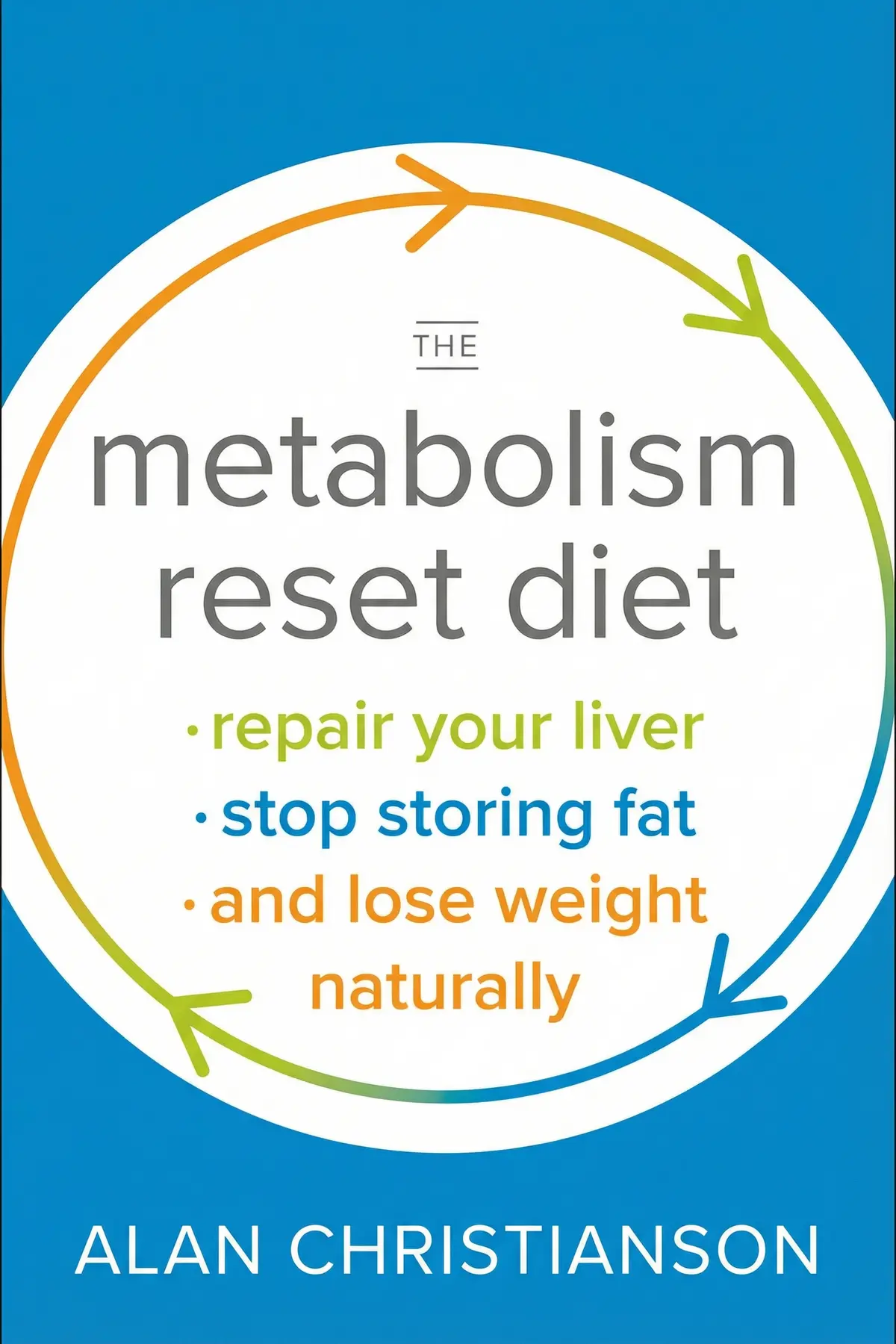
Table of Content
1. Introduction
56 sec
If you have dieted hard, counted every calorie and still watched the scale refuse to move, the problem may not be your discipline at all. In The Metabolism Reset Diet, naturopathic doctor Alan Christianson argues that stubborn weight is usually a metabolism problem, and that metabolism depends heavily on the liver. A liver clogged with stored fat, he says, cannot turn the food you eat into energy, so it sends that fuel off to become body fat, however little you eat.
The fix he proposes is a four-week reset that clears the backlog: fewer incoming calories, plenty of the nutrients the liver needs to do its work, and rest and gentle movement to help it recover. Along the way you learn what the liver actually does, why fad diets that ban a food group miss the point, and exactly what a day on the plan looks like, from the morning shake to the unlimited vegetables.
2. Stop blaming willpower for weight that stays on
1 min 50 sec
Some people eat large meals and stay slim, while others eat little and keep gaining. The usual explanation is discipline, and Christianson thinks that explanation is a lie that has sent dieters looking in the wrong place.
3. Know the organ that runs your energy
1 min 54 sec
Most of us could explain what the heart and brain do, yet barely know a third organ that touches nearly every system in the body. Its four everyday jobs explain why so many health problems trace back to it.
4. Eating less can still leave you storing fat
1 min 56 sec
Carbs, fats and proteins have all taken turns as the dieter’s enemy. Christianson argues the body barely tells them apart, and that the real trouble starts when one kind of stored fuel crowds out another.
5. Give your liver the conditions to repair itself
1 min 56 sec
Healthy people can give away most of their liver and grow it back within months. That ability offers real hope, but Christianson warns that the starvation diets many people try can block the very repair they are hoping for.
6. A simple daily menu that clears liver fat
1 min 52 sec
The plan bans no food group and puts no limit on one kind of snack. Its main tool is something many dieters dismiss, and a study of obese adults suggests it nearly doubles results.
7. Sleep longer and exercise lighter to speed results
1 min 50 sec
Two habits outside the kitchen can boost or undercut the whole plan. One is usually ignored in weight-loss advice, and the other comes with a warning that most gym regulars will not expect.
8. Conclusion
1 min 23 sec
Christianson’s book rests on a chain of cause and effect. A healthy liver keeps metabolism active, and an active metabolism produces a healthy body. Break the first link with years of heavy, processed eating, and no amount of effort further down the chain will fix it, because the fuel you eat is being filed away as fat before you can use it. Repair that link, and he believes the rest follows.
That reframing may be the most useful thing the book offers. The friend who eats freely and stays thin has a working metabolism, and the constant hunger of a crash diet can be a sign of a liver starved of the materials it needs.
If you want to try the reset, plan the full four weeks before you begin: shakes for breakfast and lunch, a real dinner, vegetables within reach for snacking, and a few liver-friendly foods such as garlic, fish or tomatoes worked into each evening meal. The book points readers to its companion website for grocery lists, recipes, progress trackers and a community for support. Protect seven to eight hours of sleep, and swap long workouts for short walks.
In Christianson’s view, an organ that can regrow most of itself after injury can also clear a backlog of fat. It needs time, materials and a lighter load, and all three are yours to give.
About this book
What is this book about?
Many people diet hard, count every calorie and still struggle to lose weight, while friends who eat more stay slim. Alan Christianson argues the difference has little to do with willpower. It comes down to metabolism, and metabolism depends heavily on the liver. In his account, years of heavy, processed eating fill the liver with short-term fats until it can no longer process new fuel. It then sends incoming calories straight to long-term storage as body fat. That is why cutting calories alone, or banning a single food group, often fails. The liver needs both a lighter load and the nutrients it uses to break fat down. The book explains what the liver does, how it can regrow after damage, and how to support that repair. The plan itself is simple and lasts four weeks: a protein shake for breakfast and lunch, a full dinner, unlimited vegetable snacks, foods rich in resistant starch, seven to eight hours of sleep, and short, gentle exercise instead of punishing workouts.
Book Information
Who it's for
Dieters not losing weight
Dieters who cut calories hard, feel hungry and tired, and still cannot lose weight.
Busy professionals wanting structure
Busy professionals who want a short, structured four-week plan instead of counting every calorie.
Curious about the liver
Anyone curious how the liver shapes metabolism, energy and body weight.
About the Author
Alan Christianson
Alan Christianson is a naturopathic medical doctor who works in natural endocrinology, with a focus on thyroid conditions. He founded Integrative Health, a physician group that helps people with thyroid disease and with weight that resists loss. He is also the author of The Adrenal Reset Diet, a New York Times bestseller. Phoenix magazine named him a Top Doctor, and he has appeared on national television, including the Dr. Oz Show.
Ratings & Reviews
Ratings at a glance
What people think
Listeners find this metabolic guide highly accessible and easy to digest, offering straightforward insights into boosting metabolic function. Additionally, the text provides excellent, simple-to-follow recipes, and listeners report shedding weight and inches while restoring their health through liver detoxification. They value the high-quality information, with one listener noting it explains science in layman's terms, and consider the regimen successful, with one mentioning impressive results after a 4-week program.
Top reviews
Sienna
Finally, a book that addresses why my weight loss stalled despite me eating what I thought was a healthy diet for years. The core message here—that a healthy liver means an active metabolism—clicked for me instantly and explained my persistent fatigue. I love how the author provides a vibrant community and online resources to support you through the transition. The maintenance phase beyond the 28-day reset focuses on whole foods and resistant starches, making it feel like a sustainable lifestyle change rather than a crash diet. I particularly appreciated the detailed shake recipes which made it easy to stick to the protocol even during my busiest work weeks. If you are tired of the 'eat less, move more' mantra that doesn't work, this liver-centric approach is the missing link. It’s a refreshing, realistic path to regaining your health and feeling like yourself again.
Show moreFrida
The chapter on metabolic flexibility was a total lightbulb moment for me as it explained exactly why I felt so sluggish after every meal. This isn't just another fad; it's a comprehensive guide to repairing the organ that actually controls how you store fat. I've been on the reset for three weeks now and the change in my blood glucose levels has been nothing short of impressive. The recipes for the evening slimming meals are actually delicious—the ginger chicken is a household favorite now—and they don't feel like 'diet food' at all. Personally, I found the progress trackers and grocery lists on the website to be the perfect companion to the book’s content. It’s rare to find a health book that is both scientifically grounded and incredibly easy to implement in a busy life. I feel lighter, clearer, and much more in control of my cravings.
Show moreSomkid
As someone who has struggled with sluggishness for years, focusing on my liver instead of just 'eating less' felt like the missing piece of the puzzle. Dr. Christianson explains the science of how our livers get 'clogged' by the modern diet in a way that is both motivating and easy to grasp. I appreciated that he included vegan options for the dinner recipes, as I’ve been trying to move toward a more plant-based lifestyle anyway. The 28-day timeline is perfect because it’s long enough to see real results in your energy levels but short enough that it doesn't feel overwhelming. I’ve lost 11 pounds so far, but more importantly, my brain fog has completely lifted for the first time in a decade. The smoothie recipes are versatile and the shopping lists saved me hours of wandering aimlessly through the store. Highly recommend for anyone feeling stuck.
Show morePrayoon
Christianson has a real talent for explaining complex biological processes without making your head spin or requiring a medical degree to understand. I’ve tried a host of programs to regain my health, yet this is the first one that focused on the liver as the primary engine of metabolism. The 28-day plan is structured beautifully, providing actionable advice and grocery lists that take the guesswork out of meal prepping. I’m currently on day 15 and have already noticed a visible difference in my waistline and a significant boost in my midday energy levels. While the two-shake-a-day requirement was a bit of an adjustment, the recipes like the Strawberry Orange Sunrise are surprisingly delicious and filling. My only minor gripe is the confusing advice regarding dairy; the book says 'no dairy' but then lists yogurt as a dinner option. Despite that, the logic behind metabolic flexibility is sound and the results speak for themselves.
Show morePang
After hearing so much buzz about resistant starches, I decided to give this four-week reset a legitimate shot to see if it lived up to the hype. To be fair, the protocol is very easy to follow because the book is well-structured and doesn't get bogged down in overly dense medical jargon. I followed the two-shake and one-meal rule strictly and ended up losing several pounds and inches around my midsection by the end of the month. The use of green banana powder was new to me, but it really helped with satiety throughout the morning. I did find the 'unlimited' vegetable list a lifesaver when hunger strikes between the shakes and dinner. My only concern is the high amount of spinach recommended in some recipes without mentioning potential issues like kidney stones for predisposed individuals. Overall, it’s a solid guide for anyone needing a structured clean-out.
Show moreYaowaluk
Look, I'm usually the first person to roll my eyes at 'detox' claims, but there's a logical pragmatism here that actually makes sense for long-term health. The author doesn't just promise a quick fix; he provides a roadmap for transitioning back into a sustainable maintenance phase with whole foods. I found the sections on sleep and stress management just as valuable as the dietary advice, as they both play huge roles in how the liver functions. My waistline is definitely slimmer after the four-week program, and I didn't feel the usual 'crash' I get from other restrictive diets. I would have liked a bit more warning about the high oxalate content in the daily spinach smoothies, though. Overall, this is a well-structured and informative guide that cuts through the noise of the weight loss industry. It’s a solid addition to my health library.
Show moreSiraporn
Is this book useful? Yes, but it's not exactly the revolutionary breakthrough the title might lead you to believe if you've read other detox books. Truth is, any program that has you drinking pea protein shakes twice a day while limiting your dinner to lean protein and veggies will cause weight loss. The focus on the liver is a nice angle, and the author does a good job of explaining 'metabolic flexibility' in layman's terms. However, I felt the book spent way too much time on recipes and not quite enough on the long-term science of maintaining these gains. The suggestion to use purified water exclusively felt a bit extreme and lacked a nuanced explanation of the mineral trade-offs involved. It’s a decent 28-day jumpstart if you need someone to tell you exactly what to eat. Just don't expect a permanent 'reset' if you go back to old habits.
Show moreRapee
Coming from a Weight Watchers background, I found the emphasis on drinking your calories via smoothies a bit hard to swallow at first since I've always been told to eat my fruit. Still, I have to admit that the logic regarding liver detoxification and resistant starch was intriguing enough to keep me reading until the end. The book is an easy read, but I noticed a few head-scratchers, like the 'no dairy' rule being followed by dinner suggestions that include yogurt. It makes the instructions feel a little unpolished or rushed in the editing phase. I think the plan works mainly through a significant calorie deficit, though the focus on liver-supporting nutrients is certainly a healthy touch. If you enjoy shakes and want a very specific roadmap, you'll like this. If you prefer whole foods at every meal, you’ll probably struggle with the restrictions.
Show moreSamira
Another day, another shake-based weight loss plan that promises the world while delivering a fairly standard low-calorie experience. Frankly, calling this a 'metabolism reset' feels like a marketing stretch for what essentially boils down to a liquid-heavy detox phase. I was genuinely hoping for some groundbreaking, reliable science on liver health, but instead, I found a program that heavily relies on pea protein smoothies and green banana powder. If you are currently eating a standard American diet, you will undoubtedly lose weight because your caloric intake is being slashed significantly. However, the book contains several factual inconsistencies, such as advising against almond milk while including recipes that basically make it from scratch. For those of us looking for deep medical insights rather than just another angle on weight loss, this falls flat. It’s an easy read, but it doesn't offer much more than what you can find for free on YouTube.
Show moreHunter
While I appreciate the effort to simplify liver health for the general public, I found several glaring contradictions that made me question the overall reliability of the advice. For instance, the author warns against almond milk but then provides smoothie recipes containing almonds and water, which is literally how you make the milk. Additionally, the requirement for purified water is a bit concerning given that it can lead to a lack of essential minerals if not managed properly. The diet itself is very restrictive, and for someone already eating a plant-based diet, the fiber content actually felt lower than what I was used to. It seems designed primarily for people coming off a very unhealthy lifestyle who need a drastic jumpstart. I wanted more peer-reviewed depth on how the liver stores nutrients, but this felt more like a recipe book for pea protein shakes.
Show moreQuestions about this book
What is the main idea of The Metabolism Reset Diet?
Alan Christianson argues that stubborn weight comes from a slow metabolism, and that metabolism slows when the liver fills up with short-term fats called triglycerides. A clogged liver cannot process new fuel, so it sends calories to long-term storage as body fat. His four-week reset aims to clear that backlog by lowering incoming fuel while supplying plenty of nutrients, supported by good sleep and light exercise.
What do you eat on the Metabolism Reset Diet?
A typical day has a protein shake for breakfast, another for lunch and a full meal for dinner, with unlimited vegetable snacks in between. No food group is banned. Christianson recommends resistant starch from bananas, legumes and potatoes, plus foods he says help the liver break down fat: soy, grapes, tomatoes, turmeric, papaya, fish, radishes, onions and garlic.
Why does the Metabolism Reset Diet use protein shakes?
Shakes make it easy to get a lot of protein while keeping other calories low. Christianson argues protein supports the liver more than any other fuel, because it can take the place of glycogen in burning stored triglycerides and its amino acids help break fat down. He cites a study of 90 obese adults in which two shakes a day led to nearly twice the weight loss of three solid meals.
Why can strict dieting fail to cause weight loss?
According to Christianson, very restrictive diets can deprive the liver of the protein, fiber and other nutrients it needs to break down stored fat. People on such diets may feel starved yet still gain weight, because their bodies cannot reach the fat reserves they already have. The reset limits calories but keeps nutrition high, so the liver has both room and tools to recover.
How should you exercise during the Metabolism Reset Diet?
Lightly. Christianson warns that heavy exercise can strain a liver that is already struggling, while no exercise at all may lead the body to burn muscle instead of fat. He recommends frequent short walks or daily micro-workouts of five to ten minutes, such as stretching or brief cardio, alongside seven to eight hours of sleep each night.
Featured in
Readers also enjoyed







AUDIO SUMMARY AVAILABLE
Listen to The Metabolism Reset Diet in 15 minutes
Get the key ideas from The Metabolism Reset Diet by Alan Christianson, plus 5,000+ more nonfiction titles.
- 5,000+ titles
- Listen as much as you want
- 7-day free trial
- Cancel anytime









