


10 min 09 sec
Available in: English
The Longevity Formula: Ayurvedic Principles to Reduce Inflammation, Increase Cellular Repair, and Live with Vitality
Shows how Ayurvedic habits around timing, digestion, breath and movement can ease inflammation and help cells repair, so the extra years modern life offers are spent feeling well instead of worn out.
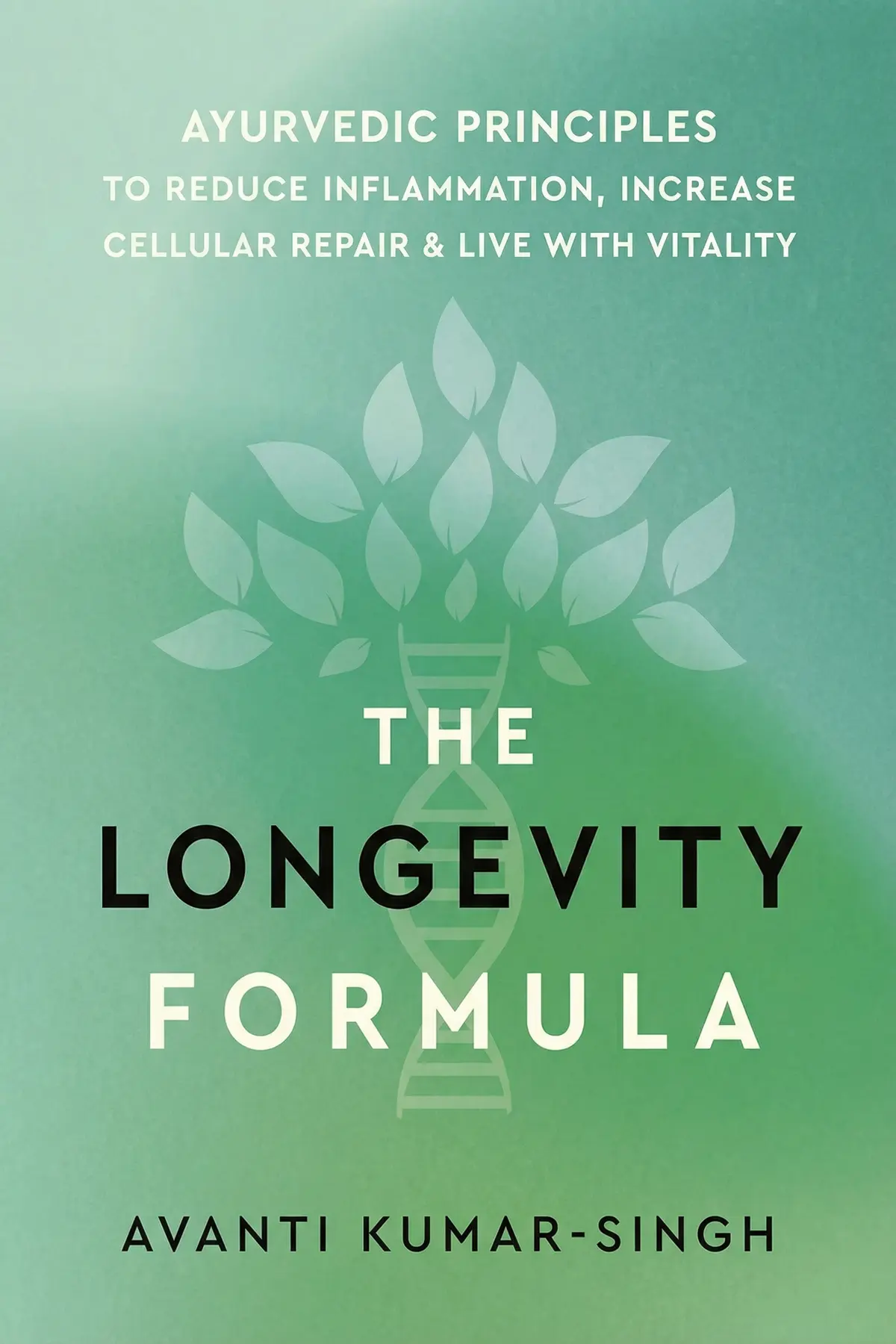
Table of Content
1. Introduction
1 min 01 sec
Most of us will live longer than our ancestors could have imagined, yet many spend those extra years feeling drained. In The Longevity Formula, emergency room physician turned yoga therapist Avanti Kumar-Singh gives that problem a name. Lifespan, the number of years we live, has climbed, while health span, the years we actually feel well, often runs out early.
Her proposal for closing the distance comes from Ayurveda, a healing tradition believed to be more than five thousand years old, which treats the body as a small copy of nature. The argument is that inflammation eases and cells repair better when daily life follows nature’s patterns: a day timed to the sun, strong digestion of everything you take in, and a nervous system given regular chances to settle.
What follows is a set of small, specific habits, from the order of food on your plate to a simple two-pose routine for the spine, that fit into an ordinary weekday.
2. Close the gap between lifespan and health span
1 min 36 sec
Medicine keeps adding years to the average life, yet many people feel worn out long before the end. A physician argues that two processes inside the body decide much of that gap, and that both can be shifted.
3. Let the sun set your daily schedule
1 min 29 sec
Most workdays are planned around meetings and messages, with no thought for daylight. Kumar-Singh argues that this habit quietly costs energy, mood and sleep, and that the fix starts before mid-morning and ends after sunset.
4. Eat your biggest meal when digestion is strongest
1 min 32 sec
Diet debates usually fight over what belongs on the plate. Kumar-Singh cares more about the clock and the sequence, and her rules for both are simple enough to try at your next lunch.
5. Treat ideas and feelings as food you digest
1 min 32 sec
A day can be full of meals, news, conversations and moods and still leave you empty. Kumar-Singh offers a picture that turns everything you take in into a choice, and asks what you are absorbing.
6. Calm a stressed body through breath and movement
1 min 54 sec
A body that lives on high alert puts rebuilding last. Kumar-Singh points to one long nerve as the route back to calm, and her ways of reaching it take minutes, not hours.
7. Conclusion
1 min 05 sec
The image Kumar-Singh leaves is of a person as a small copy of the wider world, subject to the same laws that move the sun and the seasons. Once you accept that, health stops being a matter of quick fixes. It becomes a question of rhythm: daily habits, kept steadily, that strengthen body and mind from the inside.
None of this, she makes clear, stops the clock. What it changes is how well the clock runs, and how many of the later years are spent feeling capable and at home in your own body.
The starting points are modest. Shift your heaviest meal and your hardest thinking toward the middle of the day, and protect a twelve-hour stretch without food overnight. Notice what you take in besides food, and drop one input that only drains you. When stress climbs, give your nervous system a few slow breaths or a round of Cat and Cow before the tension settles in for the day.
Medicine can add years. Ordinary days, lived in step with the sun, decide whether those years feel good.
About this book
What is this book about?
People today live far longer than earlier generations, yet many feel tired and unwell for much of that added time. Physician Avanti Kumar-Singh names the problem as a gap between lifespan, the years we live, and health span, the years we feel good. Her aim is to close it by lowering inflammation and supporting the body's ability to repair its own cells. Her method comes from Ayurveda, an ancient healing tradition that sees each person as a small copy of nature. She builds it around three kinds of practice: matching daily routines to the sun's 24-hour cycle, keeping digestion strong for food, ideas and emotions alike, and calming the nervous system through breathwork, yoga and emotional release that support the vagus nerve. She presents these as partners to modern medicine, not replacements. Readers get specific, low-cost habits: a larger lunch and lighter dinner, an order for eating what is on the plate, a twelve-hour overnight fast, morning exercise, regular breaks, alternate-nostril breathing, the Cat and Cow yoga poses and mantras for the body's energy centers.
Book Information
Who it's for
Midlife professionals
Professionals in midlife who are living full lives but feel more tired than they think they should.
Curious about Ayurveda
People curious about Ayurveda who want simple daily habits for eating, sleeping and moving, not a strict diet.
Under steady stress
Anyone under steady stress looking for short breathing and yoga practices that fit into a workday.
About the Author
Avanti Kumar-Singh
Avanti Kumar-Singh, MD, studied art history at the University of Chicago and earned her medical degree at Rush University Medical College. She worked as an emergency room physician, an experience that led her to study energy healing, yoga therapy and Ayurveda. She is a certified yoga therapist and helped lead a faculty scholars program at the Osher Center for Integrative Medicine, part of Northwestern Medicine. Her work has appeared in the Huffington Post and Thrive Global.
Ratings & Reviews
Ratings at a glance

What people think
Listeners find the material highly accessible and value its eye-opening information, with one listener highlighting how it explicitly clarifies the science underlying ancient Ayurvedic methods. They appreciate the wellness advantages, with one noting it isn't a shame-based self-help book. Feedback regarding the longevity focus is varied.
Top reviews
Sau
The chapter on circadian rhythms really changed how I view my lunch hour and my evening routine. I never realized that my digestive fire was strongest when the sun was at its peak, so shifting to a bigger midday meal has been a total game-changer for my energy levels. This isn't just a book about dieting; it’s a holistic look at how we function as biological beings. The way the author explains cellular repair and inflammation makes the ancient Ayurvedic principles feel grounded in modern science. I appreciated her personal story about her cancer journey, which added a layer of vulnerability and trust to her advice. It feels like a reliable path for anyone wanting to feel more vibrant as they age. Every page feels like an invitation to celebrate your well-being rather than a list of chores.
Show moreSudarat
After hearing about the author’s own battle with breast cancer, I found her advice felt much more grounded and less like a typical self-help lecture. She avoids the preachy tone that usually ruins these kinds of health books for me. Instead, she offers a simple, reliable path toward increasing your vitality by aligning with nature. I found the breakdown of the day into Kapha, Pitta, and Vata periods to be incredibly enlightening for my productivity. Taking those short breathing breaks between tasks has actually helped me stay focused without the usual afternoon crash. It’s rare to find a work by a health professional that balances clinical jargon with such beautiful, illustrative metaphors. This is a must-read for anyone who feels they have sacrificed their own wellness to serve others. It really shifts the focus back to nourishing the mind and body.
Show moreRungrat
Ever wonder why you feel sluggish after a big dinner late at night? This book explains exactly why our internal systems struggle when we fight against the natural flow of the day. The Longevity Formula offers a beautiful perspective on how we are microcosms of the macrocosm. I loved the breakdown of the day into specific energy periods; it has helped me schedule my hardest intellectual tasks for the Pitta window. The author reminds us that true health isn't just about the number of years we exist, but the quality of the moments we are awake for. It’s an inspiring, easy-to-read guide that integrates modern treatments with time-tested strategies. Whether you want to master a new instrument or just fix your sleep, there is something in here for you. It truly feels like a celebration of well-being rather than a struggle.
Show moreEleanor
As someone who knew absolutely nothing about Ayurveda before picking this up, I found it to be an incredibly accessible entry point. Dr. Kumar-Singh does a fantastic job of stripping away the intimidation factor often found in ancient health practices. The focus on 'health span' rather than just 'lifespan' really resonated with me because it feels more achievable than chasing immortality. I especially loved the section on the vagus nerve and how simple things like humming can reset your nervous system. While some of the advice about matching your schedule to the sun feels a bit difficult to manage with a 9-to-5 job, the 'blanket' tips are easy enough for anyone to try. It isn't a shame-based book at all, which is refreshing for the self-help genre. It’s more of a gentle guide to living better right now.
Show moreSam
Picked this up during a particularly rough flare-up and the simple breathing techniques were exactly what I needed to calm my system. The Longevity Formula isn't a miracle cure, but it provides a very sensible framework for reducing inflammation through small, consistent habits. I especially liked the emphasis on the gut microbiome and how it fuels our immune defenses. The author's tone is balanced, advocating for discipline without being overly rigid or demanding. I've started doing the early morning stretches she recommends and I can already feel a difference in my physical vitality. It’s a great starting point for anyone who wants to integrate Eastern wisdom with Western medicine. My only minor gripe is that some chapters feel a bit repetitive if you read them all at once. Still, the information is solid and very easy to apply.
Show moreChatri
It is incredibly rare to find a book that bridges the gap between Western medicine and Eastern philosophy without sounding like pseudoscience. Dr. Kumar-Singh uses her background as a physician to map Ayurvedic interpretations onto what we know about cellular repair and epigenetics. The distinction between 'lifespan' and 'health span' is the core of this book, and it’s a vital one for our aging population. I found the section on 'feeding' the mind through curiosity and new challenges just as important as the nutritional advice. Even if you don't buy into the 'energy body' concept, the practical tips on meal timing and sunlight exposure are backed by solid circadian science. Look, it’s not going to make you live forever, but it will certainly help you feel more comfortable in your own skin. It’s an empowering read that puts the tools for health back in your own hands.
Show moreNing
Finally got around to reading this and I’m pleasantly surprised by how accessible the 'formula' actually is for a busy person. I was worried it would be full of impossible demands, but it's really about small shifts in timing and awareness. The focus on the vagus nerve was particularly interesting to me as someone who struggles with stress-related digestion issues. By using the breathing breaks Kumar-Singh suggests, I've noticed I'm much less reactive during the work day. The book does a great job explaining the 'why' behind ancient habits using simple, scientific language. It feels less like a diet book and more like a manual for your internal biological clock. Some of the sections on fasting were a bit brief, but overall it’s a very enlightening read. It definitely makes you want to live a more vibrant, rhythmic life.
Show moreSofia
While I appreciated Dr. Kumar-Singh’s scientific approach to ancient traditions, I felt the 'formula' was a bit too simplified for my taste. If you have already read a few books on Yoga or basic holistic health, you likely won't find much groundbreaking information here. The author even suggests taking a chance on her advice without knowing your specific dosha, which seems to remove the very complexity that makes Ayurveda so effective. To be fair, the illustrations are helpful and the writing is very clear, making it a solid choice for a complete novice. However, I was looking for a deeper dive into the science of longevity rather than just a guide to basic daily routines. It's a good book to make your everyday life better, but it lacks the advanced nuances I was hoping for.
Show moreRyan
To be fair, if you’ve already read a few books on yoga or holistic health, you might find some of this content a bit repetitive. The book is definitely aimed at a Western audience that is completely new to the concept of Ayurveda. While the writing style is pleasant and the layout is easy to follow, it strips away much of the tradition's historical depth. I found the advice to be a bit too 'general' at times, which might frustrate someone looking for a specific plan. However, for a beginner, this is probably the best first book you could read on the subject. It covers all the basics like pranayama, fasting, and sleep hygiene in a very non-threatening way. It’s a decent guide for everyday improvement, even if it doesn't quite live up to the 'formula' in the title.
Show moreLayla
Frankly, this felt like a lot of common sense repackaged with fancy Sanskrit terms and I was left wanting more substance. We all know that we should sleep more, eat better, and exercise, so I don't see why we need a 'formula' to tell us that. The suggestion to focus on natural rhythms is nice in theory, but it ignores the reality of the modern systems we actually have to live and work in every day. I also felt the longevity claims were a bit of a stretch since no one can truly know the long-term effects of these 'hacks' on lifespan. It's an easy read, sure, but it felt very 'blanket-type' and lacked the personalized touch I expected from an Ayurvedic text. I'm mostly annoyed because I already do these things and didn't learn anything new.
Show moreQuestions about this book
What is the main idea of The Longevity Formula?
Avanti Kumar-Singh argues that people now live longer but often stop feeling well long before the end, a gap between lifespan and health span. She draws on Ayurveda, which sees the body as a small copy of nature, to narrow that gap. Living in step with the sun’s daily cycle, digesting food and experiences well and calming the nervous system can, in her view, ease inflammation and help cells repair themselves.
What daily routine does The Longevity Formula recommend?
Kumar-Singh suggests moderate to vigorous exercise before mid-morning, finishing demanding mental work by early afternoon and saving later hours for creative work and social time. She recommends a substantial lunch with lighter breakfasts and dinners, regular short breaks for stretching, breathing or humming, and dim lights with less screen time in the evening to prepare the body for sleep.
What eating habits does Avanti Kumar-Singh suggest?
She advises making lunch the largest meal, since digestion is strongest around midday. On the plate, she suggests eating fiber first, then proteins and fats, and carbohydrates last. She also recommends a twelve-hour fast overnight to give the body time for cell repair and a metabolic reset. The wider aim is a healthy gut microbiome, which she links to metabolism and immunity.
How does the book suggest calming stress?
Kumar-Singh focuses on supporting the vagus nerve through three practices. Slow breathing, including alternate-nostril breathing, can be used whenever the mind feels foggy or races. Spine movements such as the Cat and Cow yoga poses, linked to the breath, help circulation and flexibility. Naming and processing emotions, and optionally chanting mantras for the seven energy centers, helps release built-up tension.
Featured in
Readers also enjoyed





AUDIO SUMMARY AVAILABLE
Listen to The Longevity Formula in 15 minutes
Get the key ideas from The Longevity Formula by Avanti Kumar-Singh, plus 5,000+ more nonfiction titles.
- 5,000+ titles
- Listen as much as you want
- 7-day free trial
- Cancel anytime









