

14 min 35 sec
Available in: English
The Introvert’s Way: Living a Quiet Life in a Noisy World
Shows introverts why their need for solitude is natural and likely rooted in the brain, and how to protect their energy, explain their boundaries and enjoy social life on their own terms.
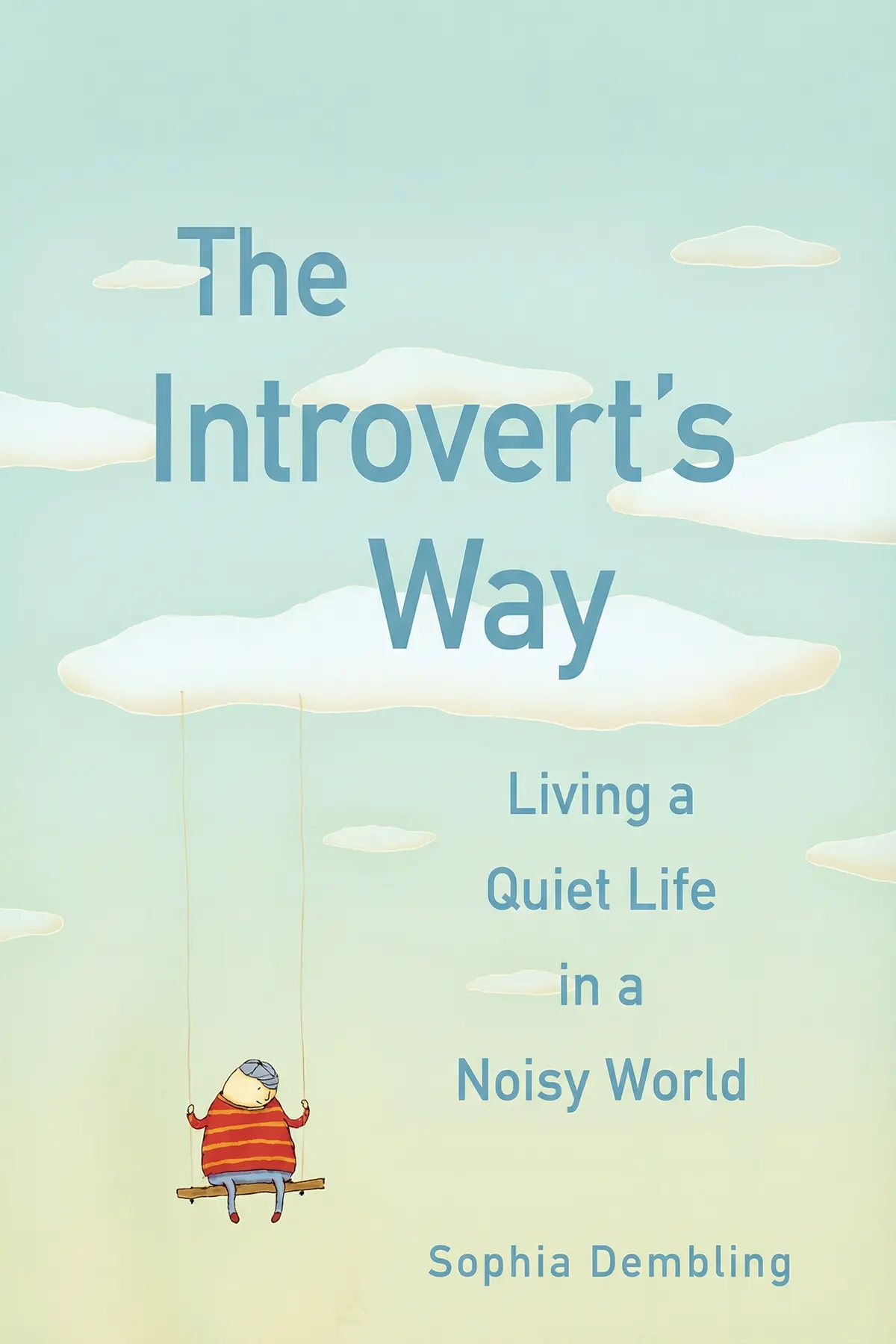
Table of Content
1. Introduction
1 min 04 sec
If crowded rooms leave you drained and you have ever wondered whether something is wrong with you, Sophia Dembling’s answer is plain: nothing is. In The Introvert’s Way, the writer behind the Introvert’s Corner blog argues that introversion is a natural way of handling energy, probably rooted in how the brain is built, and no worse than being outgoing. Introverts can do everything extroverts do. They simply lose interest in some activities sooner and need time alone to recover.
That single fact changes how an ordinary week can feel. Once you see your social energy as limited, you can budget it, explain it to the people who matter and protect it at the next party with small, practical moves. You do not have to hide from the world or act louder than you are.
Dembling turns the feeling of being out of step into a working plan: understand where your need for quiet comes from, guard your energy without guilt, and meet the extroverts around you halfway.
2. Stop treating your love of solitude as a flaw
1 min 49 sec
Friends insist you can’t be an introvert because you hold a good conversation. A famous film role suggests the opposite lesson about quiet people, and why the softest voice in a room can carry the most weight.
3. Tell introversion apart from shyness and sensitivity
2 min 06 sec
For a century, experts have argued over whether preferring your own company is a strength or a symptom. One proposal in 2010 went much further than most people realize, and the debate still shapes how introverts see themselves.
4. Understand the brain chemistry behind your need for quiet
1 min 37 sec
Two chemical messengers in the brain seem to send opposite instructions, one urging you out the door and one asking you to sit and think. Which one your brain favors may explain your weekends.
5. Spend your social energy like a limited budget
1 min 53 sec
An awkward dinner party can feel like an emergency you are obliged to fix. Dembling offers two short sentences that take the job off your shoulders, plus a simple question to ask before you say yes to anything.
6. Boundaries the people you love will learn to respect
1 min 45 sec
Leaving a gathering early can wound a friend or a parent who takes it personally. Dembling describes a slow, steady way to retrain the people closest to you until they start offering you space before you ask.
7. A party you can enjoy without running dry
1 min 43 sec
Bookshelves, the host’s dog and a stack of dirty glasses all have something to offer an overloaded introvert. So does one simple conversational habit that can leave strangers convinced you were the most charming guest there.
8. Find a middle ground with the extroverts around you
1 min 31 sec
Standing up for yourself can slide into defensiveness, and accepting others can slide into giving in. Dembling’s closing advice holds both together, with a few sentences to repeat when the critical voice in your head grows loud.
9. Conclusion
1 min 07 sec
The Introvert’s Way is finally a book about permission. Dembling gives quiet people grounds to stop treating their temperament as a flaw: it seems to come from the brain, it is neither shyness nor a disorder, and it simply means energy runs out faster in crowds and returns in solitude. Once that is accepted, the rest becomes a matter of practice.
The practice starts small. Notice which encounters fill you and which empty you, and spend accordingly. When an evening sags, let Dembling’s two magic sentences spare you the work of rescuing it. Tell the people you love, once and clearly, that time alone makes you better company, then keep showing them. At the next party, ask questions, browse the shelves or collect the glasses, and leave when the warning signs appear.
None of this asks you to become louder. Brando’s Don Corleone barely raised his voice, and the room still turned toward him. Dembling’s wager is that ordinary introverts can do the same: say what you need calmly, keep your energy for what matters, and let people learn to listen.
About this book
What is this book about?
Many introverts grow up suspecting something is wrong with them. Parents worry about the child who plays alone, workplaces reward team players, and the loudest voices collect the attention. Sophia Dembling argues that introversion is no worse than extroversion, only different, and that it is time for quiet people to stand up for themselves, calmly. She clears away the confusion first. Introversion is not shyness, not a mental disorder and not the same as being highly sensitive. Drawing on Carl Jung's idea of inward and outward energy and on research into dopamine and acetylcholine, she presents it as an inborn way of handling energy: introverts can do anything extroverts do, but they tire of certain things sooner. From there the book turns practical. Readers learn to treat energy as a limited budget, to use two short sentences that stop them from rescuing every awkward evening, to explain their needs to family and friends, and to survive parties with bookshelves, pets, kitchen chores and good questions. Dembling closes with affirmations and a call for mutual respect between introverts and extroverts.
Book Information
Who it's for
Introverts who leave early
Introverts who leave parties early and still wonder if something is wrong with them.
Misunderstood for needing space
People whose families or coworkers take their need for time alone personally.
Dreading small talk
Anyone who dreads small talk and wants simple ways to enjoy gatherings without burning out.
About the Author
Sophia Dembling
Sophia Dembling is a writer who has published hundreds of articles and essays in newspapers, magazines and websites. After writing an essay about traveling as an introvert, she began focusing on introversion and now writes the blog The Introvert's Corner for Psychology Today. The Introvert's Way and Introverts in Love are her two books on the subject. She also writes about travel in the United States, is the author of 100 Places in the USA Every Woman Should Go, and co-wrote The Making of Dr. Phil.
Ratings & Reviews
Ratings at a glance
What people think
Listeners find this book to be an accessible and highly enlightening resource for introverts, highlighted by chapter titles that are genuinely hilarious. Additionally, the quality of the writing is excellent, and listeners appreciate how the material makes them feel validated and at peace. The book is also commended for its perspective on introversion, with one listener pointing out how it helps extroverts comprehend the nature of quieter, introverted individuals.
Top reviews
Andrei
Finally got around to reading this, and I feel like I finally have permission to just exist. The chapter titles alone had me laughing out loud because they perfectly capture the absurdity of being an introvert in a world that never stops talking. For years, I thought my 'slow train of thought' was a cognitive defect, but Dembling explains it as a natural part of our wiring. The book is incredibly easy to read and feels like a warm conversation with a friend who actually gets it. I especially appreciated the section on how the phone is basically the 'tool of the devil'—it's so true! While some might prefer the academic depth of Susan Cain’s work, this felt more like a survival guide for my daily life. It made me feel normal for the first time in a long time. Truth is, every introvert needs this on their shelf for those days when the world feels too loud.
Show moreBee
This book doesn't just explain introversion; it validates it with a sharp, witty edge that I haven't found elsewhere. I’ve been told my whole life that I’m 'too quiet' or that I need to 'come out of my shell,' and Dembling basically tells those people to take a hike. It is a highly informative read that clarifies the difference between being shy and being introverted—a distinction many people still don't get. The chapter on 'Magic Words to Plug Energy Drains' has already changed how I handle my office environment. Frankly, it’s a relief to read someone who doesn't treat our personality like a problem to be solved. The brevity of the chapters makes it a breeze to get through, yet the impact of the message lingers long after you close the cover. It’s an essential manual for anyone who values their solitude.
Show moreSayan
After hearing my wife talk about this for weeks, I picked it up to understand her better, and it's been eye-opening. As an extrovert, I never realized that my 'checking in' phone calls were actually draining her energy instead of showing love. This book helps extroverts understand introverted quiet personalities without making us feel like villains. The writing is well-crafted and the humor bridges the gap between our two different ways of seeing the world. Dembling explains that introverts aren't antisocial, they're just pro-solitude, and that distinction is huge. It has helped our communication immensely. Now, when she says she needs to go into the 'fertile void,' I know exactly what she means and I don't take it personally. This should be required reading for couples with mixed personality types!
Show moreNarut
The chapter titles are worth the price of admission alone, especially 'Fact 1: Some People Are Boring.' Dembling writes with a breezy, witty style that makes the information go down easy. It’s less of a scientific textbook and more of a collection of insightful blog posts, which makes it perfect for dipping in and out of. To be fair, some of the advice felt a bit repetitive if you’ve already read a lot of literature on the subject, but her specific tips on managing energy at parties were actually practical. I loved the focus on the idea that introverts aren't 'failed extroverts.' It's a refreshing perspective. My only minor gripe is that she occasionally makes broad generalizations about extroverts that felt a little unfair. Still, if you want to understand your own quiet nature without getting bogged down in too much jargon, this is a fantastic choice.
Show moreEvelyn
Wow, it’s like Dembling was peeking into my brain during every awkward social gathering I've ever attended. This book is exceptionally informative for those of us who struggle with that 'introvert stupor' after too much socializing. The writing style is well-crafted, balancing snark with genuine empathy for the quiet soul. I found the 'Affirmations for Introverts' near the end to be genuinely moving, especially the reminder that staying home is actually 'doing something.' Look, it might not have the same gravitas as a psychological survey, but its strength lies in how it makes you feel comfortable in your own skin. I did think the section on parenting was a bit thin, as it seems geared more toward individuals without children. Nevertheless, the advice on setting boundaries with talkative friends is pure gold and worth the read.
Show moreRose
Frankly, I wish I’d had this book twenty years ago when I was beating myself up for needing to retreat to the bathroom at parties just to breathe. Dembling’s voice is refreshing and she manages to make the reader feel completely normal despite our 'quirks.' The way she describes the telephone as a tool of terror is something I will be quoting to my extroverted mother for the rest of my life. The book is short and sweet, which fits the introverted preference for getting to the point without too much small talk. My only critique is that I wanted more of the science she occasionally touched on. While the personal anecdotes are funny, the few pages on the Big Five and HSPs were the most valuable parts for me. It’s a solid four-star read that I’ll likely recommend to my fellow quiet friends.
Show moreRay
As someone who has already devoured Susan Cain’s Quiet, I found this one to be a bit of a mixed bag. On one hand, Dembling is a very engaging writer and her humor is definitely 'on point' throughout the chapters. On the other hand, the book leans very heavily on her personal experience and blog comments rather than hard data. At times, the 'royal we' she uses felt a bit alienating because her specific type of introversion—like her love for being a flâneur—doesn't apply to me at all. I’m an introvert who actually enjoys loud concerts, so some of her 'rules' felt a bit restrictive. However, her analysis of the Big Five personality test was surprisingly sharp and well-reasoned. It's a decent addition to the library for 20-somethings looking for affirmation, but maybe not the definitive text on the subject.
Show morePun
Not what I expected, but it was still a decent enough weekend read for a quiet afternoon. The author has a very specific 'introvert brand' that she pushes, which involves hating roller coasters and karaoke—things I actually happen to love! It’s important to remember that this is *an* introvert's way, not *the* only way. I did appreciate the scientific sprinkling of the Cheek and Buss shyness scale, though. That part was actually quite enlightening. The truth is, while the book is peppy and designed to make you feel better, it lacks a certain depth regarding the complexities of long-term relationships. It’s a nice, light survey of introversion that would be a good gift for a friend, but it didn't quite reach the five-star mark for me because of the repetitive blog-style formatting.
Show moreUbolwan
To be fair, I think this book is better suited for a younger crowd just starting to navigate their social identities away from their families. For a seasoned introvert, much of this felt like common sense wrapped in a slightly smug tone. I was quite annoyed by how the author constantly used sweeping statements about extroverts to define herself. It felt like she was trying to start a war between the types rather than foster the 'can't we all just get along' message she claims to support. The book reads very much like an advice column, which is fine, but I was expecting something with a bit more intellectual meat on the bones. If you've never thought about your personality before, you might like it. If you've already established your boundaries and know why you hate the telephone, you can probably skip this one.
Show moreCholada
Does anyone else feel like the 'royal we' approach in this book is a bit much? I found it distracting that the author presumed to speak for every introvert on the planet when her experience is clearly very specific. For instance, she harps on her slow decision-making as an introverted trait, but research shows that’s more about intelligence or cognitive style than personality. I felt excluded by her narrow definition of what it means to be quiet. To be honest, I preferred Susan Cain’s book because it felt more inclusive and grounded in reality. This felt more like a collection of complaints about extroverts. There were a few gems, like the part about different types of 'quiet,' but they were buried under too much snark. It just wasn't for me.
Show moreQuestions about this book
What is The Introvert's Way by Sophia Dembling about?
Dembling argues that introversion is a natural trait, no worse than extroversion, and that introverts should stand up for themselves calmly. She separates it from shyness and mental disorder, links it to brain chemistry, and then gives practical advice on managing energy, explaining boundaries to loved ones, coping at parties and finding a balance of mutual respect with extroverts.
What is the difference between introversion and shyness?
In Dembling’s account, shy people feel anxious about socializing, while introverts are often simply not very interested in it. The two can overlap but are not the same. Introverts can do everything extroverts can; the difference is that they lose interest in some activities after a while and find them draining, so they need solitude to recharge.
Is introversion caused by the brain?
Dembling says the exact cause is still unknown, but studies point to the brain. One found introverts’ brains attend equally to human faces and objects, while extroverts’ brains favor faces. Other research suggests extroverts need more dopamine, gained by going out, while introverts seem to prefer acetylcholine, a slow-acting chemical linked to calm reflection. Her conclusion is that introverts are born that way.
How can introverts protect their energy at social events?
Dembling suggests treating energy as a limited budget and asking what you gain before committing. At events, take breaks without announcing them: a bathroom pause, browsing bookshelves, petting the host’s dog, or keeping busy in the kitchen. When an evening feels awkward, tell yourself it is not your responsibility or your problem, and save your energy instead of the party.
How do I explain my need for alone time to family and friends?
Dembling advises being direct with loved ones: your energy needs looking after, you will be better company after some time alone, and your feelings toward them are not the reason. Then follow through. Each time you step away, you teach them what to expect, and over time many learn to offer space before you ask.
Featured in
Readers also enjoyed



59 Seconds: Change Your Life in Under a Minute
Richard Wiseman





A Guide to the Good Life: The Ancient Art of Stoic Joy
William B. Irvine

AUDIO SUMMARY AVAILABLE
Listen to The Introvert’s Way in 15 minutes
Get the key ideas from The Introvert’s Way by Sophia Dembling, plus 5,000+ more nonfiction titles.
- 5,000+ titles
- Listen as much as you want
- 7-day free trial
- Cancel anytime









