


10 min 59 sec
Available in: English
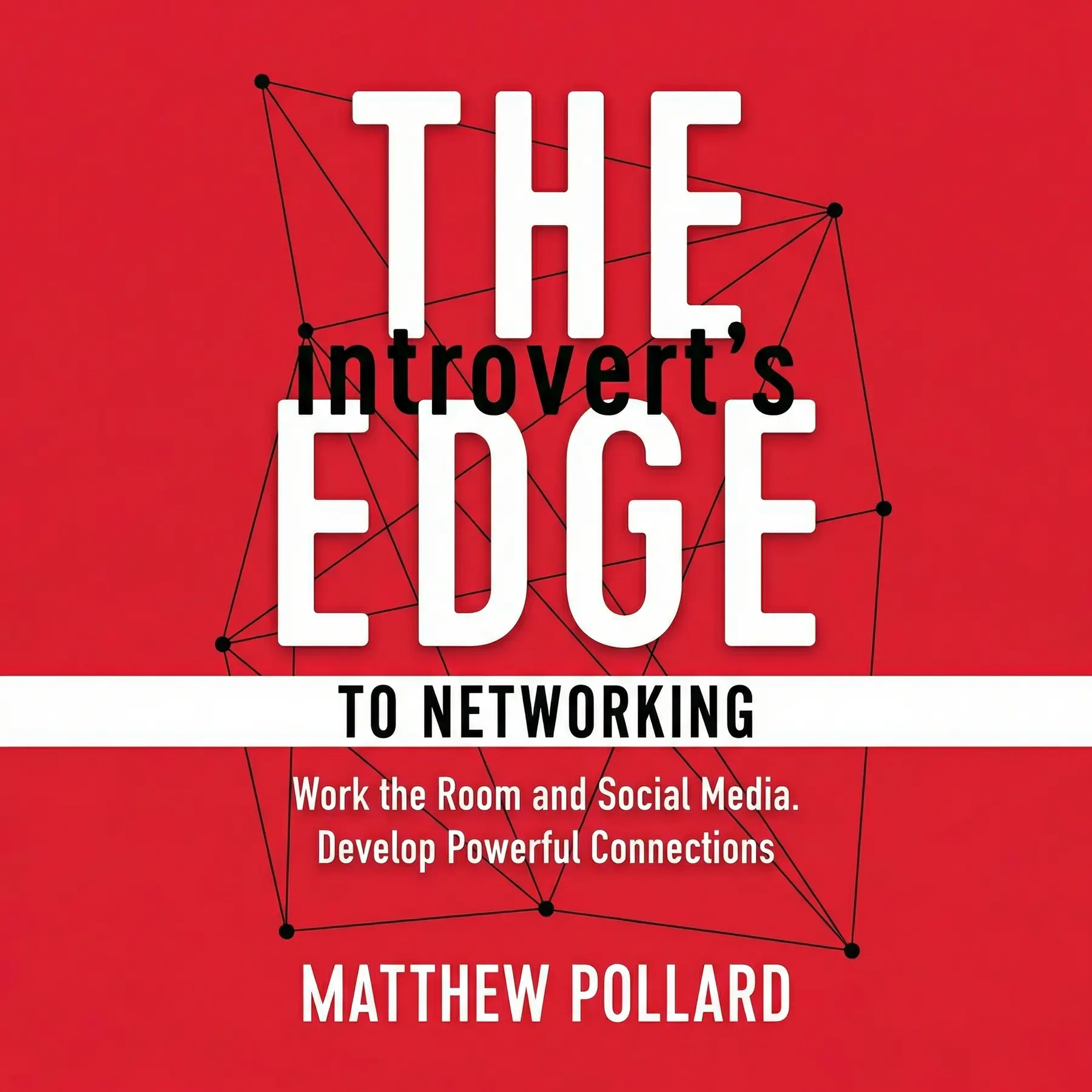
The Introvert’s Edge to Networking: Work the Room and Social Media. Develop Powerful Connections
Shows introverts how to build strong business and career relationships without faking an outgoing personality, by choosing the right people, preparing a curiosity-sparking introduction and following up in a way that fits each new contact.

Table of Content
1. Introduction
56 sec
If an hour at a crowded networking event leaves you drained, Matthew Pollard has an unexpected claim: the traits that make you dread the room are the ones that win in it. In The Introvert’s Edge to Networking, the entrepreneur and founder of Rapid Growth argues that curiosity, careful listening and empathy build deeper business relationships than a pocket full of business cards. Introverts do not need to act louder. They need a system, and most of it happens before and after the event, away from the noise.
That system has three parts: groundwork done at home, a planned and calm way of talking in the room, and a steady habit of following up. Each part plays to quiet strengths instead of fighting them. By the end, you will know who to look for at your next event, the phrase to introduce yourself with, and what to send each person you meet afterward.
2. Turn your quiet nature into a networking strength
1 min 51 sec
The loudest people at an event seem to have every advantage, and the old rituals reward them. Pollard argues the contest has changed, and that the quieter person in the room may be better equipped than anyone.
3. A short list of people worth meeting
1 min 45 sec
Talking to everyone feels productive and leaves you with a blur of forgotten faces. Two simple lists, drawn from people you already know, point to the small group where your real opportunities have been hiding.
4. Introduce yourself with a phrase that sparks questions
1 min 48 sec
Your job title is accurate, and it may be the fastest way to end a conversation. Pollard’s alternative takes real effort to write, and when it works, the other person starts asking you to talk.
5. Walk into every event already knowing who matters
1 min 47 sec
Most people arrive at an event hoping to bump into the right person. Pollard argues the decisive moments come earlier, and that a rough script can make a nervous introvert sound more natural, not less.
6. A follow-up habit that turns contacts into allies
1 min 52 sec
A great evening of conversations can vanish within a week. Pollard sorts new contacts into three kinds of people, and the follow-up that delights one kind can easily annoy another.
7. Conclusion
1 min 00 sec
Pollard’s book rests on a simple reversal. The qualities that make a crowded ballroom exhausting for an introvert, the preference for depth, the habit of listening, the care for the other person, are the same ones that make people want to stay in touch. What introverts need is structure, and Pollard places most of it before and after the event, where calm preparation and steady follow-through count for more than charm.
There is no need to become someone else. You need to know who you are looking for, what to say when they ask about you, and what to send them next. Start with the two lists, the generous payers and the people who praise you, and find where they overlap. Give a few evenings to shaping a phrase that makes that niche ask for more. Before your next event, write to a handful of attendees, and afterward decide whether each new contact is a champion, a momentum partner or a prospect.
In a room full of noise, the person who listens is often the one remembered.
About this book
What is this book about?
Crowded networking events can feel like a test built for extroverts: work the room, impress strangers, collect as many business cards as possible, then go home exhausted. Matthew Pollard argues that introverts do not need to play that game. Their natural habits of curiosity, careful listening and empathy are exactly what turns a brief meeting into a lasting relationship. Pollard's method moves most of the effort to before and after the event. Readers learn to find a niche of people who pay well and praise their work, to replace a dull job title with a short Unified Message that makes others ask for more, and to contact attendees before an event so conversations start warm. Inside the room, a simple Networking Playbook takes the pressure off. Afterward, each contact is sorted as a champion, a momentum partner or a prospect, and each gets its own kind of follow-up. The result is a calmer and more focused way to win clients, find mentors or move toward a better job, using strengths introverts already have.
Book Information
Who it's for
Introverts who need clients
Introverted founders and freelancers who need clients but leave networking events drained.
Professionals dreading small talk
Professionals looking for a new job or mentor who hate small talk with strangers.
Collecting cards, not relationships
Anyone who collects business cards at events and then never turns a single one into a real relationship.
About the Author
Matthew Pollard
Matthew Pollard grew up in Craigieburn, Australia, started several businesses and received a Young Achiever Award at a Melbourne business awards program. He founded Rapid Growth, LLC, and IntrovertU, and hosts a podcast named after his book The Introvert's Edge, a series translated into 16 languages. He has spoken at companies including Google, Microsoft and Oracle, and describes his mission as helping people turn a struggling dream into a fast-growing business they love.
Ratings & Reviews
Ratings at a glance
What people think
Listeners find this networking guide to be an ideal resource for introverts, providing useful advice and a deliberate plan of action. The material is simple to grasp and aids listeners in navigating professional gatherings, while one listener notes it can be applied to any situation. Listeners value the book's impact and concrete lessons, with one review mentioning how it helps face networking fears.
Top reviews
Yam
Wow. For the first time, I don’t feel like my introversion is a bug that needs to be fixed, but rather a feature I can use to my advantage. Pollard’s strategy of using stories instead of sales pitches resonated deeply with me because it feels authentic rather than manipulative. The section on follow-up—categorizing people into champions and prospects—is worth the price of the book alone. I used to collect business cards and let them gather dust, but now I have a system to actually build a relationship. Look, you still have to put in the work and actually show up to the events, which is still scary. But having a script and a plan makes the heart palpitations a lot more manageable when you’re walking through those doors.
Show moreWillow
Ever wonder why some people just seem to 'click' with everyone they meet at conferences? Pollard argues that it isn't magic or personality, but a disciplined, strategic system that anyone can learn regardless of their energy levels. I loved the focus on 'active listening' as a tool to control the conversation without having to do all the talking. This isn't just a book of vague platitudes; it’s an actionable set of instructions for building a professional circle that supports your growth. Not gonna lie, I was skeptical about the 'Rapid Growth' branding, but the logic holds up under scrutiny. Even if you only implement the pre-event research tips, you will be miles ahead of the people just showing up for the free drinks. It’s a must-read for anyone in business.
Show moreSomboon
Finally got around to reading this and I’m kicking myself for not picking it up sooner. As a classic introvert, I used to think networking was about being the loudest person in the room, but this book proved me wrong. It teaches you how to leverage your natural curiosity to build deep, meaningful connections instead of just collecting meaningless business cards from strangers. The strategy for following up with 'Momentum Partners' helped me land a collaboration I’ve been chasing for over a year. It feels great to have a plan that doesn't involve pretending to be someone I'm not. The book is easy to follow, the chapters are well-paced, and the advice is genuinely transformative if you're willing to step out of your comfort zone.
Show moreThida
Picked this up because the idea of a 'Networking Playbook' sounded much more manageable than just 'winging it' at a mixer. Matthew Pollard does a great job of breaking down the social anxiety of networking into a repeatable, step-by-step process that relies on preparation rather than charisma. Frankly, the advice on crafting a 'Unified Message' was a game-changer for me because it moves the conversation away from boring job titles toward actual value. I did find some of the anecdotes a bit repetitive, and the author definitely skews toward the 'high-achiever' side of the introvert spectrum. If you can get past the constant mentions of six-figure deals, the core framework is incredibly solid for anyone who hates small talk. It is a practical guide that turns a draining activity into a strategic game of chess.
Show morePia
This book provides a much-needed roadmap for those of us who would rather have a root canal than attend a corporate happy hour. The emphasis on quality over quantity is exactly what an introvert needs to hear to stay motivated. I particularly appreciated the advice on how to gracefully exit a conversation, which is usually the most awkward part for me. My only real gripe is that the author’s 'Unified Message' examples can sometimes sound a bit like marketing jargon if you aren't careful with your delivery. You have to tweak the templates to make them sound like a human being is actually speaking. Still, having a structured conversational approach prevents those long, painful silences that usually haunt my networking attempts. It is a very effective resource for small business owners.
Show moreRin
I've been struggling with career stagnation for a while, and this book helped me realize that my lack of a 'champion' network was the missing link. The advice on creating a digital footprint to reinforce your credibility after the meeting is incredibly relevant in today's remote-first world. While the author does spend a lot of time on his own success stories, the underlying principles of empathetic communication and thoughtful questioning are universal. I found the 'Networking Playbook' concept to be a bit rigid at first, but once you adapt it to your own voice, it becomes a powerful safety net. It’s a solid four-star read because it offers practical takeaways that you can use the very next day. Just be prepared for a very sales-oriented perspective throughout the chapters.
Show moreSupachai
The chapter on the 'Unified Message' alone changed how I introduce myself to potential clients. Instead of a boring elevator pitch, I now have a way to spark genuine interest without feeling like a pushy salesperson. Personally, I think the book is a bit heavy on the 'six-figure' success stories, which can feel a little alienating if you're just starting out. However, the core idea that introverts can be better at networking because they listen more than they talk is a powerful shift in perspective. It helped me face my fears and actually attend a local chamber event with confidence last week. If you need a clear, step-by-step strategy to navigate social professional settings, this is a fantastic tool. It is well worth the time for any introverted professional.
Show moreIsabelle
Not what I expected given the broad title, as it really feels like it was written specifically for coaches, consultants, and freelance entrepreneurs. If you are a government employee or work in a niche field like public history, you might struggle to see yourself in these pages. Most of the success stories involve closing massive deals with IBM executives or high-powered CEOs, which isn't exactly relatable for the average office worker. To be fair, the concept of being an 'active listener' as a networking superpower is well-explained and valid. However, the book could have been about half as long if the author didn't spend so much time recounting how he dazzled every room he entered. It’s useful, but the narrow focus on high-ticket sales makes it feel a bit exclusionary for general readers.
Show moreKung
As someone who has read Pollard’s previous work, this felt like a bit of a retread of his general message without enough new substance to justify a standalone volume. The writing style is engaging and the tone is encouraging, but I found the 'introvert' branding to be a bit of a marketing stretch at times. Some of the stories, like the one about him having VIP access to Australian clubs as a teenager, don't exactly scream 'struggling introvert' to me. Truth is, the book offers a very specific sales-based networking style that might not work in every industry. While the advice on preparation and researching attendees in advance is objectively good, I was hoping for more variety in the types of professional settings discussed. It’s a decent read, but don’t expect a total revolution if you’ve already mastered basic social skills.
Show moreChamp
Honestly, I felt like the author didn't really grasp the true diversity of the introvert spectrum, as he seems to be on the very extroverted end of the scale. The book is heavily focused on making 'big cash' and landing six-figure clients, which leaves a huge gap for 90% of people who just want to find a better job or meet interesting peers. Every example felt like a humble-brag about a massive sales win that doesn't translate to a normal professional environment. I was looking for networking tips, but I mostly got a manual on how to be a high-pressure consultant using 'introvert' as a buzzword. It was quite underwhelming and repetitive. If you aren't an entrepreneur trying to scale a business, you might want to skip this one and find something more grounded.
Show moreQuestions about this book
What is the main idea of The Introvert’s Edge to Networking?
Matthew Pollard argues that introverts do not need to imitate extroverts to network well. Their curiosity, listening and empathy are strengths that build deeper relationships. He pairs those strengths with a system: choose a niche of people who pay well and praise your work, introduce yourself with a curiosity-sparking phrase, contact attendees before events, and follow up afterward in a way that suits each type of contact.
What is a Unified Message in Matthew Pollard's book?
A Unified Message is a short, memorable phrase you use instead of a plain job title. It works like a teaser trailer, making people want to hear more. Pollard’s examples include a personal trainer for stalled clients calling herself the Plateau Conqueror, and an indoor plant expert introducing himself as the Nature Whisperer. He admits it takes several attempts, and suggests using a thesaurus to find the right words.
How do you find your networking niche according to Pollard?
Make two lists from people you have already met in your career: those who pay well without haggling, and those who praise you whenever they can. Look for patterns such as a shared industry, similar problems or a similar outlook, and group the names. The subgroups that appear on both lists, high payers who are also true fans, form your niche and point to your best opportunities.
How should you follow up after a networking event?
Pollard sorts contacts into three groups. Champions are influential, so write personally, offer specific times to talk and allow for slow replies. Momentum partners trade introductions and leads, so keep promises quickly and space out introductions. Prospects, clients or employers, get warm notes that add value, such as a useful article. A simple website or a well-kept LinkedIn profile supports all three.
Who should read The Introvert’s Edge to Networking?
It suits introverted business owners, freelancers and job seekers who find crowded events exhausting and want a calmer way to build useful relationships. It is especially practical for people who need clients or mentors but dislike selling, since Pollard advises keeping events free of sales talk and moving serious discussions to a later coffee or video call.
Featured in
Readers also enjoyed








AUDIO SUMMARY AVAILABLE
Listen to The Introvert’s Edge to Networking in 15 minutes
Get the key ideas from The Introvert’s Edge to Networking by Matthew Pollard, plus 5,000+ more nonfiction titles.
- 5,000+ titles
- Listen as much as you want
- 7-day free trial
- Cancel anytime









