
A History of Iran: Empire of the Mind
Michael Axworthy
 English
Lays out the archaeological, artistic and written evidence that ancient Greeks drank hallucinogenic wine in sacred rites, and explains why early Christians may have done the same. Also covers what modern psilocybin research adds.
1 min 06 sec
If church or ritual has ever felt like going through the motions, Brian C. Muraresku has a provocative explanation. In The Immortality Key, the Washington lawyer and scholar argues that the most famous rites of the ancient world may have worked because the sacred drink contained a psychedelic. At Eleusis, near Athens, pilgrims, Plato among them, came away from an all-night ritual and a sacred cup feeling transformed. Muraresku spent twelve years asking whether the same kind of drink reached the first Christians.
His argument is bold. Ancient Greek religion, and perhaps the original Eucharist, ran on hallucinogenic wine, and modern psilocybin research suggests our ancestors knew something we forgot. He makes the case as someone who has never taken psychedelics himself, and he is open about where the proof stops. What follows is the trail he walked, from a Spanish temple to a recipe book to the tombs beneath the Vatican, along with a sharper way to judge a claim that sounds too strange to be true.
1 min 44 sec
A New York grandmother who firmly rejects God took part in a cancer study and came out describing divine love. Her session was not unusual, and the numbers behind it raise a question about religion itself.
2 min 02 sec
For centuries the most revered rite in Greece was guarded on pain of death, and Plato left only hints. A theory from the 1970s claimed to know what was in the cup, and scholars laughed it away.
1 min 49 sec
Far from Athens, Greek settlers built a town with an underground chamber for sacred rites. What laboratory tests found on two small objects from its temple moved an old argument from guesswork to chemistry.
1 min 50 sec
Greek writers describe their wine as something far stronger than anything poured at dinner today. A painted vase and a physician’s handbook of recipes hint at the ingredient that made the difference.
1 min 58 sec
Early Christians and pagans worshipped side by side in Rome and shared more than a city. Vines in a tomb under the Vatican and a strange vessel near Pompeii suggest the Communion cup has a hidden past.
1 min 56 sec
The objects that could settle the debate may already sit in ancient catacombs and archives. Who controls them is the problem, and Muraresku has an unusual plan for the day the answer finally arrives.
1 min 16 sec
The Immortality Key is, in the end, a book about the distance between a ritual and an experience. Muraresku sat through Communion and felt the symbol without the feeling, then found a trail suggesting that for the ancients the two were the same thing. Ergot in a Spanish chalice, a nightshade recipe from Dioscorides and a vessel of opium and cannabis near Pompeii do not close his case on Christianity. They do make the Greek side hard to wave away, and they put the scorn once aimed at The Road to Eleusis in a different light.
The book supports a few concrete shifts. When you meet a claim about psychedelics, sacred or medical, ask for the physical trace and the test, the way Muraresku asked of every cup and jawbone. When reading about the past, resist assuming that ancient wine, or ancient worship, matched our own. And if you count yourself among the spiritual but not religious, take seriously a study in which 70 percent of participants put one psilocybin session among the most meaningful moments of their lives, remembering that it happened in a careful clinical setting.
Plato would not say what he saw at Eleusis. The cup he drank from may yet speak for him.
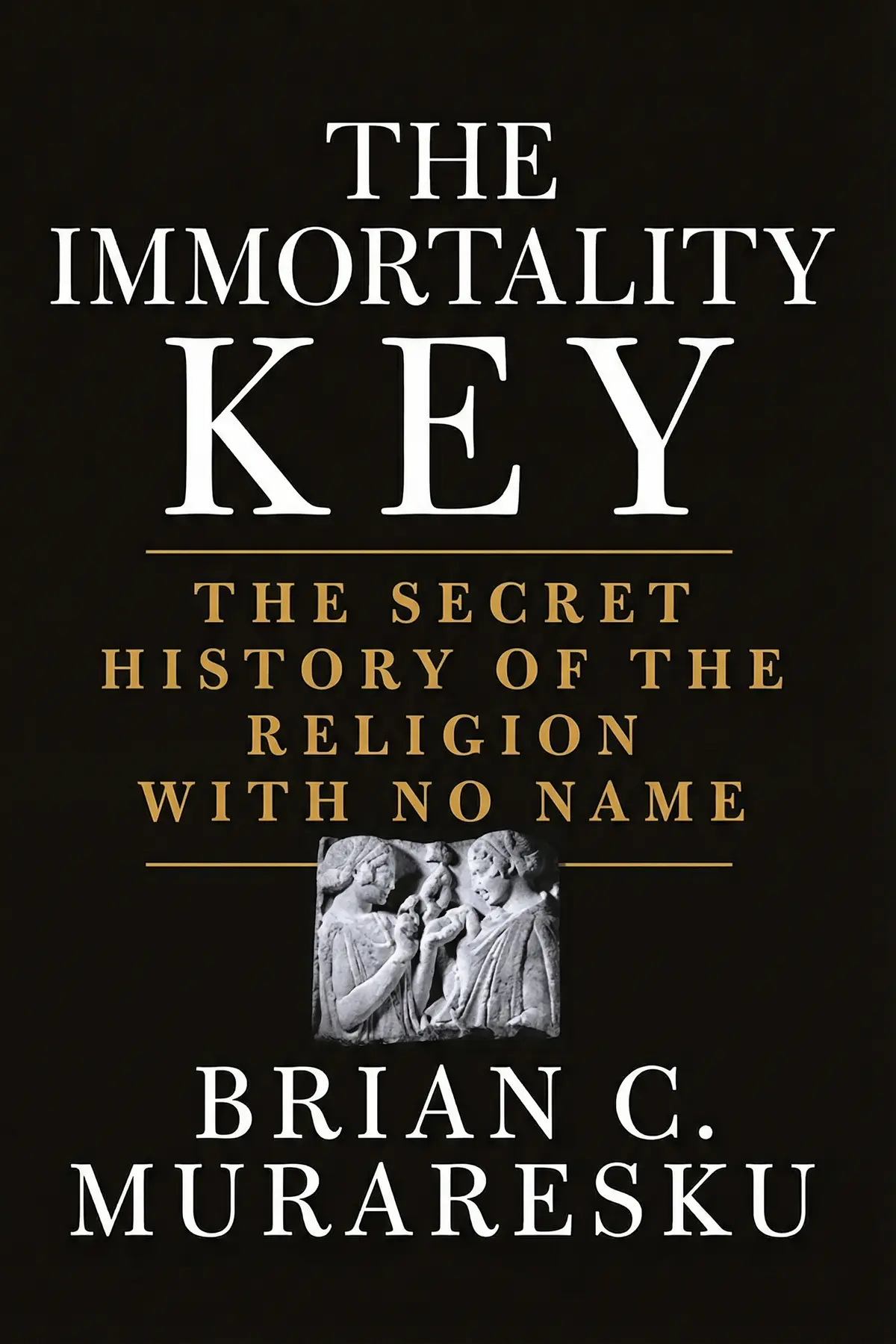
Many people who attend church or follow a ritual feel they are going through the motions. Brian C. Muraresku, a lawyer and scholar raised Catholic, felt that way about the Eucharist. He spent twelve years chasing a theory first floated in the 1970s and widely mocked: that the sacred drinks of the ancient world contained psychedelics. His trail runs from the Mysteries of Eleusis near Athens to a Greek temple in Catalonia where a chalice tested positive for ergot. It passes through a priestess on a vase in the Louvre and a physician's recipes for nightshade wine. It reaches early Christian mosaics beneath St Peter's Basilica and a vessel of opium and cannabis found near Pompeii. Muraresku is open that the Christian side of his case is not yet proven. Readers get a clear account of the evidence, a sense of where it stops, and a reason to care now. Psilocybin trials report experiences that people describe in religious terms, and many people in the West call themselves spiritual but not religious. Muraresku argues that our ancestors may already have understood what these trials are finding.
Readers curious about psychedelic therapy who want its deeper history.
People raised in a church who find its rituals empty and wonder what they once meant.
Fans of ancient Greece and Rome who enjoy archaeology told as a detective story.
Brian C. Muraresku is a lawyer based in Washington D.C. and was the founding executive director of Doctors for Cannabis Regulation. He studied Latin, Greek and Sanskrit at Brown University, and The Immortality Key was his first book. The Immortality Key was his first book.
Listeners find the work exceptionally well-researched, specifically regarding its look into religious history and psychedelics, and they value the superb prose and immersive narrative style. It is described as intriguing and evocative, with one listener highlighting how it shifts their view on organized religion. The tempo of the book gets varied feedback; while some consider it captivating, others characterize it as a slow grind.
Wow. This book completely reframed how I view the origins of Western spirituality. Muraresku takes us on a deep dive into the "pagan continuity hypothesis," suggesting that the early Eucharist was actually a psychedelic brew rooted in ancient Greek traditions. As a fan of both history and chemistry, I was hooked by the archaeobotanical evidence he digs up. To be fair, he does write with the flair of a thriller novelist, which makes the 400+ pages fly by, even when the data gets dense. The way he connects the Eleusinian Mysteries to the Dionysian cult and eventually to early Christianity is nothing short of brilliant. Look, whether you agree with his conclusions or not, the research into the suppressed role of women and sacred medicine is undeniable. It’s an intellectual adventure that feels like a more grounded version of a Dan Brown story. I finished this feeling a profound sense of awe for our ancestors' connection to the divine. Truly a masterpiece of historical detective work.
Show moreEver wonder why the early Church was so intent on wiping out "witches" and their herbal brews? Muraresku presents a convincing case that the war on drugs is actually a 2,000-year-old war on spiritual autonomy. His journey through the Mediterranean to uncover the "Immortality Key" is both a scholarly triumph and a gripping travelogue. I was especially moved by the stories of modern cancer patients using psilocybin to find peace, mirroring the ancient rites of Eleusis. The truth is, the Catholic Church has spent centuries gatekeeping the divine, and this book tears down those walls with meticulous research. I loved the focus on the lost role of women in these rituals. It’s high time we acknowledge that our ancestors weren't just drinking "wine," but something much more potent. This book is a rare find—it changes your perspective on the world and makes you question everything you thought you knew about the Eucharist. Essential reading for seekers and skeptics alike.
Show moreFinally got around to reading this and it’s a total game-changer. The Immortality Key isn't just a book about drugs; it's a book about the fundamental human desire to touch the infinite. Muraresku’s writing is evocative and deeply respectful of both the science and the mystery. He presents a history where the "holy" was something you experienced, not something you were told about. I found the connection between the ancient "science of awe" and modern psychedelic therapy to be the most compelling part. It makes the ancient world feel incredibly relevant to our current mental health crisis. In my experience, few books manage to be this informative while remaining so emotionally resonant. It’s a long journey, but every page feels like it’s peeling back another layer of a massive historical cover-up. If you want to understand the roots of Western civilization, you need to read this. Five stars without hesitation.
Show moreNothing else I’ve read this year has challenged my worldview quite like this. Muraresku has a way of making 2,000-year-old history feel like a breaking news story. He traces the use of psychoactive "kykeon" from the secret rituals of Eleusis straight into the heart of the early Christian house churches. The way he highlights the suppression of women as the keepers of these "sacred medicines" is both enlightening and infuriating. Truth is, this book feels like a reclamation of a lost heritage. The writing is elegant, the pacing is mostly great, and the "insider" look at the Vatican was a total thrill. I loved how he stayed "sober" throughout his research to maintain his integrity; it adds a layer of objectivity to a subject that is usually shrouded in stoner tropes. This is serious scholarship disguised as a page-turner. If you’re even remotely interested in religion or history, buy this immediately.
Show moreThe connection between the Greek cult of Dionysus and the Gospel of John was the "aha" moment for me. Muraresku’s deep dive into the "vine" imagery and the potential for fortified wines in the ancient world is genuinely brilliant. He managed to take a topic that could have been very "fringe" and turned it into a sophisticated, multi-disciplinary investigation. Frankly, I couldn't put it down. It’s refreshing to see someone tackle the origins of religion without the usual dogma or dismissiveness. The book is long, but I found the "slog" to be part of the experience—it felt like I was on the hunt alongside him. He asks the big questions: What if the Eucharist wasn't a symbol, but a technology for transcendence? It’s a bold, beautiful, and deeply researched book that deserves all the praise it’s getting. A definitive 5 stars for shifting the paradigm.
Show morePicked this up after hearing Muraresku on a podcast and was immediately sucked into the mystery of the "God pill." The author’s passion for the subject is infectious, and his linguistic skills are impressive, especially when he’s decoding ancient Greek and Latin texts. I particularly enjoyed the sections on the "science of awe" and how these substances might have helped people "die before they die." However, I’ve got to say that some of the connections he makes feel like a stretch, especially the jump from prehistoric beer to the literal Last Supper. It’s a compelling narrative, but there are moments where the evidence feels a little thin compared to the grandiosity of his claims. Still, the exploration of the Vatican’s secret archives was absolutely fascinating. It’s a thought-provoking read that challenges the orthodox history of the Church. Even if it’s a bit of a slog in the middle, the payoff is worth it for anyone interested in the intersection of drugs and religion.
Show moreAs a former theology student, I found Muraresku’s exploration of the "Dionysian Jesus" to be absolutely riveting. He manages to bridge the gap between classical antiquity and the birth of Christianity in a way that feels both fresh and dangerous. The chapters detailing his visits to the Vatican archives felt like a high-stakes spy novel, which kept the pacing brisk despite the heavy academic subject matter. Not gonna lie, some of his "leaps" regarding Gobekli Tepe felt a bit ungrounded, but the core thesis regarding the Greek influence on the Gospel of John is incredibly strong. He captures that sense of "awe" perfectly. My only real gripe is that he tends to repeat himself, frequently reminding the reader of previous points as if he’s worried we’ve forgotten the trail of breadcrumbs. Regardless, it’s a beautifully written book that humanizes the ancient world. It’s a 4-star read for me, mostly because it succeeds in making me want to dig deeper into archaeochemistry.
Show moreAfter hearing so much hype about the "psychedelic origins of Christianity," I went in with a healthy dose of skepticism. What I found was a remarkably well-researched, if sometimes over-enthusiastic, look at how the early Church evolved. Brian Muraresku writes with a lawyer’s precision and a poet’s soul. He doesn't just claim things were "spiked"; he looks at the chemical analysis of ancient storage jars and the linguistic nuances of the New Testament. Look, does he prove beyond a shadow of a doubt that Jesus was handing out ergot? No. But he makes the possibility feel plausible enough to warrant serious discussion. The book is a bit long-winded in parts, and the "journey" structure can be a little repetitive. But the core message—that we’ve lost a direct, experiential connection to the divine—is powerful. It’s a 4-star book that will definitely spark some heated debates at your next dinner party.
Show moreThe chapter on the "witches" of the 16th century was by far the highlight of this book for me. It provided a much-needed context for why these psychedelic traditions were eventually driven underground by the Inquisition. However, for every brilliant insight, there seemed to be fifty pages of the author describing his travels or what he ate for dinner. To be fair, Muraresku is a great writer, but he definitely needed a more ruthless editor to trim the fat. The book oscillates between being a serious scientific inquiry and a personal memoir, and those two styles don't always mesh well. I’m fascinated by the idea that the Eucharist was originally a spiked beverage, yet I wish there was more "hard" data and less "Dan Brown" style intrigue. It’s an interesting hypothesis with some thin threads of evidence. It’s worth a read if you have the patience, but don't expect a smoking gun. A solid 3 stars for the effort and the beautiful prose.
Show moreThis book is a massive disappointment that relies far too heavily on wild speculation and "what ifs." While Muraresku is clearly enthusiastic, he makes enormous logical leaps that often ignore thousands of years of geographical and temporal separation between his "proofs." Frankly, it feels like he’s trying to force a pre-conceived narrative onto history rather than letting the facts speak for themselves. There is so much filler here that it could have easily been a long-form article instead of a bloated tome. I also found his subtle hostility toward organized Christianity quite off-putting, as it clouded the objective analysis I was hoping for. The writing style is overly dramatic, almost desperate to sound profound when the evidence is just "chemical traces on a single tooth." If you’re looking for rigorous historical analysis, look elsewhere. This is more of a speculative "alt-history" journey than a serious academic work. Two stars only because the descriptions of the Catacombs were interesting.
Show moreBrian C. Muraresku argues that the sacred drink at the Mysteries of Eleusis was probably laced with a hallucinogen, and that the earliest Christian Eucharist may have used similar wine. He backs the Greek side with ergot found on a temple chalice in Spain and with nightshade wine recipes by the physician Dioscorides. He admits the Christian side is not yet proven.
At Mas Castellar de Pontós, a Greek town in Catalonia, tests on a chalice and a human jawbone from a temple detected ergot, a hallucinogenic fungus. A vase in the Louvre seems to show a priestess adding a herb or fungus to wine. And Dioscorides recorded close to 60 wine recipes, many mixing wine with nightshades, which he said bring visions.
No, and Muraresku says so. He offers clues: vine mosaics, symbols of the wine god Dionysus, in an early Christian tomb beneath St Peter’s Basilica, and a vessel from the Villa Vesuvio near Pompeii containing opium, cannabis and nightshades. These show a psychedelic Eucharist was possible. He believes testing early Christian cups could settle the question, but the Vatican controls much of the evidence.
Muraresku opens with Dinah, an atheist cancer patient in a Johns Hopkins psilocybin study who described feeling immersed in God’s love. Seventy percent of participants ranked their single session among the most meaningful experiences of their lives. He links this to falling religious affiliation and argues that if the ancients used psychedelics for spiritual breakthroughs, modern societies should reconsider their stance.
Michael Axworthy
Tom Standage

Ishmael Beah




William J. Bernstein

Ben Macintyre


AUDIO SUMMARY AVAILABLE
Get the key ideas from The Immortality Key by Brian C. Muraresku, plus 5,000+ more nonfiction titles.









