
13 min 41 sec
Available in: English
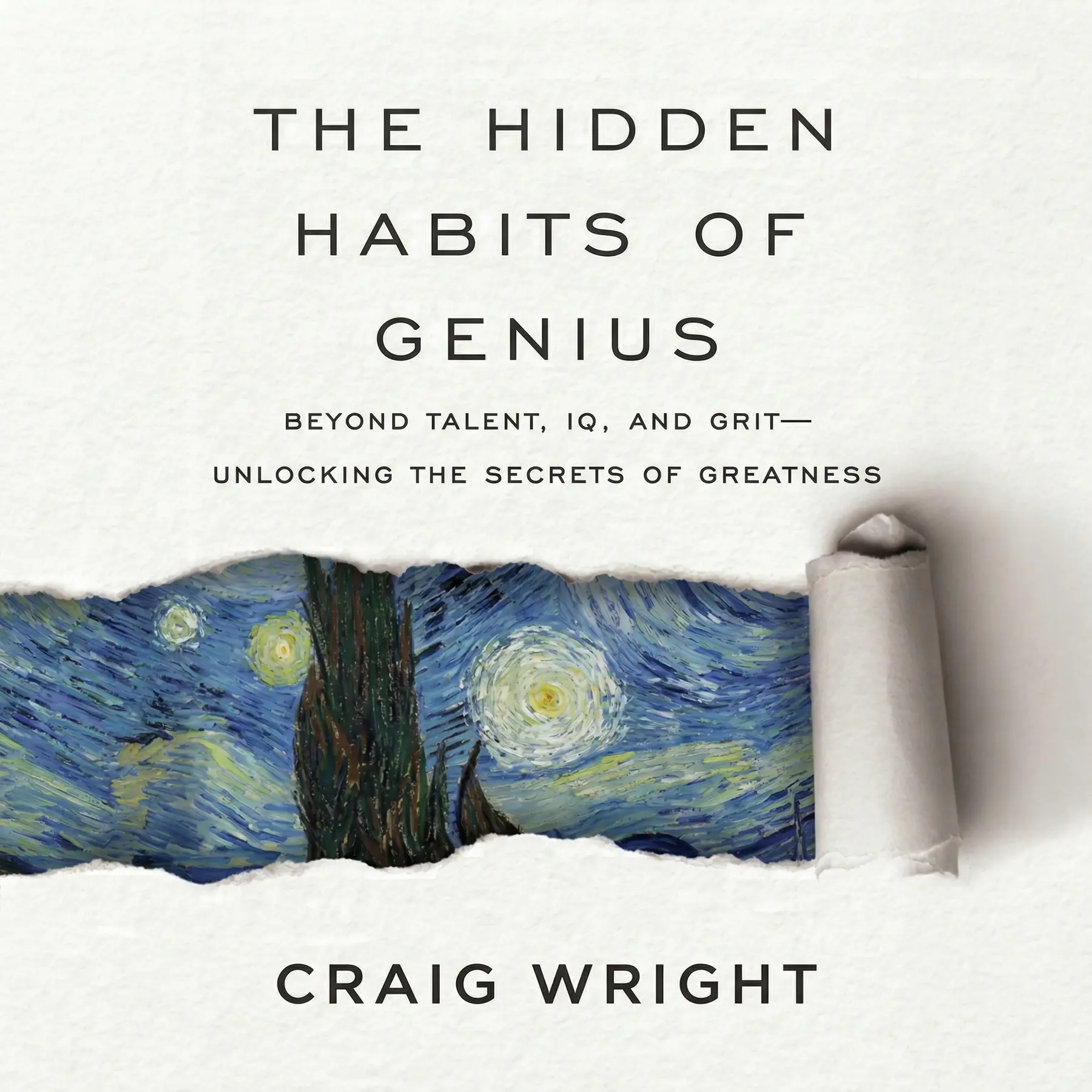
The Hidden Habits of Genius: Beyond Talent, IQ, and Grit – Unlocking the Secrets of Greatness
By Craig Wright
Shows the habits that people like Leonardo, Einstein, Picasso and Mary Shelley had in common, from childlike curiosity to slow walks and dreams, and how to bring each one into your own work.
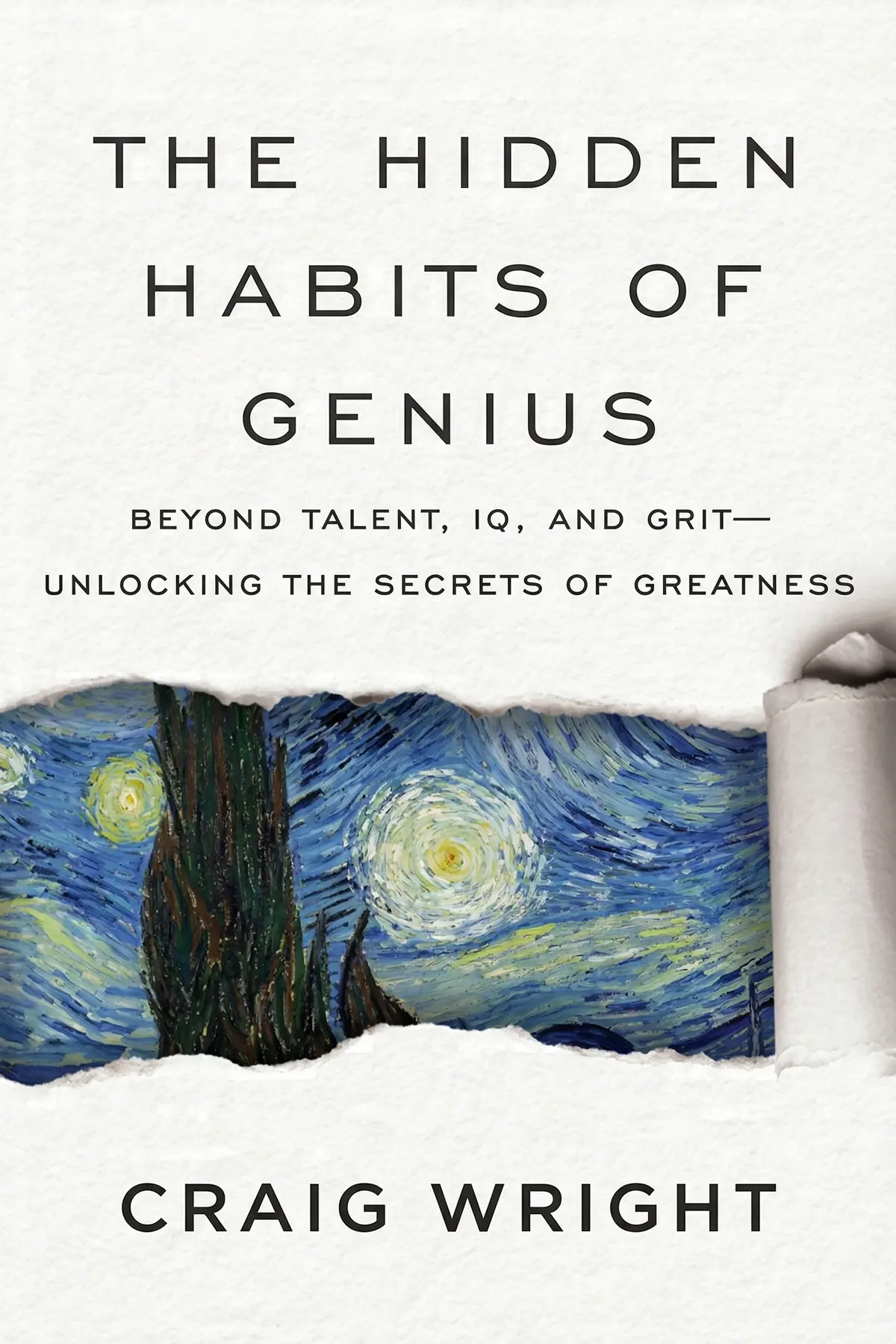
Table of Content
1. Introduction
1 min 03 sec
Most of us treat genius as a gift handed out at birth, something you either have or never will. In The Hidden Habits of Genius, Yale music historian Craig Wright argues for a more useful view: the people we call geniuses share habits, and habits can be borrowed. Leonardo da Vinci, for one, never got the Latin and Greek schooling his era prized, yet his daily notes read like the plans of a man determined to understand everything.
Wright built the book from his Yale course on the nature of genius, drawing on figures from Mary Shelley and Picasso to Einstein and Yayoi Kusama. His throughline is that greatness rests on a handful of practices. These include a child’s way of seeing, wide curiosity, fierce focus balanced by real rest, the nerve to break rules and the knack of turning weakness into material. None of them will make you Leonardo. Each can make next week’s work a little sharper, and even a walk a little more productive.
2. Let curiosity roam far beyond your field
1 min 58 sec
One of history’s most accomplished minds never received the education his own era considered essential. A single page of his daily errands shows what he had instead, and it is something almost anyone can grow.
3. See your work again through a child's eyes
1 min 51 sec
A teenager wrote one of the most famous horror novels ever, and a technically brilliant painter took a long time learning how to become young. Together they suggest that growing up may cost more creativity than we think.
4. Guard deep focus the way geniuses did
1 min 58 sec
Einstein could work through almost anything, while Nabokov needed a very strange office to write one of his most famous novels. Which kind of worker you are decides how you should protect your attention.
5. Let your best ideas arrive by stepping away
1 min 52 sec
Newton could hold a problem in his mind for hours, yet some of history’s biggest creative breakthroughs came on long walks and in dreams. The trick lies in the pace and the pause.
6. Spot the rule worth breaking in your field
1 min 58 sec
A commercial artist looked at New York galleries and felt something was badly out of date. A monk looked at his church and felt the same. Their answers reshaped art and religion.
7. Turn a personal struggle into creative fuel
1 min 52 sec
An ancient philosopher linked greatness with madness, and a modern study of British poets found a startling number to back the link. One artist in Tokyo shows what can be done with that pain.
8. Conclusion
1 min 09 sec
Wright’s portraits cover centuries and cultures, from a single day in Leonardo’s Milan to a studio across the street from a Tokyo hospital, and the same pattern keeps coming back. The geniuses he studies held opposite states in balance: the locked-door focus of Tolstoy and the long, slow wandering of Dickens. They kept a child’s daring alongside an adult’s discipline. They also treated both the rules of their field and their own troubles as raw material.
That balance is what anyone can borrow. The next time a problem will not move, give it an unbroken hour behind a closed door, and if it still resists, stop. Go for a walk at an easy pace, slow enough that your mind drifts away from your feet, and let a night’s sleep finish the job. Somewhere in the same week, follow one curiosity that has nothing to do with your work, the way Leonardo chased canal locks and the measurement of the sun.
Leonardo’s list was never a plan for a masterpiece. It was one ordinary day, filled with questions, and Wright suggests that is where genius begins.
About this book
What is this book about?
Most of us think of genius as a gift you are born with or without. Craig Wright, who taught music history at Yale for more than four decades, argues that the people we call geniuses share a set of habits. Habits can be studied and borrowed. Drawing on his Yale course on the nature of genius, Wright looks at figures from Leonardo da Vinci and Martin Luther to Andy Warhol and Yayoi Kusama. He finds the same traits again and again. They see the world with a child's freshness and stay curious about almost everything. They concentrate intensely, and they also make time to walk, rest and dream. They break the rules of their field, and some of them turn a painful personal struggle into a source of creative work. Readers get a short list of practices with a story behind each one: Leonardo's to-do list, Einstein writing equations with a baby on his knee, Nabokov working in a parked car, and Dickens walking miles a day. Each comes with a small step you can try in your own life.
Book Information
Who it's for
Knowledge workers wanting focus
Knowledge workers whose days are broken up by messages and who want deeper focus and better ideas.
Creative professionals feeling stale
Creative professionals who feel their skill has hardened into routine.
Curious about genius
Curious readers who want to know what set figures like Leonardo, Einstein and Picasso apart from everyone else.
About the Author
Craig Wright
Craig Wright is a music historian and professor emeritus of music at Yale, where he taught for forty-four years. He studied at the Eastman School of Music and earned his master's degree and doctorate at Harvard. The Hidden Habits of Genius grew out of his Yale course, Exploring the Nature of Genius. He has received a Guggenheim Fellowship and an honorary doctorate from the University of Chicago, and in 2011 he was elected to the American Academy of Arts and Letters.
Ratings & Reviews
Ratings at a glance
What people think
Listeners find the content captivating and packed with detailed information. They value the book's perceptiveness, with one listener mentioning how it integrates several different disciplines. The storytelling is praised, as one listener points out how the anecdotes are shared in a concise manner.
Top reviews
Willow
Wright manages to pull back the curtain on what it truly means to be a game-changer in any field. I found the cross-disciplinary approach refreshing because it connects the dots between 18th-century composers and modern tech moguls. The anecdotes are succinct, ensuring the narrative never feels bogged down by dry academic data. Frankly, it’s a dense read that manages to stay engaging throughout every chapter. My only minor gripe is the occasionally repetitive nature of the habits themselves. It is a fantastic exploration of the human mind.
Show moreKoi
It’s rare to find a book that blends rigorous research with such readable prose and practical takeaways for daily life. I was struck by how many geniuses relied on simple habits like long walks, daydreaming, and even consistent exercise to fuel their work. The author does a great job of showing that original thinking is often a marathon, not a sprint. Every page seems to contain a new interesting fact about people we think we already know, like Ben Franklin or Picasso. Look, if you want to understand the mechanics of creativity, this belongs on your shelf.
Show moreRin
Truth is, I used to think genius was just about being born with a giant brain and a high IQ. This book completely dismantled that myth by focusing on original thinking and the persistence to see a vision through. The stories about Jack Ma and Albert Einstein failing in school were particularly inspiring for anyone who struggled with traditional education. Wright’s anecdotal style makes the information stick in a way that a textbook never could. It is an insightful, broadly researched masterpiece that challenges our modern obsession with standardized testing and grades.
Show moreEleni
Ever wonder what actually separates a high-IQ person from a world-changing genius who leaves a lasting legacy? Wright’s formula G = S x N x D provides a fascinating framework for answering that specific question. I loved the chapters exploring how hidden habits like curiosity and rule-breaking are more vital than raw test scores. The book is packed with insights, especially regarding how many geniuses were actually late bloomers or academic failures. Not gonna lie, it changed how I view the importance of standardized testing for my own children.
Show moreLucas
Picked this up on a whim after seeing it on a best-seller list and it did not disappoint. The narrative moves at a brisk pace, delivering punchy stories about Charles Darwin, Steve Jobs, and even Lady Gaga. It’s dense with information but never feels overwhelming because the author’s tone remains conversational and accessible. To be honest, I appreciated the distinction he made between being a child prodigy and a true creative genius. It is an empowering read for anyone who felt like they didn't fit the standard academic mold in school.
Show morePridi
As a music enthusiast, I appreciated Dr. Wright’s unique perspective, though I wish he leaned more into his Yale musicology background. The chapter on musical genius was a highlight, but the book spends quite a bit of time on business figures. I found the fox versus hedgehog concept to be a particularly useful way to categorize different styles of thinking. Some of the billionaire quotes felt a bit like filler to me, but the overall historical research is top-notch. It’s a solid, multi-disciplinary look at the depths of human potential.
Show moreMatteo
While the narrative flows beautifully, the actual habits discussed occasionally felt like common-sense advice wrapped in very fancy packaging. I was slightly disappointed that the research didn't dive deeper into modern psychological theories like Dweck’s growth mindset or Ericsson’s deliberate practice. The distinction between a prodigy who mimics and a genius who creates was well-handled and clear, though. It’s an engaging collection of biographies, but it lacks the scientific depth of other academic books on talent. Still, it’s worth a read for the historical anecdotes alone.
Show moreMoo
Finally, a book that acknowledges the structural barriers preventing half the population from ever being recognized as a genius. The chapter dedicated to women was deeply necessary and highlighted figures like Mary Shelley and Marie Curie with great care. Wright shows that genius isn't just about talent, but also about the opportunity to be heard in a crowded room. I found the writing style to be succinct yet incredibly dense with historical context. This is the kind of book you want to devour slowly to absorb all the cross-disciplinary connections.
Show moreLeila
The intersection of morality and achievement is where this book gets genuinely uncomfortable and complicated. Wright doesn’t shy away from the fact that many of our greatest minds were absolute monsters to their families and peers. Reading about how these geniuses exploited those around them for the sake of their art was eye-opening. While the writing is insightful, I struggled with the conclusion that we should just be grateful for their contributions. It’s a dense, challenging book that leaves you questioning if the team really should take one for the collective good.
Show moreJonathan
Maybe I expected too much from a Yale professor, but this felt like a glorified self-help manual. The constant hero-worship of figures like Jeff Bezos and Elon Musk was incredibly distracting for me. Just when I got interested in the accomplishments of Leonardo da Vinci, the author would pivot to a quote from a billionaire. It feels superficial to equate world-altering art with massive wealth accumulation. To be fair, there are some decent stories about Marie Curie, but they are buried under platitudes and corporate quotes.
Show moreQuestions about this book
What is the main idea of The Hidden Habits of Genius?
Craig Wright argues that the people we call geniuses share habits that anyone can study and borrow. Across very different times and cultures, he finds the same traits: a childlike way of seeing, curiosity about almost everything, intense concentration paired with real rest, the courage to break rules, and the ability to turn a personal difficulty into a source of creative work.
What can we learn from Leonardo da Vinci's to-do list?
Leonardo’s list for one day in Milan included working out the area of the city, finding a book on local churches, learning to square a triangle, inspecting a crossbow, finding out how a canal lock could be repaired and asking a man about measuring the sun. Wright uses it to show that Leonardo, who lacked an elite education, was driven by curiosity about nearly everything.
Why does Craig Wright say walking helps creativity?
Wright points to the Peripatetic philosophers, who reportedly debated as they walked at Aristotle’s school, and to Charles Dickens, who supposedly covered as many as 15 miles daily on foot while writing A Christmas Carol. Walking relaxes the mind so ideas can surface. The book adds that the pace should stay leisurely, because a fast walk makes the mind focus on the walking itself.
How can I apply The Hidden Habits of Genius in daily life?
Protect stretches of deep focus, the way Tolstoy locked his door or Nabokov wrote in his parked car. Balance them with slow walks and good sleep, since Dalí and Paul McCartney had breakthroughs in dreams. Explore something outside your usual interests, and look at your field’s accepted rules to see which ones no longer match the world around you.
Who should read The Hidden Habits of Genius?
It suits professionals and students who want sharper ideas without assuming genius is purely inborn. Readers who feel scattered by constant interruptions will find practical lessons on concentration and rest. Creative workers who feel stuck in routine will find stories about Picasso, Warhol and Mary Shelley that show how a fresh, rule-breaking eye produces original work.
Readers also enjoyed

59 Seconds: Change Your Life in Under a Minute
Richard Wiseman






A Guide to the Good Life: The Ancient Art of Stoic Joy
William B. Irvine


A High-Performing Mind: Strengthen Your Mind and Live Your Best Life
Andrew D. Thompson
AUDIO SUMMARY AVAILABLE
Listen to The Hidden Habits of Genius in 15 minutes
Get the key ideas from The Hidden Habits of Genius by Craig Wright, plus 5,000+ more nonfiction titles.
- 5,000+ titles
- Listen as much as you want
- 7-day free trial
- Cancel anytime









