

59 Seconds: Change Your Life in Under a Minute
Richard Wiseman
 English
 ไทย
Shows why happiness has to come before success, not after it, and offers simple tools for protecting your time, keeping a purpose, cutting needless decisions, facing fears and trusting your own judgment.
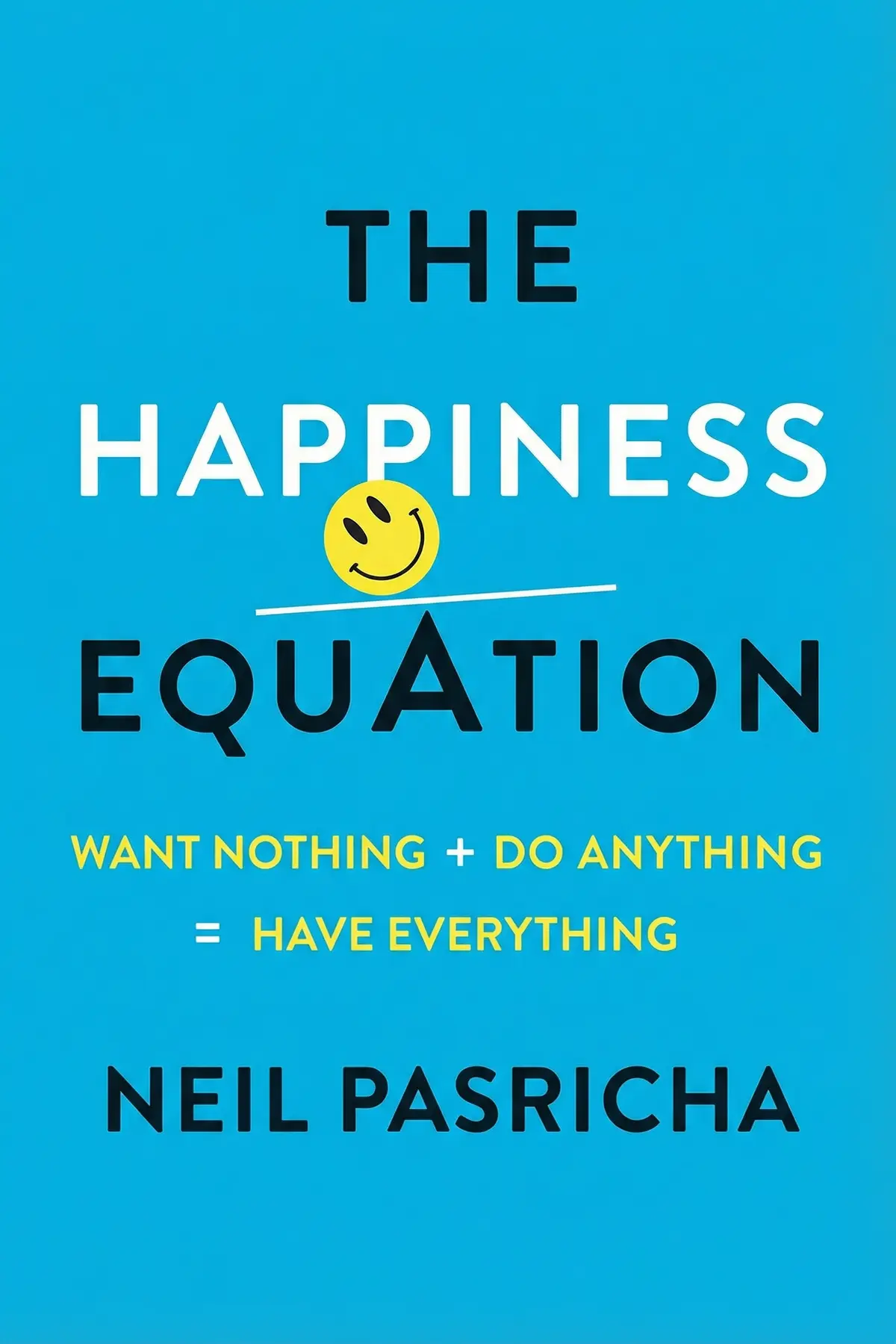
1 min 03 sec
If happiness feels like something waiting behind the next promotion or finished project, Neil Pasricha says you have the order backwards. In The Happiness Equation, the creator of the blog 1000 Awesome Things argues that happiness comes first, and great work and success grow out of it. Outside events such as a raise, he notes, explain only about 10 percent of how happy a person feels. The rest depends on how we see the world.
The book began as a long letter to his unborn son, and its subtitle states the formula: want nothing, do anything, have everything. Stop waiting on external rewards, protect your time and attention, act on what you love as yourself, and contentment follows. The tools are small and usable at once: a nightly writing habit, a way to find your real hourly wage, a wardrobe that saves a week a year and one question to ask on a Saturday morning.
1 min 56 sec
A blog started purely for fun turned into a race for millions of visitors and a bestseller. Its creator discovered why hitting each target left him wanting more, and what finally broke the loop.
1 min 58 sec
Your brain is built to spot saber-toothed tigers, and a neighbor’s new car can wreck a good afternoon. One startling number about everyone who has ever lived puts both problems in a different light.
2 min 00 sec
Retirement was designed for a world where people died at 67. On an island where people live longer than anywhere else, there is no word for it at all, and a long study suggests why that matters.
1 min 52 sec
A Harvard graduate earning six figures and a retail assistant manager earning far less turn out to have something surprising in common. The comparison changes how a job offer or a raise looks.
1 min 52 sec
One man buys thirty identical pairs of socks once a year and figures the habit saves him a full week annually. Add a deadline trick from a 1955 scholar, and the hours you thought you lacked start to appear.
1 min 45 sec
For years the author was sure he could not swim and did not even want to. What changed his mind came in a surprising order, and it applies to almost anything you have quietly written off.
1 min 50 sec
Friends, family, experts and even old proverbs hand out advice that flatly contradicts itself. A single question about your free weekend mornings offers a better guide to who you are and what to do next.
1 min 09 sec
The equation in the subtitle turns out to describe a mindset. Want nothing means letting go of the next car, the next title or the next ten million visitors as the condition for feeling good. Do anything means acting on what you love, even through fear, with time you have deliberately protected. Have everything is the realization Pasricha keeps returning to: being alive at all, the lucky one in fifteen, means you already hold what you need.
His own story shows the logic. A blog started for pleasure became a chase for numbers, and happiness returned only when he went back to the pleasure.
He suggests a gentle way in. Pick the one practice that fits you best, perhaps the nightly replay, a private deadline or the Saturday question, and keep it for seven days, marking each day on a calendar. Finishing one week shows you can manage another, and then another. Small, repeated and chosen for its own sake, the habit becomes proof that happiness was never waiting at the finish line.
Most people are taught to postpone happiness: work hard, hit the target, then enjoy life. Neil Pasricha argues that this order is the cause of much of our unhappiness. In his equation, contentment is the starting point, and good work and success grow out of it. The book began as a long letter to his unborn son and is organized as a set of practical lessons. Pasricha draws on brain science, a seven-year Tohoku University study of 43,000 people, the history of retirement and his own experience, including the blog that turned from a joy into a chase for numbers. He explains why the anxious brain often beats the rational one, why a big salary can hide a modest hourly wage and why an extra week a year can come from owning identical socks. Readers get small, concrete habits: a nightly happiness replay, a 168-hour weekly split, private deadlines, a way past the beliefs that keep them from trying new things and a Saturday morning question that points toward their true self.
Professionals who keep postponing happiness until the next promotion or milestone.
Overworked people who want a clear way to value their hours and reclaim time for what they love.
Anyone stuck on old fears, envy or conflicting advice who wants simple daily habits.
Neil Pasricha was born in Oshawa, Canada, to parents who immigrated from Punjab and Nairobi. After a painful period in his late twenties, he started the blog 1000 Awesome Things, which won three Webby Awards and led to The Book of Awesome. He is a New York Times bestselling author who writes about intentional living, hosts the podcast 3 Books and speaks regularly. He studied at Queen's University and Harvard Business School and was named to Canada's 40 under 40 in 2018.
Listeners find this work highly accessible and skillfully authored, offering actionable tips and valuable insights within each section. Furthermore, the title offers effective strategies for cultivating joy and encourages audiences to contemplate life’s purpose, all while remaining engaging and enjoyable. Listeners also value the direct style of the content, with one listener highlighting that the material is grounded in modern research.
This book completely flipped my perspective on the relationship between work and joy. For years, I believed that success was the prerequisite for happiness, but Pasricha argues the exact opposite is true. The "Happiness First" model is a game-changer because it prioritizes mental well-being as the fuel for productivity rather than the reward. I specifically loved the practical tips like the 2-minute meditation and the practice of writing down five gratitudes every week. While the writing style is very casual and filled with simple scribbles, the underlying research feels solid and actionable. It is a refreshing departure from dense, academic self-help books that often feel like a chore to finish. Truth is, we all need a reminder to unplug and find our 'ikigai' in a world that never stops moving.
Show moreEver wonder why you feel like you're constantly chasing a finish line that keeps moving further away? Pasricha tackles this head-on by dismantling the myth that milestones equal satisfaction. I found the 'remember the lottery' concept to be a beautiful way to ground myself in gratitude for the simple fact of being alive. The book is visually engaging with its various graphs and sketches, which makes the concepts much easier to digest and remember. I’ve already started implementing the '20-minute replay' by writing about positive experiences, and it really does help shift my mood. This isn't just a book about smiling more; it’s about aligning your thoughts, words, and actions to be your most authentic self. It is easily one of the most useful non-fiction books I have picked up this year.
Show moreWow, I didn't expect a self-help book to be this fun and visually engaging while still providing heavy-hitting life lessons. The single best piece of advice in the book is to stop taking everyone else's advice and start listening to yourself. It sounds simple, but Pasricha explains how to actually do that by testing how you feel in new situations and finding your flow. I loved the emphasis on random acts of kindness and how they contribute to a sense of community and personal well-being. The 2-minute meditations have already become a part of my morning routine, and they really do help reduce my daily stress levels. This book is a great reminder that being happy is a choice we have to make every single day. I'll be keeping this on my shelf for a long time.
Show moreFinally got around to reading this, and I was pleasantly surprised by how many actionable 'secrets' are packed into these pages. Secret #6 about decision fatigue was a standout for me, especially the part about reducing mundane choices like what socks to wear. It sounds silly at first, but clearing that mental space really does help you focus on the big stuff. The author has an easy cadence that keeps the pages turning, and his positivity is quite infectious throughout the chapters. I did find the 'never retire' argument a bit controversial, as not everyone views work as their primary source of stimulation. Still, the idea of having a 'second wind' is much more appealing than just fading away into idleness. It is a solid 4-star read for anyone needing a motivation boost.
Show moreAs someone who struggles with burnout, the chapters on unplugging and hitting 'flow' were exactly what I needed to hear right now. The author does a great job of explaining why we feel so overwhelmed and offers simple ways to reclaim our time from the 'hot potato' of endless emails. Not gonna lie, some of the advice is pretty basic, but the way it’s framed makes it feel more achievable than other self-help manuals. I appreciated the focus on internal validation and 'doing it for you' rather than worrying about external criticism or keeping up with the Joneses. The writing is very to the point, which is perfect for someone with a busy schedule and a short attention span. It’s a fun, lighthearted guide that reminds us to focus on what actually matters.
Show moreLook, this isn't a deep academic study, but it serves its purpose as a practical and highly motivational guide for everyday life. The comparison between hourly wages and total effort was an eye-opener for me regarding work-life balance. I’ve spent too much time thinking that a higher salary justifies a miserable schedule, but this book helped me rethink that trade-off. While I didn't agree with every single point—especially the extreme stance on retirement—I found the majority of the 'secrets' to be well-researched and insightful. The advice to choose your five closest people wisely is something everyone should take to heart. It’s an encouraging read that pushes you to take responsibility for your own joy. I would definitely recommend it to anyone feeling stuck in a rut.
Show morePicked this up on a whim and found myself highlighting something on almost every single page during my afternoon commute. It’s a very straightforward approach to happiness that cuts through the fluff and gives you a clear roadmap to follow. I particularly enjoyed the discussion on turning your biggest fears into successes by simply gaining momentum through small, consistent wins. The idea that confidence comes after doing the work, not before, was a major 'aha' moment for me. While some parts felt a little repetitive, the overall message is powerful and incredibly relevant in our high-pressure society. It is a thought-provoking read that encourages you to live to the fullest without waiting for some far-off future goal. Definitely worth the time if you want a quick boost of positivity.
Show moreAfter hearing so much about Neil Pasricha's previous work, I had high expectations for this one. Some of the chapters, particularly those on living longer and finding a reason to wake up, were genuinely excellent and thought-provoking. However, I found the constant mentions of his Harvard MBA and the lifestyle of his wealthy friends to be a bit distracting and repetitive. It felt like the book was catering to a very specific demographic of high-achievers rather than the general public. To be fair, the advice on automating decisions to avoid fatigue is useful, even if it's something I've heard before in other productivity blogs. It’s a very quick, lighthearted read that works well for beginners in the self-improvement space, but seasoned readers might find it a bit banal.
Show moreThe concept of 'remembering the lottery' is a lovely sentiment, though the rest of the book felt a bit uneven for me personally. It started incredibly strong with the focus on the happiness-success reversal, but it seemed to lose a bit of momentum toward the middle. Some of the anecdotes about Harvard felt a little out of touch with reality for people who aren't in high-flying corporate circles. That being said, I did appreciate the sections on 'ikigai' and the importance of having a reason to get out of bed every morning. The layout is very user-friendly, and you can easily flip to a random page and find a helpful tidbit or a quick reminder. It’s a decent book, but perhaps a bit too light for those looking for more rigorous psychological analysis.
Show moreTo be fair, I really wanted to like this since I loved the Awesome books, but it felt like a total letdown. The whole premise is built on oversimplified concepts that often ignore the complexities of real-world struggles. I found the section on how to make more money than a Harvard MBA to be particularly annoying and somewhat condescending to the average worker. It feels like the author assumes everyone is obsessed with elite status or working 120 hours a week in corporate silos. If you have ever read a single book on positive psychology or habits, you won't find anything new or groundbreaking here. Frankly, the advice to 'just be happy' felt a bit contrived and lacked the depth I was looking for. It’s a fast read, but unfortunately, it just didn't add any real value to my life.
Show moreNeil Pasricha argues that happiness comes before success, not after it. Outside events such as a raise explain only about 10 percent of how happy we feel, so chasing them is a poor strategy. His formula, want nothing plus do anything equals have everything, means dropping external goals as the condition for contentment, doing things you love for their own sake and recognizing that you already have what you need.
It is a nightly habit Pasricha recommends. Just prior to sleep, use a journal to record a minimum of one moment from that day that brought you joy. The practice trains you to notice happy moments as they happen and lets you relive them a second time in the evening, building the inner habit of seeing the world positively that he believes drives most happiness.
Pasricha argues that retirement, a German idea from 1889 when average lifespan was 67, no longer fits long healthy lives. He points to Okinawa, where people live longest and have no word for retirement but value ikigai, the reason you wake up each morning. A seven-year Tohoku University study of 43,000 people found 95 percent of those with an ikigai still alive, against 83 percent without one.
Start with one practice for seven days and track it on a calendar, as Pasricha suggests. Options include the nightly happiness replay, splitting your week’s 168 hours into equal blocks for sleep, work and things you love, removing a repeated decision like what to wear, setting a private deadline earlier than the real one, or asking what you would do on a free Saturday morning.
Richard Wiseman





William B. Irvine


Andrew D. Thompson


Deepak Chopra
AUDIO SUMMARY AVAILABLE
Get the key ideas from The Happiness Equation by Neil Pasricha, plus 5,000+ more nonfiction titles.









