

14 min 34 sec
Available in: English
The Golden Thread: How Fabric Changed History
Shows how cloth, from Egyptian linen and Chinese silk to Viking wool sails and Apollo spacesuits, has driven trade, faith, exploration and sport, and who paid for it.
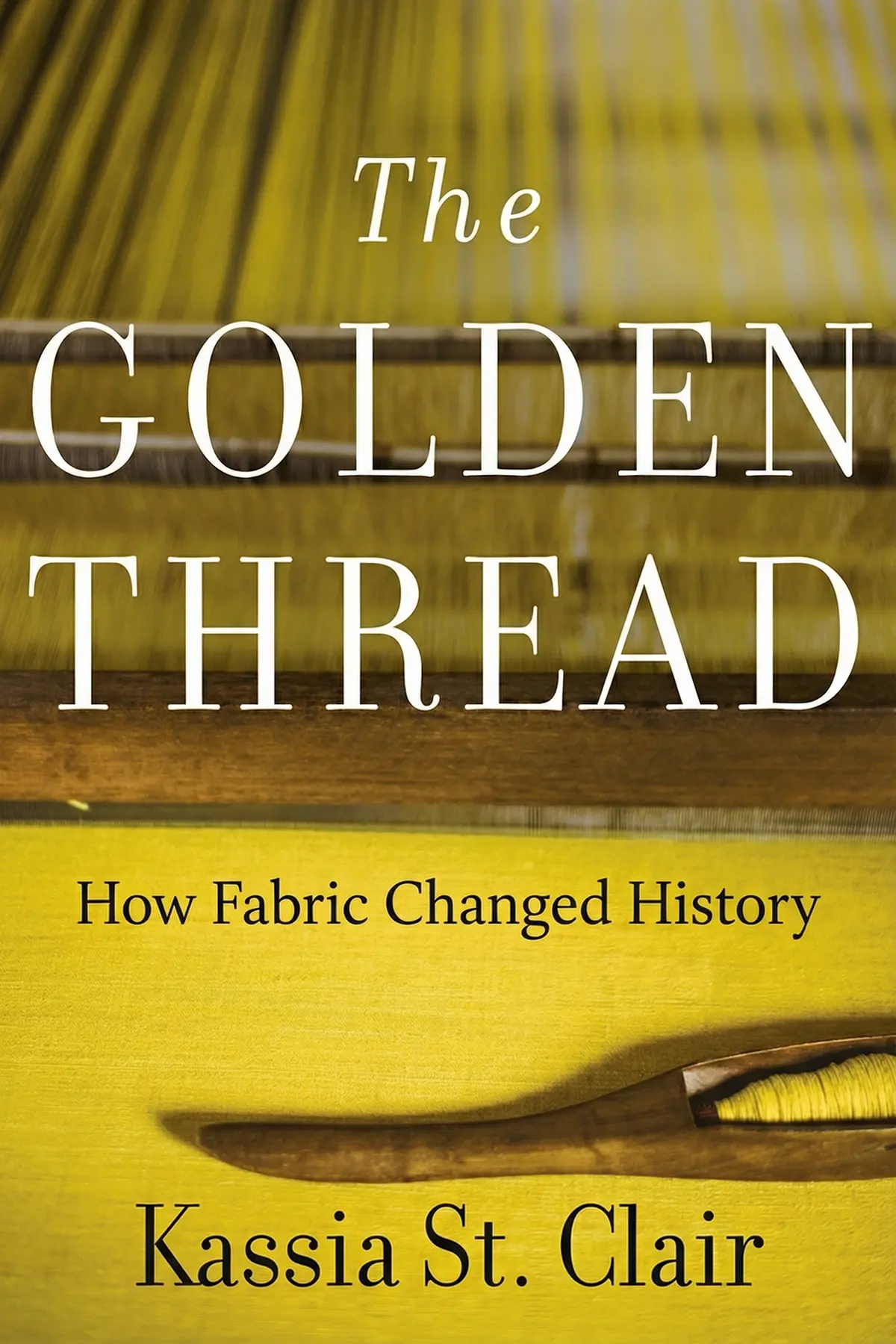
Table of Content
1. Introduction
1 min 12 sec
Most of us treat cloth as background, something we buy and wear without ever connecting it to history. In The Golden Thread, journalist Kassia St Clair, who studied history at Bristol, starts from a puzzle. We talk about a Bronze Age and an Iron Age, but nobody ever talks about a Flax Age or a Wool Age. Her explanation is that fabric rots while metal lasts, so archaeology has always been tilted against cloth. Yet spindles, looms and stray fibers turn up at digs everywhere.
St Clair argues that textiles have both expressed and driven human progress. Again and again, choices about cloth decided whether a society grew rich, whether a fleet reached new coasts, whether explorers came home and whether a race was fair. Those choices covered who made it, how, and at whose expense. Her stories run from Egyptian tombs and Chinese palaces to Viking longships, the Antarctic, wartime factories, the moon and the Olympic pool. After them, the shirt you are wearing starts to look like a technology with a long past, and sometimes a brutal one.
2. Read a culture by the cloth it treasures
1 min 38 sec
Many people think the wrappings on an Egyptian mummy were just packaging. St Clair argues the reverse, and the evidence lies in a secret room, some special numbers and one cloth with a weaver’s name on it.
3. Silk served as money, weapon and poetry
1 min 46 sec
A gift of fine cloth looks like friendship. In 198 BC China used it as part of a long-term plan against a rival people, and the same fabric later carried a poem that could be read thousands of ways.
4. Count the labor hidden inside a great voyage
1 min 37 sec
Wool lets air through and holds water, which makes it about the worst thing you could make a sail from. The Vikings did it anyway, and their sails took them to America.
5. Choose what works over what looks heroic
1 min 51 sec
Scott’s men tested their diets and weighed themselves to beat the Antarctic cold. A warmer option already existed, but an Australian climber had been laughed at for wearing it.
6. Ask who pays for the cheapest cloth
1 min 50 sec
Four million pairs of stockings sold out in two days, and synthetics went on to take over the world’s wardrobes. A French art historian’s diary shows what that cheap fabric cost the people forced to make it.
7. Discover the underwear makers who dressed the moonwalkers
1 min 46 sec
NASA’s engineers wanted specifications and documents. The company that actually built Neil Armstrong’s suit ran on seamstresses and girdle patterns, and someone had to find a way for the two to work together.
8. Spot when better gear stops being fair
1 min 49 sec
In 2009 a swimmer who was not ranked among the best beat Michael Phelps, and within six months the sport had changed its rules. The reason was in the fabric.
9. Conclusion
1 min 05 sec
St Clair’s thread links people who never met. A priest folds linen in multiples of three, a Norse family sorts wool through the winter, and a seamstress at a Singer machine stitches a suit for the moon. In every case cloth was technology, and what happened depended on choices about it. Look again and it shows up behind most human feats, protecting fragile bodies in places they were never built for.
The book also keeps asking who does the work. Women spun the wool for Viking sails, were tied to silk-making through a silkworm goddess, and sewed the Apollo suits. Forced laborers paid for rayon with their skin.
So check where a garment came from before choosing the throwaway one. When gear tempts you because it looks right, think of Scott turning away from down. When a new tool favors only the few who can buy it, ask whether the game is still fair.
History is usually told in bronze and iron. St Clair asks us to tell it in thread as well, starting with whatever we are wearing today.
About this book
What is this book about?
We name ancient ages after bronze and iron, never after flax or wool. Kassia St Clair argues that this is a trick of survival. Metal lasts and cloth decays, so archaeology has always undercounted fabric, even though spindles, looms and old fibers turn up at digs everywhere. The Golden Thread follows textiles through a series of turning points. Egyptian linen worked as money and made the dead sacred. Chinese silk bought goods, was meant to make a rival people depend on China and carried a poem that can be read in any direction. Lanolin-rich Viking wool, treated with fat and tar, became sails that reached America. Scott's men died in Antarctic cold partly because of the clothes they chose. Rayon's chemicals burned the forced laborers who made it, and a women's underwear company stitched the suits worn on the moon. Readers come away with a new way to look at history and at their own wardrobe. St Clair keeps asking who made the cloth, often women and sometimes forced laborers, and what it cost. Her stories also show how a material can widen human reach or quietly tilt a contest.
Book Information
Who it's for
History buffs
History lovers who want a fresh angle on Egypt, China, the Vikings and the space race.
Fashion insiders and shoppers
Designers, fashion workers and shoppers curious about what their clothes really cost.
Managers and engineers
Managers and engineers interested in how craft skill and technical cultures can work together.
About the Author
Kassia St Clair
Kassia St Clair is a journalist who writes about design and culture for The Economist, Elle and the Times Literary Supplement, and she has written a color column for Elle since 2013. She took a first in history at Bristol University and then studied English women's dress and the eighteenth-century masquerade at Oxford. Her first book, The Secret Lives of Colour, reached the Sunday Times top ten. The Golden Thread was a Sunday Times book of the year and was shortlisted for the Somerset Maugham Award.
Ratings & Reviews
Ratings at a glance
What people think
Listeners find the book highly accessible and thoroughly researched, offering captivating details on how textiles have played a vital role throughout human history. They value the prose and view it as educational, with one listener noting how it enhances understanding through anecdotes and quotations. The content receives positive feedback regarding its exploration of fabric usage, and one review highlights its beautiful descriptions of historical textiles. Listeners find the narrative engaging, with one describing it as a great trip through the history of mankind. However, the visual quality draws mixed reactions, with one listener noting the lack of illustrations.
Top reviews
Nitaya
Ever wonder how a tiny thread could topple an empire? St Clair has a real talent for excavating the forgotten bits of our past, weaving a narrative that makes something as mundane as a shirt feel like a miracle of engineering. This book is a masterclass in making history feel personal and tactile. I was particularly floored by the chapter on Viking sails—the idea that their naval dominance relied on the wool of two million sheep is staggering. It’s a remarkable compilation of well-researched stories that connects the dots between ancient Egyptian tombs and the high-tech suits used in space exploration. While some might find the jump between eras a bit sudden, the sheer variety of anecdotes kept me hooked. The writing is accessible, witty, and deeply educational without ever feeling like a dusty textbook.
Show moreChatchai
After hearing so many good things about St Clair’s style, I finally dove into this, and it didn't disappoint. It is an absolutely gorgeous history of fabric that looks at the world through a completely unique lens. The economic and gendered significance of silk in ancient China was a standout for me. Specifically, the story of Su Hui and her 3,000-way palindrome poem embroidered in silk was mind-blowing. The book is full of these 'a-ha' moments where you realize just how much our modern world owes to the weavers of the past. The prose is crafted with considerable wit, making the transition from mummy wrappings to Mount Everest base layers feel surprisingly natural. It’s the kind of book you’ll find yourself quoting to friends for weeks.
Show moreCee
This book is an involving history that provides much-needed context for the clothes we wear today. I read it alongside some books on the modern fashion industry, and it served as a perfect historical anchor. St Clair’s exploration of the cultural and symbolic power of cloth is just brilliant. I was particularly struck by the complexity of handmade lace—up to six hundred bobbins for one pattern! It’s a testament to human patience and skill. The writing is clear and the pace is brisk, making it a very readable volume for non-specialists. Even the darker chapters on Nazi-era rayon factories were handled with a careful, informative touch. It’s a beautiful reminder that our history is woven, not just written.
Show moreDavid
Finally got around to reading this, and it’s every bit as good as her book on color! The Golden Thread is a remarkable achievement that manages to be both scholarly and immensely entertaining. I loved the variety of the topics, especially the bits on record-breaking sports fabrics and the elusive nature of spider silk. St Clair has a way of making you feel the texture of the past through her descriptions. It’s a great trip through the history of mankind, viewed through the looms and needles of our ancestors. While it’s not an exhaustive encyclopedia, it’s a wonderful entry point for anyone curious about how we came to be the 'clothed animal.' Highly recommended for anyone who loves micro-histories and quirky facts.
Show moreNong
The chapter on space suits alone is worth the price of admission. I never realized that the iconic silver look of the Apollo missions was an aesthetic choice rather than a purely functional one! Kassia St Clair writes with a journalistic flair that makes the technical aspects of textile production surprisingly digestible. From the grueling labor of cotton plantations to the futuristic labs developing record-breaking swimwear, the scope is impressive. Look, it’s not a deep-dive scholarly tome, and yes, it skips over some major developments like the rise of knitting. But as a general overview of how human ingenuity is literally wrapped in cloth, it’s a great trip. It changed how I look at my own wardrobe, even if the narrative flow was a little jerky at times.
Show moreCherry
As someone who enjoys both history and crafts, I found this narrative particularly absorbing. Truth is, we often ignore the very things we are encased in every single day. St Clair does a brilliant job of reminding us that fabrics have defined, advanced, and shaped human history. I especially enjoyed the later chapters on extreme environments—the struggle to create clothing for polar exploration was gripping. My only real gripe is that the subtitle 'How Fabric Changed History' feels a bit like a stretch. It’s more of a history of how we’ve adapted fabric to meet our needs. Still, the information about King John owning 185 silk shirts in the 13th century was the kind of detail that makes history spring to life. Definitely worth a read.
Show moreYaowaluk
Gotta say, I didn't think I’d care this much about the history of thread. St Clair has a knack for finding the human story behind the commodity. Whether she's discussing the cultivation of silk or the grueling demands of early industrial steam power, she keeps the reader engaged with a steady stream of surprising facts. Personally, I would have liked more focus on the environmental impact of 'fast fashion,' which was only briefly touched upon, but I understand she was going for a broader historical sweep. The lack of illustrations is a shame, as I spent half the time Googling the fabrics she was describing. Regardless, it’s a solid, informative read that makes the mundane world feel a lot more complex.
Show moreMats
Picked this up because I adored her previous work on color, but I have mixed feelings about this one. To be fair, the research is clearly there, and the facts about spider silk and medieval lace are genuinely fascinating. However, the structure feels oddly fragmented and kaleidoscopic, almost like a series of long-form magazine articles that haven't quite been stitched together. I kept waiting for a grander conclusion or a unifying theory on 'the fabric,' but it never quite arrived. Also, for a book about such a visual subject, the lack of actual photographs or illustrations is a massive oversight. Those stylized chapter headings just don't do the descriptions justice. It’s an informative read for a casual afternoon, but I wouldn’t call it a definitive history.
Show morePing
Not what I expected from the title, but an interesting journey nonetheless. The book is essentially thirteen separate essays, and like any collection, some are much stronger than others. I found the sections on ancient linen and the Vikings to be excellent, but the chapters on synthetic fabrics like rayon felt a bit dry and rushed. To be honest, I was hoping for something more cohesive that traced the evolution of weaving techniques more strictly. Instead, it feels a bit directionless, hopping from one fun fact to the next without a strong central thread. It’s well-written and certainly educational, but it lacks the depth that a true textile enthusiast might be looking for. It’s a bit too 'dilettante' for my taste, though the research is broad.
Show moreWilliam
Frankly, this felt like a missed opportunity. While the subject is fascinating, the execution is irritatingly superficial and, in several places, just plain sloppy. For someone touted as a scholar, St Clair makes some elementary factual errors that a decent editor should have caught—like the confusion over Richard the Lionheart’s ransom. The chronological leaps are jarring, and the tone feels too journalistic for its own good, skimming the surface of complex social histories without drawing any real conclusions. I also found the anachronistic application of modern perspectives to ancient cultures quite distracting. It’s a sad indictment of our current publishing trends that such a 'lite' version of history gets so much hype. If you want a rigorous look at textiles, look elsewhere.
Show moreQuestions about this book
What is The Golden Thread by Kassia St Clair about?
It is a history of fabric as a technology. St Clair argues that archaeology overlooks cloth because it decays, even though textiles shaped human life. She follows linen in Egypt, silk in China, wool sails on Viking ships, clothing on Scott’s Antarctic expedition, synthetic fibers, the Apollo 11 spacesuits and the high-tech swimsuits that were banned after 2009.
Why did Vikings make sails from wool?
Wool seems like a poor choice because it lets air through and soaks up water. The Vikings made it work. Their Old Norse sheep gave them lanolin-rich wool to start with, but the sewn sails still had to be coated with a mix of earth, water and horse fat or fish oil, followed by hot tallow or fir tar. The sails blocked almost all wind and lasted 40 to 50 years, though each one took two and a half years of work.
What did a bra company have to do with the moon landing?
The International Latex Company, known as Playtex, made the Apollo 11 spacesuits. Its skill at molding latex for bras and girdles gave it better prototypes than its rivals. An all-female team built each suit by hand from 4,000 pieces in 21 layers, using a mesh found in Playtex bras to stop the pressurized rubber from ballooning out.
How did clothing affect Scott's South Pole expedition?
Both teams wore treated Burberry gabardine. The Norwegians added reindeer or seal skin outer layers learned from the Netsilik Inuit and rode dog sleds. Scott’s men hauled their own loads, and their sweat froze in their clothes. Down was already known to insulate well, but St Clair suggests Scott rejected it, perhaps because it looked unheroic.
Who should read The Golden Thread?
It suits readers who like history told through one surprising object, people who work in fashion or design, and anyone uneasy about fast fashion. It also gives managers and engineers lessons from the Apollo suits, where seamstresses and NASA engineers needed a translator, and from the swimsuit era, when new gear made a sport unfair.
Readers also enjoyed
Alexander Hamilton
Ron Chernow

Alexander the Great
Philip Freeman


A History of Iran: Empire of the Mind
Michael Axworthy

A History of the World in 6 Glasses
Tom Standage

A Long Way Gone: Memoirs of a Boy Soldier
Ishmael Beah


AUDIO SUMMARY AVAILABLE
Listen to The Golden Thread in 15 minutes
Get the key ideas from The Golden Thread by Kassia St Clair, plus 5,000+ more nonfiction titles.
- 5,000+ titles
- Listen as much as you want
- 7-day free trial
- Cancel anytime









