

Abortion: Our Bodies, Their Lies, and the Truths We Use to
Jessica Valenti
 English
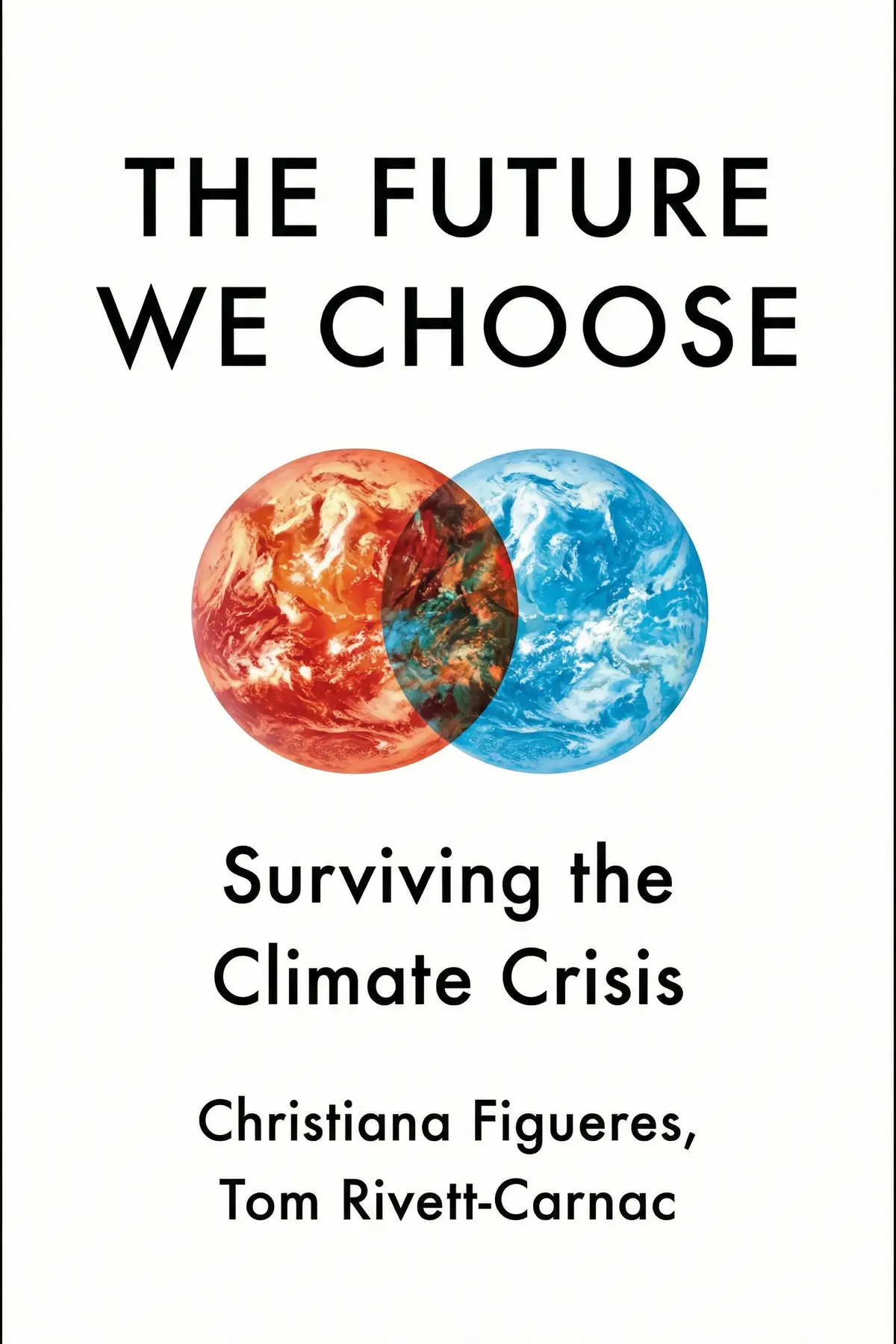
Two architects of the Paris Agreement show how this decade's choices decide whether 2050 is livable, and which mindsets and everyday actions, from spending to peaceful protest, give ordinary people real influence.
1 min 00 sec
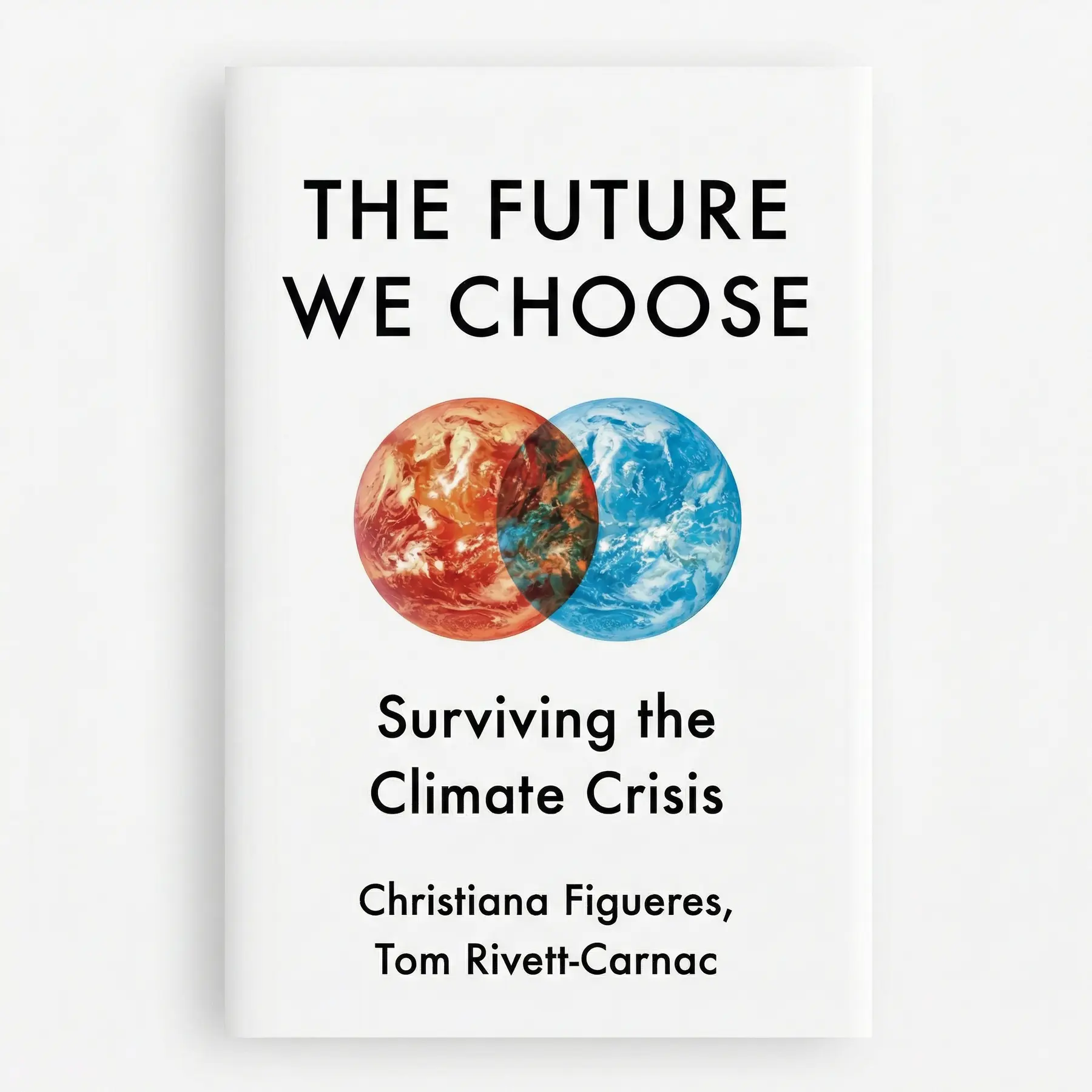
If climate news leaves you anxious and unsure what one person can change, start with this: the next ten years decide which of two very different worlds we will live in by 2050. In The Future We Choose, Christiana Figueres and Tom Rivett-Carnac, who helped steer the 2015 Paris Agreement, set out the targets plainly. Emissions must fall by at least half by 2030 and reach net-zero by 2050, when we release no more greenhouse gas than the earth can absorb.
Their argument is that meeting those targets starts with how we think, and then shows up in what we do with our money, our attention and our votes. Hope, abundance, restoration and a readiness to let go of the past come first. Smarter technology, different spending and peaceful political pressure follow. What you gain is a clear picture of both futures and a handful of moves that actually count.
1 min 44 sec
Two mornings in the same year could hardly look more different: one behind a face mask, one under city trees. The gap between them comes down to a single rate of change we still control.
1 min 43 sec
One of the most important climate negotiators alive once told reporters a global deal would never happen in her lifetime. What she did in the minutes after saying it changed the outcome.
1 min 35 sec
A desert city pumped its groundwater in a panic about running dry, and made things worse. Its mistake mirrors a habit most of us bring to every crowded train and tough negotiation.
1 min 52 sec
Whale populations nearly wiped out in the nineteenth century came back almost entirely. The authors use that recovery to make an unexpected case about where repairing the planet should begin.
1 min 53 sec
A bomb near the Paris conference forced a choice between safety and history. Most of us will never face that, yet a softer force is blocking change on farms and in planning law.
1 min 47 sec
An algorithm cut one company’s cooling bill dramatically, and smart grids could keep renewable power flowing in any weather. Still, the same tools carry risks, and the simplest fix may need only a spade.
1 min 42 sec
Making clothes, the authors report, puts more greenhouse gas into the air than all international flights and sea shipping. That fact points to a source of influence most people use every week without noticing.
1 min 57 sec
Falsehoods outrun facts online, and fossil fuel subsidies run into hundreds of billions. Against that, history suggests a surprisingly small share of citizens can still force change, if they act the right way.
1 min 06 sec
Figueres once told reporters that a climate deal would not come in her lifetime. Five years later she helped deliver one. That turnaround is what the book adds up to: a livable future starts as a choice, made by enough people, often before the evidence says it can work.
The authors frame this decade as a crossroads. One road leads to masks, floods and 60-degree summers, the other to rooftop gardens and forests across half the earth. What they ask of an ordinary person is modest. Pick one day this week to eat no meat, and keep it. When the boiler or the car is due for replacement, let the next one be electric. Check a frightening headline before you pass it on, and if a peaceful climate group gathers near you, consider becoming part of the 3.5 percent.
No single act settles the matter, and the authors never claim otherwise. Each one keeps the second morning of 2050 within reach, and reminds us who decides which morning we wake up to.
By 2030, global emissions need to fall by at least half, and by 2050 they need to reach net-zero. Christiana Figueres and Tom Rivett-Carnac, who worked at the center of the talks that produced the 2015 Paris Agreement, argue that whether we get there depends on choices made now, by governments and by ordinary people. They open with two portraits of 2050. In one, people check air quality apps before stepping outside and parts of India swelter at 60 degrees Celsius. In the other, cities are full of trees and forests cover half the planet. The path between them, the authors argue, starts with mindset: stubborn optimism, a sense of abundance in place of zero-sum competition, a regenerative habit of giving back, and the courage to let go of nostalgia for the fossil fuel age. From there the book turns practical. Readers learn how technology can help without hurting people, how to redirect their spending on clothes, cars, heating and food, and how truth-seeking, non-violent protest and support for women leaders can shift climate politics.
Professionals who feel anxious about climate news and want to know which personal actions really count.
Readers drained by doom headlines who want a grounded case for hope from people who negotiated the Paris Agreement.
Homeowners and drivers weighing a new car, heating system or diet with the climate in mind.
Christiana Figueres is a Costa Rican diplomat who became Executive Secretary of the UN Framework Convention on Climate Change in 2010, months after the failed Copenhagen conference. She spent six years rebuilding global climate negotiations, work that led to the 2015 Paris Agreement. Tom Rivett-Carnac, born in 1977, was her Senior Strategy Advisor from 2013 to 2016, leading a strategy team through the Lima and Paris talks. Together they founded Global Optimism and co-host the podcast Outrage and Optimism.
Listeners find the writing accessible and value its hands-on advice, especially the 10 actionable steps. The content is grounded in evidence with a well-measured blend of serious data, and one listener mentions that it offers a fair perspective on the topic. Furthermore, listeners characterize the work as transformative; one person notes how it fosters a feeling of empowerment, while another points out its depiction of two potential future paths. The narrative speed is consistent, with one listener observing the authors' use of relatable analogies.
Finally got around to reading this after seeing the authors on a panel, and it's exactly the kick in the pants I needed. The juxtaposition between the two potential 2050s—one a scorched wasteland and the other a green, breathable paradise—is incredibly effective at illustrating the stakes of our current decade. While some might find the '10 steps' a bit basic, I think the emphasis on shifting our internal mindset from defeatism to 'stubborn optimism' is where the real value lies. It’s less about a technical manual and more about finding the agency to act when everything feels overwhelming. The writing is punchy and accessible, avoiding the dense jargon that usually kills my interest in climate science. It’s rare to find a book that acknowledges the dire reality while still leaving you feeling empowered to make a change. Truth is, we don't have time for more doom and gloom; we need this kind of clarity.
Show moreAs someone who has struggled with eco-anxiety for years, I found this book to be a literal lifeline. Instead of just burying me under a mountain of terrifying statistics, the authors provide a structured way to process grief and move toward meaningful engagement. The way they frame the climate crisis as a choice we are making every single day really changed my perspective on my own lifestyle. The ten steps are surprisingly holistic, covering everything from political engagement to reforesting our mental landscapes. Not gonna lie, I cried a bit during the 'bleak future' section, but it made the 'regenerative future' section feel so much more worth fighting for. This isn't just a book about the environment; it’s a manual for how to live with integrity in the 21st century. It gave me a sense of purpose that I hadn’t felt in a long time. Highly recommended for every citizen of this planet.
Show morePicked this up on a whim and it ended up being one of the most life-changing books I've read this year. The authors have this incredible ability to take the most daunting challenge in human history and turn it into a series of manageable, even exciting, opportunities. I loved the emphasis on gender equality and how it intersects with environmental sustainability; that's a connection I hadn't fully considered before. The pacing is excellent, moving quickly from the sobering reality of our current path to the 10-step roadmap for action. In my experience, most climate books leave you wanting to crawl into a hole, but this one makes you want to roll up your sleeves and get to work. The fact-based approach combined with a deeply human tone makes the message land much harder than a dry scientific report ever could. Every politician, CEO, and parent should have a copy of this on their nightstand.
Show moreWow. This is the first climate book I’ve read that didn’t leave me in a state of total despair. The concept of 'stubborn optimism' is brilliant because it acknowledges that things are bad but insists that we can still shape the outcome. I love how the authors break down the path forward into 10 clear, actionable steps that go beyond just individual consumption habits. It’s fact-based, sober, yet strangely beautiful in its vision for what a better world could actually look like. Instead of just scaring us, they invite us to participate in a grand project of global regeneration. The pacing is fantastic and the message is clear: the future is not yet written. If you read only one book about the environment this decade, make it this one. It really helps you find your own sense of agency in a world that feels increasingly out of control.
Show moreThe chapter on the Paris Agreement negotiations was easily the highlight for me, offering a rare behind-the-scenes look at how global diplomacy actually functions. Figueres and Rivett-Carnac bring a level of authority that most climate writers lack because they were actually in the room when history was made. I appreciated the practical 10-point plan for individual action, though I'll admit some suggestions felt a bit like 'Green Living 101' for anyone who’s already recycling and eating less meat. To be fair, the book's strength isn't in groundbreaking science, but in its ability to simplify complex trajectories into understandable analogies. My only real gripe is that it occasionally feels a bit too optimistic about the role of corporations and global finance. Despite that, it’s a necessary read for anyone feeling paralyzed by climate anxiety who wants to understand how we can still course-correct. It’s well-paced and avoids being overly preachy.
Show moreEver wonder what the world looks like in 2050 if we actually get our act together? This book paints that picture with striking clarity while also warning us of the 'hot house' world we're currently heading toward. The authors use very simple analogies to explain the carbon cycle and systemic shifts, making it a great entry point for people who aren't climate scientists. I found the section on 'being a citizen, not a consumer' particularly poignant because it challenges the idea that we can just shop our way out of this mess. Frankly, some of the advice on technology and AI felt a little vague and hand-wavy compared to the more concrete steps like reforestation. However, the overall message of 'stubborn optimism' is infectious and provides a much-needed balance to the pessimistic headlines we see every day. It’s a short, fast read that manages to pack a significant emotional punch without being melodramatic.
Show moreThis book provides a balanced view that is sorely lacking in most mainstream discussions about the environment. It doesn't shy away from the horrifying reality of what 3 degrees of warming would look like, yet it refuses to succumb to doomerism. I found the 10 steps to be a great framework for auditing my own life, especially the parts about defending the truth and engaging in local politics. It’s true that some of the advice is standard—eat less meat, drive less—but the authors frame it within a larger vision of a 'regenerative' economy that makes these changes feel meaningful. Personally, I would have liked a bit more critique of the capitalist systems that got us here, but I understand the authors were trying to write something that wouldn't immediately alienate half the population. It’s a pragmatic, clear-eyed guide to survival that focuses on what is still possible if we act immediately.
Show moreAfter hearing about the authors' work at COP21, I had high expectations for this book, and for the most part, it delivered. The writing style is very conversational, using analogies that anyone can grasp, which makes the scale of the crisis feel less abstract. I particularly appreciated the focus on 'defending the truth' in an era of rampant misinformation. The authors remind us that the future isn't something that happens to us, but something we are actively building with every choice. My only minor complaint is that the transition between the two scenarios felt a bit abrupt, almost like reading two different books. To be fair, though, the contrast is likely intentional to jar the reader into realizing how precarious our current position is. It’s an empowering read that shifts the focus from 'what are they doing?' to 'what can I do?' which is exactly the mindset shift we need right now.
Show moreNot what I expected given the credentials of the authors as the architects of the Paris Agreement. I was hoping for deep political insights or perhaps some new data on our progress since 2015, but instead, I got what feels like a motivational pamphlet. The two future scenarios are a bit too black-and-white for my taste, ignoring the messy complexities of how geopolitical shifts actually happen. Look, the '10 steps' are fine for beginners, but telling people to 'be more optimistic' feels slightly patronizing when the structural barriers to change are so massive. It’s a well-written book with a good heart, but it lacks the analytical rigor I’ve found in works by David Wallace-Wells. If you’re already very active in the climate movement, you probably won’t find much new information here. It’s a decent introductory text for your friends who are just starting to pay attention, though.
Show moreI'm actually quite disappointed by this, especially given the 'hardcover' format for a book that preaches sustainability. It feels like a very high-level, self-congratulatory summary of things we already know, wrapped in layers of 'peace and love' rhetoric that won't move the needle for skeptics. The authors spend a lot of time talking about the Paris Agreement as a massive success, but they are very vague on the actual impact it’s had on global emissions so far. Honestly, the 10 steps felt incredibly basic—don't buy fast fashion, eat less meat—and completely ignored the massive corporate and systemic hurdles that make these choices difficult for the average person. It’s a well-meaning 'motivational pamphlet' for people who are already sympathetic to the cause, but it offers very little in terms of real political or economic strategy. If you want a rigorous look at climate change, look elsewhere; this is essentially a collection of optimistic blog posts.
Show moreChristiana Figueres and Tom Rivett-Carnac argue that the next ten years decide whether 2050 is livable. Emissions must fall by at least half by 2030 and reach net-zero by 2050. They describe two possible futures, one of face masks and extreme heat, one of green cities and forests, and argue that reaching the better one depends on mindsets like stubborn optimism and on concrete actions in technology, spending and politics.
Stubborn optimism is a deliberate decision to believe a better future is possible, firmly enough that others start believing too. Figueres adopted it after telling reporters in Bonn in 2010 that a global climate deal would not happen in her lifetime. She immediately saw that the attitude was wrong, and the authors trace her path toward the 2015 Paris Agreement back to that choice.
The authors suggest eating meat-free one day a week and adding more over time, buying fewer and better clothes, choosing an electric car when yours needs replacing, and switching to electric heating when the old boiler wears out. They also urge checking facts before sharing them, joining non-violent protest, voting with climate in mind, supporting women leaders and planting trees.
It suits readers who feel overwhelmed or hopeless about climate change and want a practical, hopeful account from two people who helped negotiate the Paris Agreement. It also helps anyone deciding how to spend, eat, travel or vote with the climate in mind, since it links mindset changes to specific everyday choices and political actions.
Jessica Valenti

Yanis Varoufakis

Yuval Noah Harari
Jacinda Ardern
Pankaj Mishra
James Comey

Anthony Pratkanis

AUDIO SUMMARY AVAILABLE
Get the key ideas from The Future We Choose by Christiana Figueres, plus 5,000+ more nonfiction titles.









