

15 min 51 sec
Available in: English
The Future Begins with Z: Nine Strategies to Lead Gen Z as They Disrupt the Workplace
By Tim Elmore
Shows managers why Gen Z workers seem so hard to lead and how to turn that friction into innovation, through shared planning, compassionate mental health conversations and the human skills AI cannot replace.
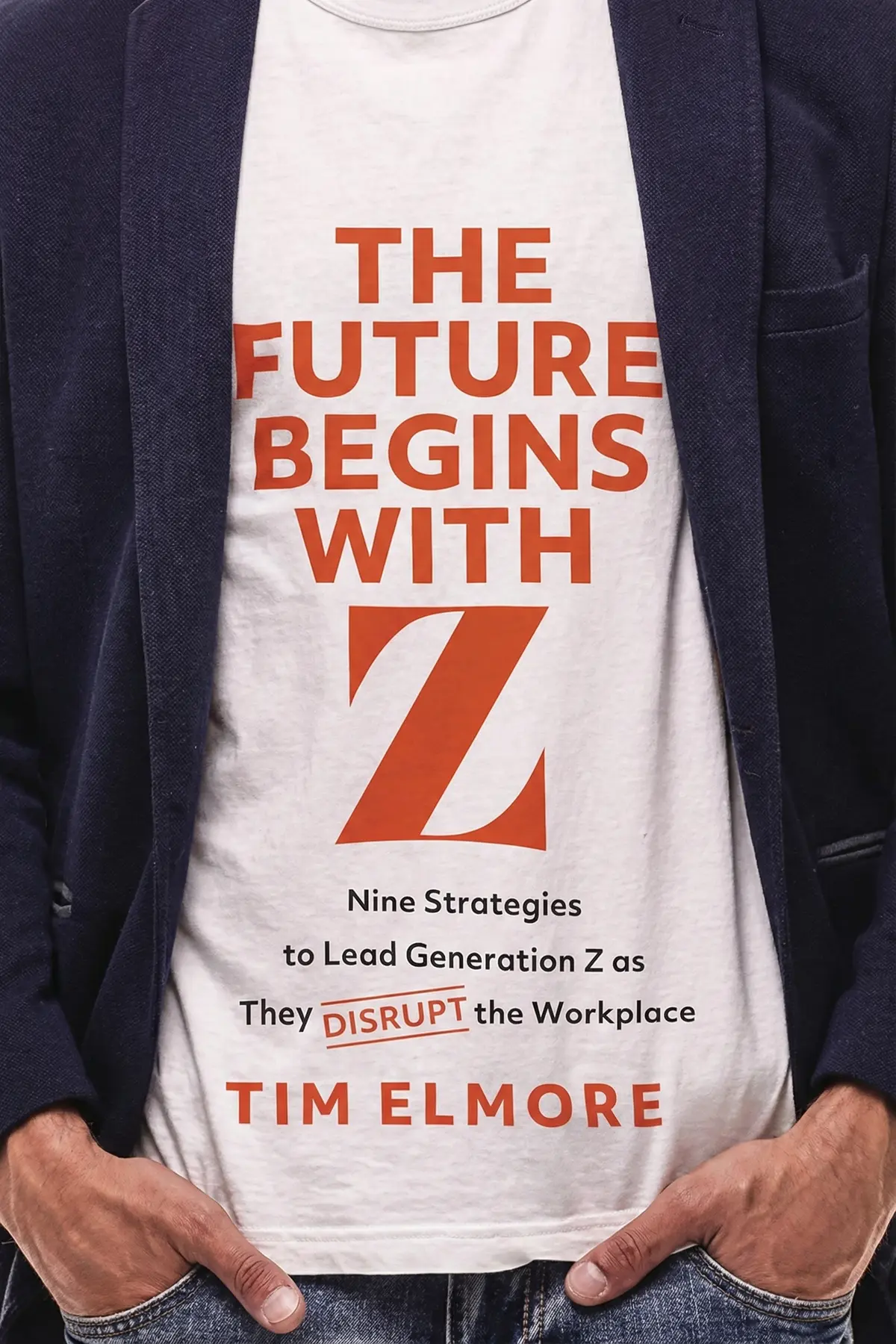
Table of Content
1. Introduction
1 min 12 sec
Managers who keep losing patience with their youngest hires are often misreading them. According to a 2024 ResumeBuilder.com survey, three in ten now avoid hiring Gen Z candidates altogether. In The Future Begins with Z, Tim Elmore, who leads the Atlanta nonprofit Growing Leaders, argues that those managers are turning away the creativity and problem-solving they most need. His explanation is a single mismatch: this generation grew up overexposed to information and underexposed to real experience.
That mismatch accounts for the phone habits, the skipped meetings and the constant questioning, and it also points to the fix. Elmore’s leaders earn influence by inviting people into decisions. They treat mental health with compassion that equips people, and they deliberately teach the human skills screens never taught. Leaders who do these things can turn generational friction into a team’s best source of ideas. Along the way come a three-round planning method, four habits for steadier minds and a short list of skills that should grow in value as AI spreads.
2. See the mismatch that shapes your youngest hires
1 min 49 sec
A beloved character who refuses to grow up mirrors a paradox managers face every day. Elmore traces it to a single imbalance in how today’s young workers were raised, and it changes what you should expect from them.
3. Read your team through the six COPING traits
1 min 45 sec
One six-letter word sums up a generation shaped by a pandemic, endless screens and other people’s debt. Half its letters sound like warnings, half like strengths, and they all come from the same place.
4. Drop the six myths that hide young talent
2 min 05 sec
Labels like lazy, fragile and disloyal feel like common sense to many older managers. Elmore tests each one, and the figure that emerges about this generation’s ambition is hard to square with any of them.
5. Plan in three rounds so people own the outcome
1 min 52 sec
An online encyclopedia with no single editor offers an unexpected model for running a team. Elmore turns it into a planning routine that gives everyone a voice while the leader still makes the final call.
6. Keep ambitious young staff with room to move
1 min 30 sec
Your best young hire may already be eyeing the exit, and a promotion ladder won’t change that. Elmore suggests a different shape for growth, plus a listening stance that sounds simple and is rarely practiced.
7. Talk about mental health so people grow stronger
2 min 20 sec
Many young employees stay home on days they don’t feel well, and managers struggle to respond. Elmore shows how to tell what kind of conversation you are in, and why feeling someone’s pain is only half the job.
8. Build the human skills that AI cannot replace
2 min 01 sec
Behind the effortless answers on a phone screen often sits a confidence that has never been tested. Elmore lays out how to build the skills that fill that gap, and which ones gain value as machines advance.
9. Conclusion
1 min 17 sec
The young employee glued to a phone and the one who sketches a solution before anyone else has finished complaining are often the same person. Elmore’s book makes the case that both behaviors grow from one upbringing, rich in information and poor in practice. A leader’s job is to supply the experience the screen never could. Avoiding these candidates, as three in ten managers in that survey were doing, only hands their ideas to someone else.
What he asks of leaders is mostly a change of stance. Influence has to be earned by inviting people into decisions early. Hard conversations about mental health call for honesty that still leaves room for hope. And the skills worth teaching are the ones a machine cannot copy: authenticity, reading a room, adapting fast.
This week, start a project with a loose napkin conversation before your own mind is made up. When a young colleague raises something personal, answer with a question first. Then choose one power skill and let a younger teammate watch it, try it and talk about how it went.
A generation that grew up with every answer in its pocket mostly needs someone who will let it practice, and that is a job only a person can do.
About this book
What is this book about?
Many managers find their youngest employees baffling. They live on their phones, skip meetings when they don't feel up to it and question every instruction, yet they also produce ideas nobody else saw. Some managers have given up. In one 2024 survey, three in ten said they were avoiding Gen Z candidates. Tim Elmore argues that this generation's puzzling mix of brilliance and immaturity comes from growing up overexposed to information and underexposed to real experience. He describes the traits that upbringing produced and takes apart six myths that make older colleagues dismiss young workers. He also points to research showing that three in four want to become entrepreneurs. The practical core is a set of tools for leaders. A three-round planning method gives young staff a real voice. Internal moves suit careers built like hops between lily pads. Elmore also offers a way to handle mental health conversations with compassion, four habits for steadier minds and a four-stage path for teaching the power skills that matter more as AI spreads.
Book Information
Who it's for
Frustrated managers and leads
Managers and team leads frustrated by young hires who skip meetings, question everything and leave at five on the dot.
HR and learning teams
HR and learning professionals building onboarding, mentoring and well-being programs for staff in their twenties.
Curious about older bosses
Young professionals who want to understand how older bosses see them, and why.
About the Author
Tim Elmore
Tim Elmore founded Growing Leaders, a nonprofit based in Atlanta, and serves as its CEO. He has written more than 40 books, among them the Habitudes series, which has sold close to 3 million copies, and The Eight Paradoxes of Great Leadership. He has spoken on hundreds of university campuses in the US and in more than thirty countries. He has also trained teams at organizations including Chick-fil-A, The Home Depot and Delta Global Services. The Wall Street Journal and The Washington Post have covered his work on younger generations.
Ratings & Reviews
Ratings at a glance
What people think
Listeners find the usable frameworks and concrete tactics for blending Generation Z into professional settings to be highly valuable. They also view the data-driven perspectives on the cohort's distinct drivers and principles as a critical guide for enhancing leadership and dialogue. Though some listeners suggest the guidance can at times prioritize organizational flexibility over personal duty, they still observe that the book successfully reframes Gen Z as a powerful asset rather than a problem to be solved. Furthermore, listeners emphasize the material's usefulness for both parents and managers, with one listener describing how the specific resources allow supervisors to deliver truthful feedback without dampening the spirits of recent hires.
Top reviews
Pawinee
As someone who has managed teams for over two decades, I’ve seen the 'kids these days' complaint cycle through every generation, but Elmore offers a much-needed paradigm shift here. Instead of viewing Gen Z as a problem to be solved, he reframes them as a strategic asset with a unique entrepreneurial spirit. The way he explains their lack of corporate loyalty—stemming from watching their parents get laid off during recessions—really hit home and changed how I approach retention. I especially appreciated the concrete tools for giving feedback without crushing their confidence, which is a delicate balance in today's climate. Frankly, the advice on mentoring relationships is worth the price of the book alone for any supervisor. It’s not about coddling; it’s about understanding the specific motivations that drive high performance in a digital-first world. This is easily the most practical roadmap I’ve found for bridging the generational gap in my office.
Show moreLayla
Finally got around to reading this after hearing my HR department rave about it, and it mostly lives up to the hype. As a millennial, I found myself nodding along to the descriptions of how we were raised vs. how Gen Z operates. Elmore’s frameworks for cultivating resilience are fantastic, though I do think he occasionally leans too hard into the 'fragility' narrative that gets pinned on these younger workers. The truth is, they just want authenticity and meaning, which isn't a bad thing for a company to provide. Some of the strategies for onboarding were game-changers for my team, especially the focus on 'meaningful impact' from day one. I did feel like the book could have spent more time on how Gen Z can meet older generations halfway, but the insights are still incredibly valuable. It’s a solid, research-backed guide that avoids being overly academic or dry.
Show morePat
The chapter on the nine core strategies is where this book truly shines for busy managers who need answers fast. I’ve read plenty of leadership books that are all theory and no action, but Elmore provides a literal playbook for the modern office. He handles the sensitive topics of mental health and anxiety with genuine empathy, explaining why digital overload has created a different kind of stress for this cohort. Not gonna lie, I was skeptical about 'adapting' to new hires at first, but the book argues convincingly that this is just good leadership, not a surrender. By using his methods, I’ve seen a noticeable uptick in engagement from my interns and entry-level staff. The storytelling is engaging and keeps the pace moving quickly throughout the chapters. This is required reading if you want to keep your talent pipeline from leaking.
Show moreFah
Ever wonder why the newest members of your team seem so disconnected from traditional corporate structures? Tim Elmore answers that question with a brilliant blend of data and heart that makes 'The Future Begins with Z' a must-read for anyone in a leadership role. I’m a parent of two Gen Zers myself, and I found his observations about their 'loyalty to self' to be spot on. They aren't lazy; they are just survivalists who have seen the old world fail their parents. This book helped me realize that our job as mentors is to provide the stability and intentionality they crave. The sections on emotional intelligence were particularly eye-opening for me. It’s a refreshing take that moves past stereotypes and into real, actionable growth strategies. If you want to lead with wisdom and confidence, don't sleep on this one.
Show moreMichael
Tim Elmore has managed to capture the essence of a generation that many leaders find baffling. Look, we can either complain about how things have changed, or we can learn to leverage the incredible digital strengths these young professionals bring to the table. This book chooses the latter, offering a clear-eyed look at how to build environments where Gen Z can actually thrive. I found the historical context regarding downsizing and outsourcing to be a crucial piece of the puzzle that most other management books ignore. It explains the 'why' behind the behavior, which makes the 'how' of leading them much more intuitive. The practical tools for building trust are phenomenal and can be applied immediately. I’ve already started using his tips for 'healthy risk-taking' with my junior associates. It’s a hopeful, visionary guide for the future of the American workforce.
Show moreSiraporn
Looking at the workforce today, it’s clear that the old ways of 'command and control' management are dead. This book provides the autopsy and the replacement strategy all in one go. Elmore’s insights into the entrepreneurial spirit of Gen Z are particularly compelling for anyone trying to innovate. He doesn’t shy away from the challenges like social media addiction or sensitivity, but he frames them as hurdles to be cleared together rather than permanent roadblocks. Personally, I think the advice on creating a 'learning phase' that feels like a partnership rather than a trial is brilliant. It respects the new hire's desire for growth while maintaining the company's need for results. The research is robust, yet the writing remains accessible and conversational throughout. It’s a masterclass in generational intelligence that I’ll be recommending to every manager in my network.
Show moreCooper
Wow, this was exactly the resource I needed as I transition into a senior coaching role. The Future Begins with Z is incredibly timely, practical, and filled with the kind of 'generational intelligence' that is missing from most HR seminars. Elmore’s focus on building mentoring relationships that go beyond just work tasks is what sets this apart from other leadership manuals. He captures the anxiety and digital overload of the current era perfectly. Truth is, we have to meet people where they are if we want to take them where they need to go. I highlighted so many sections on cultivating resilience and encouraging authenticity. It’s a positive outlook on a generation that usually gets a bad rap in the media. This isn't just a book for managers; it’s a roadmap for anyone invested in the next generation’s success. Absolute five-star effort.
Show moreYuki
Picked this up on a whim because I was tired of the 'no one wants to work' narrative and wanted a fresh perspective. What I found was an incredibly deep, research-backed exploration of what makes Gen Z tick. Elmore’s writing style is punchy and direct, making it easy to digest even for a busy professional. The nine strategies he outlines are concrete, actionable, and—most importantly—realistic for a fast-paced business environment. I particularly liked the focus on how to incentivize performance through meaning rather than just a paycheck. It’s a shift that benefits everyone, not just the youngest employees. The book successfully reframes this generation as a powerful asset to be unlocked. While it challenges some old-school assumptions, it does so with a level of wisdom and confidence that is hard to argue with. This should be on every leader’s desk this year.
Show moreKae
To be fair, I struggled with the premise that organizations need to fundamentally overhaul their structure to cater to new hires. While Elmore provides incredible research on the 'digital overload' Gen Z faces, I fear we are crossing into territory where companies are expected to act like schools. As a leader, I value accountability; a generational trait shouldn’t be an automatic free pass for lower performance. However, the nine core strategies offered are undeniably practical and easy to implement. The book is well-written and the storytelling is top-tier, providing a much-needed bridge for communication. I found the sections on providing feedback without discouraging new employees particularly useful for my daily operations. It is a vital resource for understanding the 'why' behind certain behaviors, even if I think the push for corporate adaptation is a little heavy-handed. If you want to understand Gen Z, this is a great start.
Show morePia
I honestly think this is Elmore's best-written work in terms of style, but I have major reservations about the 'support' framework he proposes. Look, there are some great tools here for the metaphorical toolbox, but the book feels like it's asking companies to become finishing schools for young adults. To be fair, I appreciated the comparison between the Walkman era and the smartphone era; it’s very descriptive and puts the historical shifts in perspective. However, I worry that by adapting the entire system for new hires, we are sacrificing individual accountability and professional standards. Some of the scenarios felt a bit too idealized for a high-pressure business environment where results have to come first. While I value the research on Gen Z’s digital overload and anxiety, I’m not convinced that a manager’s job is to manage a new hire’s every emotional state. It's a useful read for the psychological insights, but the management advice felt a bit one-sided for my taste.
Show moreQuestions about this book
What is the main idea of The Future Begins with Z?
Tim Elmore argues that Gen Z workers grew up overexposed to information and underexposed to firsthand experience, which explains both their creativity and their struggles at work. He tells leaders not to avoid them. Instead they should lead by permission and give young staff a real voice in decisions. He also urges them to meet mental health struggles with compassion and to teach power skills such as authenticity, emotional intelligence and adaptability.
What does COPING mean in Tim Elmore's book?
COPING is Elmore’s acronym for six traits of Gen Z. They are cynical after watching leaders struggle during the COVID-19 pandemic, and overwhelmed by constant information. They are pragmatic after seeing millennials struggle with debt, and inclusive in their commitment to equality and environmental justice. They are nuanced, with fluid identities, and globally savvy, perhaps the best-informed generation in history.
What is the three-step planning approach for leading Gen Z?
Elmore describes three rounds. Napkin conversations are open brainstorming where anyone can add ideas, after which leaders privately rank the options. Whiteboard conversations come once a direction exists, when key influencers can suggest changes that don’t overturn it. Slide deck conversations allow only small refinements to a nearly finished plan. People support what they help create, and the leader still makes the final decision.
How should managers support Gen Z mental health at work?
Elmore suggests first working out whether a conversation is informational or emotional. When unsure, answer the question with a question and watch tone and body language. In emotional talks, stay honest while leaving the person hopeful. Go beyond empathy to compassion that helps them grow stronger. Across the organization, encourage his four Ms: margin, movement, mindfulness and practical ways of managing stress and anxiety.
Who should read The Future Begins with Z?
It suits managers, team leads and HR professionals who hire or lead people in their twenties and feel friction with them. Founders building young teams will find practical tools for engagement and retention, such as internal gig moves and entrepreneurial zones. Young professionals can use it to understand how older colleagues see them and which power skills will matter as AI spreads.
Readers also enjoyed



A Year with Peter Drucker: 52 Weeks of Coaching for Leadership Effectiveness
Joseph A. Maciariello





Acting with Power: Why We Are More Powerful Than We Believe
Deborah Gruenfeld

All In: How Great Leaders Build Unstoppable Teams
Mike Michalowicz
AUDIO SUMMARY AVAILABLE
Listen to The Future Begins with Z in 15 minutes
Get the key ideas from The Future Begins with Z by Tim Elmore, plus 5,000+ more nonfiction titles.
- 5,000+ titles
- Listen as much as you want
- 7-day free trial
- Cancel anytime









