

13 min 11 sec
Available in: English
The Fourth Trimester: A Postpartum Guide to Healing Your Body, Balancing Your Emotions, and Restoring Your Vitality
A guide to the three months after birth: how to plan support before the baby arrives, read postpartum emotions, restore energy with warmth, and rebuild strength and intimacy at a safe pace.
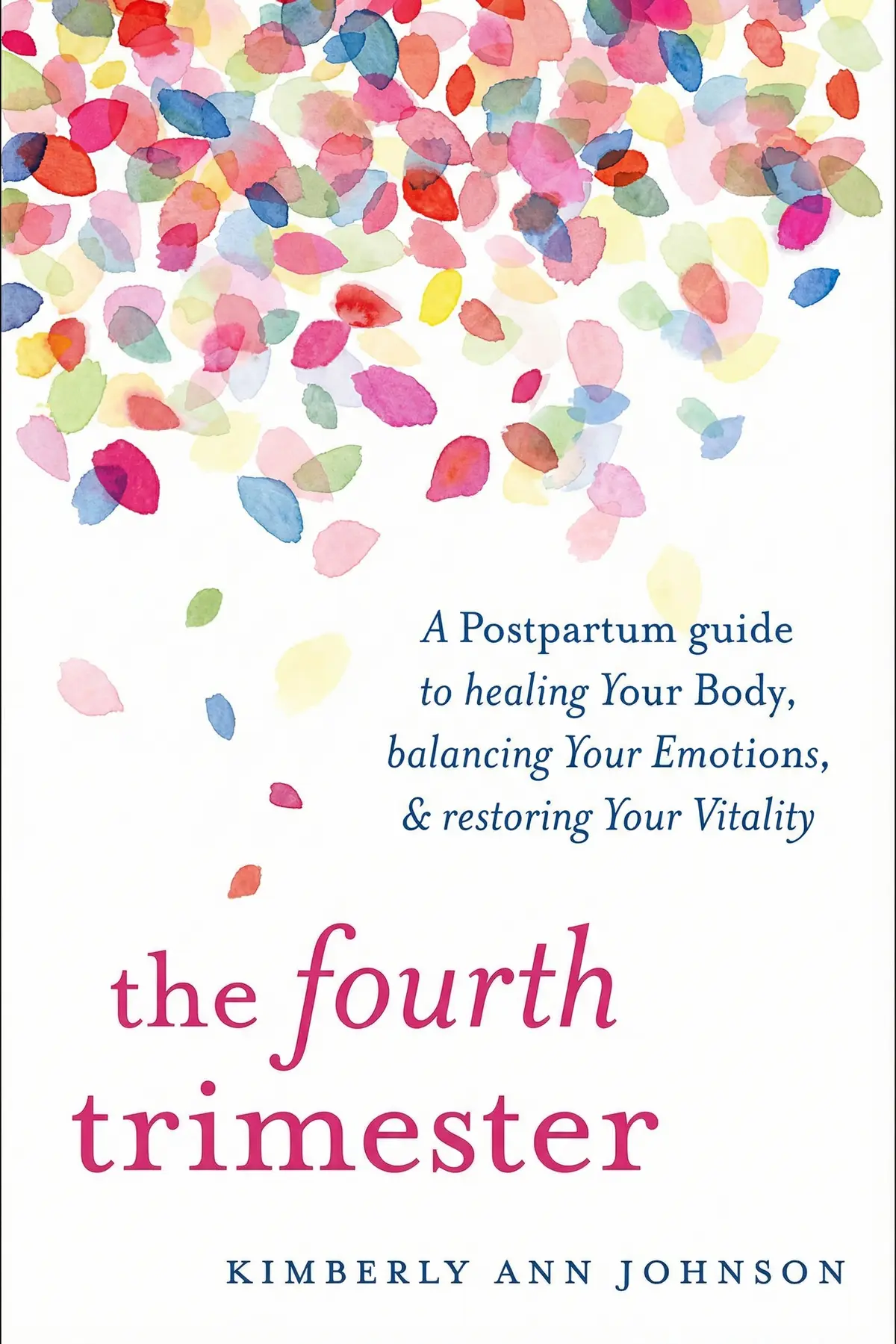
Table of Content
1. Introduction
1 min 02 sec
Most new mothers are told, in effect, that six weeks after birth they should be back to normal. A routine checkup clears them for exercise and sex, and life is expected to resume. In The Fourth Trimester, birth doula and sexological bodyworker Kimberly Ann Johnson argues that this timeline is wrong. The real recovery window is the first three months after birth, and it deserves the same attention pregnancy gets. Yet most women enter it knowing little about what their body, mind and emotions will go through.
Johnson’s case is that a mother who plans her own care before the baby arrives, and honors what she needs afterward, heals better and comes back to her body on her own terms. Her guidance runs from late pregnancy through the months after birth: a support plan, body preparation, emotions, warmth, movement and intimacy. A new parent, or the partner beside her, gets concrete things to arrange, ask for and try, starting well before the due date.
2. Plan three months of care, not six weeks
1 min 49 sec
Pregnancy comes with endless advice about the baby, and then the advice about the mother almost stops. Families in two large cultures solve this in a way that sounds old-fashioned and turns out to be very practical.
3. Food, touch and fresh air that speed healing
1 min 53 sec
Many traditions guard the first forty to sixty days after birth closely, believing they shape a woman’s health for years. Three simple ingredients carry most of that protection, and one of them is easy to overlook.
4. Get your body ready before the due date
1 min 43 sec
Late pregnancy rarely feels like a time for intimacy or exercise. Johnson makes the case that both, along with one overlooked form of self-care, can protect a woman’s body during birth and long after it.
5. Sort your feelings before calling it depression
1 min 52 sec
The weeks after birth are supposed to feel like bliss, and many mothers feel anxious or low instead. Johnson suggests one question to ask before deciding what those feelings mean, and it reaches back to the birth itself.
6. Warm the body back to steady energy
1 min 50 sec
Many new mothers feel as if the birth carried away part of their strength. An old Chinese way of thinking about the body explains why, and suggests a comforting habit anyone can borrow at home.
7. Rebuild strength and intimacy one week at a time
1 min 46 sec
After birth, the body has a new shape, a new center of gravity and a new relationship with pleasure. Johnson’s route back is gentler and slower than most fitness advice, with one firm rule even keen athletes must follow.
8. Conclusion
1 min 16 sec
More than anything, The Fourth Trimester asks for a change in timing. Pregnancy comes with months of appointments, classes and advice, all built around the baby. Johnson argues that the three months after birth deserve the same seriousness, and she notes that good information and support for this period are hard to come by. Treat that stretch as its own season, and recovery becomes something a family can prepare for.
The most useful move happens before the due date: sitting down with a partner to write a sanctuary plan that covers rest, warm food, touch and daily fresh air, with a name attached to each task. After the birth, Johnson’s guidance is to treat difficult feelings as signals to explore and talk through together before deciding what they are. And when the body feels ready to move again, add one gentle exercise a week and leave running and heavy lifting until six months have passed.
The women in China and India who go home to their own mothers are not being indulged. They are being given time. A baby gets nine months of preparation, and Johnson’s case is that the woman who carried it deserves at least three months of care in return.
About this book
What is this book about?
Six weeks after birth, most mothers get a checkup that clears them for exercise and sex, and many take it as a signal to be back to normal. Kimberly Ann Johnson, a birth doula and sexological bodyworker, argues that this timeline misses the point. The real recovery period lasts three months, and it rarely gets the care and planning that pregnancy receives. Johnson's answer starts before the due date with a postpartum sanctuary plan built around four needs: rest, nourishing food, loving touch and time in nature. She draws on traditions in China and India, where new mothers return to their own mothers' homes for the first month, and on the Chinese idea of yin and yang, from which she borrows an Eastern practice known as mother warming. The guide follows a mother from late pregnancy, with ways to prepare her body for birth, through the emotional first weeks and on to rebuilding her core, pelvic floor and sex life. Readers come away with a plan to share with a partner, questions for processing the birth, and a week-by-week way back to strength.
Book Information
Who it's for
Expectant mothers
Expectant mothers who want a recovery plan in place before the baby arrives.
New mothers
New mothers who feel rushed to be back to normal at six weeks, or unsure what they are feeling.
Partners and relatives
Partners and family members who want to know exactly how to help after the birth.
About the Author
Kimberly Ann Johnson
Kimberly Ann Johnson is a birth doula and sexological bodyworker, also trained in Somatic Experiencing. She graduated as valedictorian of her class at Northwestern University's School of Education and Social Policy. She hosts the Sex Birth Trauma podcast, created the course Activate Your Inner Jaguar, and trains birth professionals, bodyworkers and somatic therapists. The Fourth Trimester has been published in seven languages, and she has also written Call of The Wild, which grew out of her Activate Your Inner Jaguar course.
Ratings & Reviews
Ratings at a glance
What people think
Listeners find this postpartum guide to be a comprehensive and indispensable resource, packed with useful advice and an all-encompassing perspective on care. The text provides a roadmap for managing the shift into motherhood and assists in grasping the period following birth, while honoring emotional well-being and spiritual foundations. Listeners value the empowering tone, with one noting how it encourages community support, and find it stimulating, with one highlighting its focus on psychological elements of the fourth trimester.
Top reviews
Anna
Finally, someone is talking about the mental aspects of the fourth trimester with real depth and compassion! I received this as a gift and it has become my absolute go-to recommendation for any expecting friend because it centers the woman’s experience so beautifully. While everyone else is obsessed with swaddles and sleep training, Johnson reminds us that the mother’s healing is the foundation of the whole family. It matters. The chapters on navigating relationship shifts and rediscovering intimacy were particularly enlightening and frankly overdue in the parenting book world. Not gonna lie, some of the more 'earth mother' language took me a minute to get used to, but the core wisdom is undeniable. It provides a thorough roadmap for a period that most of us just try to 'survive.' This helped me value my own emotional realm. Truly an essential piece of the puzzle.
Show moreValentina
As someone who felt completely lost after my first birth, this book was a revelation. Kimberly Ann Johnson offers a perspective that is missing from almost every other parenting book on the shelf. She focuses on the mother’s vitality and health with a level of empathy that brought me to tears. It’s a very thorough guide that values the emotional and spiritual realms of motherhood without being totally disconnected from reality. I loved the sections on pelvic health and reclaiming your body after such a massive transition. Not gonna lie, if you’re strictly into clinical, data-driven books, the 'woo-woo' language might grate on your nerves. But if you’re looking for something that feels like a warm embrace and a call to honor yourself, this is it. It truly helped me set up a transition plan that prioritized my own healing alongside my baby’s needs.
Show moreSue
This guide focuses heavily on the mother’s recovery, which is a breath of fresh air compared to most baby-centric manuals. I loved the holistic approach to healing and the emphasis on building a village during that vulnerable transition to motherhood. The author provides a thorough framework for physical and emotional care, touching on everything from pelvic floor health to setting boundaries with family. It's a lot. Actually, some parts felt a bit too 'woo-woo' for my pragmatic brain, especially the sections involving spiritual energy. However, the practical advice on nourishing foods and resting rituals made it worth the read. It’s definitely a book to pick up while you're still pregnant so you can have your support system in place before the exhaustion hits. I wish the structure was more organized with checklists, but the message remains deeply empowering.
Show moreSamuel
Picked this up on a whim after a friend mentioned the 'five pillars' concept. I really didn’t think I’d like it because I’m not usually into the 'mother earth' vibe, but I was surprised by how much I learned. It’s one of the few books that treats the postpartum period as a major life transition rather than just a recovery from a medical event. I liked that. The emphasis on community support and physical touch, like massage and belly binding, was really eye-opening for me. Gotta say, the author does get a little repetitive about her own birth story, and the formatting could be much tighter. I would have loved more checklists or time tables to make the planning easier. Still, the focus on the mother's mental health and the importance of rest is something every pregnant woman needs to hear. It’s a solid resource for a more holistic approach.
Show moreManee
The chapter on Sexological Bodywork was a bit of a curveball, but the rest of the book offers some solid gold for new mamas. I appreciated how exhaustive the author was in covering topics that are usually brushed over, like pelvic floor integrity and the mental load of early parenting. It’s a very spiritually based guide, which I found thought-provoking even if I didn't agree with every single 'mother earth' sentiment. The truth is, we don't talk enough about the physical toll of birth, and Johnson refuses to sugarcoat that reality. My only real gripe is that the exercises occasionally felt poorly explained. I actually tweaked my back trying one of the movement suggestions! Still, the overarching message about the importance of community and deep rest is something I’ll carry with me. It’s a great resource for anyone who wants a more holistic, empowered approach.
Show moreNit
You have to be willing to eat the meat and spit out the bones with this one. About half the content was incredibly valuable—specifically the sections on warming foods and the physiological need for rest—while the other half felt like an odd collection of New Age theories. I appreciated the inclusivity of different birth experiences, but the lack of a clear, organized to-do list made it hard to extract the 'meat' sometimes. Look, the author’s personal story is moving, though it does ramble on a bit too long in the beginning. I also found the stance on certain topics, like the vegetarianism comments, to be confusingly wishy-washy rather than helpful. It’s a thought-provoking read if you can filter through the 'Sexological Bodywork' tangents. Not a perfect guide. Still, it sparked some important conversations with my partner about our postpartum plan.
Show moreEarn
Ever wonder why nobody tells you what happens to your body after the baby arrives? This book tries to answer that, but I made the mistake of reading it when I was already six weeks postpartum. It is definitely designed to be read during the third trimester so you can actually implement the suggestions. Some of the tips, like the specific warming foods and the reflection questions, were quite helpful for my emotional processing. However, the organization is a bit of a mess. I found myself flipping back and forth trying to find the 'how-to' parts amidst all the community stories and new-age terminology. In my experience, the author’s tone can be a little discouraging at times, making birth sound like an inevitable disaster. In conclusion, it's a mixed bag. Some really enlightened nuggets of wisdom are buried under a lot of fluff.
Show moreTod
Wow, I really wanted to love this, but it was a bit of a frustrating experience. The author spends so much time on her own story that the actual advice feels secondary and buried under piles of anecdotes. I was looking for a clear, organized guide with to-do lists and timelines, but instead, I got a lot of vague theories. In reality, the sections on the importance of rest are great, but the stance on things like breastfeeding and diet felt wishy-washy. One minute she’s talking about birth injuries, and the next she’s telling you that 'any way you do it is great.' It lacks the kind of direct, expert opinion I was hoping for. Plus, some of the exercises she suggests were just ineffective for me and felt like more filler. There are some good nuggets here, but be prepared to dig through the 'Goop-lite' vibes to find them.
Show morePaiboon
After hearing great things about this resource, I was disappointed by the surprisingly negative tone that permeated the chapters. Instead of feeling empowered about my upcoming birth, I found myself spiraling into anxiety about potential injuries and 'brokenness.' It was exhausting. Kimberly Ann Johnson is clearly knowledgeable, but her background in sexological bodywork results in some very specific, often uncomfortable, advice that didn't resonate with me. To be fair, the section on the 'five pillars' of postpartum health has some merit, yet the delivery feels like a bizarre mix of pseudoscience and anecdotal fear. It felt like I was being warned about every possible complication rather than being encouraged in my body's natural resilience. If you are prone to health anxiety, you might want to skip certain chapters. I ended up abandoning it halfway through.
Show moreRosa
I'm just going to say it: this felt like the Goop version of a pregnancy book. It’s a strange concoction of Western entitlement and Eastern pseudoscience that often borders on fearmongering about birth trauma. The author’s training in sexological bodywork leads to some deeply awkward sections that felt entirely irrelevant to my needs as a new parent. Yikes. To be fair, the section on the five pillars of postpartum health has some merit, but the lack of scientific backing for the more 'spiritual' claims made it hard to take seriously. There’s no real structure here—just long-winded anecdotes and exercises that actually made my back hurt. Instead of feeling empowered, I felt like I was being lectured on why my lifestyle choices might lead to physical failure. If you want a book that tells you it's okay to fail without giving actual medical facts, this is for you.
Show moreQuestions about this book
What is the fourth trimester according to Kimberly Ann Johnson?
Johnson uses the term for the first three months after birth, not just the six weeks before the usual postnatal checkup. She argues this period matters as much as the three trimesters of pregnancy for a mother’s long-term health, yet it gets far less information and support. Her book sets out how to plan for it, recover in it and move beyond it.
What is a postpartum sanctuary plan?
It is a plan a mother makes before the birth, ideally with her partner, to arrange the support she will need afterward. Johnson builds it on four needs: rest, nourishing food, loving touch and time in nature. In practice it answers questions such as who cooks, whether a meal train is set up, how often laundry is done, whether weekly massage is wanted and how many visitors are welcome in the first week.
Does The Fourth Trimester say postpartum sadness is depression?
Johnson cautions against assuming right away that stress, anxiety or low mood after birth is ordinary depression, because hormonal imbalances change how a mother feels. She suggests not turning to medication immediately unless a doctor advises it. Instead she recommends reflecting on all feelings, asking whether the birth feels complete, and talking openly with a partner, who has feelings about the birth too.
When can I start running or lifting weights after giving birth?
Johnson advises waiting six months before running or lifting heavy weights, even for women who exercised a lot before. Until then she recommends gentle walking and stretching, a simple core breathing exercise lying on the floor, and belly wrapping with expert guidance. She suggests a week-by-week plan that adds one exercise at a time to rebuild support for the spine and pelvis.
Who should read The Fourth Trimester?
It suits expectant mothers who want to prepare for recovery, not only for the birth, and new mothers who feel pushed to be back to normal at six weeks. Partners and relatives also benefit, since much of Johnson’s advice is about what others can do: cooking, organizing support, listening and sharing the emotional work of the first months.
Readers also enjoyed







AUDIO SUMMARY AVAILABLE
Listen to The Fourth Trimester in 15 minutes
Get the key ideas from The Fourth Trimester by Kimberly Ann Johnson, plus 5,000+ more nonfiction titles.
- 5,000+ titles
- Listen as much as you want
- 7-day free trial
- Cancel anytime









