

15 min 10 sec
Available in: English
The Fixer: Saving Startups from Death by Politics
By Bradley Tusk
Shows how startups facing hostile regulators and entrenched rivals can win political fights by shaping the media story, exposing donor influence and rallying their customers, drawn from Tusk's work with Uber, FanDuel and Lemonade.
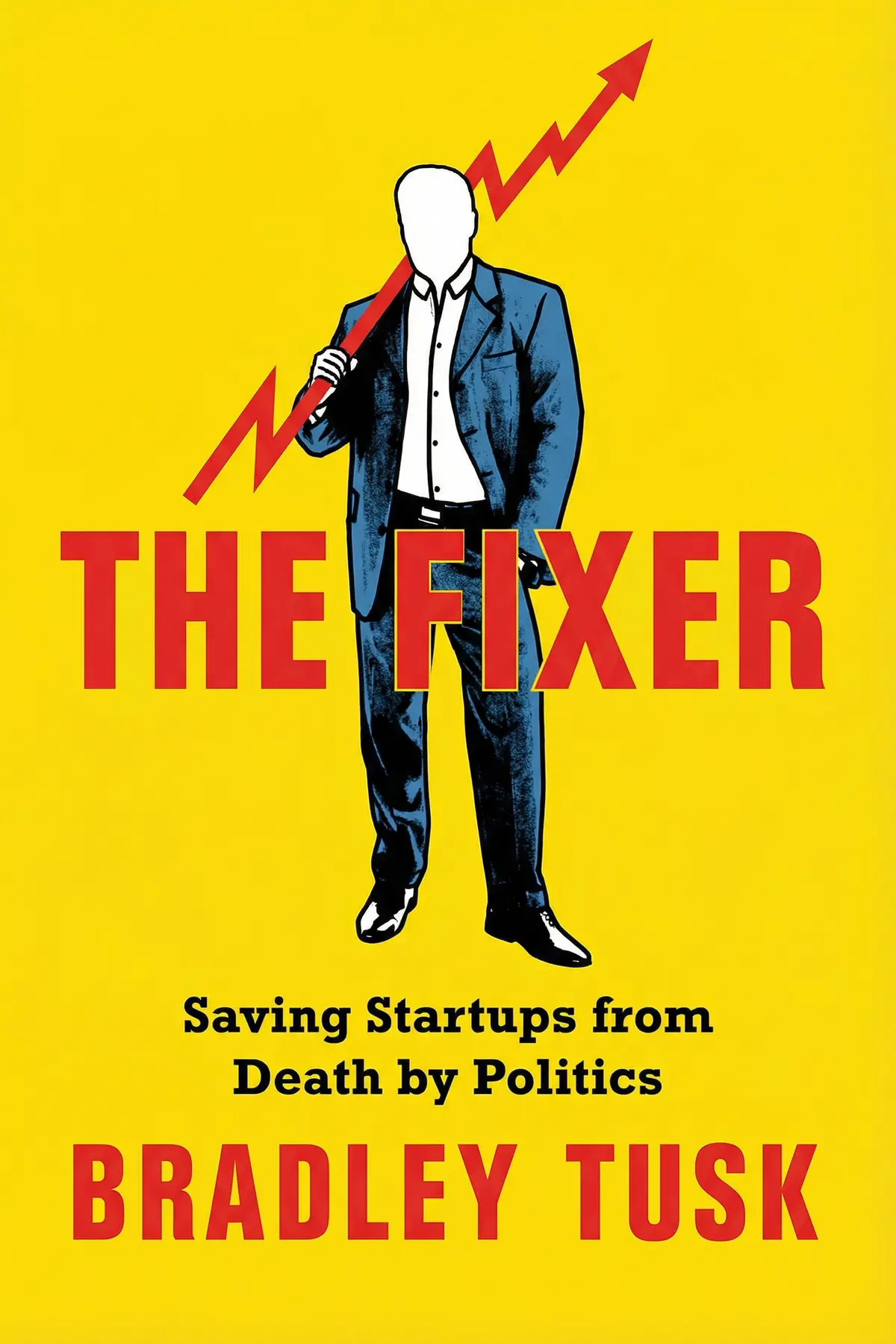
Table of Content
1. Introduction
59 sec
Most founders treat politics as background noise until one bill threatens to shut them down. In The Fixer, strategist and investor Bradley Tusk argues that officials rarely ask which policy is best; they ask whether a decision will upset their donors or make them look bad in the news. That habit is a weakness a young company can use.
Tusk ran Michael Bloomberg’s 2009 re-election campaign and later fought for Uber, FanDuel and Lemonade. His case is that a startup can beat entrenched incumbents by doing three things: shaping the media story, exposing cozy ties between officials and donors, and turning its own customers into public pressure. The evidence comes from his own fights, from a staged funeral for trees to tens of thousands of angry messages that saved Uber in Washington DC. What follows is a clear map of how political decisions really get made, and a set of moves for the day a regulator or city council comes for your business.
2. Give politicians the attention they crave
1 min 40 sec
A toilet roll, a stack of dead trees and a complaint about windshield wiper fluid all made headlines. Tusk’s earliest jobs revealed what elected officials want most, and why supplying it buys real influence.
3. Pick one opponent and make the race feel dangerous
1 min 54 sec
Bloomberg’s third run for mayor looked shaky, and one Democrat worried his campaign more than any other. Tusk never tried to beat that rival at the polls. He tried something more personal.
4. Turn your customers into a lobby politicians fear
1 min 45 sec
A city council member expects a few dozen messages on a heated issue. In Washington DC, a bill to ban Uber met something no politician there was ready for.
5. Win on the ground your opponent claims
1 min 41 sec
New York’s progressive mayor wanted to cap Uber’s growth, and he seemed to have the moral argument on his side. Tusk chose to fight him exactly where he felt strongest.
6. Ignoring politics can sink a booming market
1 min 57 sec
Two fast-growing companies raised hundreds of millions while staring only at each other. One newspaper story later, their entire industry faced legal doubt across most of the country.
7. Force a stalled regulator to say yes
1 min 57 sec
A digital insurer promised payouts in seconds, but a state agency would not license it. Polite meetings were going nowhere, so Tusk went looking for the one person who could overrule the rulebook.
8. Know when to ask permission and when to persist
2 min 02 sec
A cleaning platform wanted to give its workers pensions and health care, and the fiercest resistance came from where you might least expect. Tusk lost that round, and the loss shapes his advice to founders.
9. Conclusion
1 min 15 sec
Tusk’s career adds up to an uncomfortable picture of how decisions get made. A law that could kill a company is rarely weighed on its merits. It is weighed by who is calling, who is donating and what tomorrow’s paper will say. Tusk treats that as an opening rather than a reason for despair. If attention and fear of bad press drive officials, then a startup with a good story and loyal users holds more power than it thinks, the same power that turned a mock funeral for trees into coverage and a flood of emails into a unanimous vote.
Disruption, as Tusk sees it, earns you a punch in the face, so be ready to punch back. The practical start is modest. Before entering a new market, study its politics as closely as its customers: which laws could allow or block you, whether leaders lean toward innovation or caution, and how strong your opponents are there. Know what you can give or take away, such as jobs or a headquarters, and who would stand beside you.
FanDuel paid for waiting, and Lemonade won because it walked in with every tool ready. The fight comes either way; what you control is whether you meet it prepared.
About this book
What is this book about?
A startup can build a product people love and still be shut down by a single bill, a stalled license or a mayor who listens to the wrong donors. Bradley Tusk spent years in politics before turning his skills toward young companies under attack, and The Fixer is his account of what actually moves elected officials. His answer is blunt. Officials crave attention and approval, and they fear bad press and angry voters. Tusk shows how he used that knowledge as a campaign manager for Michael Bloomberg, then for Uber against city leaders in Washington DC and New York, for FanDuel when daily fantasy sports suddenly faced legal doubt across 39 states, and for the digital insurer Lemonade when a regulator would not grant a license. He is also frank about a fight he lost with the cleaning platform Handy. Readers get a working model of political decision-making and a practical playbook: build a story the media will run, look for signs of pay-to-play, turn users into a public voice, know your bargaining assets and allies, and study a market's politics before you enter it.
Book Information
Who it's for
Founders worried about regulation
Founders in regulated industries such as transport, insurance or gaming who fear a single law could end their business.
Operators and policy staff
Operators and policy staff planning expansion into new cities or states.
Curious how officials decide
Professionals curious about how elected officials and regulators really make decisions.
About the Author
Bradley Tusk
Bradley Tusk is a venture capitalist, political strategist and writer. He founded Tusk Ventures, a fund that backs early-stage startups in regulated industries, and was an early political advisor to Uber. Before that he managed Michael Bloomberg's 2009 re-election campaign for New York City mayor, served as Deputy Governor of Illinois and was communications director for US Senator Chuck Schumer. His foundation, Tusk Philanthropies, campaigns on mobile voting and anti-hunger policy in the United States.
Ratings & Reviews
Ratings at a glance
What people think
Listeners find that this book provides a skeptical yet useful perspective on the crossroads of tech startups and state regulation. While viewpoints differ on the author's self-promotional style, listeners enjoy the captivating "war stories" about high-stakes conflicts for firms like Uber and Tesla. Additionally, they appreciate the backstage look at political tactics, with one listener observing that the story is a "real eye-opener" into the way power is applied. Furthermore, many remark that the volume functions as an engaging and instructive resource for entrepreneurs trying to handle difficult regulatory challenges.
Top reviews
Elan
Bradley Tusk is the guy you want in your corner when the government tries to shut you down. This book provides a masterclass on how to survive the regulatory meat grinder, especially for disruptive tech companies. In my experience, most business books are fluff, but Tusk offers a cynical yet practical look at the intersection of startups and government regulation. I was particularly fascinated by the story of the Uber app's "De Blasio" button in NYC; it was a brilliant example of using a user base to exert political pressure. To be fair, Tusk definitely blows his own horn throughout the narrative, but when you've won battles for Tesla and Uber, you probably earned that right. The war stories are fast-paced and provide a real eye-opener into how power is wielded behind closed doors. Highly recommended for any founder who thinks their product is too good to be regulated.
Show morePick
Picked this up on a whim and was immediately sucked into the high-stakes world of political consulting. Tusk’s writing style is punchy and direct, which makes the 300 pages fly by in just a few hours. The truth is that most startups ignore politics until it’s too late, and this book serves as a necessary wake-up call. I loved the breakdown of the Uber versus De Blasio fight—it shows how a David can beat a Goliath by being more tech-savvy than the bureaucrats. Some might find his tone arrogant, but I appreciated the honesty about how power actually works. He doesn't sugarcoat the fact that you often need to find 'dirt' or create bad press to get a politician to back down. This isn't just a memoir; it's a tactical manual for anyone trying to disrupt an entrenched industry. Essential reading for the tech community.
Show moreArt
Finally got around to reading this and it lived up to the hype as a real eye-opener. Tusk proves the old adage that if you aren't at the table, you're on the menu. The book is a fast-paced journey through the corridors of power, from City Hall to the Governor's mansion. I was impressed by the sheer creativity of the campaigns he ran for his clients, especially the way he mobilized users as a political force. Not many people understand how to weaponize a customer base against a mayor, but Tusk has turned it into a science. Personally, I found his honesty about the 'sausage-making' of politics to be refreshing compared to the usual platitudes we hear from pundits. It's an entertaining, educational, and highly practical guide for anyone trying to change the status quo. Don't launch a disruptive company without reading this first.
Show moreWit
Ever wonder how the sausage actually gets made in the halls of power? The Fixer pulls back the curtain on the gross, messy reality of political maneuvering. Frankly, the author comes across as incredibly cynical, but that's exactly why the advice feels so authentic. He doesn't pretend that politicians are driven by noble ideals; he treats them as rational actors looking for attention or campaign donations. The chapter on his time as deputy governor in Illinois was a highlight for me, even if it showcased a shocking lack of traditional qualifications. While it occasionally reads like an extended marketing brochure for Tusk’s consulting firm, the tactical insights are invaluable. I found the section on how they intimidated Anthony Weiner out of the mayoral race to be both ruthless and effective. It's a quick, entertaining read that teaches you how to fight dirty when the stakes are high.
Show moreNatchaya
The chapter on mobile direct voting was the most thought-provoking part of the entire book for me. Tusk makes a compelling case for how technology can fix our broken democratic process, even if his other tactics feel a bit 'dark arts.' Not gonna lie, the way he describes taking out political opponents is chillingly efficient. He understands that politicians are often cowards who will back down the moment a situation becomes a liability for their re-election. The book is a fascinating look at how disruptive companies like Uber used 'gorilla warfare' to bypass traditional taxi commissions. While I disagree with his generic leftist bubble-think on certain issues, his tactical brilliance is undeniable. It’s a very skimmable and entertaining guide for anyone interested in how the real world of power operates. It certainly opened my eyes to the reality of pay-to-play politics.
Show moreMaya
After hearing Tusk on a podcast, I wanted to see if his 'fixer' reputation held up in print. The book is essentially a collection of war stories that demonstrate why startups need to take political risk seriously. I found his strategy of pinning the 'anti-innovation' label on governors to be a particularly effective tool in the modern media landscape. It’s a cynical view, sure, but in a world where incumbents own the regulators, what else are you supposed to do? The writing is concise and avoids the usual fluff found in business memoirs, which I appreciated. My only real gripe is that he glosses over the times his clients actually broke the law or acted unethically. He treats every battle as a 'good guy vs. bad guy' scenario where he is always the hero. If you can get past the ego, there's a lot of useful information here for startup execs.
Show moreViolet
Not what I expected, but in a good way. I thought this would be a dry textbook on regulatory compliance, but it’s actually a gritty, behind-the-scenes look at political combat. Tusk is a master of finding the leverage point that makes a politician blink. Whether it's running targeted ads in a specific zip code or threatening to pull a company out of a state, he knows how to play hardball. Gotta say, the section on the taxi industry's donors was a fascinating look at how incumbents protect their monopolies. The book is a bit self-serving, as most memoirs are, but the underlying lessons about 'anti-innovation' labeling and voter protests are spot on. It’s a quick read—I finished it in a single Sunday afternoon—and it left me with a lot to think about regarding the future of tech and government. Definitely worth your time.
Show moreYok
Wow, this was quite a ride, though perhaps not for the reasons the author intended. The book is clearly an ad-posting-as-political-memoir, designed to justify the massive fees Tusk charges his startup clients. Look, the war stories about Fanduel and Tesla are genuinely interesting and offer a unique perspective on regulatory hurdles. However, the constant name-dropping and self-aggrandizement become exhausting after a while. One minute he's talking about saving Uber, and the next he's bragging about his 'unlimited funds' and connections. To be fair, his insight that politicians are primarily driven by a need for attention seems depressingly accurate in today's climate. I wish there was more actual advice for founders who don't have millions of dollars to spend on a professional fixer. It's a decent 'hate read' if you want to see the cynical side of New York politics, but don't expect a moral compass.
Show moreRungrat
The truth is that this book feels like two different stories smashed together. The first half is a somewhat tedious memoir of Tusk's early career in government, which reads like a gossip magazine for political junkies. It took me a while to get through those chapters because the 'war stories' I was promised didn't start until halfway through. Once he starts talking about his work with Uber and Tesla, the pace picks up considerably. The insight into how politicians perform 'political calculations' before deciding which side to support is genuinely valuable for any business owner. However, Tusk's tone can be quite off-putting; he describes himself as a 'mature adult' while recounting his work for the corrupt Blagojevich. It’s a bit of a mixed bag. I’d recommend skimming the first 100 pages to get to the actual startup advice.
Show moreLucas
As someone who has worked in the public sector, I found Tusk’s lack of self-awareness almost breathtaking. He proudly describes taking the deputy governor role in Illinois at age 29 despite having zero connection to the state or relevant experience. The chapter title 'Not Being Qualified for a Job Shouldn't Stop You' says everything you need to know about his worldview. He essentially admits he was a useful idiot for the Blagojevich administration, yet he frames it as a stepping stone to his current success. The first half of the book drags significantly with gossip about various politicians that feels more like a tabloid than a business strategy guide. It’s hard to root for a narrator who seems to have no core beliefs beyond 'winning' for his wealthy clients. If you want a book on ethics, look elsewhere. This is purely about how to use unlimited resources to steamroll the government. I honestly struggled to finish it.
Show moreQuestions about this book
What is The Fixer by Bradley Tusk about?
It is Tusk’s account of helping startups survive political attacks. Drawing on his years working for Henry Stern, Chuck Schumer and Michael Bloomberg, and then for Uber, FanDuel, Lemonade and Handy, he argues that officials respond to donors and media pressure more than to good policy. Startups can fight back by shaping the public story, exposing pay-to-play ties and mobilizing their customers to contact elected officials.
How did Bradley Tusk help Uber beat regulators?
In Washington DC, his team charged city leaders with shielding the taxi industry, then used the Uber app to urge riders and drivers to reach out to council members, which generated nearly 40,000 tweets plus 50,000 emails within a couple of days. In New York, ads showed riders ignored by yellow cabs, stories exposed taxi donations to the mayor, and an in-app button led 250,000 people to contact the city council in one week.
Should a startup ask permission or forgiveness from regulators?
Tusk says it depends. Uber started up without explicit approval, gathered a base of devoted customers, and only then fought from a position of strength, which worked well. But he urges founders to ask who they would be begging forgiveness from. Facing an irritated regulator is very different from facing a judge, a jury and possible jail time, and the second should be avoided.
Who should read The Fixer?
It suits founders and operators whose businesses depend on licenses, local laws or regulators, especially in transport, insurance, gaming or the gig economy. It also helps anyone planning expansion into new markets, since Tusk recommends studying each market’s politics, the strength of your opponents there and the leverage you hold, such as jobs or a headquarters.
Readers also enjoyed

7 Powers: The Foundations of Business Strategy
Hamilton Helmer





A Warning
Miles Taylor

Alibaba: The House That Jack Ma Built
Duncan Clark


AUDIO SUMMARY AVAILABLE
Listen to The Fixer in 15 minutes
Get the key ideas from The Fixer by Bradley Tusk, plus 5,000+ more nonfiction titles.
- 5,000+ titles
- Listen as much as you want
- 7-day free trial
- Cancel anytime









