
Mastery
Robert Greene
 English
A year of short lessons from Robert Greene on finding your life's work, building real skill, reading the power games at work, winning people over and keeping your emotions out of needless fights.
59 sec
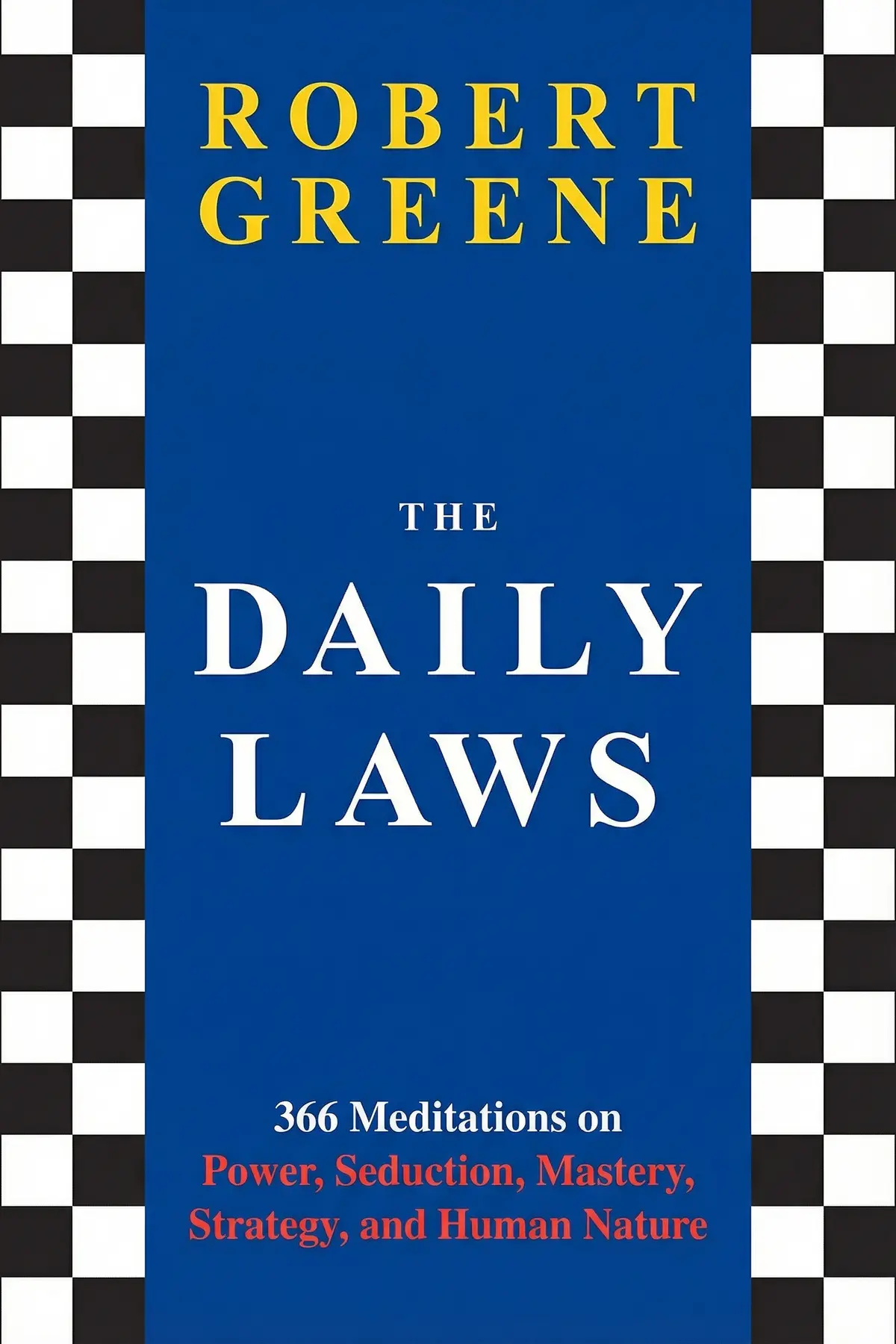
Most of the dangers in a modern life come from other people, and they are subtle enough to ignore until they cost you a job, a relationship or years of effort. That warning opens The Daily Laws, Robert Greene’s collection of 366 short lessons, one for each day of the year, grouped into twelve months. Our brains evolved for a wilderness where one careless moment could kill, Greene notes. Now that we are fed and sheltered, it is easy to grow naive about the human threats that replaced the saber-toothed tiger.
His calendar draws on all his themes: mastery, power, seduction, strategy and human nature. One demand runs through it. See reality as it is, in your own growth, in the games others play and in your own emotions, then act from that view. Ahead are the strongest laws from each stretch of the year, from uncovering your life’s work to keeping a quarrel at home in proportion.
1 min 44 sec
Greene spent years drifting through about sixty odd jobs, and from the outside he looked lost. He insists something kept him on course, and that the same compass is already inside you, waiting to be dug up.
1 min 49 sec
Napoleon’s officers suspected their commander had mystical powers, because he could read a battlefield at a glance. The truth behind his instinct is less magical and far more useful to anyone starting something new.
1 min 49 sec
Greene was talented, friendly and full of ideas, and his boss seemed to hate him for it. The harder he tried to win her over, the worse things got, until he understood a rule nobody had told him.
1 min 41 sec
Correcting someone who is wrong feels like a small victory. Greene argues it usually costs you, because of how tightly people tie their sense of self to one particular quality, and what you can gain by doing the opposite.
1 min 44 sec
A flirt who keeps admirers waiting and an emperor who almost never praised his soldiers used the same principle. Greene shows why holding something back can bind people to you more firmly than giving freely.
1 min 38 sec
Couples who bicker often win every argument and still lose something larger. Greene’s autumn laws describe the trap they fall into and a simple habit, practiced like a muscle, that keeps you out of it.
1 min 37 sec
At 23, Virginia Woolf returned to an empty family house by the sea and was overwhelmed by the sound of the waves. What she did with that feeling over three decades points to a cure for small, circling thoughts.
1 min 08 sec
What lifts The Daily Laws above a pile of tips is the warning it starts with. Our ancestors could not afford to look away from reality, because a predator in the grass ended careless lives. The predators now are harder to spot: an insecure boss, a bruised ego, an argument wearing down a marriage, your own anger late at night. Greene’s year of laws is training in not looking away. It asks you to admit how long real skill takes, how power actually moves between people and how easily emotion pulls you off course, and then to lift your eyes far enough to see something larger than all of it.
In practice that could mean an hour this week recalling what fascinated you as a child, or asking someone who knew you then. It means paying attention to how your successes land on the person above you. It means letting one heated draft sit before you send it. And now and then it means making room for something vast enough to shrink your worries back to their real size.
Naivety feels safe. Greene’s argument is that it never was.
Our brains evolved to keep us alive in a wilderness full of predators. Today the main threats are other people: an insecure boss, a bruised ego, a quarrel that slowly wears down a relationship. These dangers are easy to ignore, and Robert Greene argues that ignoring them is how sensible people end up naive. The Daily Laws gathers his life's work into 366 short lessons, one for each day, arranged as a calendar. The early months cover mastery: uncovering your Life Task, accepting a long apprenticeship and keeping up the practice once you get good. The middle months turn to power: why outshining your boss backfires, why the game of power never stops, and how deception, seduction and persuasion work. The final months are about strategy and perspective: escaping petty battles, studying your negative emotions, pausing before you react and making room for awe. Readers get a practical lens for work and life, with stories from Greene's own wandering years, Napoleon's command of his army and Virginia Woolf's return to a house by the sea.
Young professionals who are good at their jobs yet keep clashing with bosses or office politics.
Career switchers and drifters looking for the thread that ties their interests together.
Managers and anyone worn down by petty conflicts who want more influence and more calm.
Robert Greene was born in Los Angeles in 1959 and studied at the University of California, Berkeley, and the University of Wisconsin at Madison, where he earned a degree in classical studies. He worked as a magazine writer and editor in New York, including at Esquire, and developed stories in Hollywood. His books include The 48 Laws of Power, The Art of Seduction, The 33 Strategies of War, Mastery and The Laws of Human Nature, and he co-wrote The 50th Law with 50 Cent. Seven of his books have been international bestsellers.
Robert Greene
Robert Greene
Robert Greene

Robert Greene
Robert Greene
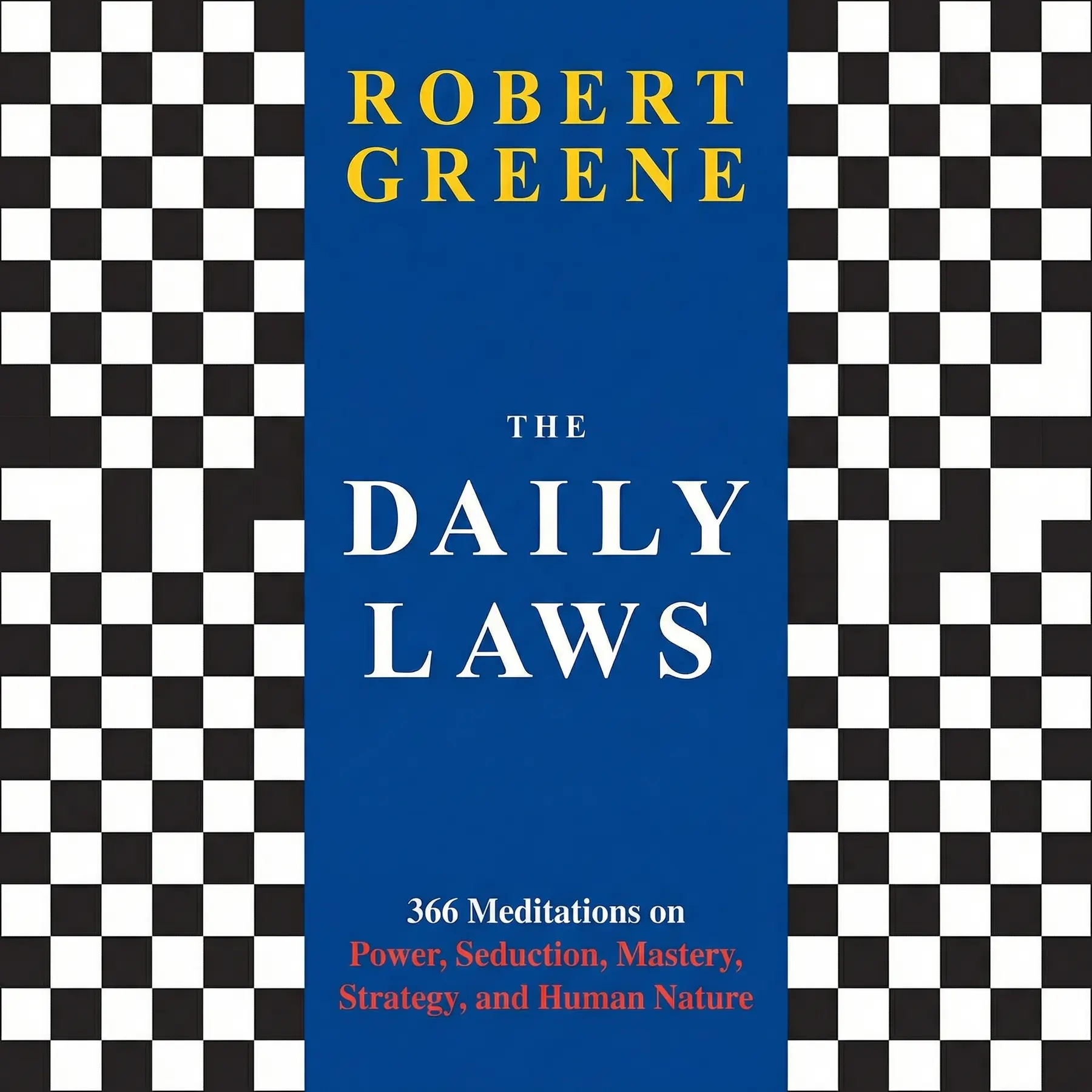
Listeners find the book provides insightful daily wisdom and functions as an ideal everyday handbook, offering stimulating concepts and practical life shortcuts. They value its accessibility as a fast daily ritual, and one listener mentions that every lesson fits on a single page or less. The book’s structure earns praise; one listener emphasizes how it delivers material in brief daily installments, while another likes the way it organizes each month into distinct themes.
This book acts as the ultimate roadmap for anyone trying to navigate the messy realities of power and human nature. I found the month-by-month structure incredibly helpful because it prevents you from getting overwhelmed by the sheer volume of Greene's previous works. Each entry is concise, usually under a page, making it the perfect companion for a morning coffee ritual. While some might find his perspective a bit cynical, look, it’s actually just refreshing to see someone acknowledge how the world truly functions instead of sugarcoating everything. It’s essentially a greatest hits collection that distills complex psychological strategies into actionable daily bites. I highly recommend this for anyone who needs a quick, sharp dose of reality before they start their workday.
Show moreAs someone who has followed Greene for years, I finally decided to dive in with this "best of" compilation to refresh my memory. It is an exceptional entry point for newcomers, providing a wide-ranging overview of his philosophies on everything from seduction to strategic warfare. The writing is sharp, provocative, and consistently challenges the reader to stop being so naive about the world. Truth is, some of the "laws" made me recoil at first, but upon reflection, they offer a necessary shield against the darker side of human behavior. It's less about being a villain and more about understanding the tools that villains use so you don't end up as a victim. This is definitely his most accessible work to date.
Show moreFinally got around to reading this alongside The Daily Stoic, and the contrast between the two is absolutely fascinating. While the Stoics teach you how to control your internal world, Greene gives you the manual for managing the external one. It’s a pragmatic, often ruthless look at how to gain influence and protect your interests in a world that isn't always fair or kind. The chapters on "The Laws of Human Nature" were my personal favorite, offering deep dives into why people act the way they do. Personally, I think reading a page of this every morning is the best way to sharpen your social intelligence. If you want a book that serves as a daily reality check, this is it.
Show moreLook, I didn't expect a self-help book to be this addictive, but I find myself wanting to skip ahead and read the next three days every single night. The way Greene breaks down complex social dynamics into these tiny, punchy lessons is just brilliant. It’s like having a mentor in your pocket who tells you exactly what you need to hear, even when it’s uncomfortable. I’ve already noticed a shift in how I handle conflict at work because of the entries on strategic thinking. The format is perfect for people with short attention spans who still want to gain deep insight. If you’re looking for a perfect everyday guide for life, this is the one to buy.
Show moreThe introduction to this book is arguably one of the most compelling pieces of writing Greene has ever produced, setting a high bar for the rest of the year. It lays out a vision for a "radical realism" that I find incredibly empowering in an age of toxic positivity and wishful thinking. Each page provides a quick hit of strategic thinking that helps sharpen the mind and clarify your goals. Even when the advice feels a little "dark," there is an undeniable truth to the historical patterns he highlights. It is a dense, well-researched, and ultimately transformative guide that I plan on revisiting every single year from now on. Truly an outstanding piece of work that serves as a masterclass in human behavior.
Show moreEver wonder if you're actually in control of your career or just a pawn in someone else’s game? Greene’s latest feels like a crash course in self-awareness that forces you to confront uncomfortable truths about your own motivations and those of the people around you. To be fair, some of the advice feels a bit repetitive if you’ve already devoured Mastery or The 48 Laws, but the daily format breathes new life into those concepts. I particularly appreciated the sections on creative work and finding your "life's task." My only gripe is that many examples remain heavily rooted in historical anecdotes rather than hard science, though the stories are undeniably fascinating. It is a solid 4-star guide for the modern professional.
Show moreThe thematic organization of this volume is its greatest strength, as it clusters ideas into manageable chunks that build on each other throughout the month. Each morning, I spend about five minutes reading the day’s entry and pondering how it applies to my current office dynamics. It’s much more digestible than his longer books, which can sometimes feel like a heavy slog through ancient history and complex theory. You get the brilliance of his research without the 500-page commitment. I did notice the perspective is very male-focused, which might alienate some readers, but the core psychological insights about ego and persuasion are universally applicable if you can look past the wording. It's a great life-hack tool for the busy reader.
Show moreWow, this is a hefty amount of wisdom packed into a very small daily footprint. I love how the book doesn't demand hours of your time but still manages to leave you with a profound thought to chew on for the rest of the day. Some entries are definitely more impactful than others—there are days where the advice feels a bit like a "hot take" rather than a law—but the hit rate is generally very high. In my experience, I’ve started carrying this in my bag everywhere because the one-page format is so convenient. It’s a great refresher for his older fans and a survival guide for anyone entering a competitive field. It definitely makes you more observant of the power dynamics in your own life.
Show moreGotta say, this book is a bit of a mixed bag that relies too heavily on the author's usual tropes. You’ve got the mandatory mentions of Sun Tzu, Machiavelli, and various historical figures, which gives it a high-brow feel, but sometimes the "laws" feel like pseudo-intellectual reaches. That said, the section on confronting mortality toward the end of the year was surprisingly moving and offered a different, more philosophical side to Greene. It’s a decent enough daily reader if you want quick life hacks, but don’t expect a scientific breakthrough. It's more of a curated collection of anecdotes that are fun to read but should be taken with a grain of salt. It’s okay, but maybe a bit overhyped.
Show morePicked this up hoping for some genuine self-improvement, but it frankly reads more like a manual for a sociopath in training. The tone is often deeply manipulative, encouraging readers to view every human interaction as a strategic chess match where you must always come out on top. It feels like Greene is teaching us how to be cold, calculating, and ultimately lonely by prioritizing power over genuine connection. Not gonna lie, the worldview presented here is pretty bleak and feels stuck in a very specific, aggressive corporate mindset that I find exhausting. I gave it two stars because the historical research is clearly extensive, but the actual "laws" often felt like shortcuts to becoming a narcissistic prick that nobody actually likes.
Show moreIt is a collection of 366 short lessons, one for each day, arranged as a twelve-month calendar. The early months cover mastery, the middle months cover power, deception, seduction and persuasion, and the final months cover strategy, emotional control and awe. Greene’s underlying argument is that modern threats come mostly from other people, and that we have to stop being naive about them.
The Life Task is Greene’s name for your true vocation. He says you uncover it, like an archeological dig, by looking back at what obsessed you as a child. His own case: he loved words as a boy, failed as a journalist, drifted through about sixty jobs, and finally found his path writing The 48 Laws of Power.
It is Greene’s warning that being too ambitious and too good in front of a superior can make them insecure and turn them against you. He learned it in his mid-twenties as a documentary researcher, when his boss seemed to resent him despite his strong work. His attempts to win her over made it worse, and he eventually quit.
Accept that power is a game always in play, and choose when to watch and when to act. Make sure your wins never leave your boss feeling smaller, and avoid making colleagues feel unintelligent. Give praise rarely and only for merit, as Napoleon did. When something upsets you, pause before replying, and write the angry email without sending it right away.
It suits readers who want Greene’s ideas on mastery, power, persuasion and strategy in small daily doses. It is especially useful for people early in their careers who feel lost or keep clashing with superiors, leaders who want more influence over their teams, and anyone drained by constant small conflicts who wants a wider perspective.





William B. Irvine


Andrew D. Thompson


Deepak Chopra

AUDIO SUMMARY AVAILABLE
Get the key ideas from The Daily Laws by Robert Greene, plus 5,000+ more nonfiction titles.









