
14 min 39 sec
Available in: English
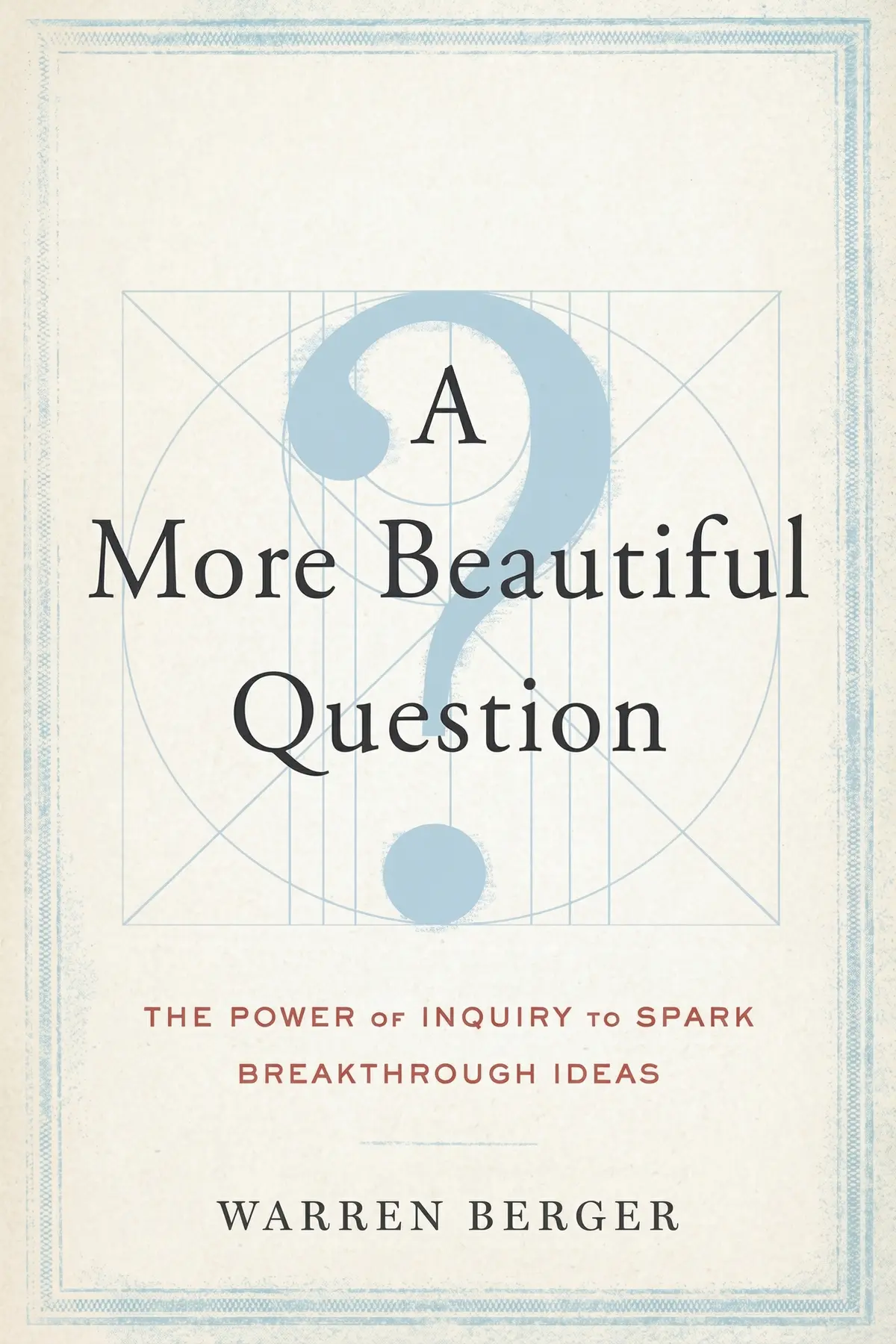
The Creative Curve: How to Develop the Right Idea at the Right Time
Shows why creative success depends less on raw intelligence than on purposeful practice, deep study of your field, good timing, the right people and ideas that pair the familiar with something new.

Table of Content
1. Introduction
1 min 01 sec
If you have ever decided you are simply not the creative type, Allen Gannett has numbers that should change your mind. In The Creative Curve, the entrepreneur and marketing analytics founder points to research showing that above an IQ of about 86, intelligence stops predicting creative ability, and most of humanity clears that bar. Genius, he argues, is closer to a pattern than a gift. Ideas that succeed sit at a particular point between the familiar and the new, they arrive at the right moment, and the right people carry them. Each of those conditions can be learned and worked toward.
Gannett’s evidence runs from Charles Darwin racing a rival to a scientific society, to a teenage video store clerk who later chose shows for Netflix, to a romance reader who invented a genre without ever having written before. What it adds up to is a working method: how to practice, what to study, where to aim an idea and who to bring along.
2. Stop waiting for genius and practice with purpose
2 min 16 sec
A person with a genius-level IQ and someone of average intelligence turn out to be equally good at one key creative test. So what actually separates the famous few from everyone else?
3. Move fast when your idea's moment arrives
1 min 57 sec
Two men worked out the same theory at the same time, yet only one name made it into the textbooks. The reason had nothing to do with which of them was smarter.
4. Understand how familiarity wins fans and novelty keeps them
2 min 13 sec
A clothing brand sold hundreds of millions of dollars of goods in a single year, then became a joke before that year was over. Two small experiments explain both the boom and the crash.
5. Spend a fifth of your day studying your field
2 min 02 sec
Customers lined up every night at a small Arizona video store, and not for the movies on the shelves. The teenager they came to see later decided what millions of people would watch.
6. Find the gap inside a form people already love
2 min 04 sec
An office worker with no writing experience became the creator of an entire literary genre. Her advantage was not a gift for words but something she noticed while relaxing after work.
7. Build the circle that turns work into reputation
2 min 01 sec
Films love the inventor who builds everything alone in a workshop. A study of thousands of innovators and scientists, along with research on artists and performers, tells a very different story about where lasting success comes from.
8. Conclusion
1 min 05 sec
Gannett takes the mystery out of genius without pretending it is easy. The people we celebrate were, in his account, ordinary in intelligence and unusual in their habits and circumstances. They practiced toward clear goals with someone critiquing them. They absorbed their field until they could sense what audiences were tired of and what they had never been shown. They moved when the moment came, and they had a community to carry the work and a respected voice to vouch for it. Darwin had the Linnean Society. Wallace had a ship.
That turns creative success into something you can start on this week. Ask a trusted critic to review your work and set you an exercise you cannot yet do. Protect a regular block of time to study the best and newest output in your field. Take the idea you are working on and name both what will feel familiar to its audience and the one thing that is new. Then think about whose endorsement would make others look twice.
The curve is real, and most of us are clever enough to climb it.
About this book
What is this book about?
Many people quietly decide they are not creative and leave invention to a gifted few. Allen Gannett, founder of the marketing analytics company TrackMaven, argues that this belief is mostly wrong. Research he cites suggests that above a modest IQ score, intelligence no longer predicts creative ability, and most of the world's population clears that bar. What separates celebrated creators, in Gannett's account, is a pattern anyone can study. He calls its center the creative curve: people like what feels familiar, yet tire of anything they see too often, so the ideas that succeed blend recognizable elements with a dose of novelty. Around that curve he sets the other conditions of success: practice with clear goals and feedback, hours of consuming the best work in your field, timing that suits the moment, and a network of teachers, peers and promoters. His cases include Charles Darwin and Alfred Wallace, the rise and fall of Ed Hardy clothing, Netflix's Ted Sarandos and novelist Beverly Jenkins. Readers get a practical way to judge whether an idea is ready, and a routine for becoming the kind of person who sees the right idea first.
Book Information
Who it's for
Self-described non-creatives
Professionals who think of themselves as not creative and want a method instead of inspiration.
Business builders judging ideas
Founders, marketers and product builders trying to judge whether an idea is too strange or too stale.
New writers and artists
Aspiring writers and artists wondering how to get their work noticed.
About the Author
Allen Gannett
Allen Gannett founded TrackMaven, a marketing analytics company whose clients included Microsoft, Home Depot and Honda, and served as its CEO. After TrackMaven merged with the content marketing platform Skyword in 2018, he became its Chief Strategy Officer. He has been named to the 30 Under 30 lists of both Inc. and Forbes and has written for FastCompany.com. The Creative Curve, published in 2018, has been featured on CNBC and Forbes.
Ratings & Reviews
Ratings at a glance
What people think
Listeners find this title to be an immediate classic that offers a captivating examination of the creative journey through scientific data and discussions with leading innovators. This well-documented book is filled with information, serving as a helpful manual with actionable insights for the business world. Listeners value the immersive narrative approach, with one listener highlighting how the writer blends unforgettable anecdotes with proof regarding creativity, and its capacity to inspire people to achieve their goals.
Top reviews
Ella
Ever wonder why certain products just 'pop' while others fall flat? Gannett argues that success isn't about some 'aha!' moment from the gods but rather a calculated balance of the new and the known. It’s about timing. If you’re too early, people don't get it; if you’re too late, you’re just a cliché. The concept of the 'Creative Curve'—that sweet spot where novelty meets familiarity—is a total paradigm shift for anyone in a creative field. I especially loved the deep dive into the 20% principle. Spending a fifth of your time just consuming media in your niche sounds simple, yet it’s the one thing most of us skip. This isn't just another 'believe in yourself' book. It’s a densely researched, vivid narrative style guide that provides a blueprint for making things people actually want. Highly recommended for entrepreneurs who need to understand the science of taste.
Show moreNongnuch
Finally got around to finishing this, and the 'Law of Iteration' chapter was a total game-changer for my development process. Look, we all want to believe our first draft will be a masterpiece. Gannett proves that the most successful hits are usually the result of rigorous, data-backed tweaking. The breakdown of how big brands use 'conceptualization' and 'reduction' to filter ideas was eye-opening. It takes the ego out of the equation. The writing style is punchy and accessible, moving quickly between scientific research and pop culture history. I’ve already started applying the 20% consumption rule to my daily routine, and I can already feel my 'pattern recognition' improving. It's refreshing to read a book that treats creativity as a skill you can actually engineer. If you’re tired of vague 'follow your passion' advice, buy this immediately. It’s a practical roadmap for the modern creator.
Show moreElise
Wow, this really challenges every excuse I’ve ever made about not being 'born' with the creative gene. The book is packed with fascinating look at the creative process, using neuroscience to explain why we like what we like. I found the 'mere exposure effect' section particularly interesting. It explains so much about why certain trends take off and why others feel too 'weird' for the general public. It’s all about finding that bell curve. The stories are memorable and serve as great anchors for the more technical concepts. I’m especially fond of the advice on finding a 'conflicting collaborator'—someone to challenge your assumptions. It’s a motivating read that makes the daunting task of 'being creative' feel achievable through systems and persistence. This is an essential guide for anyone looking to turn their hobby into something with actual commercial appeal.
Show moreSiraporn
Identifying the four types of people you need in a creative network was the most practical part of the entire book for me. I’ve always tried to do everything myself, but the 'Creative Communities' chapter helped me see why I’ve been hitting a plateau. You need that 'prominent promoter' to open doors and a 'master teacher' to fix your technical flaws. The author weaves these lessons into stories about high-achievers that never feel dry or academic. Truth is, most 'creative' books are just fluff, but this one provides a legitimate framework. It’s well-researched and provides actual implications for business leaders. I’ve recommended it to my entire team because it changes how you look at brainstorming and product-market fit. It’s a rare book that manages to be both inspirational and grounded in hard data. Absolutely brilliant.
Show moreNarong
After hearing several podcast interviews with Allen Gannett, I was eager to see if the book lived up to the hype. It mostly does. The most valuable takeaway for me was Law III: Creative Communities. The idea that you need four specific types of people—a master teacher, a conflicting collaborator, a modern muse, and a prominent promoter—is such a practical way to audit your professional circle. It turns out that creativity is a team sport, not a solo mission in a vacuum. To be fair, some of the neuroscience explanations felt a bit simplified, but the case studies, particularly the Ben & Jerry’s ice cream story, kept the momentum going. It’s a well-structured argument against the 'inspiration theory' of genius. I finished it feeling motivated to stop waiting for a flash of lightning and start building a better system for my ideas.
Show moreTanawan
The core thesis here—that creativity is a science rather than a mystical gift—is quite compelling. Gannett does a fantastic job of dismantling the 'lone genius' myth that plagues our culture. Instead of focusing on raw talent, he emphasizes the 'Franklin Method' and the importance of imitation as a precursor to innovation. I appreciated the data-driven approach to timing. Success is often just being 'familiar enough' to be comfortable but 'novel enough' to be exciting. My only gripe is that the book can be a bit repetitive in its middle chapters. The author drives the same points home multiple times. However, the actionable advice on building 'perceptual fluency' makes it a worthwhile read for marketers. It’s an engrossing deep-dive that treats creativity with the analytical rigor it deserves. Definitely an enduring staple for my office bookshelf.
Show moreBun
Picked this up expecting another fluffy self-help book, but I was pleasantly surprised by the analytical approach to timing. The 'Law of Imitation' was a standout section for me. It’s a bold move to tell people they should start by copying successful structures, but the 'Franklin Method' makes total sense. It’s about learning the rules before you break them. The book is light on its feet, moving fast enough that I finished it in two sittings. While some of the 'Law of Consumption' advice felt a bit like common sense, the overarching framework of the curve is something I’ll definitely use when launching my next project. It’s a solid 4-star read that offers a few genuine 'aha' moments. Perfect for anyone who feels stuck in their process and needs a nudge to look at the data.
Show moreWit
To be fair, Gannett does a great job of explaining why 'flashes of genius' are actually just the result of a lot of hidden work. I loved the emphasis on 'perceptual fluency'—the idea that our brains crave what is familiar because it’s easier to process. It explains why so many 'original' ideas fail; they’re just too taxing for the audience. The book is well-researched and provides a much-needed reality check for anyone waiting for the muse to strike. I did find the sections on 'iteration' a bit dry compared to the earlier chapters on community and consumption, but the Ben & Jerry's example at the end brought it back home. It's an insightful guide with practical implications for anyone in marketing or content creation. It might not be 'earth-shattering' if you're a veteran, but for most people, it’s a very useful manual for the creative process.
Show moreJom
Frankly, I found this to be mostly common sense wrapped in fancy marketing speak. The book meanders through incredibly broad advice like 'practice intentionally' and 'find a mentor,' which felt redundant for anyone who has read more than one business book. Do we really need another retelling of how Paul McCartney wrote 'Yesterday' or how J.K. Rowling struggled before Harry Potter? It felt like a collection of anecdotes I’ve heard a dozen times on various podcasts. While the 'Creative Curve' graph is a neat visual, the rest of the 200+ pages felt like filler. I was hoping for tactical, granular steps, but instead, I got a surface-level overview of pattern recognition. If you’re brand new to the concept of deliberate practice, you might find a nugget here. Otherwise, you can probably get the same info from a ten-minute summary online. Not worth the time.
Show morePenelope
Not what I expected from the glowing reviews, and the audiobook narrator’s weirdly nasal tone made it a struggle to get through. Why the author decided to read it himself is beyond me; the emphasis was all over the place. Content-wise, it felt like an over-extended blog post. The 'Creative Curve' idea is decent, but it’s stretched thin across way too many pages. I felt like I was being lectured on things anyone with a basic understanding of social media already knows. For instance, explaining what a meme is felt incredibly condescending. The 'Yesterday' anecdote is a cliché in itself at this point. There are some okay case studies near the end, but the signal-to-noise ratio is just too low for my liking. If you want to learn about deliberate practice, just read Anders Ericsson’s 'Peak' instead. This felt like a 'lite' version of better books.
Show moreQuestions about this book
What is the creative curve?
The creative curve is Allen Gannett’s name for our contradictory taste for both familiarity and novelty. Research he cites shows people like things more as they see them more, yet tire of them after enough exposure, as with a song heard more than eight times. Ideas succeed when they blend familiar elements with something new, and they fade once they become everywhere, as Ed Hardy clothing did in 2009.
Does creativity depend on intelligence according to The Creative Curve?
Only up to a low point. Gannett cites a 2013 Austrian study finding that above an IQ of about 86, intelligence no longer predicted divergent thinking, the ability to produce many solutions to a problem. A person scoring 150 did no better than someone at 100. Since around 80 percent of people score above 86, he argues that most of us have genuine creative potential.
How much time should you spend studying your field?
Gannett suggests about 20 percent of your time. The creative professionals he interviewed, including songwriters, painters and chefs, spent three or four hours a day taking in work from their field. Netflix’s Ted Sarandos built his instinct for what audiences want by watching every film in the video store where he worked as a teenager.
How can I apply The Creative Curve to my own ideas?
Practice skills just beyond your level with someone giving you regular feedback. Study your industry’s best and newest output. Then test your idea: name what will feel familiar to its audience and the one element that is new, as Beverly Jenkins did by keeping romance conventions while centering African-American lovers. Finally, look for a respected promoter in your field who can vouch for your work.
Who should read The Creative Curve?
It suits people who doubt their own creativity, and founders, marketers and product teams who need to judge whether an idea’s timing and positioning are right. Aspiring writers and artists will find practical guidance on practice, studying their field and building the relationships that turn good work into a reputation.
Readers also enjoyed




AUDIO SUMMARY AVAILABLE
Listen to The Creative Curve in 15 minutes
Get the key ideas from The Creative Curve by Allen Gannett, plus 5,000+ more nonfiction titles.
- 5,000+ titles
- Listen as much as you want
- 7-day free trial
- Cancel anytime









