
13 min 23 sec
Available in: English
The Compass Within: A Little Story about the Values That Guide Us
A short business fable about uncovering the core values that already drive you, testing them until they are precise enough to decide with, and using them to choose your work, partner and home.
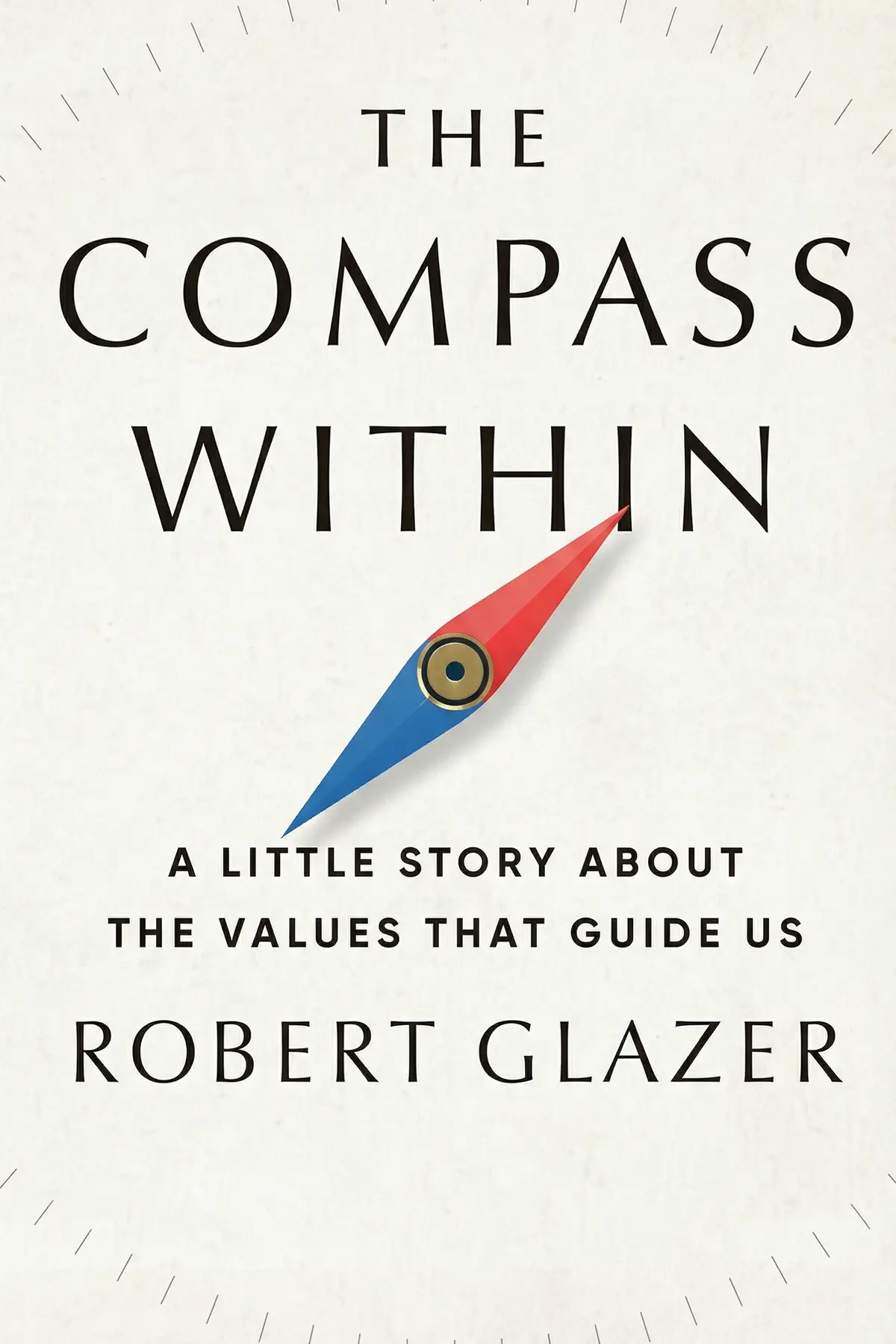
Table of Content
1. Introduction
1 min 00 sec
If your career looks fine on paper but something keeps feeling wrong, that discomfort may be the most useful information you have. In The Compass Within, entrepreneur and author Robert Glazer argues that the unease you feel when asked to do something that doesn’t sit right is an internal compass, warning that an action clashes with your deepest values. Glazer, who says he divides his own life into before and after learning to read that compass, tells his method as a short story about Jamie Hynes, a young manager rising fast at a leading communications firm.
The throughline is simple. Your core values already exist, honest questions can uncover them, a strict test can sharpen them into tools, and then they can steer the biggest choices you make. Along the way there are questions to answer this weekend, a test for any value you claim, and a way to check your partner, your work and your home against what you find.
2. Treat the knot in your stomach as a signal
1 min 55 sec
A strong performance review should end in relief. Instead, one young manager walks out ready to explode, and a painted slogan on a lobby wall shows him that the trouble runs deeper than one bad meeting.
3. Separate who you are from what you admire
1 min 52 sec
Ask most people for their values and they reach for impressive words. A CEO at a diner explains why those words often describe the person you wish you were, and what to look for instead.
4. Five questions that reveal what drives you
1 min 43 sec
Asking yourself what you value rarely produces an honest answer. Asking about where you thrive, where you stall and who annoys you turns out to work far better, and the pattern can surprise you.
5. Find your strongest value beside your oldest hurt
2 min 03 sec
A recurring nightmare from a county fair holds the key to a grown man’s work frustrations. The connection sounds unlikely until a mentor explains why painful memories so often point to our deepest strengths.
6. Test every value until it can make decisions
2 min 01 sec
Integrity is printed on countless office walls, yet it failed one simple test in a mentor’s office. A four-question check explains why, and what a value needs before it can guide a hard choice.
7. Choose your partner, work and home by your values
1 min 43 sec
Three decisions shape most of a life, and Glazer believes they go badly when they ignore what you stand for. One manager’s resignation, one honest conversation and one house move show what alignment costs and gives.
8. Conclusion
1 min 06 sec
The Compass Within makes a modest promise and keeps it: nobody needs to invent values, only to find the ones already steering them. Jamie’s anger in the lobby, his ease with the kids he mentors, his dislike of deceit and the panic of a lost sister at a fair all pointed the same way. Once he could name trust, a vague unease became something he could act on, and acting on it reshaped his work, his marriage and his address.
The method asks for a few honest hours. Answer questions about your own behavior, at work and away from it, and circle the words that repeat. Look back at a childhood moment that still stings, since it may hold your strongest value. Then push each value through the four tests until it is a phrase you could use to decide something tomorrow, and keep the list where you will see it.
After that, the discomfort you feel when a boss asks for something that doesn’t sit right stops being a mystery. Glazer’s view is that everyone starts out without an instruction manual. Nobody has to keep going without a compass.
About this book
What is this book about?
Many capable people reach a point where their career looks fine on paper yet something keeps feeling wrong. Robert Glazer argues that this discomfort is an internal compass at work, a signal that what you are being asked to do clashes with values you hold deeply but may never have named. Glazer teaches his method through a story. Jamie Hynes, a fast-rising young manager, is told by his boss to fire an honest employee and decides he can no longer ignore his own compass. A mentor, Jack Reardon, guides him through five behavior-based questions, a childhood memory that explains his strongest value, and a four-part test called the Core Validator that turns vague words into usable values. Readers get a process they can run on their own in a few quiet hours: questions to answer, a way to spot recurring themes, a test for any value they claim, and a frame for the three choices Glazer says matter most, which are partner, vocation and community.
Book Information
Who it's for
Uneasy young managers
Young managers whose careers look successful but who feel uneasy about what their boss asks of them.
Professionals weighing a change
Professionals weighing a job change, a move or a commitment who want a clear test for the decision.
Team leads exploring values
Team leads who want to understand what core values really are before writing them on a wall.
About the Author
Robert Glazer
Robert Glazer is a bestselling author, speaker and entrepreneur who has founded five companies, including the global marketing agency Acceleration Partners, which he has chaired. He was twice named one of Glassdoor's Top CEOs for small and medium companies in the US. He writes the weekly Friday Forward newsletter, hosts the Elevate Podcast and speaks around the world on leadership, culture and personal and professional development. His other books include Elevate and Elevate Your Team.

Ratings & Reviews
Ratings at a glance

What people think
Listeners find the writing very accessible and appreciate the lesson-packed, story-centric narrative. Furthermore, they value the practical advice on clarifying personal values and view the work as a roadmap for living more authentically. The book also receives praise for its relatability, genuineness, and motivational tone, with one listener specifically noting how it helps transform ideas into action.
Top reviews
Rotjanee
Glazer’s latest is a masterclass in making abstract concepts feel lived-in. I’m usually wary of the “business parable” format because it can feel cheesy, but Jamie’s struggle with his boss Matt felt incredibly authentic. The tension between profit-driven loyalty and genuine integrity is something many of us face daily. I appreciated how the book doesn't just tell you to "find your values" but actually walks you through a rigorous process. The "Core Validator" was the standout for me; it forced me to stop using buzzwords and start using phrases that actually mean something in my real life. It’s a short read, but the emotional weight of aligning your vocation and partner with your inner truth lingers long after you finish. Frankly, it’s the kick in the pants I needed to stop settling for a life that looks good on paper but feels hollow inside.
Show morePor
Finally sat down with this over the weekend and I’m genuinely surprised by how much I took away from a 2-hour read. The concept that our greatest gifts are found right next to our deepest wounds really hit home for me, especially during Jamie’s reflection on his childhood failure at the county fair. It’s a vulnerable take for a business book. Glazer argues that "integrity" is too vague to be a value, and he’s right. Using the Validator tool to turn my vague ideas into actionable phrases changed my perspective on my current role. I’ve already started drafting my own "laminated card" to keep on my desk. It’s practical, no-nonsense wisdom that avoids the usual fluff you find in this genre.
Show morePornpimon
Wow. This hit me at exactly the right moment in my career. Watching Jamie realize that his company’s "core values" were just slogans was like looking in a mirror. We’ve all worked for a "Matt Embers" at some point, right? The book excels at showing the cost of staying in a situation that erodes your spirit. I found the five reflection questions particularly challenging but necessary. It’s one thing to say you value trust, but it’s another to measure yourself against it objectively every day. This isn't just a book about work; it's a book about the courage required to be yourself in a world that wants you to conform. It’s short, sharp, and potentially life-changing if you actually do the work.
Show moreNarong
This is a beautiful little book that bridges the gap between philosophy and daily action. I love the idea that our values are things we already are, not things we hope to become. Jack Reardon is the kind of mentor we all wish we had, and his "values process" is surprisingly rigorous for such a slim book. The realization that Jamie’s need for reliability stemmed from a childhood failure was a profound moment. It reminds us that our history shapes our "why." Look, if you’re looking for a 500-page academic tome on ethics, this isn't it. But if you want a clear, emotional, and actionable guide to living more authentically, buy this immediately. It’s the definition of a guide to living your truth.
Show morePenelope
After hearing so much buzz about Glazer’s approach to leadership, I finally dove into The Compass Within. It’s a short story with a massive impact. The "Big Three" framework—partner, vocation, community—provided a clarity I’ve been seeking for years. It made me realize I’ve been focusing so much on the "vocation" part that I’ve neglected the "community" aspect of my compass. Jamie’s move to Arlington felt like a victory for intentional living. This book gives you the permission to stop trying to please everyone and start honoring the quiet voice inside. It’s authentic, motivational, and deeply practical. I’ll be gifting copies of this to my entire executive team this year to help them find their own direction.
Show moreAria
Ever wonder why you’re successful but still feel like something is missing? This book digs into that specific dissonance by exploring what Glazer calls "the Big Three"—partner, vocation, and community. I loved the story of Jamie moving to Arlington because it shows that alignment isn't just about what you do for a living, but where you put down roots. The writing is punchy and moves fast, which is great for busy professionals. My only gripe is that I wish we spent more time on the "Core Validator" questions toward the end, as they felt a bit rushed compared to the narrative. Still, it’s a powerful guide for anyone feeling misaligned. It’s rare to find a book that feels both like a cozy story and a strategic manual for your soul.
Show moreKanokporn
Picking this up felt like having a long coffee with a wise mentor who isn't afraid to tell you the truth. Glazer doesn't sugarcoat the fact that living by your values can be expensive and uncomfortable. The scene where Jamie’s fiancée Beth supports his risky decision to leave his job was a beautiful illustration of value alignment in a relationship. I do think some of the transitions in the story happened a bit too quickly—years of Jamie’s life are condensed into a few pages—but the pacing keeps you engaged. The focus on "relationships built on trust" rather than just the word "trust" is a nuance that I’ll be applying to my own team management immediately. It’s a solid read that offers a clear path forward.
Show moreKasemsan
Not what I expected, but exactly what I needed. I’m usually the type of person who skips the "story" parts of business books to get to the bullet points, but Glazer’s parable actually held my attention. The internal conflict Jamie feels during his performance review was so relatable it was almost painful to read. My only real criticism is that the "Core Validator" feels like it could be its own separate workbook—it’s a lot to process in such a short volume. That said, the emphasis on long-term orientation over short-term comfort is a message that needs to be shouted from the rooftops. It’s a quick, punchy read that packs a significant punch for anyone seeking more authenticity.
Show moreChiw
As a dedicated reader of Robert Glazer’s work, I had high expectations for this one. To be fair, the core message about the internal compass is vital, but I struggled with the fictional narrative. Parables just aren't my cup of tea; I would have preferred more real-world case studies instead of the character Jamie. The story feels a bit "perfect" at times, especially when Jamie resigns on the spot and everything just falls into place. Life is usually messier than that. However, the workbook-style section at the back is pure gold. If you can get past the somewhat scripted dialogue of the characters, the actual framework for identifying your values is one of the best I’ve seen. Worth it for the exercises alone, even if the story didn't fully land for me.
Show moreOm
Truth is, I almost put this down because I found the boss character, Matt, to be a bit of a caricature of a corporate villain. He’s almost too easy to dislike, which makes Jamie’s decision feel a little more obvious than it might be in real life. However, once the story shifted to the "Core Validator" and the specific questions about moments of disengagement, I was hooked. The distinction between "beliefs" and "core values" is something I had never considered before. Glazer argues that one is aspirational while the other is unshakable, and that changed how I view my own personal goals. It’s a helpful tool, even if the narrative is a little bit simplistic at times. I appreciate the brevity.
Show moreQuestions about this book
What is the main idea of The Compass Within?
Robert Glazer argues that everyone has an internal compass made of core values that already shape their behavior. When an action clashes with one of those values, you feel a nagging discomfort. By uncovering the values through honest questions and testing them carefully, you can make better decisions about your work, your partner and where you live, the three choices Glazer considers most important.
How do you find your core values according to Robert Glazer?
In the story, Jamie answers five questions on separate sheets: where he is engaged outside work, where he did his best work, what people come to him for, when he is disengaged and which traits in others he struggles with. A bonus question asks about a childhood moment of failed responsibility. He then groups repeated words into themes, which for him pointed clearly to trust.
What is the Core Validator?
The Core Validator is a four-question test that Jack Reardon applies to each proposed value. Can you use it to make a decision? Does its opposite make you uncomfortable? Is it a phrase rather than a single word? Can you rate yourself against it objectively? Broad words like integrity often fail because they mean too many things, so Jamie replaced it with relationships built on trust.
Who should read The Compass Within?
It suits people whose careers look fine on the outside but feel misaligned, especially young managers asked to do things that bother them. It also helps anyone facing a big decision about a job, a partner or a place to live. The format is a short fable, so the method arrives through Jamie’s story rather than through theory.
Does living by your values have a cost?
Glazer is direct that it can. Aligning your life with your values sometimes means hard decisions with a real financial or emotional price in the short term, as when Jamie resigns from a well-paid job. Glazer’s argument is that this short-term pain is almost always smaller than the cost of staying on a path that conflicts with who you are.
Readers also enjoyed

59 Seconds: Change Your Life in Under a Minute
Richard Wiseman





A Guide to the Good Life: The Ancient Art of Stoic Joy
William B. Irvine


A High-Performing Mind: Strengthen Your Mind and Live Your Best Life
Andrew D. Thompson


Abundance: The Inner Path to Wealth
Deepak Chopra
AUDIO SUMMARY AVAILABLE
Listen to The Compass Within in 15 minutes
Get the key ideas from The Compass Within by Robert Glazer, plus 5,000+ more nonfiction titles.
- 5,000+ titles
- Listen as much as you want
- 7-day free trial
- Cancel anytime









