

A Thousand Brains: A New Theory of Intelligence
Jeff Hawkins
 English
 ไทย
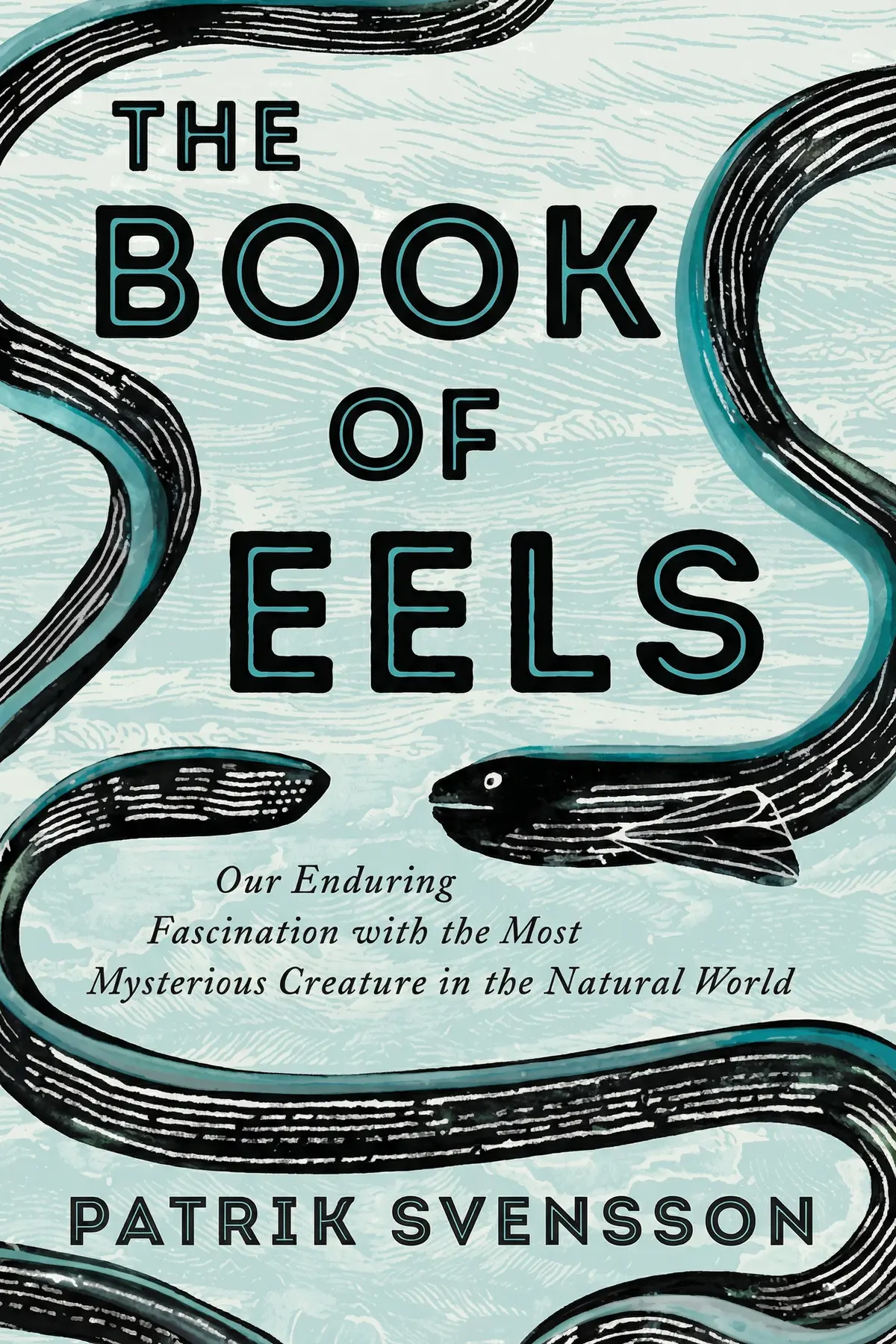
Follows the centuries-long scientific hunt to understand the eel, from Aristotle's mud to Freud's microscope and the Sargasso Sea, and explains why this secretive fish is now disappearing from Europe's rivers.
1 min 05 sec
Most people who have eaten eel sushi have never seen a living eel, and science barely knows the animal either: nobody has ever watched eels breed. In The Book of Eels, Swedish journalist Patrik Svensson follows the creature that has puzzled thinkers from Aristotle to Sigmund Freud. Eels hide at night, can wriggle over dry land for hours and are often mistaken for snakes. Their real strangeness lies deeper, in a life of four separate bodies, a birthplace thousands of miles from the rivers where we meet them, and a clock that ignores the calendar.
Svensson’s story has one thread. For more than two thousand years, the eel has kept its origins, its sex life, its route and its timing hidden, and that very secrecy now leaves it exposed, because people cannot easily protect a life they do not understand. Follow that thread and you get a compact history of how science learns, told through one stubborn fish, plus one plain choice at the table that helps it survive.
1 min 48 sec
The long, dark eel most people picture is often an animal near the end of its life. Before that, it has worn three other bodies, each so different that early observers would never have connected them.
1 min 48 sec
A drying pond and a sudden crowd of eels convinced the greatest naturalist of the ancient world of something false. His mistake shaped two thousand years of research, and Svensson thinks that was a gift.
1 min 57 sec
A young student spent a month in Trieste cutting open hundreds of eels, searching for a single organ, and came home with nothing. The reason he failed turned out to be one of the eel’s strangest habits.
1 min 55 sec
For seven years a Danish biologist combed the coasts of Europe and found nothing new. Then he pointed his ship the other way, and one simple measurement began leading him toward an answer.
1 min 48 sec
Seven hundred tagged fish set off across the Atlantic, and their paths looked like a mess. Then, about halfway out, something changed in how they swam, and it reveals a lot about how they find their way.
1 min 58 sec
An eel dropped into a Swedish well in 1859 was still alive in 2008, and barely any bigger. Whatever tells an eel it is time to grow up, it is clearly not the number of birthdays it has had.
1 min 52 sec
The young eels reaching Europe have fallen to a sliver of their former numbers. Fishing explains only part of the loss, and the biggest danger of all may be a change happening far out in the ocean.
1 min 14 sec
What makes the eel unforgettable is that its mystery keeps changing shape. Svensson shows the eel question growing with each answer. At first it asked what an eel is and how it is born. Once Mondini’s female and the Sicilian silver eel revealed the sexes, it became a question of where eels breed and why they travel so far. Schmidt’s nets answered the first part, and the 2016 tags hinted at the route. Today’s version is the most urgent: why eels are vanishing, and how to stop it.
This is where the old secrecy turns dangerous. An animal that breeds out of sight, in a sea thousands of miles from the rivers where people meet it, is hard to count and hard to protect. If this question goes unanswered for too long, Svensson warns, the eel could be lost for good.
The story leaves a habit of mind worth keeping: treat a missing fact as one that may not be visible yet, the way Freud’s immature males hid exactly what he was hunting for. And it leaves a choice, which is to keep glass eels off your plate. The fish that outlasted Aristotle’s mud and Freud’s microscope may not outlast our appetite.
Most people have probably heard of the eel, and some may have tasted it as unagi, yet few have ever seen one in the wild, and we have still never watched eels breed. Patrik Svensson, a Swedish journalist, takes that gap as his subject. He follows the animal through four very different bodies, from a flat, transparent larva born in the Sargasso Sea to the silver eel that returns there to spawn and die. Along the way he tells the story of the eel question, once ranked as the biggest problem in zoology. Aristotle thought eels came from mud. An anatomy professor found the first eggs in 1777. A young Sigmund Freud dissected hundreds of eels and failed to find a male organ. A Danish biologist spent almost twenty years tracing larvae back to their birthplace. The book ends on the newest and most urgent version of the question. Eel numbers have collapsed, and Svensson explains how overfishing, disease, dams and shifting ocean currents are to blame. Readers get a short history of how science learns, told through one stubborn fish, and one simple way to help it survive.
Curious readers who enjoy nature writing and want a true scientific mystery told as one clear story.
Professionals and students interested in how science actually advances, through wrong guesses, failed searches and patient measurement.
Food lovers and eco-minded shoppers who want to know why eel is disappearing and what they can do.
Patrik Svensson, born in 1972, is a Swedish journalist who covers arts and culture for the newspaper Sydsvenskan. He learned to fish for eel as a boy, at his father's side beside a Swedish stream. The Book of Eels, first published in Swedish in 2019, was his first book and blends the eel's natural and cultural history with a personal story about him and his father. It won the August Prize for Swedish non-fiction book of the year, and rights were sold in 33 other languages.
Listeners find this work absorbing and beautifully written, valuing the balance of intimate narrative and scientific information regarding eels. They particularly enjoy how it links humanity to these enigmatic animals, and one listener observes that it functions as a meditation on a boy's memories of his father. Additionally, listeners praise the informative nature of the text, with one review specifically noting its keen insights into the human condition.
Growing up near the water made me appreciate the quiet, murky depths of our natural world, yet this book revealed a mystery I never fully grasped. Patrik Svensson weaves a delicate tapestry of biological wonder and nostalgic melancholy that resonates long after the final page is turned. I was particularly moved by the chapters detailing his childhood fishing trips with his father along the river. These moments serve as a poignant meditation on the passage of time and the inevitable loss of our parents. While the technical details of the eel’s life stages are fascinating, it is the emotional weight of the human connection that truly anchors the narrative. The writing is lyrical, evocative, and deeply personal. It effectively transforms a slimy, misunderstood fish into a symbol of our own search for meaning and home.
Show moreSvensson has crafted something truly rare here. This is a book that manages to be both intellectually stimulating and emotionally devastating at the same time. The way he connects the elusive nature of the eel to the enigmatic relationship he had with his father is masterful. I never expected to be moved to tears by a story about glass eels drifting across the Atlantic. The author’s ability to find beauty in the grotesque and significance in the mundane is a testament to his skill as a writer. Every chapter feels like a carefully polished stone, contributing to a larger structure that contemplates life, death, and the persistence of memory. If you appreciate nature writing that dares to be philosophical, you must pick this up. It is a hauntingly beautiful tribute to a species on the brink of extinction.
Show moreRarely does a book about marine biology feel so deeply human. Patrik Svensson has written a masterpiece that transcends the boundaries of the nature genre. By examining the life of the eel, he forces us to confront the mysteries of our own origins and the inevitability of our end. The connection between the eel's journey to the Sargasso Sea and the human search for identity is profound. His writing is clear and accessible, yet it carries a weight that feels ancient and timeless. This is a meditation on what it means to belong to a place and the lengths we go to return home. It is easily one of the most thought-provoking books I have read in years. Every chapter left me reflecting on my own family history and my place in the natural world.
Show moreHow can a creature that has existed for forty million years still remain such a complete mystery to modern science? This book is a fascinating exploration of the European eel, a fish that undergoes several radical metamorphoses before returning to its birthplace to die. Svensson does an excellent job of presenting the scientific history, from Freud's early dissections to Rachel Carson's environmental warnings. The mystery of why no one has ever seen an adult eel spawn in the Sargasso Sea is genuinely gripping. My only minor complaint is that some of the philosophical tangents felt a little self-indulgent. Still, the insight into how humans project our own fears and desires onto the natural world is quite enlightening. It’s a meditative and informative journey that made me look at the mud-dwelling eel with newfound respect.
Show moreWho knew Sigmund Freud spent his youth looking for eel testicles? This book is packed with bizarre historical anecdotes that keep the reader constantly surprised. Beyond the science, it explores how the eel has occupied the human imagination for millennia, appearing in literature and folklore across the globe. I was captivated by the account of the Danish biologist Johannes Schmidt and his tireless search for the eel's breeding grounds. The narrative voice is steady and engaging, striking a perfect balance between education and storytelling. Some of the later chapters on the environmental threats facing the species are quite sobering and necessary. It’s a comprehensive look at an animal that is as culturally significant as it is biologically unique. I highly recommend this for anyone who loves a good 'secret history' of the natural world.
Show moreThe realization that we might lose the European eel before we even understand its life cycle is heartbreaking. Svensson uses the eel’s current status as a critically endangered species to reflect on our own impact on the planet. He discusses climate change, pollution, and the mysterious viruses that are decimating populations with a sense of urgent melancholy. I appreciated how he didn't shy away from the darker aspects of our relationship with nature. The book effectively highlights the irony of our obsession with a creature we are simultaneously destroying. While the memoir aspects were touching, it was the ecological warning that stayed with me the longest. This is an important read for anyone interested in conservation and the ethics of our interaction with the environment. It’s a quiet but powerful plea for a species that cannot speak for itself.
Show moreIf you are looking for a straightforward textbook, you might be surprised by the narrative detours this book takes. Personally, I enjoyed the blend of science and memoir, though I can see how it might not be for everyone. The information regarding the four stages of an eel's life—larvae, glass, yellow, and silver—was presented in a way that was easy to visualize. I also enjoyed the discussion of the eel in the context of the Mayflower and early American history. It’s fascinating how such a prevalent creature has remained so hidden from our total understanding for so long. The author’s passion for the subject is evident on every page, which makes the reading experience very engaging. While some of the philosophical musings felt a bit thick, the overall quality of the research is impressive.
Show moreIs this a science book or a memoir? Frankly, the transition between the historical accounts of Aristotle and the author's childhood memories felt a bit jarring at times. I came for the hard facts about the Sargasso Sea and the incredible migration patterns of these slippery creatures. Instead, I found myself wading through long, descriptive passages about night fishing and family dynamics. While the prose is undeniably beautiful, the pacing suffered from this constant back-and-forth between the laboratory and the riverbank. Truth is, I learned a lot, especially regarding the 'eel question' that stumped scientists for centuries. However, I found myself skimming the more autobiographical sections to get back to the actual biology. It is a solid read for those who enjoy narrative non-fiction, but it might frustrate a reader looking for a pure nature guide.
Show morePicked this up on a whim after seeing that striking cover and wanting something different to read. To be fair, I didn't expect a book about fish to be this existential or deep. It’s a relatively quick read, but it demands your full attention because of the dense scientific and historical information. I found the sections on the Basque glass eel trade particularly eye-opening and strange. However, there were moments where the prose felt a bit repetitive, circling the same themes of mystery and home multiple times. The personal stories about his father provide a nice emotional anchor, even if they occasionally slow down the momentum of the book. Overall, it’s an enlightening look at a creature I used to think was just slimy and gross. It didn't quite blow me away, but it was certainly worth the time.
Show moreWait, I thought this was going to be a straightforward nature guide about a species I knew nothing about. Instead, a huge portion of the book is dedicated to the author and his father catching, gutting, and eating these poor creatures. As someone who finds the idea of recreational fishing quite upsetting, these chapters were incredibly difficult to get through. I really just wanted to learn about the science and the mystery of the Sargasso Sea. It felt like every time I got interested in a biological fact, the narrative shifted back to the riverbank and the ritual of the kill. Not gonna lie, I ended up skipping several sections just to avoid the graphic descriptions of the catch. The parts about Aristotle and the history of the eel problem were interesting, but they didn't justify the rest of the content for me.
Show moreIt follows the eel question, the long effort to understand an animal nobody has ever seen breed. Svensson traces the eel’s four life stages, from a transparent larva in the Sargasso Sea to the silver eel that returns there to spawn. He tells how Aristotle, Carlo Mondini, Sigmund Freud and Johannes Schmidt each chipped away at the mystery, and ends with the sharp decline of eels across Europe.
European eels breed in the Sargasso Sea, in the northwest Atlantic. Danish biologist Johannes Schmidt found it by catching eel larvae across the ocean and measuring them, reasoning that smaller larvae meant he was closer to their birthplace. After almost twenty years, he found newly hatched larvae there. Adult eels swim more than five thousand miles from Europe to spawn, and nobody yet knows why they go so far.
As a young student, Freud was sent to Trieste by the zoologist Carl Claus to look for the male eel’s testicle, which no one had found. He dissected more than 400 eels in a month and found nothing. Eels only grow sex organs when they need them, so his males were probably immature. Svensson suggests, as a guess, that the episode may have shaped Freud’s later thinking about hidden sexuality.
Svensson blames human activity. Glass eels reaching Europe have fallen to about 5 percent of their 1970s level. Overfishing, especially of young glass eels, is the most obvious cause. Diseases and parasites spread by shipping eels between continents add to it, and dams, locks and hydroelectric plants block or kill migrating fish. The biggest long-term threat is climate change shifting the ocean currents that carry larvae to Europe.
Svensson’s direct advice is to stop eating glass eels. Fishing them is especially harmful because it removes huge numbers of fish before they ever grow, and a single meal needs a great many of them. The European Union now requires fish bridges around dams and the release of some caught glass eels, but has not banned the fishery, so avoiding them in restaurants and shops is the step individuals can take.
Jeff Hawkins


Lisa Kaltenegger




AUDIO SUMMARY AVAILABLE
Get the key ideas from The Book of Eels by Patrik Svensson, plus 5,000+ more nonfiction titles.









