
14 min 15 sec
Available in: English
 ไทย
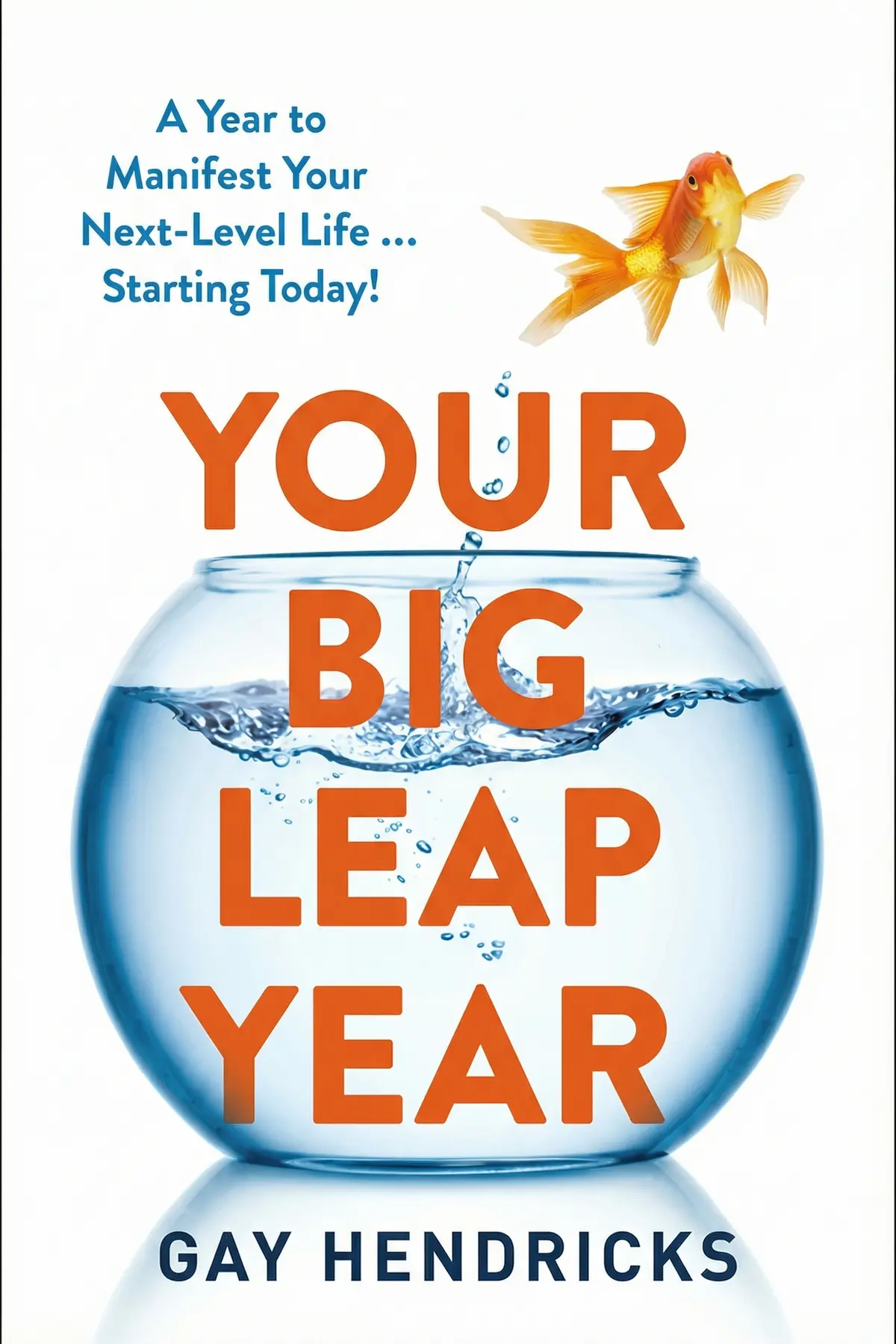
EnglishไทยThe Big Leap: Conquer Your Hidden Fear and Take Life to the Next Level
Shows why people tend to spoil their own good times once life goes well, and offers simple tools to stop it: one question for worries, deep breathing, a complaint diet and a clear way to refuse distractions.
Table of Content
1. Introduction
1 min 03 sec
Many people who work hard for success feel strangely uneasy once it arrives, and then find a way to spoil it. In The Big Leap, psychologist Gay Hendricks gives that pattern a name: the upper-limit problem, an inner warning system that decides how much happiness and success you are allowed. When life climbs above that level, he argues, people stir up trouble to bring it back down, often in a part of life far from the one that is thriving.
His throughline is simple and demanding. The ceiling is learned, and you can raise it by catching the moments you sabotage yourself and putting your energy where your talent lives. The tools are small: a deep breath before a speech, one question for every worry, a week of noticing how often people complain, a clear test for which offers to refuse. Each comes with a case from his practice, from a woman who nearly lost a new love to a billionaire who fretted over the price of toilet paper.
2. Spot the ceiling you put on happiness
1 min 44 sec
A woman in her fifties finally found love after deciding it was beyond her. Then, at the very moment life looked complete, she made a choice that nearly cost her everything she had gained.
3. Use your worries to catch self-sabotage early
1 min 37 sec
A man with billions in the bank fretted constantly over money, down to the cost of toilet paper. His case shows what most worry is really about, and how one small experiment changed his marriage in seven days.
4. Breathe fear into excitement and drop old roles
1 min 39 sec
Fear and excitement feel almost the same in the body. A twentieth-century psychiatrist noticed what separates them, and his observation gives you something to do in the last minute before a speech.
5. Find the work where hours disappear
1 min 43 sec
Finding the work you were made for sounds like pure good news. Hendricks argues it is also frightening, and he explains why people avoid it and how attention, not luck, reveals it.
6. Say no to good offers that pull you sideways
1 min 47 sec
A colleague offers an affordable investment that could earn $50,000 and help paralyzed people. It sounds impossible to refuse, yet Hendricks describes exactly when the right answer is a polite no.
7. Win back time by facing problems while small
1 min 46 sec
Ignoring a hard problem seems to save time today. Hendricks shows how it does the reverse, and why a week of simply listening to office talk can reveal hours you never knew you were losing.
8. Keep love strong as your success grows
1 min 46 sec
An influential study found that most highly successful people were unhappy with their partners. Hendricks points to one everyday habit behind much of that unhappiness, and it is easier to spot in others than in yourself.
9. Conclusion
1 min 10 sec
The Big Leap rests on one uncomfortable idea: the main limit on your happiness may be the amount you believe you are allowed. Hendricks argues that most people defend this limit without noticing, through a sudden risky decision, a worry that will not stop, a complaint, a quarrel with someone they love. In his view, the supply of happiness and success has no limit for anyone willing to face the fear of their own potential.
What changes is attention. The next time things go unusually well, watch for the urge to create trouble, the way Lois did when she left therapy too soon. When a worry starts to circle, ask whether you can control it, and either act or let it go. Before a moment that scares you, breathe slowly and treat the rush as excitement. And when a good offer arrives, measure it against the work where your hours disappear.
The billionaire did not need more money. He needed one week without criticizing his wife, and he walked back in looking ten years younger.
About this book
What is this book about?
Many people work hard for success and love, then feel uneasy once they have them, and somehow make a mess. Psychologist Gay Hendricks calls this the upper-limit problem. In his view, it is an inner warning system that sets a maximum on how good life is allowed to feel. When life rises above it, people create drama, often in an area far from the one that is going well. Hendricks traces the pattern to fear: if you reach your full potential, you run out of excuses. Drawing on cases from his practice, including a woman who almost lost a new relationship and a billionaire who fretted over the price of toilet paper, he shows how the limit appears in worry, complaint, avoided problems and blame between partners. Readers get a set of small, concrete practices. These include a question that settles most worries, a breathing method that turns fear into excitement, the idea of a Zone of Genius, an Enlightened No for tempting offers, and a week-long complaint diet. Together they aim at one goal: letting good times last.
Book Information
Who it's for
Professionals after reaching goals
Professionals who reach a goal and then find themselves creating new problems.
Wanting simple daily tools
Ambitious people stuck in constant worry, complaint or overcommitment who want simple daily tools.
Couples tired of blaming
Couples feeling the strain of busy careers who want to stop blaming each other.
About the Author
Gay Hendricks
Gay Hendricks earned a PhD in psychology from Stanford University in 1974. He then taught at the University of Colorado for 21 years and became a full professor of counseling psychology. He founded The Hendricks Institute, which runs seminars in North America, Asia and Europe, and he has coached more than 800 executives, including leaders at Dell and Motorola. With Kathlyn he has written more than 35 books, among them Conscious Loving and the New York Times bestseller Five Wishes.
Ratings & Reviews
Ratings at a glance
What people think
Listeners find this work absorbing and fast-paced, offering useful strategies for leading a more satisfying life. They value its deep perspectives, especially regarding the discovery of underlying beliefs, and its reflective method that inspires a new outlook on every minute of one’s day. Listeners commend the outstanding principles and creative concepts, with one listener mentioning its ability to help dismantle generational barriers.
Top reviews
Eye
Wow, this was exactly what I needed to hear right now. The concept of the 'Upper Limit Problem' hit me like a ton of bricks because I've spent years sabotaging my own success whenever things started going too well. Frankly, I didn't realize how much I was holding myself back based on old, hidden beliefs from my childhood. Hendricks explains that we have an internal thermostat for how much happiness we can handle, and once we hit that limit, we manufacture drama to bring ourselves back down. It’s a quick read but the insights into the 'Zone of Genius' are genuinely transformative if you're willing to do the work. I’ve already started using the mantra to expand my capacity for abundance. While some parts felt a bit like a corporate pitch, the core message about being allowed to thrive is powerful.
Show moreGoy
Picked this up on a whim after a friend mentioned 'upper limiting' and it’s changed my entire outlook on work. It’s a very fast, engaging read that cuts straight to why we stop ourselves from reaching our full potential. I loved the section on identifying the four different zones of activity. I realized I was spending way too much time in my 'Zone of Incompetence' just because I felt obligated to do everything myself. Personally, the most impactful part was the realization that I don't have to limit my success just because my parents didn't have the same opportunities. It’s a thought-provoking guide to breaking through those internal ceilings and moving toward a life of genuine satisfaction.
Show moreMats
I wasn't expecting a business book to make me confront the 'ghosts' of my family's financial history. Hendricks talks about how we carry generational blocks—this idea that we shouldn't 'shine too bright' because it might make others feel bad. Growing up in a culture where people were suspicious of success, I found this deeply emotional and relevant. I am finally giving myself permission to thrive without guilt. The mantra 'I expand in abundance, success, and love every day' might sound cheesy to some, but it’s been a helpful tool for reframing my mindset. Some of the anecdotes about famous friends were a bit much, but the psychological breakthroughs I had while reading made it a 5-star experience for me. It’s about more than career growth; it’s about wholeness and integrity.
Show moreAroon
This is a book I’ll be keeping an e-copy of to dip back into whenever I feel myself contracting. The 'Upper Limit Problem' is the most accurate description of the success/crash cycle I have ever encountered. Hendricks’ writing is engaging and the book moves at a brisk pace, making it perfect for a weekend read. I particularly appreciated the focus on 'microscopic truth' in relationships and how that ties into our overall capacity for success. Not gonna lie, I cringed at a few of the sports metaphors, but the central thesis is so strong that I can overlook the occasional hokey terminology. It’s about taking ownership of your time and your potential. This book helps you identify those invisible barriers that you didn’t even know you were building. Truly a gift for anyone looking to level up.
Show moreOm
The core philosophy here is brilliant, even if the delivery feels a bit dated at times. Hendricks has a very specific 'California life coach' tone that can be a bit grating for those of us who prefer data and hard science over spiritual anecdotes. To be fair, he doesn't include many studies or statistics, which might turn off more academic readers. However, once you look past the prosperity-gospel-adjacent language, the distinction between the Zone of Excellence and the Zone of Genius is incredibly helpful for anyone feeling stuck in a career they are good at but don't love. It’s about more than just money; it’s about aligning your daily activities with your unique talents. It’s an engaging read that forces you to rethink every moment of your day-to-day life. I’d recommend it with the caveat to take what works and leave the rest.
Show moreEli
As someone who has struggled with hitting a glass ceiling in my own business, Hendricks' insights into self-sabotage were a revelation. He identifies how we use worry, criticism, and even physical illness as tools to stay within our comfort zones. The idea that we are actually afraid of our own greatness is a hard pill to swallow, but it rings true. I found the questions designed to help find your 'unique ability' very practical and easy to apply immediately. My only gripe is that the book feels a bit repetitive, and the definition of success feels heavily weighted toward wealth and power without much regard for social impact. Still, if you want to understand your own psychological barriers, this is a fantastic starting point. It definitely makes you look at your faults in a new, more curious way.
Show moreSurasit
Finally got around to finishing this, and while I had to filter out some of the 'life coach' jargon, the practical applications are undeniable. The book is at its best when it identifies the specific ways we 'upper limit' ourselves through deflection and bickering. I never realized that picking a fight with my partner after a big win was actually a way to dampen my own happiness. That insight alone was worth the read. Hendricks writes in a way that is quick and easy to digest, though the lack of data-driven evidence is a bit of a letdown. In my experience, the concepts of Newtonian time versus Einsteinian time are a bit too abstract, but the core message about living in your genius is vital. It’s a solid 4-star read for anyone looking to stop getting in their own way.
Show moreMind
Ever wonder why self-help books are always 200 pages when they could be 20? Hendricks has some truly innovative ideas here, particularly the 'Upper Limit Problem,' but they are buried under a mountain of celebrity name-dropping and stories about his own accomplishments. One minute you're learning about self-sabotage, and the next you're reading about how he helped a famous musician move from rock to jazz. Also, the chapter on 'Einstein Time' was completely useless to me—it felt way too vague and hokey to be applicable in a modern, fast-paced work environment. Truth is, there is about a chapter’s worth of gold here, and the rest is just filler. If you can skim through the fluff, you'll find some great prompts for identifying your unique abilities, but it requires some patience to get there.
Show moreAnchalee
Look, the ideas regarding the 'Zone of Genius' are worth the price of admission alone. Most people spend their lives in the 'Zone of Excellence,' doing things they are good at but that drain their energy. Learning to say an 'enlightened no' to those tasks is a game-changer. However, the book is incredibly heavy on the anecdotes. Whether it’s Bonnie Raitt or some high-powered CEO, the author seems very intent on showing us his impressive Rolodex. I also found the section on physical injuries being a form of self-sabotage to be a bit of a stretch. But if you can look past the name-dropping and some of the more 'woo-woo' elements, the actual strategies for breaking through your upper limit are excellent. It’s a very thought-provoking piece that I think most ambitious people would benefit from.
Show morePor
To be fair, I can see why people like this, but the tone was an absolute dealbreaker for me. The writing feels incredibly arrogant, with the author constantly talking himself up and using these bizarre, corporate-sounding metaphors like the 'Zone of Genius.' It reads like a transcript from a high-priced seminar for billionaires, which makes it feel hopelessly out of touch for normal people with actual family responsibilities. Hendricks makes these broad claims about how we 'choose' our illnesses to prevent success, which feels borderline dangerous and totally lacks any scientific backing. I pushed through it because of the hype, but I found the 'Einstein Time' concepts to be nothing more than pseudo-spiritual nonsense. There are better books out there on mindset that don't come with this much ego.
Show moreQuestions about this book
What is the main idea of The Big Leap by Gay Hendricks?
Hendricks argues that most people carry an upper limit on how much happiness and success they will allow. When life goes better than that limit, they unconsciously create trouble, often in a different area of life, such as making a risky investment while their love life thrives. The root is fear of reaching their full potential. By noticing this self-sabotage, people can let good times last.
What is the upper-limit problem?
It is Hendricks’s name for an inner warning system that caps how good life is allowed to feel. During a winning streak, part of you grows uncomfortable and creates obstacles or drama to return to normal. His client Lois found love, then stopped therapy, and within six months the relationship nearly collapsed. He says the problem often strikes when you relax after a big achievement.
How do you stop worrying, according to The Big Leap?
Hendricks suggests asking one question whenever a worry starts: is this something I can control? If not, the worry is pointless and can be dropped. If so, act on it quickly and end the worry. He sees much worry as a sign of the upper-limit problem, as with a billionaire client who fretted about money until he stopped criticizing his wife’s spending for a week.
What is the Zone of Genius and the Enlightened No?
The Zone of Genius is the work you are best suited for, where you lose track of time and contribute the most. The Enlightened No protects it. Before accepting an opportunity, even a good one like an affordable investment in a machine for paralyzed people, ask whether it fits your zone. If your zone is music rather than neuroscience, Hendricks advises declining politely.
How can I apply The Big Leap at work?
Try a complaint diet. For a week, notice how much workplace talk is complaining, then point out that complaints solve nothing and that owning a problem works better. Ban the excuse that you have no time, since doing tasks now saves time. Face avoided problems early before they grow, and breathe deeply before stressful moments like speeches to turn fear into excitement.
Featured in
Readers also enjoyed

59 Seconds: Change Your Life in Under a Minute
Richard Wiseman





A Guide to the Good Life: The Ancient Art of Stoic Joy
William B. Irvine


A High-Performing Mind: Strengthen Your Mind and Live Your Best Life
Andrew D. Thompson


Abundance: The Inner Path to Wealth
Deepak Chopra
AUDIO SUMMARY AVAILABLE
Listen to The Big Leap in 15 minutes
Get the key ideas from The Big Leap by Gay Hendricks, plus 5,000+ more nonfiction titles.
- 5,000+ titles
- Listen as much as you want
- 7-day free trial
- Cancel anytime









