

14 min 04 sec
Available in: English
The Art of Persuasion: Winning Without Intimidation
By Bob Burg
Shows how to win cooperation from customers, colleagues, officials and angry strangers by staying calm, choosing tactful words and making people feel respected, so that both sides leave the exchange feeling they came out ahead.
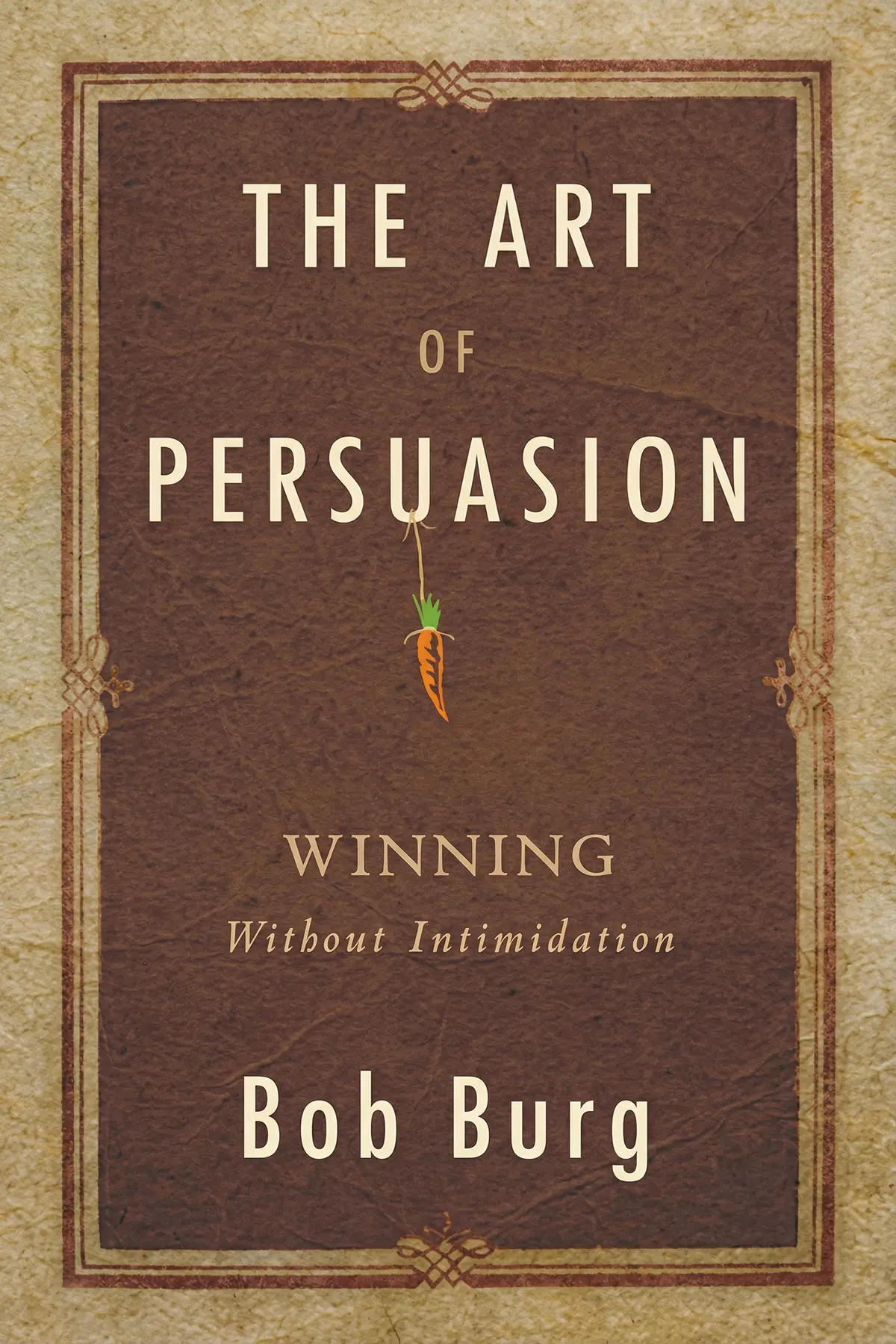
Table of Content
1. Introduction
1 min 03 sec
If tense conversations leave you either giving in or digging in, Bob Burg offers a third option. In The Art of Persuasion, the speaker and sales author argues that people decide mainly on emotion. That means the fastest way to a yes is to make the other person feel respected rather than beaten. Pushing harder raises their guard, and protecting their pride lowers it.
Burg’s case is that calm, tact and real empathy get you what you want more reliably than force, and they leave the other side glad they helped. His examples come from ordinary life: a venue official who declared a table position non-negotiable, a hotel manager shrugging off stolen jewelry, a friend whose joke died at a party, and Abraham Lincoln opening his court arguments with his opponent’s best points. From them come exact phrases for calming anger, a three-step way to soften a stubborn mind, and a habit of thanks that makes people want to say yes next time.
2. Win cooperation by guarding the other person's pride
1 min 50 sec
A dismissive agent or a negative colleague can wreck your afternoon. Burg argues the problem is often the role you are both playing, and that one deliberate shift in your own voice changes how they answer.
3. Get trusted quickly by asking for advice
1 min 45 sec
When two offers look the same on price and quality, something else decides who wins. Burg names it, and shows that one small request can turn a wary stranger into someone invested in your success.
4. Small thanks that earn lasting loyalty
1 min 44 sec
Even when you hold the weaker hand in a negotiation, one kind of statement can make the other side treat you better. Burg pairs it with a habit most people abandoned long ago.
5. Turn a firm no into a yes
1 min 49 sec
An event official declared a table position non-negotiable and meant it. The exhibitor got the spot anyway, without arguing once, by handing the official something more valuable than the table.
6. Calm a hostile person before stating your case
1 min 51 sec
A hotel manager met a couple’s report of stolen jewelry with a shrug. They never raised their voices, yet he ended up working for them. Their approach starts with a surprising first sentence.
7. Change stubborn minds without making them defensive
1 min 39 sec
Telling people they are wrong usually makes them hold on tighter. During his legal career, Abraham Lincoln found a way to win the trust of his audience that sounds like it should have hurt his own case.
8. Everyday tact that makes people glad to help
1 min 22 sec
A friend’s joke falls flat at a party and the room goes silent. What you do in the next few seconds shows the kind of influence that matters most outside work.
9. Conclusion
1 min 01 sec
Burg’s book reverses how most people approach a fight. The instinct is to press harder, prove the point and make the other side give way. His argument is that winning at someone’s expense works against you, while a person whose ego you protect becomes far more likely to cooperate and agree. The exhibitor got his table by letting the official own the idea. Lincoln won over listeners by being fair to his opponents first. The Michelsons got help from an indifferent manager by staying calm and firm.
A few moves carry straight into daily life. When someone is upset, begin with a pre-apology before making any request. When someone digs in, ask for their advice, or tell them what others felt and later found. When you must correct anyone, invite them to correct you first. And keep writing short thank-you notes by hand, because they build goodwill for almost no cost.
Burg ends on a simple idea. Persuasion done well means both people walk away winning, together.
About this book
What is this book about?
Most people handle resistance in one of two ways. They give in, or they push harder until someone loses. Bob Burg argues for a third way. He calls it ethical persuasion: getting people to act in your favor while they feel respected and valued, so that both sides come out ahead. His reasoning starts from the observation that people decide mainly on emotion. A request that bruises someone's ego meets resistance however sensible it is, and a request that supports their sense of worth often succeeds. From there Burg builds a set of everyday tools. He shows how to keep conversations Adult to Adult, how to build trust by asking for advice, and how to correct people without making them defensive. He also covers calming hostility with a pre-apology and softening stubborn views with the feel, felt, found approach. The examples are ordinary and easy to use: an exhibitor who got around a non-negotiable table rule, a couple who turned an indifferent hotel manager into a willing problem-solver, and Abraham Lincoln, in his legal career, earning his audience's trust by laying out the other side's best points first. Readers get phrases they can say tomorrow and a steadier way to handle difficult people.
Book Information
Who it's for
Dreading tough work conversations
Professionals who dread difficult customers, officials or colleagues and want calm words that work.
Young staff and salespeople
Young employees and salespeople who need people to say yes without pushing them.
Team leads protecting relationships
Team leads who must correct and persuade people without damaging the relationship.
About the Author
Bob Burg
Bob Burg speaks internationally to corporations and associations, including Fortune 500 companies, franchises and direct sales organizations. He first became known for Endless Referrals and later co-wrote the business parable The Go-Giver with John David Mann, a Wall Street Journal and BusinessWeek bestseller that has sold more than one million copies in 30 languages. His books on sales, marketing and influence have sold over two million copies. He holds that what people earn depends on how many people they serve.
Ratings & Reviews
Ratings at a glance

What people think
Listeners find this work to be a treasure trove of helpful guidance, packed with accessible communication techniques that are simple to grasp. Furthermore, the writing is clear and educational, with listeners praising the specific scenarios shared throughout the text. They also prize its logical perspective and profound insight into the human psyche, with one listener highlighting how successfully it fosters interactions with beneficial outcomes.
Top reviews
Nora
Bob Burg has a way of making complex social dynamics feel like a breeze. Instead of dry theories, he utilizes storytelling from real-world situations that kept me turning pages long after I planned to stop. The core message about managing your temper and avoiding useless anger really resonated with me. We often think persuasion is about force, but Burg shows it's actually about grace and understanding human nature. It’s written in a very conversational, layman-friendly style that makes the concepts stick. I’ve already started applying the "positive results" mindset in my office meetings. Highly recommended for anyone who deals with people.
Show morePawinee
Ever wonder why some people just seem to "get" everyone around them? This book unpacks that mystery by blending the science of persuasion with a very human touch. One of the biggest takeaways for me was the distinction between acting on logic versus acting on emotion. Burg argues that we are emotional creatures first, and learning to control our reactions under pressure is a total game-changer. The conversational tools provided are easy to implement immediately. It’s not just about winning an argument; it’s about becoming a better, more effective human being in your daily life and career.
Show moreLuckana
The intersection of art and science is where this book truly shines. It could easily have been titled "The Science of Persuasion" because Burg demonstrates such a deep understanding of human psychology. He provides a wealth of conversational tools that turn potentially explosive conflicts into productive dialogues. I loved the emphasis on how expressing anger is almost always useless for achieving your goals. Instead, he teaches you how to guide people toward your perspective through empathy and tactical communication. It’s a well-written, informative piece of work that offers immediate value to anyone willing to listen and learn.
Show moreTar
After hearing so much about Bob Burg’s philosophy, I’m glad I finally dived in. This isn’t just a book for sales professionals; it’s a guide for anyone who wants to navigate the world with more ease and less friction. The way he explains turning enemies into friends is nothing short of brilliant. It’s all about the simple act of communication and understanding that people act out of emotion, not logic. Frankly, the book is a gold mine of practical tips that I plan on revisiting whenever I feel a difficult conversation coming on. Five stars for the life-changing perspective.
Show moreSuvannee
As a salesperson, I’m always looking for that extra edge in negotiations. Burg delivers a solid toolkit here. He focuses on influencing people through genuine communication rather than sneaky manipulation, which is a breath of fresh air. My only gripe—and it’s a distracting one—is the lack of proper editing by the publisher. There are several typos throughout the text that yanked me right out of the flow. If you can look past the formatting errors, the sage advice on turning adversaries into allies is incredibly valuable. Definitely a practical guide for the business world that works.
Show moreAudrey
Finally got around to reading this classic, and it’s basically a masterclass in common sense. The problem with common sense, as Burg points out, is that we often forget to use it when we are stressed or pressured. The book acts as a necessary reminder to keep our ears alert and our emotions in check during difficult interactions. It’s written like a personal diary of experiences, which makes the tips feel much more attainable than a textbook would. I particularly liked the section on how to handle difficult people without losing your cool. A solid four stars.
Show moreSukit
This book feels like sitting down for a coffee with a very wise mentor. Burg’s tone is humorous and humble, and he shares his own experiences—both good and bad—to illustrate his points clearly. I’ve seen my own father use these exact "tricks" of communication to navigate his career, so I know they actually work in the real world. It’s not about being an obnoxious jerk; it’s about finding the win-win in every situation. I’d recommend this to anyone in public speaking or management who needs a practical, easy-to-digest guide to human interaction and influence.
Show moreMarco
While I appreciate the effort, most of this felt like a refresher on things I already knew from earlier readings. The truth is, if you’ve read any modern books on social psychology or influence, you might find this a bit elementary. It covers the basics of being polite and politically correct, which are essential, but it doesn't dive particularly deep into the "why" behind our actions. That said, it is a quick and easy read. I suppose for someone just starting their career in sales or customer service, it could be a gold mine. For me, it was just okay.
Show moreSamira
Look, the advice here is undeniably useful, but the presentation could use some work. Not gonna lie, I was expecting something a bit more revolutionary given the high praise I’ve heard. It’s a collection of basic principles that most adults should already be practicing, though I admit we all need a nudge sometimes. The examples are helpful, but the writing can be a bit repetitive in the middle chapters. I appreciated the common sense approach, but it didn't quite blow my mind. It’s a solid three-star read that offers decent foundational knowledge for beginners.
Show moreBae
To be fair, I struggled with the ethical undertones of some of these techniques. It often felt like learning a social game designed to polish the craft of rhetoric bordering on deception. While the author claims it’s about "persuasion, not manipulation," the line feels incredibly thin at times. I found myself becoming more wary of people who use these specific euphemisms and "polite" rules to get what they want. It reminded me too much of the political correctness I loathed when I was teaching. It’s informative, sure, but it left a bit of a sour taste in my mouth.
Show moreQuestions about this book
What is the main idea of The Art of Persuasion by Bob Burg?
Burg argues that people decide mainly on emotion, so persuasion works best when the other person feels respected and valued. He calls this ethical persuasion: aiming for outcomes where both sides feel good about the exchange. Calm responses, tactful words and real empathy lower people’s defenses, while pressure and blame raise them. Throughout the book he shows how protecting someone’s pride turns resistance into cooperation.
What is the pre-apology technique?
The pre-apology means acknowledging someone’s frustration before you ask them for anything, for example by saying you are sorry they have to deal with all of this and that it must be a hassle. Burg says this small sign of understanding can disarm hostility completely, because you stop being one more problem in their day. It opens the way to cooperation with angry or overworked people.
How does Burg suggest handling conflict?
He recommends a sequence of empathy. First restate the other person’s concern, beginning with what I hear you saying is. Then find common ground with I agree with you that. Next, recognize how they feel by saying something like I understand you feel. Only then state your own view, calmly and briefly. He also advises directing your effort to the person who can actually say yes.
How can I change someone's mind without an argument?
Burg offers the feel, felt, found approach: acknowledge how the person feels, mention that others felt the same, and describe what those others found. A third-party story lets you give feedback without direct criticism. He also points to Abraham Lincoln, who as a lawyer opened with the strongest points of the opposing case, which made him look fair and his own arguments more convincing.
Who should read The Art of Persuasion?
It suits anyone who deals with difficult people: employees facing negative colleagues, salespeople, team leads who must correct others, and anyone stuck with unhelpful customer service or officials. The tools are small and ready to use, from asking for advice and writing handwritten thank-you notes to softening corrections with correct me if I’m mistaken.
Readers also enjoyed









AUDIO SUMMARY AVAILABLE
Listen to The Art of Persuasion in 15 minutes
Get the key ideas from The Art of Persuasion by Bob Burg, plus 5,000+ more nonfiction titles.
- 5,000+ titles
- Listen as much as you want
- 7-day free trial
- Cancel anytime









