

14 min 22 sec
Available in: English
The Art of Influence: Persuading Others Begins With You
Shows how to become someone people trust and choose to follow. Widener puts character, patience, integrity, optimism, care for others and high standards in place of pushy persuasion and pressure tactics.
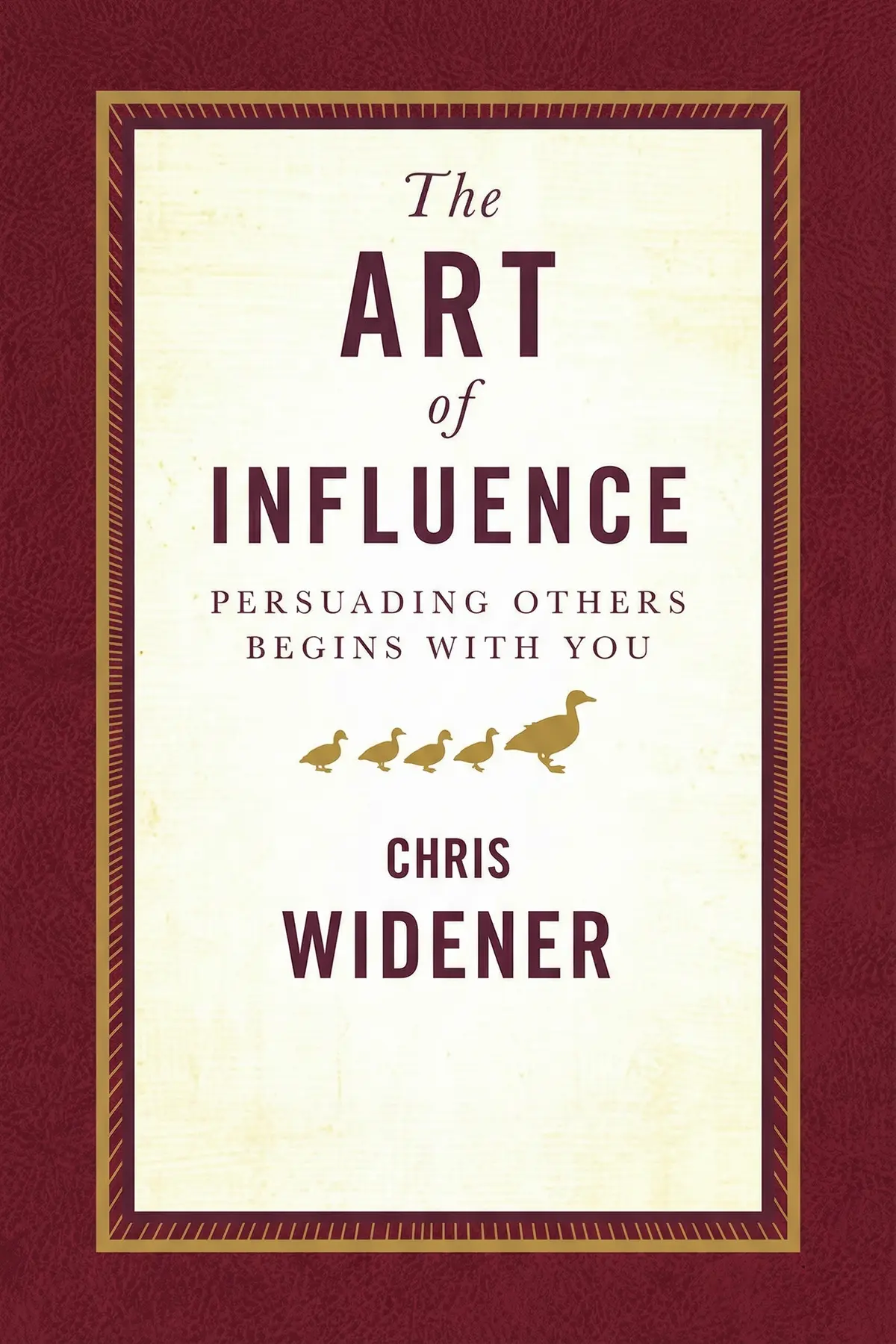
Table of Content
1. Introduction
1 min 07 sec
Working harder than everyone around you rarely makes you the person others choose to follow. In The Art of Influence, speaker and executive coach Chris Widener argues that influence is a kind of personal growth. You become someone people are drawn to, and the need to argue your case fades away.
He tells it as a fable. Marcus Drake has just finished at Northwestern’s Kellogg School of Management. A graduation card from his grandmother contains the phone number of Bobby Gold, who ranks as America’s tenth wealthiest person and was once babysat by her. Gold is invented, but the days Marcus spends with him carry the book’s argument. Lasting influence grows from who you are: your character, your patience, your honesty, your hope, your care for others and your standards. Pressure has no part in it. Follow Marcus from a jet to a boardroom, a ballpark and a billionaire’s office, and you’ll have four rules to test on your next sales call, team meeting or job interview.
2. Become someone people are drawn to
1 min 34 sec
Two graduates with the same degree work equally hard, yet only one gets ahead. A billionaire on a private jet offers an explanation that has little to do with effort or talent.
3. Grow the character you want to attract
1 min 52 sec
Ask anyone to list what they admire in a leader and a pattern appears that most people miss. It says something uncomfortable about workshops, and about the people you keep attracting.
4. Fish for opportunities instead of hunting them
1 min 47 sec
Marcus proudly calls himself a hunter, and the billionaire beside him isn’t impressed. The alternative takes more patience, and it changes how you treat the prospect who says no today.
5. Guard the small truths that protect big deals
1 min 49 sec
The company’s figures were solid and a $50 million purchase looked likely. Then, in the middle of the meeting, someone told a harmless little fib about a parcel, and the deal ended.
6. Choose optimism and your team will follow
1 min 39 sec
A struggling baseball team turned around under a coach who encouraged the players and made them feel good. His method starts with the question players ask after a defeat, and it works for any team.
7. Make every conversation about the other person
1 min 31 sec
With a game underway and a stadium full of fans, the owner went to talk with the ushers and the maintenance crew. What he asked them, and what he never mentioned, holds the third rule.
8. Raise your standards in every part of life
1 min 49 sec
The ninth richest person in America gives the last lesson, and it goes well beyond the office. It covers your health, your friendships and a scrap of paper lying on the floor.
9. Conclusion
1 min 14 sec
Marcus got on that jet a fresh business graduate who felt ready to take on the world. What he got instead was a portrait of a person. This person is honest when a lie would be easier and hopeful when the team is losing. They’re curious about how the usher will spend the weekend, and they bend down for the scrap of paper on the floor. Widener’s case is that such a person doesn’t need a hard sell. People come to them the way fish come to good bait.
That’s also why his lessons work slowly. Influence, in his account, is a lifelong commitment to building character, skills and the way others see you. Every shortcut, from manipulation to pressure selling, borrows against trust you’ll need later.
The everyday version is modest. Drop the small convenient lies, because someone like Gold may be listening. Stay in touch with the people who aren’t ready to buy yet. When a setback hits, ask what it can teach you before asking why it happened to you. And ask someone about their life with no agenda behind the question.
A $50 million deal died over a single parcel. Influence is built and lost in moments that small.
About this book
What is this book about?
Plenty of capable people work hard and still get passed over, while someone with the same degree and the same hours pulls ahead. Chris Widener puts the difference down to influence. He doesn't mean the skill of winning arguments. He means becoming a person others are drawn to and trust. He tells it as a fable. Marcus Drake, a new business school graduate, gets the chance to spend a few days with Bobby Gold, an invented billionaire his grandmother once babysat. On a private jet, in a boardroom, at a baseball stadium and in the office of a second billionaire, Marcus learns why character counts for more than skills, and why patient fishing works better than aggressive hunting. He also learns the four golden rules of influence: undivided integrity, a positive attitude, putting other people's interests first, and excellence in every area of life. Readers get a simple, values-based model of influence they can use in sales, leadership and everyday relationships. It comes with concrete scenes to remember it by, like a $50 million deal that fell apart over one small lie.
Book Information
Who it's for
Young professionals feeling overlooked
Young professionals who work hard but feel overlooked next to equally qualified peers.
Tired of pushing prospects
Salespeople and founders tired of pushing prospects and looking for a patient, trust-based approach.
First-time managers
New managers who want their team to follow them because they choose to.
About the Author
Chris Widener
Chris Widener has been a professional speaker since 1988 and has talked about leadership and motivation at General Electric, Cisco Systems and Harvard Business School. He has coached and advised company executives and once wrote a column for SUCCESS magazine. In the early 1990s he started a publishing company, later named Made for Success, and sold it to his business partner in 2009. He co-wrote Twelve Pillars with Jim Rohn in 2005 and has published more than 400 articles and many books.
Ratings & Reviews
Ratings at a glance

What people think
Listeners find value in the profound insights shared about establishing genuine influence and the guidance provided for mentoring others. This title is highly accessible, and listeners describe the narrative style as exceptional, with one mentioning how the author uses stories to deliver powerful messages. There is widespread acclaim for the clear, simple, and high-quality writing found throughout the work.
Top reviews
Joy
What a fantastic journey through the fundamental habits of leadership. I found the fishing analogy particularly helpful because it shifts the focus from chasing followers to becoming the type of person others actually want to follow. Widener explains that our bait is our character and our skills, and if those aren't high quality, no one is going to bite. This book doesn't just teach you how to manipulate people; it teaches you how to improve yourself so that influence happens naturally. Not gonna lie, I was skeptical about the fictional story format at first, but it actually made the four principles much easier to remember. This should be mandatory reading for anyone in a management role.
Show moreSoontorn
Finally got around to reading this, and I must say the 'fishing mindset' is a game-changer for my leadership approach. Widener uses the story of Marcus to illustrate that influence isn't something you aggressively hunt; rather, it’s something you attract by becoming a person of high character. The four rules are deceptively simple but incredibly hard to master in practice. I prefer this condensed, parable-style delivery over a five-hundred-page dry textbook because it sticks in the mind better. It’s a quick read that hits hard on the idea that who you are matters more than the tactics you use. I’ve already started applying the rule about considering other people’s interests, and the shift in my team’s response is noticeable.
Show moreNew
Picked this up because I wanted something between self-help and business strategy, and I wasn't disappointed by the clarity of Widener’s message. The story of Marcus and Bobby Gold provides a nice framework for what could have been a dry list of rules. I appreciate how the author emphasizes that personal growth is the foundation for persuading others. While some might find the parable a bit cliché, the four golden rules are timeless. Frankly, the lesson on undivided integrity is something every modern executive needs to hear again. It’s a quick read, but the impact stays with you long after you finish the last page.
Show moreRungtip
After hearing so many recommendations for this, I finally sat down with the audiobook during my morning commute. It’s a very fast listen, taking up less than two hours, but it manages to pack in some heavy truths about human connection. The idea that we should consider other people's interests as more important than our own is incredibly challenging in today’s competitive environment. I think the author did a great job showing how a small lie, like the CFO example in the book, can destroy a massive deal. Even though the storytelling is a bit simplistic, the core message about trust being the foundation of all influence is spot on. It’s definitely a helpful tool for developing a better professional reputation.
Show moreOlivia
To be fair, I wasn't expecting much from such a short book, but the simplicity is actually its greatest strength. Widener breaks down influence into manageable chunks that don't feel overwhelming. I especially liked the emphasis on maintaining a positive attitude even when things are going wrong. We all know people who drain the energy out of a room, and this book shows exactly why that kills your ability to lead. The writing is clear and easy to follow, making it a great gift for a new graduate or someone starting their first job. It’s a solid reminder that success comes from nurturing contacts over time rather than using manipulation.
Show moreBunyarit
Gotta say, the core message that persuasion begins with your own personal growth is a refreshing take on the genre. Instead of focusing on psychological tricks, the author focuses on authenticity and how perceptions are managed through real character. The book is short and has some padding, but the principles of integrity and excellence are things I need to hear daily. I’ve read many leadership books that ignore the importance of a positive attitude, so I’m glad it was highlighted here. It’s an easy-to-read guide that provides a good roadmap for becoming a person of influence.
Show moreHana
As someone who manages a large team, I found the third rule about putting others first to be the most convicting part of the book. It is easy to get caught up in your own KPIs and forget that your influence depends on the success of those around you. The story format makes these lessons digestible, even if Bobby Gold feels like a bit of a mythological figure at times. While it doesn't solve every problem you’ll face in the business world, it provides a very strong moral compass. I think the price is a bit steep for the length, but the quality of the advice is high. This is a book I will likely revisit every couple of years.
Show moreThitima
Ever wonder why some people just seem to have a magnetic personality in the office? This book attempts to answer that through a short story about a billionaire mentor. The four rules—integrity, positivity, putting others first, and excellence—are certainly solid pillars for any career. However, I felt the book was a bit too short and stayed on the surface level for most of the narrative. It’s a decent reminder of character-based leadership, but it doesn't offer much in terms of practical, day-to-day execution. In my experience, these parables are great for a quick boost but lack the depth of more academic business texts. It is a good library pick for a weekend read, though.
Show moreNim
The chapter on excellence was the highlight for me, but the rest of the book felt a bit repetitive. I appreciate the focus on seven areas of life, including physical and spiritual health, because true influence is holistic. To be fair, the parable of Marcus and Bobby is a bit predictable and hammers the message home with very little subtlety. I’ve read a lot of these business fables, and this one is middle-of-the-pack in terms of engagement. It’s a nice enough summary of common sense principles, but don't expect a revolutionary breakthrough. If you need a quick refresher on being a decent human being in business, it’s worth a look.
Show moreBua
Look, if you’re already a wealthy guy looking for someone to tell you that hard work is the only factor in success, then this is your book. While the principles are fine, the narrative completely ignores things like systemic inequality or the reality of being a woman in a male-dominated industry. Success isn't just about attitude; sometimes the bait isn't the problem, it’s the pond you're fishing in. I got the audiobook version, which was less than two hours, but even that felt padded with unnecessary details. It’s an okay read if you want a feel-good story, but it lacks the gritty reality required for a truly deep business guide. For $20, I expected something much more substantial than this.
Show moreQuestions about this book
What is The Art of Influence by Chris Widener about?
It argues that influence comes from becoming someone people trust and are drawn to, not from making stronger arguments. Widener tells this as a fable about Marcus Drake, a business school graduate who spends a few days with Bobby Gold, an invented billionaire. Along the way Marcus learns why character matters more than skills, why a fishing mindset beats hunting, and four golden rules of influence.
What are the four golden rules of influence?
Widener names four. The first is to live a life of undivided integrity, shown by a $50 million deal Gold drops after a small lie. The second is to always show a positive attitude, taught by baseball coach Tom Martin. The third is to put other people’s interests before your own. The fourth, from billionaire Paula Diamond, is to never settle for less than excellence in any area of life.
What does Widener mean by being a fisher rather than a hunter?
A hunter chases and pressures prey. A fisherman is patient and attracts what he wants with the right bait. Widener describes four fishing skills: believe in abundance, fish where interest is high while staying in touch with others, make yourself the bait through character and skills, and fit your approach to each person. He warns that manipulation and pressure selling damage relationships.
How can I apply The Art of Influence at work?
Start small. Stop telling convenient untruths, even about minor delays, since Widener argues tiny lies destroy trust. After a setback, ask your team what it can learn rather than who is to blame. Talk to colleagues of every rank about their lives and remember what they tell you. Keep in touch with clients who aren’t ready to buy, and set a visible example of high standards.
Who should read The Art of Influence?
It suits early-career professionals who want to stand out among equally skilled peers, salespeople and founders who want an alternative to pushy selling, and managers who want trust rather than authority. Its short fable format and plain rules make it easy to remember and to share with a team.
Readers also enjoyed



59 Seconds: Change Your Life in Under a Minute
Richard Wiseman





A Guide to the Good Life: The Ancient Art of Stoic Joy
William B. Irvine

AUDIO SUMMARY AVAILABLE
Listen to The Art of Influence in 15 minutes
Get the key ideas from The Art of Influence by Chris Widener, plus 5,000+ more nonfiction titles.
- 5,000+ titles
- Listen as much as you want
- 7-day free trial
- Cancel anytime









