

12 min 17 sec
Available in: English
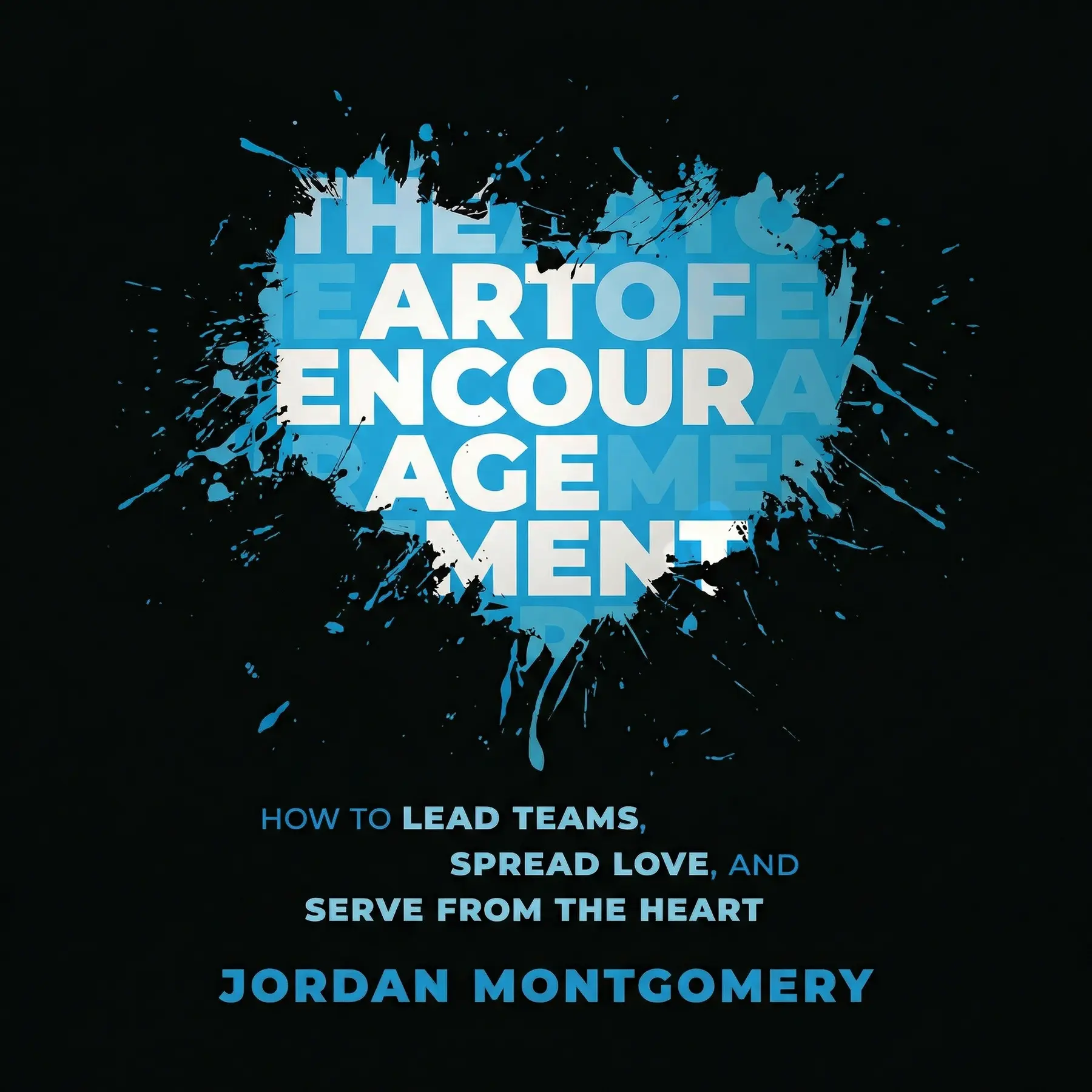
The Art of Encouragement: How to Lead Teams, Spread Love, and Serve from the Heart
Shows leaders, parents and friends how to give encouragement that sticks: praising character over results, being honest about your own mistakes, helping people see their potential, promoting them publicly and serving their goals.

Table of Content
1. Introduction
1 min 00 sec
Most people encourage others the same way: a quick good job when the numbers come in, and silence the rest of the time. In The Art of Encouragement, coach and speaker Jordan Montgomery argues that this habit wastes one of the strongest tools a leader, parent or friend has. Encouragement, he says, is a need every person shares, whatever their background or temperament, and most of us give it rarely and not very well.
Montgomery’s case is that real encouragement aims at who someone is, rests on honesty, and is backed by action: a public word, an open door, a few hours of your time spent on their goals. It also starts closer to home, with the way you speak to yourself.
What follows is a set of plain moves to try this week: a nightly notebook, a rewritten thank-you, a sentence that shows a colleague the leader you see in them, and a question that turns their agenda into yours.
2. Start by encouraging the person in the mirror
1 min 37 sec
It is hard to lift anyone else while your own inner voice keeps pulling you down. Montgomery argues that the brain itself can be retrained, and the tool he recommends costs nothing but a few minutes each evening.
3. Praise character to make your encouragement last longer
1 min 41 sec
Two thank-you messages to the same colleague can both be kind, yet one lands far deeper than the other. The difference reveals a trap many managers fall into without noticing, and it affects even their best performers.
4. Earn trust with specific praise and honest mistakes
1 min 46 sec
Generic compliments cost nothing, and people can hear it. Montgomery suggests a surprising alternative to sounding impressive, one that works for nervous colleagues, teenagers and teams alike, and it starts with something most leaders try to hide.
5. Help people see the leader they already are
1 min 46 sec
Talented people often talk themselves out of the very chances they are ready for. A famous football coach’s definition of coaching, turned upside down, gives you a way to change how they see themselves, and it works on bosses too.
6. Turn private praise into public opportunity
1 min 37 sec
A kind word in private can lift someone’s mood and still leave their career exactly where it was. Montgomery borrows an idea from the world of billboards and brand campaigns to change that, especially for people who never ask.
7. Make another person's goals your own agenda
1 min 42 sec
The leaders most people admire were rarely the loudest or most competitive in the room. Montgomery draws on their example for a form of encouragement that asks more of you than words, and gives more back than you expect.
8. Conclusion
1 min 08 sec
Montgomery’s book treats encouragement as a skill, and suggests that most of us practice only its weakest form: a passing good job, aimed at a number. The stronger forms ask more. They require knowing a person well enough to name their character truthfully, being honest enough to share where you have failed, and caring enough to spend your reputation and your time on their behalf. Each step costs a little more than the last, and each one tells the other person more clearly that they matter.
The thread running from the nightly notebook to the volunteer Saturday is attention. You cannot praise a trait you never noticed, picture a future for someone you do not know, or serve an agenda you never asked about.
So begin where it is cheapest. Tonight, write down one thing you did right today. Tomorrow, take the thanks you were about to give a colleague and point it at the quality behind the work, then say it somewhere others will hear. And the next time someone mentions a goal, ask what you can do to help them reach it.
Encouragement, in Montgomery’s telling, is a rope. The skill is learning to throw it often, and to throw it well.
About this book
What is this book about?
Most encouragement is a passing good job after a target is hit, and most people give even that rarely. Jordan Montgomery, a coach who works with executives, sales teams and athletes, argues that encouragement is a learnable skill, and one that every person needs whatever their background or temperament. His method moves from the inside out. It begins with self-encouragement, such as a regular journaling practice, which he connects to neuroplasticity, the brain's capacity to form new connections. It then turns outward: praising a person's character and not only their results, offering specific and honest words, and sharing your own failures so others feel less alone. From there Montgomery goes further, toward vision casting that helps people see strengths they miss, elevation that uses public credit and introductions to move someone forward, and servant leadership that makes another person's goals your own. Each idea comes with a concrete challenge, from rewriting a thank-you for your partner to giving a weekend to a friend's priority. Readers get a clear ladder of ways to lift colleagues, family members and even their own bosses, and a plain test for when praise has gone empty.
Book Information
Who it's for
Managers wanting better praise
Managers who default to a quick good job and want praise that motivates people beyond the numbers.
Hoping family feels seen
Parents and partners looking for words that make family members feel truly seen.
Hoping to recognize coworkers
Colleagues who want to help quiet achievers get noticed and to support bosses who rarely hear thanks.
About the Author
Jordan Montgomery
Jordan Montgomery founded Montgomery Companies and leads a group of coaches and speakers who work with professionals and athletes aiming to perform at their best. His clients have included Fortune 500 executives, sales organizations and professional athletes, and he travels widely to give keynote talks and run coaching sessions.
Ratings & Reviews
Ratings at a glance
What people think
Listeners appreciate the book as a world-class encourager that aids in delivering value to other people. They find the content extremely accessible and think of it as an essential read for every person.
Top reviews
Dao
After hearing Jordan speak at a live event, I immediately grabbed the audiobook and wasn't disappointed. It’s a rare find that combines vulnerability with a practical workbook style that actually demands you get off the couch and engage. The author shares his own lows, including some pretty heavy personal failures, to show how encouragement isn't just fluffy talk but a survival tool for the broken. I’ve already started my list of ten people to reach out to this week as the chapter assignments suggest. While some of the advice feels basic to the seasoned leader, the reminders are exactly what a busy professional needs to stay grounded. It’s an easy read that focuses on the 'how' rather than just the 'why.'
Show moreEmma
Picked this up because I’ve been feeling a bit burnt out in my role lately, and it was exactly the shot in the arm I needed. Jordan’s perspective on the 'art' of lifting others up is simple yet profoundly applicable to anyone in a high-pressure environment. It’s half-memoir and half-workbook, which keeps the pace moving and prevents the content from feeling too preachy or theoretical. I love how he emphasizes that encouragement is as much about action as it is about words. Not gonna lie, I finished the whole thing in two sittings and immediately felt more intentional in my daily interactions. It proves that the simplest things often have the most power.
Show moreFinn
Wow, talk about a wake-up call for anyone who thinks they’re too busy to check in on their friends or colleagues. Jordan uses that John Maxwell quote about needing encouragement if you’re 'breathing,' and it really sticks with you throughout the entire book. The stories about his personal struggles made the advice feel more authentic than your average motivational speaker’s fluff. I’ve already started implementing the small gestures he suggests, and the response from my team has been incredible. Look, the title is a little bit cliché, but the impact of these simple techniques is very real and very powerful. It’s a must-read for anyone who wants to bring value to others.
Show moreWaree
The chapter on taking action rather than just using 'nice words' was a major turning point for me. Too often, we think a quick 'good job' is enough, but Montgomery shows how deep-seated support requires vulnerability and consistency. He shares a story about being fired for cheating that was quite jarring, yet it highlighted the power of people who didn't give up on him. This isn't just a book about being positive; it’s about the hard work of building and strengthening relationships. My only complaint is that I wish it were longer, as some of the techniques felt a bit rushed. Still, the message of being an authentic encourager is world-class.
Show moreSamroeng
This book might look like your typical cheesy self-help pamphlet from the cover, but the substance inside is surprisingly deep and resonant. Montgomery doesn't just tell you to be nice; he provides a roadmap for becoming a world-class support system for those around you. I appreciated the specific action steps at the end of each chapter because they turn abstract concepts into daily habits. Truth is, I went in with low expectations and came out wanting to buy copies for my entire management team. My only gripe is that it leans a bit heavily on anecdotes at times, but the core message about positive reinforcement is undeniable. It's a quick read but one that sticks with you.
Show moreAir
As someone in leadership, I’ve read a lot of books on motivation, but few are as easy to digest as this one. The author presents his ideas through a spiritual lens, modeling his approach after the way Jesus lived and led through service. It’s refreshing to see a focus on being a servant leader instead of just chasing metrics or bottom-line results. While some chapters felt a bit short and left me wanting more depth, the concluding assignments really help you internalize the lessons. It’s a practical guide for anyone who wants to create an environment where people feel genuinely supported. Definitely worth a read for any Christian leader looking to inspire.
Show moreMai
Finally got around to finishing this on my commute, and I have to say, the audiobook version is excellent for anyone on the go. Jordan’s voice is engaging, and you can tell he genuinely cares about the message he’s putting out into the world. I found myself thinking deeply about the 'assignments' even when I couldn't write them down immediately. The book emphasizes that genuine encouragement can propel people to achieve things they never thought possible. It’s a short read, but it leaves you with plenty of actionable insights that you can start using the very same day. It's about creating a supportive environment through consistent, small actions.
Show moreMingkwan
Frankly, I thought this would be another toxic positivity manual, but the focus on authentic connection won me over. The writing style is conversational and unpretentious, which makes the heavier topics like career failure much easier to process. Jordan does a great job of explaining how the simplest gestures often have the most significant impact on our mental health and performance. Even if you aren't a religious person, the practical advice on interpersonal relationships is universal and highly effective. It’s a great tool for anyone looking to inspire others without feeling like a walking Hallmark card. It’s a needed reminder that we all have the power to lift someone up.
Show moreLuke
To be fair, I struggled with the author’s opening admission about being a liar and a cheat in his past career. It definitely made it harder to trust the leadership advice initially, even if he was trying to be transparent about his growth and rebuilding. The book reads very quickly and relies quite a bit on name-dropping famous motivational speakers, which felt a little distracting from his own original message. However, the spiritual framework and the focus on servant leadership are solid enough for a Sunday morning read. If you’re looking for groundbreaking new psychological theories, you won't find them here, but it's a decent reminder of Christian values and how Jesus lived.
Show moreCamila
Not what I expected, and frankly, a bit of a letdown compared to the hype I heard on social media. The book feels a bit like a collection of motivational speeches stitched together rather than a cohesive deep dive into human psychology. I found the constant mentions of other big-name authors to be a bit much, making it feel more like a networking tool than an original piece of work. While the workbook sections are okay for beginners, the content itself is stuff you’ve likely heard in every other personal development book out there. It’s a fast read, but it lacks the intellectual depth I was hoping for in a leadership guide.
Show moreQuestions about this book
What is the main idea of The Art of Encouragement?
Jordan Montgomery argues that everyone needs encouragement, yet most people give it rarely and poorly. Strong encouragement starts with how you talk to yourself, focuses on a person’s character more than their results, stays specific and honest, and is backed by action. That action can mean casting a vision of someone’s potential, praising them publicly, opening doors for them, or spending your own time serving their goals.
What is character encouragement in The Art of Encouragement?
Character encouragement praises who someone is instead of only what they did. Montgomery contrasts thanking a colleague named Elodie for an accurate spreadsheet with recognizing her dedication and work ethic and how they inspire the team. He argues praise tied only to performance can feel conditional, as if people matter only while results last, while character praise meets the deeper need to be seen and valued.
What does Jordan Montgomery mean by elevation?
Elevation is encouragement that goes public and produces concrete results. Instead of only telling someone privately that they are doing well, you connect them with a mentor, write a strong reference or LinkedIn testimonial, leave a review for their business, or credit their work in a meeting. Montgomery compares it to marketing for people and says it matters most for quiet achievers who avoid the spotlight.
How can I practice self-encouragement?
Montgomery recommends making encouraging thoughts visible by writing them down. Each evening, use a notebook to note what you are proud of, what you are looking forward to and what you did right that day. He links the habit to neuroplasticity, the brain’s ability to form new connections, arguing that repeated positive thoughts gradually make positive thinking easier. Consistency and self-compassion matter more than perfection.
Readers also enjoyed


A Year with Peter Drucker: 52 Weeks of Coaching for Leadership Effectiveness
Joseph A. Maciariello



Acting with Power: Why We Are More Powerful Than We Believe
Deborah Gruenfeld

All In: How Great Leaders Build Unstoppable Teams
Mike Michalowicz



7 Powers: The Foundations of Business Strategy
Hamilton Helmer
AUDIO SUMMARY AVAILABLE
Listen to The Art of Encouragement in 15 minutes
Get the key ideas from The Art of Encouragement by Jordan Montgomery, plus 5,000+ more nonfiction titles.
- 5,000+ titles
- Listen as much as you want
- 7-day free trial
- Cancel anytime









