
15 min 12 sec
Available in: English
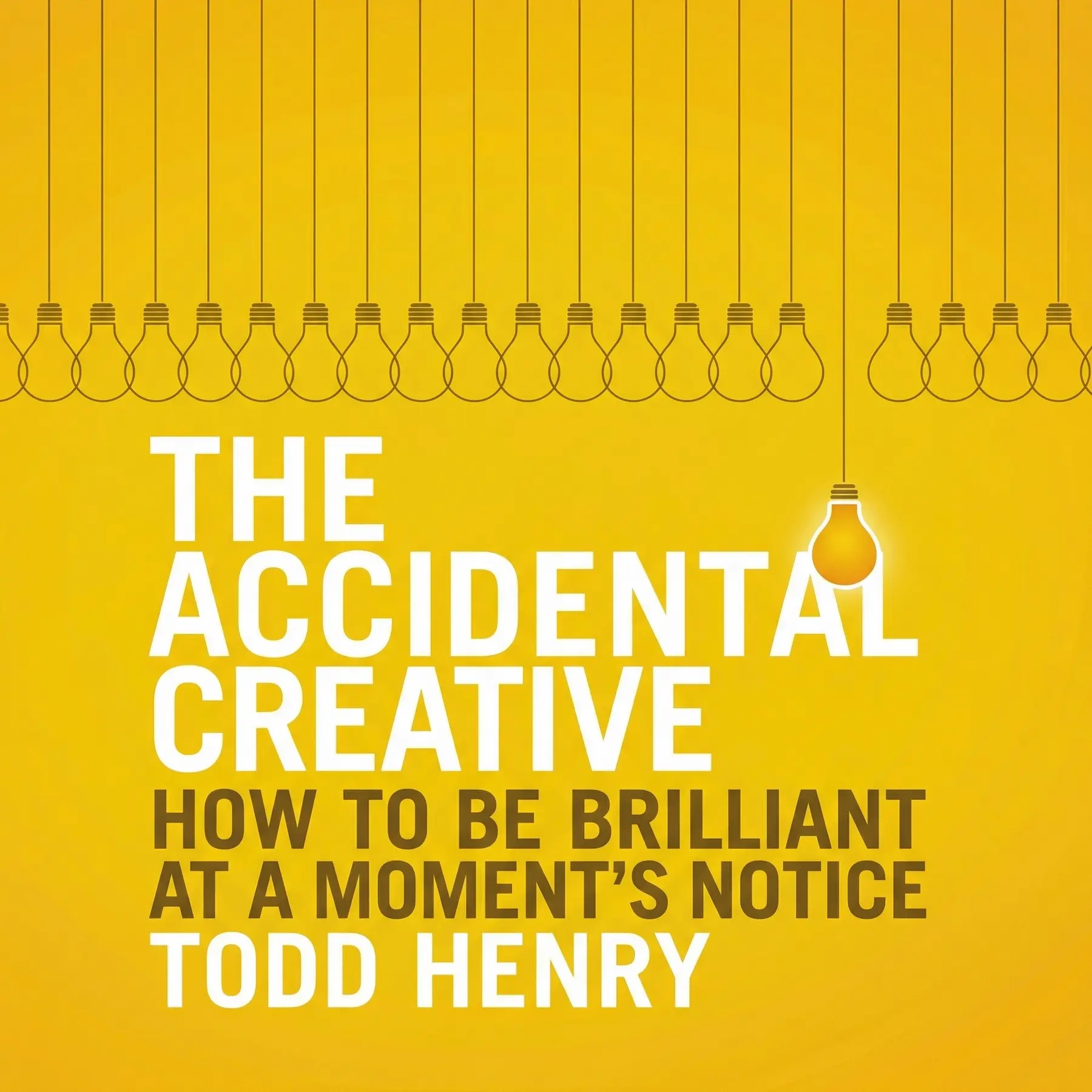
The Accidental Creative: How to Be Brilliant at a Moment’s Notice
By Todd Henry
Shows how to produce good ideas on deadline by looking after five conditions: your focus, your relationships, your energy, what you read and watch, and how you spend your hours. It also shows how to spot what kills creativity.
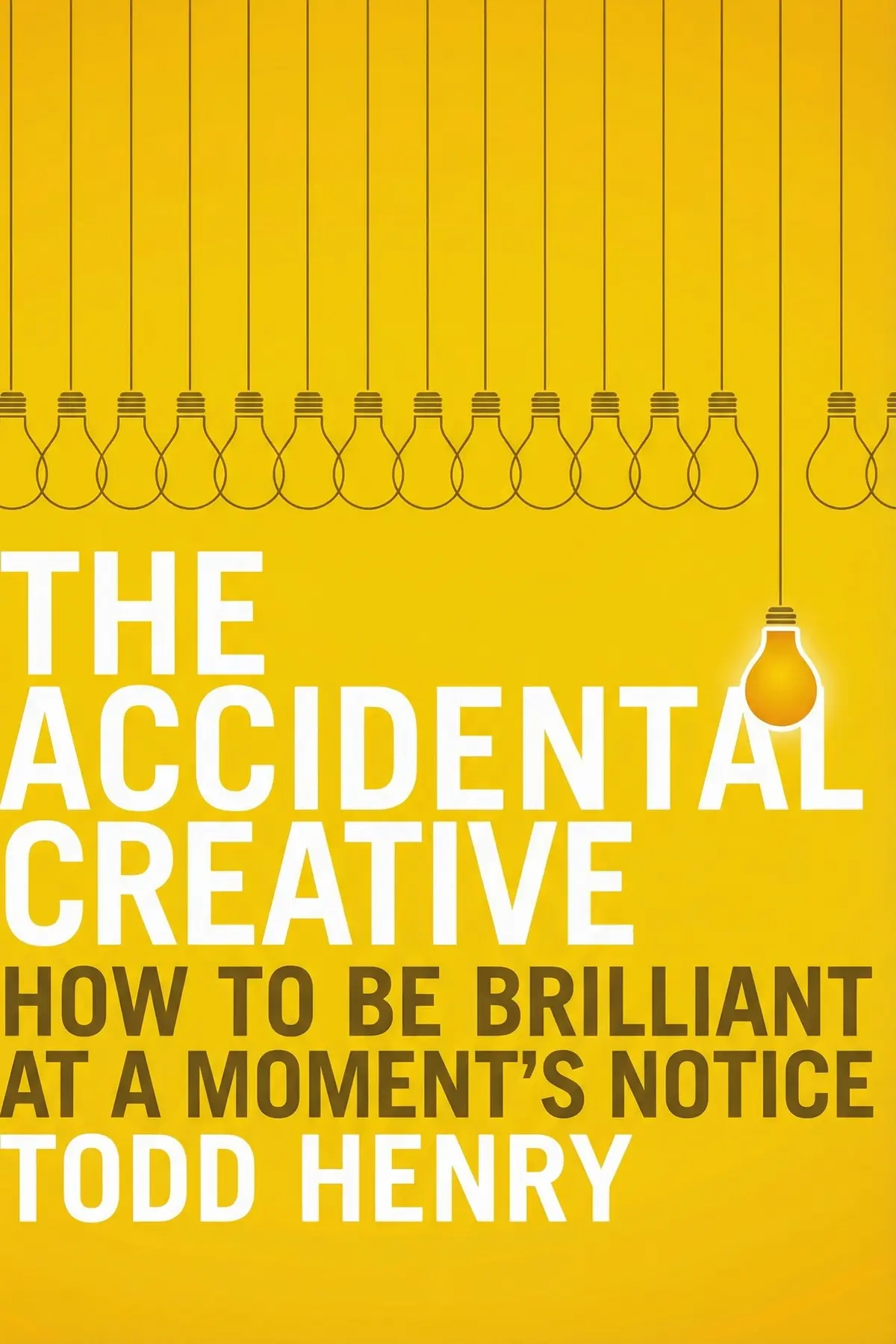
Table of Content
1. Introduction
1 min 04 sec
If your best ideas come in bursts but your job wants them by Friday, Todd Henry has a useful answer: creativity is not a mood you wait for. In The Accidental Creative, Henry, who founded a consultancy devoted to creativity, argues that ideas rise and fall with five things you can look after. They are your focus, your relationships, your energy, the stimuli you take in and the way you use your hours. He groups them under one word, FRESH.
His starting point is that creativity belongs to everyone, from a touring rock star to someone who paints watercolors on a quiet Sunday. The throughline is simple. When workplace pressure meets a creative life nobody is managing, ideas dry up. When the five conditions get steady care, good work shows up on demand.
Along the way are three threats worth spotting early, a way to divide your learning time, and the story of how an old painting hobby rescued a worn-out creative director.
2. Be prolific, brilliant and healthy at once
1 min 52 sec
Most people are strong in two of the three qualities employers quietly judge creative workers on. The missing one decides whether you burn out, get avoided, or put your job at risk.
3. Spot three threats before they kill your ideas
1 min 50 sec
A plank on the floor is easy to walk. The same plank high between two buildings is not. Henry uses that difference to expose the hidden forces that stop good projects before they start.
4. Guard your focus against the ping
1 min 50 sec
A single spider in a garden shed cost Henry six hours a year. The story shows how past experience and constant alerts pull attention away from the work that needs it most.
5. Build a small circle that sharpens your ideas
1 min 48 sec
Working alone protects concentration but slowly narrows what you can see. Henry proposes three kinds of relationships, one of them built on friendly rivalry, that keep a solo thinker’s ideas from going stale.
6. Prune one draining activity every month
1 min 48 sec
The brain is a tiny share of the body’s weight but takes a large share of its fuel. Henry borrows a habit from winemakers to keep that fuel going where it counts.
7. Feed your mind a richer creative diet
1 min 55 sec
An advertising executive found a restaurant idea in an art museum. Henry explains why your reading and viewing choices shape your output, and offers a simple way to split your learning time.
8. Make things for fun to improve your work
1 min 47 sec
A creative director worn down by a large design firm got his enthusiasm back within weeks. What helped was not a new job or a vacation. It was something he owed no one.
9. Conclusion
1 min 18 sec
Henry’s case is that a brilliant idea at short notice is rarely an accident. It comes to people who have been looking after its conditions all along. That means attention aimed at the right problems, people who push back, energy kept in reserve, a varied diet of ideas, and hours with room for play. Workplace pressure, vague briefs, imagined drops and growing expectations will keep pushing the other way. The answer is not to hold on to creativity more tightly but to keep it supplied, aiming for long-term growth over the next quick result.
The first moves are small. Write down your Big Three and turn each one into challenge questions. Set aside one hour a week to come up with ideas on your own, and one session of making something just for yourself, as Robert did with his watercolors. Once a month, drop the activity that drains you most.
Henry ends with a remark from a friend. The most valuable real estate on Earth, the friend said, is the cemetery, because it holds so many ideas and so much potential that were never used. The aim is to use yours up while you can. Start today, and give the work everything you have.
About this book
What is this book about?
More and more jobs ask for creativity, but creativity doesn't arrive on a schedule, and employers still want new ideas by Friday. Many people respond by playing it safe, working until they burn out, or watching the quality of their work slip. Todd Henry argues that being brilliant at short notice is not a matter of luck or talent. It depends on conditions you can manage. Henry names three hidden threats to creative work: dissonance, fear and expectation escalation. He then sets out a framework he calls FRESH, which covers focus, relationships, energy, stimuli and hours. Each area comes with concrete practices. There are challenge questions and the Big Three for focus, circles and mentors for relationships, and monthly pruning for energy. A quarterly study plan shapes what you read and watch, and solo idea sessions and play shape how you use your time. Readers get a working routine for producing good ideas reliably, plus stories that make each practice easy to remember. One is a director who got his spark back by painting watercolors. Another is a steak restaurant idea that came from a visit to an art museum.
Book Information
Who it's for
Creative professionals on deadline
Designers, writers, marketers and other professionals expected to produce fresh ideas on tight deadlines.
Team leads
Team leads whose people play it safe, or who feel drained by vague briefs.
Close to burnout
Anyone close to burnout who wants a steady routine for creative output.
About the Author
Todd Henry
Todd Henry founded Accidental Creative, a consultancy focused on creativity and personal development. He speaks and consults across many industries on creativity, leadership and passion for work. He has written seven books, including The Accidental Creative, Die Empty and Louder Than Words, and they have been translated into more than a dozen languages. His podcast has passed fifteen million downloads and offers weekly tips on staying prolific and healthy.
Ratings & Reviews
Ratings at a glance
What people think
Listeners find this book incredibly clear and ingenious, presenting distinct suggestions and helpful directions for their personal and work lives. The text offers a systematic framework and hands-on methods, assisting listeners in engaging with their projects with passion and concentration. They value its uplifting message and overall utility, with one listener highlighting how it revolutionized their professional journey.
Top reviews
Bank
As a professional juggling multiple projects, this book was a breath of fresh air. Todd Henry hits on something crucial here: creativity isn't a magical spark, but a discipline. I particularly connected with the concept of 'dying empty,' which encourages us not to leave our best work inside us. The framework he provides—Focus, Relationships, Energy, Stimuli, and Hours—is incredibly robust. In my experience, shifting the mindset from time management to energy management is a total game-changer. I’ve started implementing a 'stimulus queue' to ensure I’m feeding my brain high-quality material rather than just mindless scrolling. If you are struggling with burnout or feeling like you're just reacting to the urgent rather than the important, this is the guide you need. It's well-structured, easy to digest, and provides a clear system to maintain brilliance on demand without losing your soul in the process.
Show moreTod
Finally got around to reading this, and the concept of 'dying empty' really shook me to my core. It’s easy to get caught up in the grind and forget that we have limited time to put our unique stamp on the world. This isn't just another productivity book; it’s a system for sustaining your creative output over the long haul. The focus on 'stimuli' was a wake-up call for me. You really are what you 'eat' mentally. I've completely restructured my morning to include more intentional study time. The book is brilliant, offering specific hints that transformed how I approach my professional life. It helped me find the enthusiasm I had lost. If you feel like your ideas have dried up, Henry provides the irrigation system you need to get things growing again. High-quality advice throughout.
Show moreBird
This is the definitive guide for anyone who has to be brilliant on a deadline. As someone who works in a high-pressure design environment, I’ve often felt the 'accidental' nature of my productivity. Henry shows you how to make it intentional. The 'Big 3' method has already cleared up so much mental clutter for me. I no longer feel like I'm trying to solve twenty problems at once; I focus on what moves the needle. Frankly, the step-by-step system provided here is much more practical than the vague 'find your muse' advice you see in other books. It’s about building a structure that supports your mind. The writing is clear, the tone is encouraging, and the tools are immediately applicable. This book basically saved my professional life this month. I highly recommend it to any burnt-out creative.
Show moreChamnong
Picked this up during a massive creative block and it provided exactly the structure I was missing. The way Todd Henry breaks down the creative process into manageable buckets is brilliant. I especially loved the section on 'Hours' and the reminder that time is our most precious currency. We should spend it effectively, not just efficiently. Building time into my schedule just to make something for the joy of it has revitalized my work. I'm also finding the reflective questioning during note-taking to be a great way to identify patterns in my thinking. This book is an excellent guide for anyone in a creative career. It’s easy to read, well-structured, and full of guideposts for a more focused life. I can definitely see myself coming back to this whenever I feel my energy start to dip again.
Show moreRungrat
Todd Henry provides a very nice roadmap for creative workers here. To be fair, chapters 1 through 5 can be a bit of a slog and honestly could have been condensed, but once you hit the actual tools, it’s gold. I personally loved the 'social circles' idea and have already started looking for a core team to help with my blind spots. The book acts like a big box of cookies; you shouldn't try to eat the whole thing at once or apply every single habit immediately, or you'll get overwhelmed. Pick two or three strategies that resonate and work them into your routine. I’m currently focusing on 'The Big 3' creative priorities to keep my focus sharp. It’s a practical, insightful read that helps separate the daily noise from the work that actually matters.
Show moreSamart
Ever wonder why you feel completely drained by 3 PM even when you haven't 'done' much? This book explains exactly why that happens. Henry focuses on the idea that creative work requires a specific kind of energy that needs to be managed, not just scheduled. I’ve started using his 'Notebook' system, numbering the pages and keeping an index of stimuli and ideas. It has made my brainstorming sessions so much more productive. My only gripe is that it occasionally feels a bit repetitive, and some of the advice leans into that hyper-self-optimization territory that can be exhausting. However, the 'Quick Focused Dives' and the emphasis on side projects for joy are fantastic tips. It’s a great resource for anyone feeling the weight of 'creative on demand' expectations. Definitely worth a read for the practical guideposts alone.
Show moreMikael
The chapter on 'Stimuli' changed how I view my daily consumption of media and information. Henry argues that if we want better ideas, we need better inputs, and he’s absolutely right. I’ve started being much more purposeful about what I read and experience. The structure of the book is quite helpful, breaking things down into five key practices. I found the 'Hours' section particularly insightful—the distinction between working efficiently and working effectively is something we all need to hear. I did find some of the habit changes he suggests to be a bit unrealistic to maintain all at once, but as a reference guide, it's excellent. It’s a very nice book with lots of tips for creative workers who are struggling to find clarity. I'll be keeping this on my shelf for periodic check-ins on my creative health.
Show moreKavya
Truth is, I was skeptical about another productivity book, but the 'Big 3' method is actually sustainable. Most of these books suggest things that only work for a week before you crash, but Henry seems to understand the ebb and flow of creative energy. I appreciated the focus on relationships and building a 'core team' for collaboration. It reminds us that creativity doesn't happen in a vacuum. To be fair, the first few chapters were a bit slow and felt like a lot of setup for things that could have been said more quickly. However, the meat of the book—the practices—is solid. I've started carving out specific time for strategic thinking rather than just 'doing' all day. It’s a great guide for surviving the modern workspace without losing your creative spark.
Show morePong
The first half of the book felt like a bit of a chore, but it picks up significantly once you get into the actionable systems. Look, the author suggests a lot of changes, and trying to implement every single one is just not realistic for most people. It adds a load of habit-building that can feel daunting. That said, I found the section on pruning distractions to be incredibly helpful. We often do things out of pure obligation that kill our creative capacity. I appreciated the advice on using technology to increase capacity rather than just being a slave to notifications. It’s a solid guide to surviving a creative career, even if some of the advice feels a bit like it's geared toward someone with a lot more free time than I have. Pick and choose what works for you.
Show morePreeda
Not what I expected; it felt like another manifesto for corporate hyper-optimization. While there are some good tips buried in here—like managing energy levels and the importance of side projects—I found the overall tone a bit grating. It's very obvious this is written by someone who has a support system at home managing their life for them. I'm tired of books telling me I need to wake up at 5 AM and give up all my hobbies just to 'deliver more value' to the machine. Truth is, I just want to do cool stuff without feeling like a robot. The pressure to constantly be 'brilliant at a moment's notice' feels like a recipe for the very burnout he claims to solve. If you love tracking every minute and optimizing every stimulus, you’ll love it. For me, it felt a bit too much like capitalism-flavored self-help.
Show moreQuestions about this book
What is the main idea of The Accidental Creative?
Todd Henry argues that producing good ideas on demand depends on managing five conditions, which he groups under the word FRESH: focus, relationships, energy, stimuli and hours. Workplace pressures and three hidden threats, called dissonance, fear and expectation escalation, wear creativity down. Looking after the five areas steadily, with an eye on long-term growth instead of quick results, keeps ideas coming when work needs them.
What does FRESH stand for in The Accidental Creative?
FRESH stands for focus, relationships, energy, stimuli and hours. Focus covers challenge questions, the Big Three and grouping similar tasks. Relationships covers creative circles, one-on-one rivalry and a core team of mentors. Energy covers weekly, monthly and quarterly planning plus monthly pruning. Stimuli covers what you read and experience, and hours covers solo idea sessions and creating things just for yourself.
What are the three assassins of creativity?
Henry names dissonance, fear and expectation escalation. Dissonance happens when the reason behind work is disconnected from the work itself, as with designers who got vague instructions instead of real briefs. Fear grows when we picture frightening outcomes, as in the experiment with a plank imagined on the floor and then high between buildings. Expectation escalation fixes us on one outcome, so we miss other possibilities.
How can I apply The Accidental Creative at work?
Start by naming your Big Three, the projects that most need attention, and write four to six challenge questions for each. Group similar tasks into blocks of at least 30 minutes. Book one hour a week to come up with ideas on your own. Each month, drop your most draining and least useful activity. Plan your learning each quarter, and make something purely for yourself.
Who should read The Accidental Creative?
It suits people whose jobs depend on new ideas but who feel squeezed by deadlines and approval. It helps designers, writers, marketers and creative directors, and managers who want their teams to take bolder risks. Henry stresses that creativity is not limited to creative job titles, so anyone who wants more steady creative output, at work or in a hobby, will find practical routines here.
Readers also enjoyed





AUDIO SUMMARY AVAILABLE
Listen to The Accidental Creative in 15 minutes
Get the key ideas from The Accidental Creative by Todd Henry, plus 5,000+ more nonfiction titles.
- 5,000+ titles
- Listen as much as you want
- 7-day free trial
- Cancel anytime









