
13 min 15 sec
Available in: English
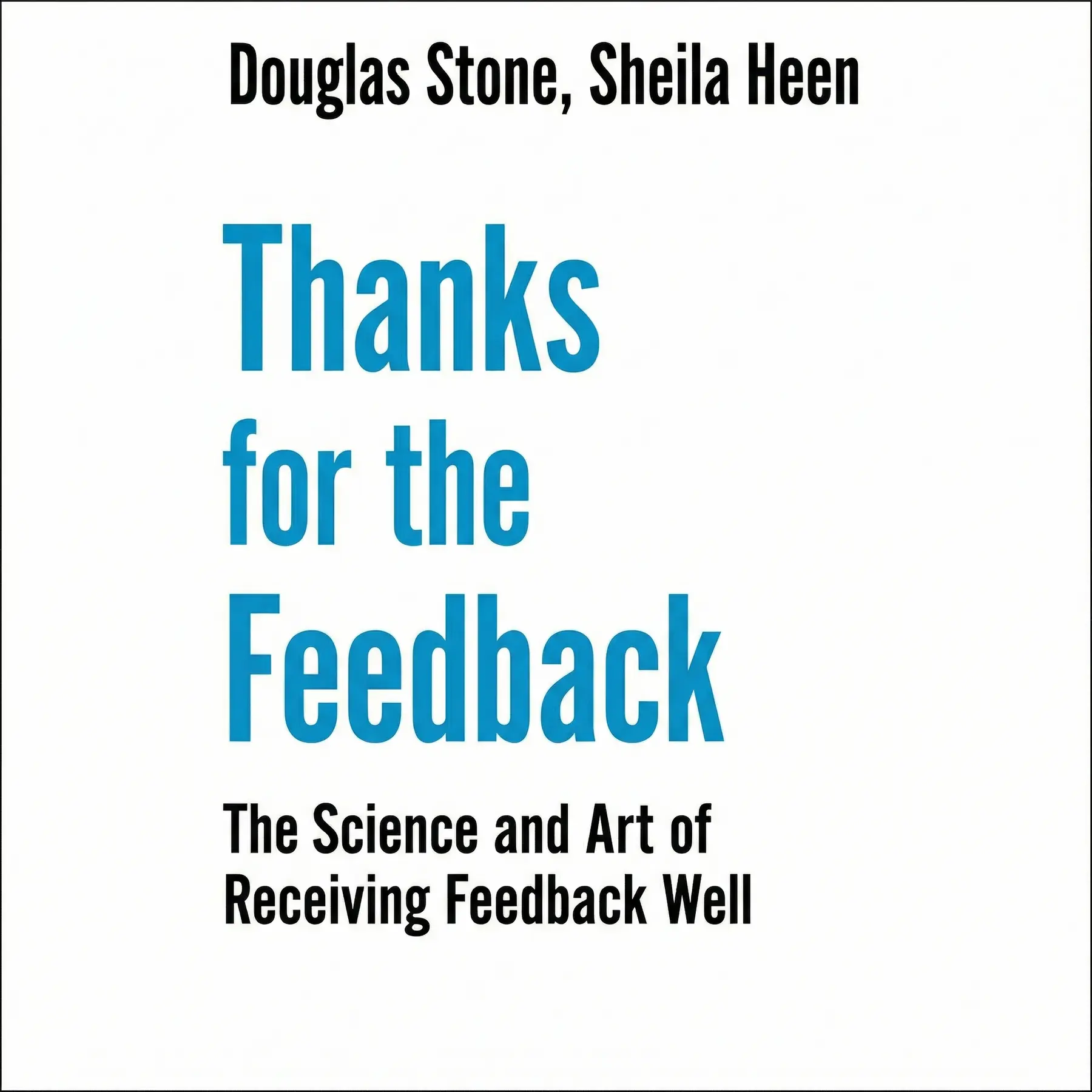
Thanks for the Feedback: The Science and Art of Receiving Feedback Well
Shows how to take criticism without getting defensive: recognize which type of feedback you need, decode vague comments, spot your blind spots and keep relationships, roles and self-labels from blocking what could help you grow.
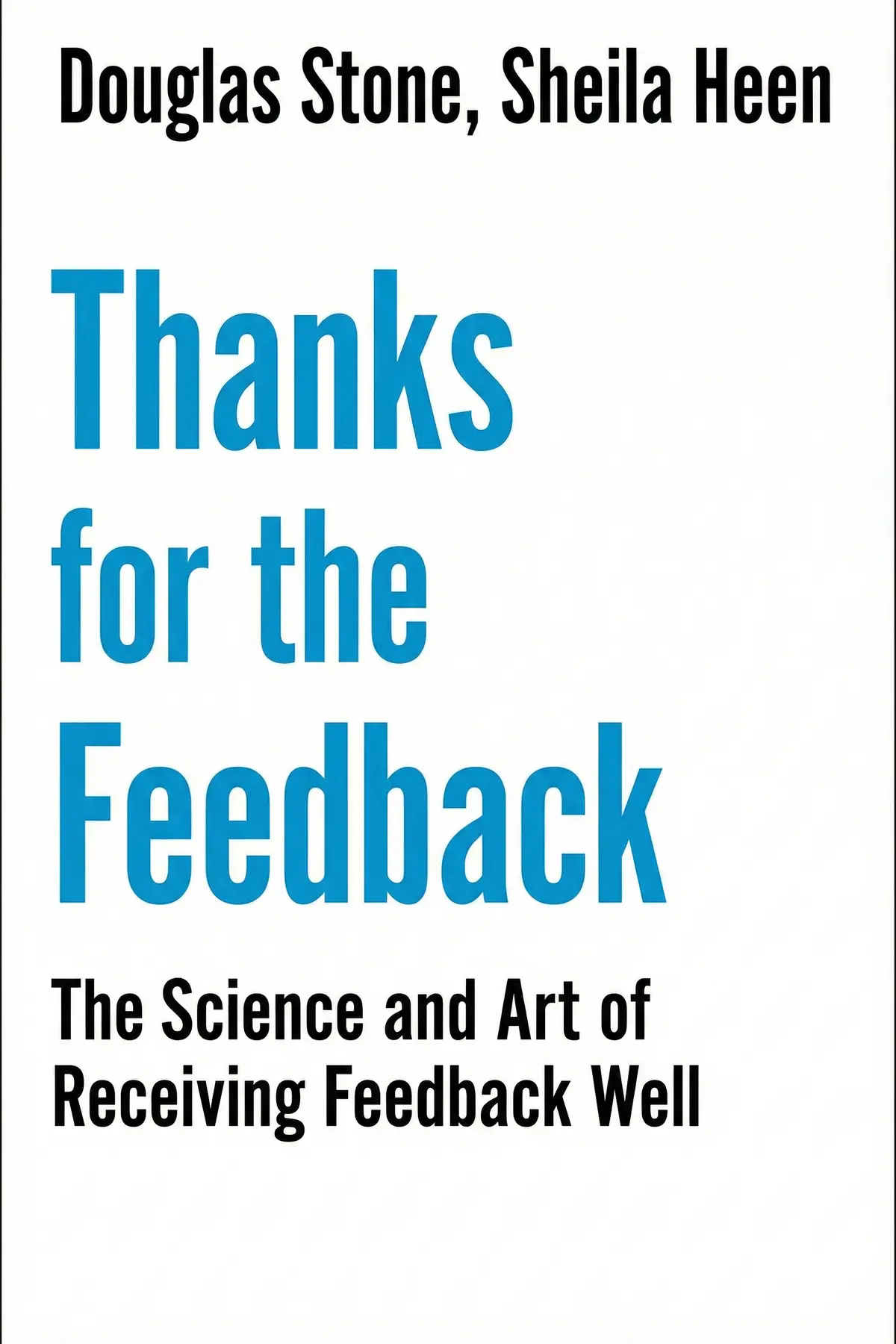
Table of Content
1. Introduction
1 min 00 sec
Criticism at work can leave you defensive for days, even when part of it is true and useful. In Thanks for the Feedback, Douglas Stone and Sheila Heen, who both teach at Harvard Law School, argue that receiving feedback well is a learnable skill. One finding sets the tone: in a 2007 survey, 90 percent of managers placed their own performance in the top ten percent. Most of us cannot see ourselves clearly, so other people hold information we have no other way to get.
The authors’ case is that almost any feedback, fair or unfair, from friend or rival, can help you grow once you know what kind it is, what it really means and what in you is reacting to it. Along the way they explain why a forced smile backfires, why a promotion strains a friendship and why some people recover from criticism far faster than others. The aim is simple: to make the next hard comment something you can use.
2. Ask for the kind of feedback you need
1 min 33 sec
A grade on an exam tells you something, yet it can leave you no wiser about what to do next. The trouble often has less to do with the giver than with a quiet mismatch nobody named.
3. Decode vague criticism before you dismiss it
1 min 37 sec
A single sharp label can sound like an attack on your whole character. Hidden inside it, though, there is often something small and fixable, and two plain questions can bring it out.
4. See the habits only others can see
1 min 33 sec
You try harder to seem warm at work, and your coworkers end up trusting you less. The reason lies in the gap between how you see yourself and what everyone else sees.
5. Hear the point even when you doubt the messenger
1 min 36 sec
The same criticism can feel reasonable from one person and infuriating from another. Learning why your reaction changes with the speaker is the step that lets you keep the useful part either way.
6. Step back to find the forces behind friction
1 min 31 sec
A police officer and a speeding driver might get along well anywhere else. What turns ordinary people into opponents is often invisible, and seeing it changes how every comment between them sounds.
7. Know how your own brain takes criticism
1 min 41 sec
Two colleagues hear the same harsh review; one forgets it by lunch and the other replays it for a week. Part of that gap was set long before either of them started work.
8. Turn a hard comment into room to grow
1 min 40 sec
One remark about a single afternoon can feel like it erases everything you believe about yourself. A puzzle given to schoolchildren shows why that happens and what lets some people recover.
9. Conclusion
1 min 04 sec
Stone and Heen shift the weight of feedback from the person giving it to the person receiving it. Poor delivery, vague labels, rivals with motives and a brain tuned to feel threat all get in the way, yet nearly every comment, whether you agree with it or not, carries something you could use. The skill lies in knowing what you need, working out what was meant and noticing what in you is pushing back.
That skill gets its test the next time someone criticizes you. Before you answer, put yourself in their position and ask what they saw and what they want changed. Notice whether your reaction is about the message or about the messenger, and whether a role or a setting is shaping the exchange. If the comment still stings, remember it is one person’s view, and you do not have to rethink your whole life because of it.
The coworkers who saw through that forced smile were offering information you could not have gathered any other way. Thanks really is the right reply, because they showed you a part of yourself you could not see.
About this book
What is this book about?
Most advice about feedback is aimed at the person giving it. Douglas Stone and Sheila Heen turn to the person on the receiving end, the one who has to decide what to do with a comment that stings, confuses or seems plainly unfair. Their argument is that receiving feedback is a skill. They separate feedback into three types with different jobs, appreciation, coaching and evaluation, and show why getting the wrong one feels useless. They explain how vague labels hide specific points, why we cannot see our own tone or expressions, how trust in the giver bends what we hear, and how roles such as boss and friend create friction. They also look at biology, from inherited levels of well-being to large differences in how fast people recover from criticism, and at the self-labels that turn a small comment into a threat to who we are. Readers get practical questions to ask in the moment, ways to read a hard comment through someone else's eyes, and a steadier way to grow from feedback they did not ask for.
Book Information
Who it's for
Defensive in performance reviews
Professionals who get defensive in performance reviews and want to take more from them.
Recently promoted
New managers and recently promoted staff handling criticism from bosses, peers and former teammates.
Hearing the same feedback
Anyone whose partner or friends say the same thing about them again and again.
About the Author
Douglas Stone
Douglas Stone is a principal at Triad, a consulting firm in Cambridge, Massachusetts, offering corporate education and organizational consulting around the world, and a Lecturer on Law at Harvard Law School. Sheila Heen is a professor of practice at Harvard Law School, where she teaches negotiation and conflict management, and a member of the Harvard Negotiation Project. She co-founded Triad Consulting Group, whose clients span six continents and have included the US White House and the Singapore Supreme Court. Together they also wrote Difficult Conversations, and both of their books became New York Times bestsellers.
Ratings & Reviews
Ratings at a glance
What people think
Listeners find this work both insightful and practical, as it offers effective techniques for both sharing and accepting feedback. They also praise the book’s readability, structured layout, and its many relatable real-world examples. Additionally, the content improves professional communication, and one listener mentions its high value for career advancement. Listeners consider it thought-provoking, while one individual noted that it specifically helped them gather more constructive criticism.
Top reviews
Champ
Finally, a book that acknowledges how much it hurts to be told you're doing something wrong. Most professional growth books pretend we are all rational robots, but Stone and Heen lean into the messiness of human emotion. The section on 'blind spots' was particularly humbling because it reminded me that I can’t see my own facial expressions or hear my tone the way others do. It’s a bit of a reality check. The writing is clear and the structure makes it easy to jump back into specific sections when you're preparing for a tough conversation. I’ve already started using the 'forward-looking' questions mentioned toward the end. It has definitely shifted my mindset from being defensive to being curious. This should be mandatory reading for anyone who works on a team or, frankly, anyone in a long-term relationship.
Show moreSupachai
Not many business books actually change the way I talk to my spouse, but this one did. We often think of 'feedback' as a workplace thing, but it’s constant in our personal lives, and usually, we’re terrible at it. Understanding the difference between needing appreciation and receiving coaching has saved us from at least three arguments this month. The authors' tone is empathetic and encouraging, which helps when you're confronting your own flaws. I loved the "emotional math" concept—how we discount our own bad behavior while magnifying others'. It’s an uncomfortable read at times because it forces a lot of self-reflection, but that’s exactly why it works. The practical advice on how to turn down feedback gracefully was also a huge relief for a people-pleaser like me. This is a life-changing book if you actually do the work.
Show moreNadia
Stone and Heen have a way of making complex psychological triggers feel accessible and manageable for the average professional. I picked this up hoping for some tips on dealing with a difficult manager, but I ended up learning more about my own "blind spots." The idea that we judge ourselves by our intentions while others judge us by our impact is a game-changer. It’s one of those books that you’ll want to keep on your desk and refer back to before a big meeting. The writing style is engaging, and the authors do a great job of blending research with practical application. I especially liked the section on "disentangling the who from the what." It’s helped me listen to people I don’t necessarily like or respect. Truly a must-read for anyone in a leadership position.
Show moreJavier
As a manager struggling with performance reviews, I usually look for books on how to deliver news, but this flipped the script entirely. The focus on the receiver as the person in control is a powerful perspective that I hadn’t considered before. I especially appreciated the deep dive into 'relationship triggers.' It explained why I can hear the same advice from a mentor and feel inspired, yet hear it from a difficult colleague and feel attacked. To be fair, some sections on identity triggers got a bit too academic for my taste and felt like they belonged in a psychology textbook. Still, the practical tips on asking for 'just one thing' to improve are gold. It’s helped me solicit more constructive criticism from my team by lowering the stakes for everyone involved. Highly recommended for professional development.
Show moreAdam
The concept of 'switchtracking' was a total lightbulb moment for me during my commute this week. I never realized how often I derail a conversation by responding to feedback with my own grievances about the person giving it. It's a classic trap that leads to two people talking about two different things without ever resolving the original issue. The authors provide a very helpful roadmap for navigating these tricky interpersonal dynamics. My only gripe is that the book is quite dense and could have probably been about fifty pages shorter without losing much impact. Some of the case studies felt repetitive after the third or fourth example. That said, the insights into 'truth triggers' are worth the price of admission alone. It’s a very useful tool for anyone looking to sharpen their communication skills at work or at home.
Show moreTern
Ever wonder why you get so defensive even when the advice is actually helpful? This book dives deep into the "why" behind our reactions, and the results are eye-opening. The breakdown of identity triggers—how feedback challenges the story we tell about ourselves—was a breakthrough for me. It helped me realize that a critique of one project isn't a critique of my entire career. The authors provide a lot of real-life examples, though as other reviewers have noted, the dialogue can feel a bit staged. Despite that, the underlying logic is sound and very practical. I’ve found myself pausing before reacting to emails now, trying to identify which "trigger" is being tripped. It’s a great resource for anyone wanting to build a growth mindset. It’s not a quick fix, but it provides a solid foundation for better conversations.
Show morePhu
After years of 'giving' feedback training, I realized I had no idea how to actually 'receive' it. We focus so much on the "sandwich method" or being "radical," but we forget that the person listening has the final say in whether the message sticks. This book fills that gap perfectly. I found the distinction between coaching and evaluation to be the most helpful part of the whole text. Too often, we conflate the two, which leads to total confusion and hurt feelings. To be fair, I found the chapters on biological wiring and "baseline" reactions a bit slow, but I can see why they included them for context. It's a dense read, so don't expect to fly through it. However, if you're looking for professional development that actually sticks, this is a great place to start.
Show moreJoshua
Look, we all think we're better at taking criticism than we really are. This book is the cold shower many of us need to actually improve our communication skills. It isn't just about being "nice"; it's about being effective and making sure you're getting what you need to grow. I really appreciated the specific advice on how to ask for feedback in a way that actually yields useful results. Instead of a vague "how am I doing?", asking "what's one thing I could change?" is so much more effective. My only minor complaint is that the book can be a bit repetitive in its middle section. But the frameworks are so solid that I can forgive a bit of wordiness. It’s a thought-provoking read that I’ll likely revisit next year.
Show moreDavid
I wanted to love this more than I did, especially given the pedigree of the authors from the Harvard Negotiation Project. There’s no denying the brilliance in categorizing feedback into appreciation, coaching, and evaluation. That framework alone helped me realize why I often feel frustrated during my annual reviews; I’m looking for coaching while my boss is just checking evaluation boxes. However, the dialogue examples felt incredibly stiff and unrealistic. Nobody in a high-stress office environment actually talks in those perfectly polished, diplomatic paragraphs. It made the advice feel harder to implement in the heat of the moment. It’s a solid, intellectual read, but I found myself skimming the later chapters because the pacing slowed down significantly. If you’re willing to translate their formal scripts into your own voice, there’s value here. Just don't expect a quick, "how-to" guide you can finish in a weekend.
Show moreMaja
While the core message is vital, the execution felt a bit bogged down by repetitive examples that didn't always resonate. I agree that the receiver is the most important part of the feedback loop, but I felt the authors were sometimes too idealistic. In my experience, some feedback is just toxic or poorly intended, and the book's advice on handling hostile situations felt a little thin. It's easy to say "be curious," but much harder when a boss is being genuinely unfair or biased. I also struggled with the length; it felt like a very good 100-page book stretched out to over 300 pages. There are definitely nuggets of wisdom here regarding the three types of feedback, but you have to dig through a lot of fluff to find them. It’s a worthwhile read for the concepts, but it requires a lot of patience to get through.
Show moreQuestions about this book
What is the main idea of Thanks for the Feedback?
Douglas Stone and Sheila Heen contend that almost every piece of feedback can aid your growth, regardless of whether you agree with it, provided you learn to take it in well. That means knowing which type you need, decoding vague comments, recognizing your blind spots, and separating the message from your feelings about the person, the roles involved, your own emotional wiring and the fixed labels you hold about yourself.
What are the three types of feedback in Thanks for the Feedback?
The authors name appreciation, coaching and evaluation. Appreciation motivates and shows your effort was seen. Coaching helps you improve. Evaluation tells you where you stand and what is expected of you. Problems arise when the type does not match the moment, such as getting tips after an exhausting week when you really needed recognition, so they advise asking for the type you need.
How do you respond to feedback you think is unfair?
Stone and Heen suggest first checking whether the feedback is wrong or just unclear. Ask what the person specifically saw and what they want you to do differently, as with a reckless driver comment that may really mean you check your phone while driving. Then consider whether they know something you do not, and whether your view of them is coloring how you hear it.
Why do some people take criticism harder than others?
The authors point partly to biology. Genes account for at least half the differences in people’s default well-being, and Richard Davidson’s 2002 research found recovery from negative emotions can vary by up to 3,000 percent between people. Everyone also feels bad emotions more strongly than good ones. Self-labels matter too: rigid all-or-nothing identities make small criticisms feel like threats to who you are.
Who should read Thanks for the Feedback?
It suits anyone who receives feedback regularly and struggles to use it: employees facing reviews, managers whose teams or bosses criticize them, people promoted above former peers, and partners who keep hearing the same complaint at home. Its tools are conversational, from asking clarifying questions to stepping back to see the roles and pressures shaping an exchange.
Featured in
Readers also enjoyed










AUDIO SUMMARY AVAILABLE
Listen to Thanks for the Feedback in 15 minutes
Get the key ideas from Thanks for the Feedback by Douglas Stone, plus 5,000+ more nonfiction titles.
- 5,000+ titles
- Listen as much as you want
- 7-day free trial
- Cancel anytime









