

10 min 11 sec
Available in: English
Targeted: How Technology is Revolutionizing Advertising and the Way Companies Reach Consumers
By Mike Smith
Shows how online advertising moved from one message for everyone to auctions for a single searcher's attention, and how a business can use search engine marketing and sharp keywords to get found by buyers.
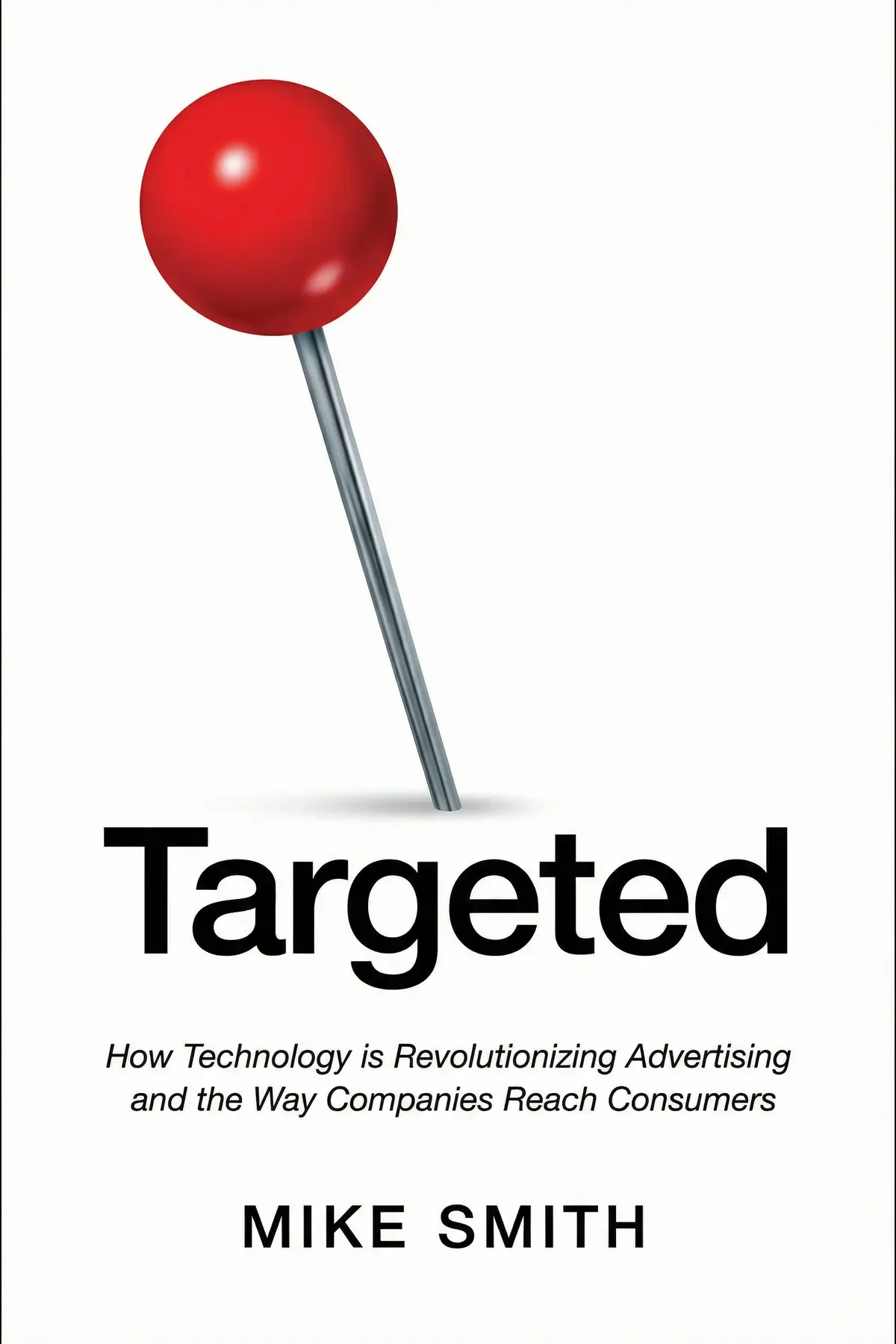
Table of Content
1. Introduction
57 sec
If you sell anything online, a good product is only half the job: buyers have to see it at the very moment they search for it. In Targeted, advertising and digital publishing veteran Mike Smith shows why that moment is worth so much. Ads shown to people who are searching get clicked up to 10 percent of the time, while ads shown to people who searched for nothing get about 0.1 percent, roughly one click in a thousand.
Smith’s case is that success in the digital economy depends on being found by the right buyer when they search, and that search engine marketing is how companies manage it. The story runs from 1950s ads that sold one dream to everyone, through Bill Gross and his keyword auction, to software that bids for a single shopper the instant they search. By the end, the price of an online ad stops being a mystery, and you can pick the three keywords your own business should own.
2. One message for everyone no longer works
1 min 32 sec
Advertising learned to speak to our deepest wishes decades ago, yet it still said the same thing to millions of people at once. A change in how we look for things broke that model for good.
3. Get found at the moment someone is searching
1 min 44 sec
Most ads are ignored, but one kind can reach a click rate of up to 10 percent, against just 0.1 percent for ads shown when nobody searched. The difference has nothing to do with clever design and everything to do with timing.
4. Pay only when a customer actually clicks
1 min 38 sec
Early search ads were bought like billboards, at a fixed spot for a fixed price. One entrepreneur looked at an old printed directory and saw a better way to decide who gets seen.
5. Advertisers bid on you, not the page
1 min 43 sec
A search for hiking boots can start a contest among sellers who already know something about you. Behind it sits a market that works much like a stock exchange, fed by your own browsing.
6. Guard your budget against costly keywords and fake clicks
1 min 33 sec
The same features that make search ads so effective also make them expensive and open to abuse. One insurance phrase shows how fast prices climb, and the cure starts with a single honest sentence.
7. Conclusion
1 min 04 sec
Smith’s book traces one long move, from the 1950s advert that sold the same dream to everyone to an auction that decides, in an instant, which ad one person sees. Desire links the two eras. Timing separates them. Today the most valuable moment in advertising is the second someone tells a search engine what they want, and every tool Smith describes, from careful site design to Bill Gross’s keyword auction to bids driven by cookies, exists to meet that moment.
For anyone selling something, the lesson is practical. Describe your offer so precisely that a stranger could tell it apart from the generic version, then choose the three keywords a buyer with that need would search for. Work on your site’s design so it can rank well alongside any ads you buy. And when you do pay, keep an eye on what each click costs and whether the clicks look real.
A perfect product still fails if it sits where no one is looking. Smith’s advice is to stand exactly where the search ends.
About this book
What is this book about?
For decades advertising sold the same dream to everyone. Since the 1950s ads have reached for people's deepest wishes, but the message was shared by the whole audience. Technology has changed that. People now search for whatever they want, wherever they are, and a company that is not visible at that moment loses the sale, however good its product. Mike Smith, a longtime advertising and digital publishing executive, explains the machinery behind this shift. He covers search engine marketing and its two routes, optimizing a site to rank well and paying for search ads. He tells how Bill Gross turned paid search into a pay-per-click auction at GoTo.com, and how real-time bidding now lets software bid for an individual user, using profiles built from cookies. Readers learn why search ads are clicked far more often than other ads, what drives keyword prices up, how click fraud can drain a budget, and how to choose the three keywords that matter most to their own business.
Book Information
Who it's for
Founders and business owners
Founders and small business owners deciding how to spend their first online ad budget.
Marketers going digital
Marketers moving into digital roles who want to understand keyword auctions and real-time bidding.
Professionals curious about ads
Professionals curious about why the ads they see seem to know what they were just browsing.
About the Author
Mike Smith
Mike Smith has spent about 25 years in advertising, with time at HBO, Forbes and Hearst. He is known for his expertise in digital publishing and in real-time bidding for online ads. At Forbes he was President of Forbes.com and Chief Digital Officer of Forbes Media. Earlier he was Vice President and Chief Information Officer at TheStreet.com and held several roles at HBO, including director of information technology. He graduated from the New Jersey Institute of Technology.
Ratings & Reviews
Ratings at a glance
What people think
Listeners find this title offers a useful broad perspective on the advertising sector and is a straightforward listen. They view it as essential for digital marketing professionals, with one listener mentioning that it addresses every facet of online advertising.
Top reviews
Jack
Wow, this is easily one of the most comprehensive overviews of the digital advertising space I have come across. Mike Smith writes with a clarity that turns what could have been a dry, technical subject into a page-turner about the future of commerce. I particularly enjoyed the sections on how retargeting works and the sheer speed of the computerized auctions that happen every time we click a link. Some might say it’s a bit dated, but the core principles of behavioral targeting and data collection remain the bedrock of the industry today. This should be mandatory reading for anyone who wants to understand the invisible forces shaping our online experience. It bridges the gap between 'how things work' and 'why it matters' perfectly. If you want to know where your ad dollars are actually going, start here.
Show moreEleni
The chapter on building an RTB server was the highlight of the book for me. Most marketing books stay at such a high level that you never actually understand the underlying tech, but Smith gets into the weeds just enough to be interesting. It’s a must-read for anyone entering the online marketing space because it covers every major aspect of the digital advertising revolution. Personally, I think the way it connects the history of search to the future of display ads is brilliant. Yes, the data from several years ago is a bit old now, but the logic behind the auctions and the 'right person, right time' philosophy hasn't changed. It’s a conversational and insightful look into how companies are using our data to sell us things. Definitely worth the time for the industry perspective alone.
Show moreMoo
Picked this up because I wanted a clear breakdown of the ad-tech alphabet soup like DMPs and SSPs. Mike Smith does a solid job of explaining how the landscape evolved from early search engine marketing into the real-time bidding behemoth it is today. To be fair, the first half is much stronger than the second, focusing on the history of ad auctions and anecdotes about industry giants. It reads like a narrative, which makes the complex technical stuff go down easier for a beginner. However, I noticed some of the stats on mobile and tablet usage feel stuck in 2013, which is a lifetime in digital years. If you need a foundational understanding of behavioral targeting and why those ads follow you around, this is a great starting point. Just don't expect a technical manual on how to execute a campaign in the current market.
Show moreOscar
As someone just starting out in a marketing role, this book was exactly the primer I needed to stop feeling lost in meetings. Mike Smith manages to untangle the messy web of real-time bidding and behavioral targeting without relying too heavily on confusing jargon. The way he describes the 'digital exhaust' and how cookies are used to build consumer profiles was a real eye-opener for me. Look, it’s not a perfect book; the chapters on privacy seem to waffle back and forth without taking a firm stance. Also, some of the technology references haven't aged particularly well since it was published in 2014. Despite that, the historical context of how we got from simple banners to million-per-second auctions is invaluable. It’s a fast-paced read that provides a comprehensive overview of a very complicated industry.
Show moreOrathai
Finally got around to reading this, and I have mixed feelings about the final product. On one hand, the author clearly knows his stuff and provides a brilliant history of how search marketing and RTB came to dominate our screens. On the other hand, the book can’t seem to decide who its target audience is. It’s a bit too 'word-heavy' and light on data for my taste, and the lack of images in the copy made it feel like a long slog through blocks of text. Not gonna lie, I was disappointed that AdWords and AdSense were barely mentioned despite their massive role in the story. However, for a high-level look at the rise of the machines in the ad world, it’s a solid effort. It’s a good book to clear up the confusion between various industry acronyms.
Show moreElias
This book is a digital lifesaver for anyone struggling to keep up with the terminology of the ad-tech world. Mike Smith has managed to cram a massive amount of industry knowledge into a relatively small package, drawing on hundreds of interviews to tell the story. The narrative flows like a novel, which is rare for a business book, and I found myself whipping through the chapters on search engine history. Gotta say though, I wish there were more updated statistics on the 'internet of things' and how mobile apps are actually being monetized today. The second half loses a bit of steam as it drifts into more general talk about data and privacy without offering much in the way of actionable advice. Regardless, it’s a strong overview that serves as a solid foundation for further study.
Show moreWoramet
Ever wonder why an ad for that pair of shoes you just looked at follows you across every site you visit? Targeted takes you behind the curtain of the digital advertising machine, exploring the 'digital exhaust' we all leave behind. It’s an easy read, but I have to say, the content feels a bit lopsided. The early chapters on the rise of Google and the development of RTB are fascinating, yet the later sections on privacy and future trends felt somewhat superficial. Truth is, for someone already working in the field, this might be a bit too basic. I was hoping for more deep-dives into data analytics instead of the fluffy predictions that dominate the end of the book. It serves well as a high-level overview for newcomers, but industry veterans will likely find themselves skimming the second half.
Show moreManee
After hearing a colleague mention it, I dove into Targeted expecting a more technical breakdown of search engine marketing. Instead, I found a book that is part business history and part industry commentary. The first nine chapters are quite engaging, especially the bits about the elevator conversations with Jeff Bezos and the early days of ad auctions. But once you hit chapter ten, the pace slows down significantly and the content becomes much more abstract. In my experience, books on tech move fast, and this one is definitely showing its age regarding tablet stats and digital TV. Still, Smith’s insider perspective as a publishing executive adds a layer of credibility you don't always get in these types of books. It’s a decent high-level summary if you’re looking to understand the broad strokes of the ad-tech ecosystem.
Show moreCarter
Not what I expected given the 'revolutionizing advertising' subtitle. While the writing style is conversational and the history of search auctions is well-researched, the book suffers from a major identity crisis. It’s too detailed about corporate history for a casual reader but far too shallow for anyone actually trying to learn the mechanics of digital marketing. Frankly, the information about HTML5 and mobile apps is incredibly dated, which makes the 'future predictions' hard to take seriously. I found myself frustrated by the lack of actual statistics or visual aids to break up the dense, word-heavy chapters. There’s an interesting story here about the personalities that built the ad-tech world, but as a guidebook for modern marketers, it misses the mark entirely. You're better off checking out free online resources if you want current strategy.
Show morePong
Look, the technical landscape of digital marketing changes every six months, so any book on the topic is going to feel a bit like a time capsule. Targeted is no exception, and reading it now feels like looking at a map of a city that has since been rebuilt. The sections on HTML5 and mobile technology are particularly stuck in the past, which undermines the author's attempts at future-casting. I also felt like the discussion on privacy was far too fluffy to be of any real use to a professional. It’s well-written enough, and the author's narrative style is easy to follow, but it lacks the depth required for a veteran. It’s a fine introductory text if you know absolutely nothing about the field, but don't expect it to change your marketing strategy.
Show moreQuestions about this book
What is Targeted by Mike Smith about?
Targeted explains how technology changed advertising from one message aimed at everyone into ads aimed at a single person at the moment they search. Mike Smith covers search engine marketing, the difference between optimizing a site and paying for search ads, the keyword auction Bill Gross introduced at GoTo.com, and real-time bidding powered by cookies. His core message is that companies must target their customers carefully to be found.
Why are paid search ads so effective according to Targeted?
Smith points to the Click Through Rate, the share of viewers who click an ad. Paid search ads can reach 10 percent, while ads shown to people who searched for nothing get about 0.1 percent. The reason is timing: someone who has just searched is already looking for a product, so an ad that answers the search reaches them when they are most ready to buy.
What is real-time bidding in online advertising?
In Smith’s description, real-time bidding lets advertisers compete for a specific user instead of a fixed ad spot. Each search opens an auction on an online ad exchange, which works much like a stock market for ad space. The auction carries profile data drawn from cookies, and advertisers’ software bids automatically up to the amount they decided in advance that such a profile is worth.
What are the risks of paid search?
Smith names two. First, popularity drives prices up: a New York Times report he cites found the keyword life insurance rose from $1 per click in 2002 to $20 in 2012. Second, click fraud lets dishonest competitors click a rival’s ad repeatedly, forcing the rival to pay for clicks that will never turn into sales.
How do I choose keywords for my business using Targeted?
Smith advises finding the three search keywords that matter most to your company. Start by stating precisely what your business offers people, because generic descriptions such as providing lifestyle coaching are too broad to help. Once that aim is clear, choose the terms a buyer with that exact need would type, and use them to guide your search engine marketing.
Readers also enjoyed









AUDIO SUMMARY AVAILABLE
Listen to Targeted in 15 minutes
Get the key ideas from Targeted by Mike Smith, plus 5,000+ more nonfiction titles.
- 5,000+ titles
- Listen as much as you want
- 7-day free trial
- Cancel anytime









