
14 min 38 sec
Available in: English
 ไทย
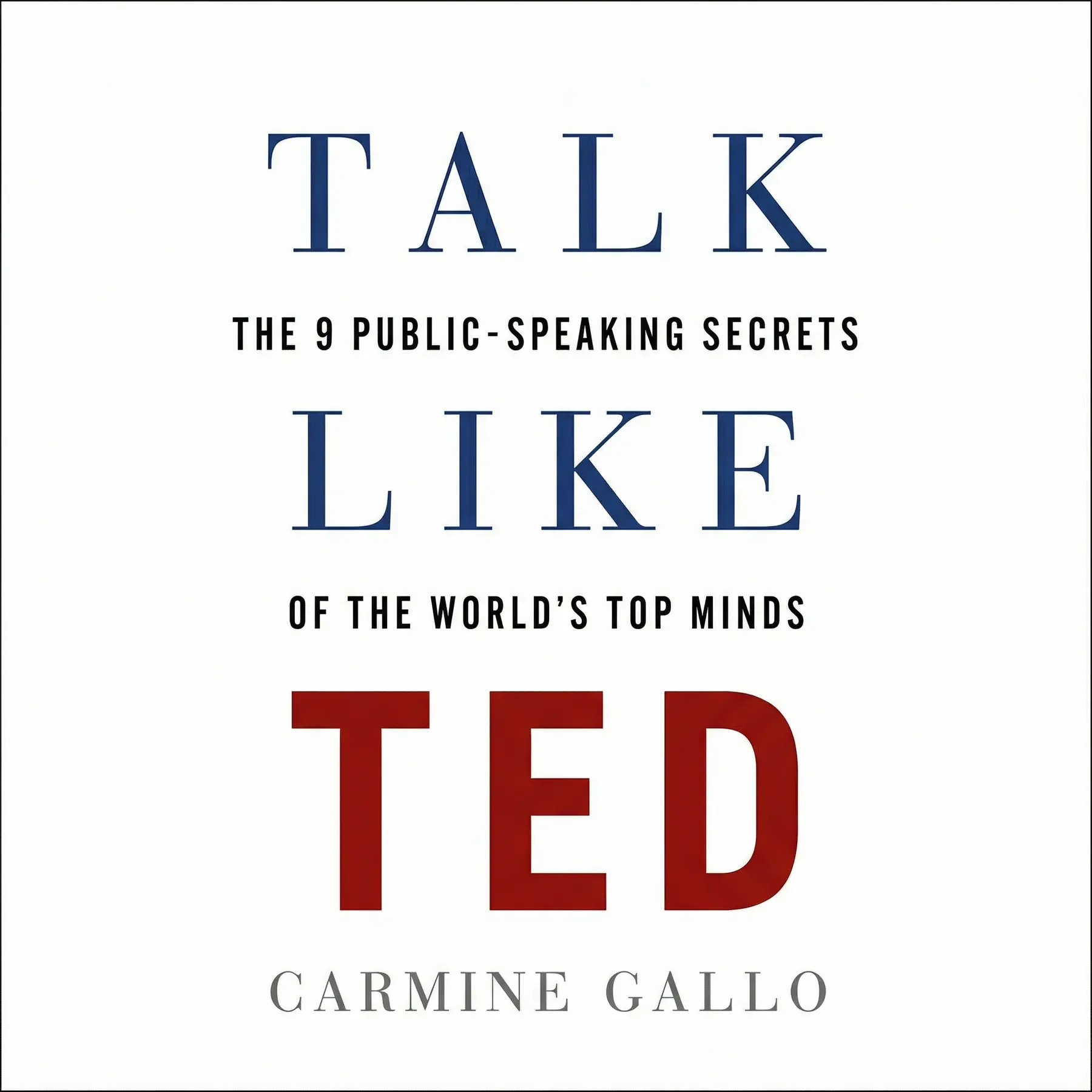
EnglishไทยTalk Like TED: The Nine Public-Speaking Secrets of the World’s Top Minds
Shows how to give talks that persuade and stay in memory, using patterns Carmine Gallo found in more than 500 popular TED talks: passion, stories, surprise, humor, brevity and appeals to sight and hearing.
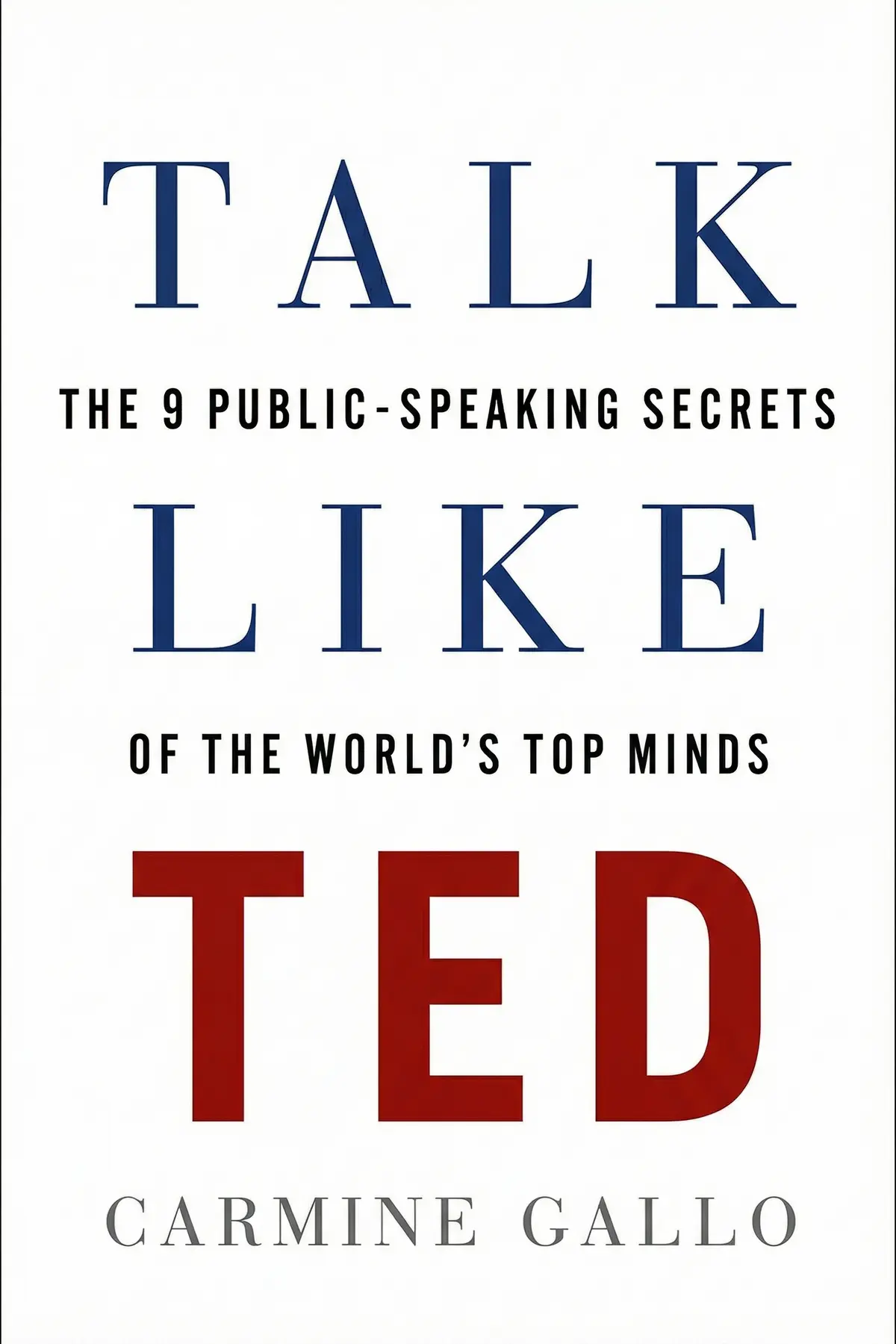
Table of Content
1. Introduction
58 sec
Most people who dread public speaking assume great presenters were simply born that way. In Talk Like TED, former news anchor Carmine Gallo studied more than 500 popular TED talks and found that the best ones shared three habits anyone can learn: they told the audience something new, they formed an emotional bond with the room, and they were built to be remembered.
That is the case the book makes. A talk persuades when people feel it, hear something they did not know and can carry it home afterward, and each of those effects comes from choices a speaker can practice. Gallo’s evidence runs from Bill Gates opening a jar of mosquitoes on stage to a professor who cut a three-hour class into three shorter ones.
By the end, you will know how to plan a presentation around one headline and three supporting points, which kinds of story to tell, and how to find the one fact your audience will repeat to colleagues the next morning.
2. Make conviction your strongest credential
1 min 43 sec
Investors watching start-up pitches cared less about degrees and experience than most founders would expect. A study and a group of taxi drivers explain what actually sways a room, and why you can grow more of it.
3. Let stories do most of your persuading
1 min 44 sec
Aristotle named three ways to persuade, and Gallo measured how the most popular TED talks balance them. The winning mix leaves numbers and credentials far behind, and it points to three kinds of story worth collecting.
4. Match your voice, posture and hands to your message
1 min 43 sec
A study of suspected liars shows how much an audience reads from a speaker’s body. Gallo’s advice covers pace, posture and a precise zone for your hands, plus the moments when you should break out of it.
5. Win an audience's trust with a well-placed smile
1 min 55 sec
Executives judged outstanding joked far more often than average ones. A father of triplets and a professor speaking about inequality show how to earn a smile in a serious talk without a single rehearsed joke.
6. Give people a fact that makes them say wow
2 min 03 sec
Bill Gates once opened a jar of live mosquitoes in front of an audience. That moment, and a startling comparison of two government budgets, show what makes the brain decide a piece of information is worth keeping.
7. Build a talk your audience can remember
1 min 40 sec
A professor broke his long class into pieces and his students’ exam scores rose. Research on memory explains why, and a one-page tool turns that research into a plan for your next talk.
8. Pictures and repeated phrases that stay with people
1 min 36 sec
Two famous political phrases still echo years after they were spoken. Their staying power, and research on how students learn, point to a simple change that will make your slides and your words harder to forget.
9. Conclusion
1 min 16 sec
Standing out has always been the speaker’s problem. In 1915, Dale Carnegie wrote The Art of Public Speaking, which Gallo describes as the first self-help book, to teach exactly that. Daniel Pink, in To Sell is Human, argues that everyone today is in sales, like it or not. Gallo finds the modern version of Carnegie’s manual in TED, which began as a single event in 1984 and now sees five TEDx events a day in more than 130 countries.
What those talks reveal is reassuring. The speakers who move audiences are doing things you can copy: caring visibly, telling stories, surprising people, earning smiles, staying brief and showing pictures. None of it requires a famous stage.
Start with your next meeting or pitch. Write the one headline you want remembered, cut your support to three points, and look for the fact that would make your listeners say wow. Open with a story before the first chart, and say your key phrase more than once.
Gates needed one jar of mosquitoes to be remembered by millions. Most of us need only one surprising sentence, said with conviction, to be remembered by the room.
About this book
What is this book about?
Good ideas often lose to well-presented ones. Carmine Gallo, a former journalist and news anchor, wanted to know what separates the talks that spread from the ones people forget, so he studied more than 500 popular TED talks. He found three features in common. The audience had not heard the content before, the speaker formed an emotional bond, and the delivery made the material simple to remember. Gallo turns those features into habits anyone can practice. He shows why passion swayed investors more than a founder's credentials, why the most popular talks lean heavily on emotion and story, and how voice, posture and gestures support that bond. He explains how surprising facts and extreme moments, such as Bill Gates releasing mosquitoes on stage, fix a talk in memory, and how humor makes a speaker more likable. Readers also get a clear structure: keep a talk to about 18 minutes, cover no more than three points, plan it on a one-page message map, and use pictures and repeated phrases so the idea reaches both the eye and the ear.
Book Information
Who it's for
Presenting at work
Professionals who present to clients, bosses or investors and want their ideas remembered after the meeting.
Founders before a pitch
Founders preparing a pitch who need to show conviction as well as numbers.
Teachers and team leads
Team leads and teachers whose talks run long, pack in too much and lose the room halfway through.
About the Author
Carmine Gallo
Carmine Gallo is a former journalist and news anchor and the president of Gallo Communications Group, based in Pleasanton, California. He has taught at Harvard, lectured to MBA students at Stanford, UCLA and UC Berkeley, and advised companies including Google, Coca-Cola and LinkedIn on communications strategy. He has written for Forbes.com, and his books include The Presentation Secrets of Steve Jobs, also an international bestseller, and Five Stars.
Ratings & Reviews
Ratings at a glance
What people think
Listeners consider this an excellent resource for preparing presentations, as it offers practical best practices and condensed research within its chapters. The book provides superb advice for any type of public speaking and aids in perfecting delivery, ensuring the concepts are both simple to grasp and implement. Furthermore, listeners value the motivational material that sparks new ideas and enhances self-assurance, alongside the compelling storytelling featured throughout the work.
Top reviews
Rotjanee
Finally got around to reading this, and I have to say, the emphasis on the 'jaw-dropping moment' changed how I view my meetings. Carmine Gallo doesn't just tell you to be better; he shows you how to package your message so it actually sticks in someone's memory long after the Zoom call ends. I loved the deep dive into how multisensory experiences—touch, sight, sound—help cement an idea in the audience's mind. The writing style is punchy and accessible, making it an easy weekend read for anyone looking to boost their professional confidence. While the book can feel a little formulaic at times, the research-backed evidence for each 'secret' provides a level of credibility that many self-help books lack. It’s an essential guide for the modern professional.
Show moreSamira
Wow, I didn't realize how much my presentation style was holding me back until I saw it through the lens of these nine secrets. There is something truly inspirational about the way Gallo describes the power of a well-told story to change the world. After reading this, I spent hours rewriting my next keynote to focus on a single, 'shocking' moment that would grab the listener's attention. The book encourages you to be open and vulnerable, which is terrifying but clearly effective based on the TED examples provided. It’s more than just a public speaking manual; it’s a boost to your creative confidence. I finished the last page feeling like I could actually stand on that red carpet and hold my own. Highly recommended for anyone with a message to share.
Show moreSara
Picked this up because I wanted to understand the science of persuasion, and the research Gallo distills here is genuinely fascinating. He explains why the brain tires after 18 minutes and why our internal 'clocks' need a break every ten, which has huge implications for any kind of teaching or presenting. The advice on being 'open and transparent' resonated with me, as it’s often the one thing missing from corporate communications. Not gonna lie, I was skeptical about the 'secret' regarding humor, but the examples he used really proved his point about authenticity. It’s a rich, fast-paced read that manages to be both practical and deeply human. I’ve already started applying the 'Rule of Three' to my emails and pitches with great success. This is exactly the kind of inspirational content that builds thoughts and helps you approach any speaking engagement with a sense of purpose. Definitely a must-read for aspiring leaders.
Show moreEmily
Ever wonder why some speakers just click while others put you to sleep? Gallo breaks down the 'TED' magic into nine manageable components that feel surprisingly reachable, even for the stage-fright prone among us. I particularly appreciated the emphasis on the 18-minute rule and the science behind why our brains crave brevity. To be fair, some of the advice leans toward the obvious—like 'be passionate'—but the way he bridges those clichés with neurobiology makes them feel fresh. It isn't just a list of tips; it’s a blueprint for anyone needing to pitch an idea or lead a meeting. The storytelling examples are so vivid that I found myself pausing the book to go watch the actual presentations he was describing. It’s a solid resource, though maybe a bit repetitive in the middle sections.
Show moreElan
This book is essentially a masterclass in how to avoid 'Death by PowerPoint.' As someone who has sat through countless dry presentations, the advice here on using images instead of bullet points felt like a breath of fresh air. Gallo analyzes the most viral talks and extracts the 'novelty' factor—that unique angle that makes an old problem feel new again. Look, while the 18-minute limit is a great rule of thumb, I do wish there was more specific advice for those of us who have to give hour-long technical briefings. Still, the core pillars of being authentic and transparent are timeless. It’s a helpful distillation of best practices that turns a daunting task into a series of achievable steps. Great for refining your pitch.
Show moreYok
As a complete novice in public speaking, I found Gallo’s breakdown of the three pillars of persuasion—Pathos, Logos, and Ethos—to be incredibly illuminating. He explains how the most successful presenters reach people’s hearts through storytelling before they even try to touch their minds with data. This isn't just about the stage; it's about how we communicate our unique connections to our work every single day. I'll admit that some of the backstories on the speakers felt a bit long-winded, and I found myself scanning those to get to the actual tips. However, the overall framework is remarkably simple to grasp and put into practice immediately. If you've ever felt like you have no idea what you're doing up there, this book provides the structure you need to stop panicking.
Show moreVimolwan
After hearing the audio version of this, I was struck by how the storytelling within the book itself mirrors the techniques it advocates. The narrators do a fantastic job of bringing the different speakers to life, making the analysis feel much more dynamic than a standard textbook. Personally, I found the section on 'multisensory experiences' the most intriguing, especially the idea of involving more than just sight and sound to make a point. It’s a great read if you want to understand the 'why' behind the world's most popular talks. Some of the anecdotes are a bit repetitive, but the core message remains strong. It’s an excellent guide for anyone who needs to deliver information in a way that is both memorable and moving.
Show moreRoydao
The chapter on humor alone makes this worth a look, mainly because it warns you away from telling canned jokes. Instead, Gallo suggests using authentic, self-deprecating humor to build a bridge with your audience, which feels much more natural. Gotta say, though, I kept waiting for a 'eureka' moment that never quite arrived. So much of this is common sense. Practice relentlessly? Check. Keep it short? Check. But there is a certain value in having all these 'best practices' distilled into one place with such high-quality examples. It’s a decent guide for beginners, but seasoned pros might find it a bit elementary.
Show moreJames
Not what I expected from a book that claims to reveal the secrets of world-class communication. Instead of actionable techniques on vocal modulation or physical presence, I felt like I was reading a glorified fan-site summary of popular videos I've already seen. Truth is, calling these 'secrets' is a massive stretch when most of it boils down to 'tell a story' and 'don't use too much text on your slides.' It reads more like a 'What TED Speakers Do' rather than a manual for how the rest of us can actually achieve it. My highlighter sat mostly idle because the insights were buried under layers of corporate buzzwords and disjointed quotes that lacked depth. If you’re already an experienced public speaker, you can safely skip this one.
Show moreSomrutai
Frankly, I struggled to stay engaged because the book felt like it was trying too hard to sell me on the idea of TED rather than teaching me how to speak. I was looking for deep insights into rhetoric and body language, but what I got was a collection of disjointed quotes and some vague advice about 'digging deep' to find passion. It feels more like a highlight reel for people who don't want to actually watch the videos themselves. In my experience, great speaking requires more than just following a nine-step checklist, and this book oversimplifies the craft to a point of frustration. The tone is overly enthusiastic, bordering on sycophantic towards the featured speakers. If you want real substance, look for a forensics or debate coach instead.
Show moreQuestions about this book
What is the main idea of Talk Like TED?
Carmine Gallo analyzed more than 500 popular TED talks and found that the best shared three features: content that was new to the audience, an emotional connection between speaker and listeners, and delivery that made the material easy to remember. He breaks these into practical habits, from passion and storytelling to surprising facts, humor, a short three-part structure and appeals to both sight and hearing.
How long should a presentation be according to Carmine Gallo?
Gallo treats 15 to 20 minutes as the best window, and TED talks usually run 18 minutes. He cites professor Paul King, whose students retained more after he split a three-hour class into three 50-minute sessions. Gallo also limits a talk to three main points, because memory research suggests people hold only three or four chunks of new information comfortably.
What is a message map in Talk Like TED?
A message map is a one-page plan for a talk. You write the single most important message you want the audience to take away at the top, like a headline. Below it you list no more than three supporting messages, and under each one you outline the stories, facts and examples that fill it out. Every part of the talk then serves the headline.
How can I make a presentation more memorable?
Gallo recommends giving the audience something new, since novel information triggers dopamine, which helps the brain save it. A startling statistic or an extreme moment, like Bill Gates releasing mosquitoes on stage, fixes a talk in memory. He also suggests using pictures with a few keywords instead of text-heavy slides, and repeating one short phrase, as Martin Luther King did with I have a dream.
Who should read Talk Like TED?
It suits anyone who presents ideas for a living: professionals pitching clients or bosses, founders seeking investors, and managers or teachers who speak to groups. Gallo’s advice is concrete, from speaking at around 190 words per minute to keeping gestures between the eyes and the belly button, so readers can apply it to their very next talk.
Readers also enjoyed






AUDIO SUMMARY AVAILABLE
Listen to Talk Like TED in 15 minutes
Get the key ideas from Talk Like TED by Carmine Gallo, plus 5,000+ more nonfiction titles.
- 5,000+ titles
- Listen as much as you want
- 7-day free trial
- Cancel anytime









