Table of Content
1. Introduction
53 sec
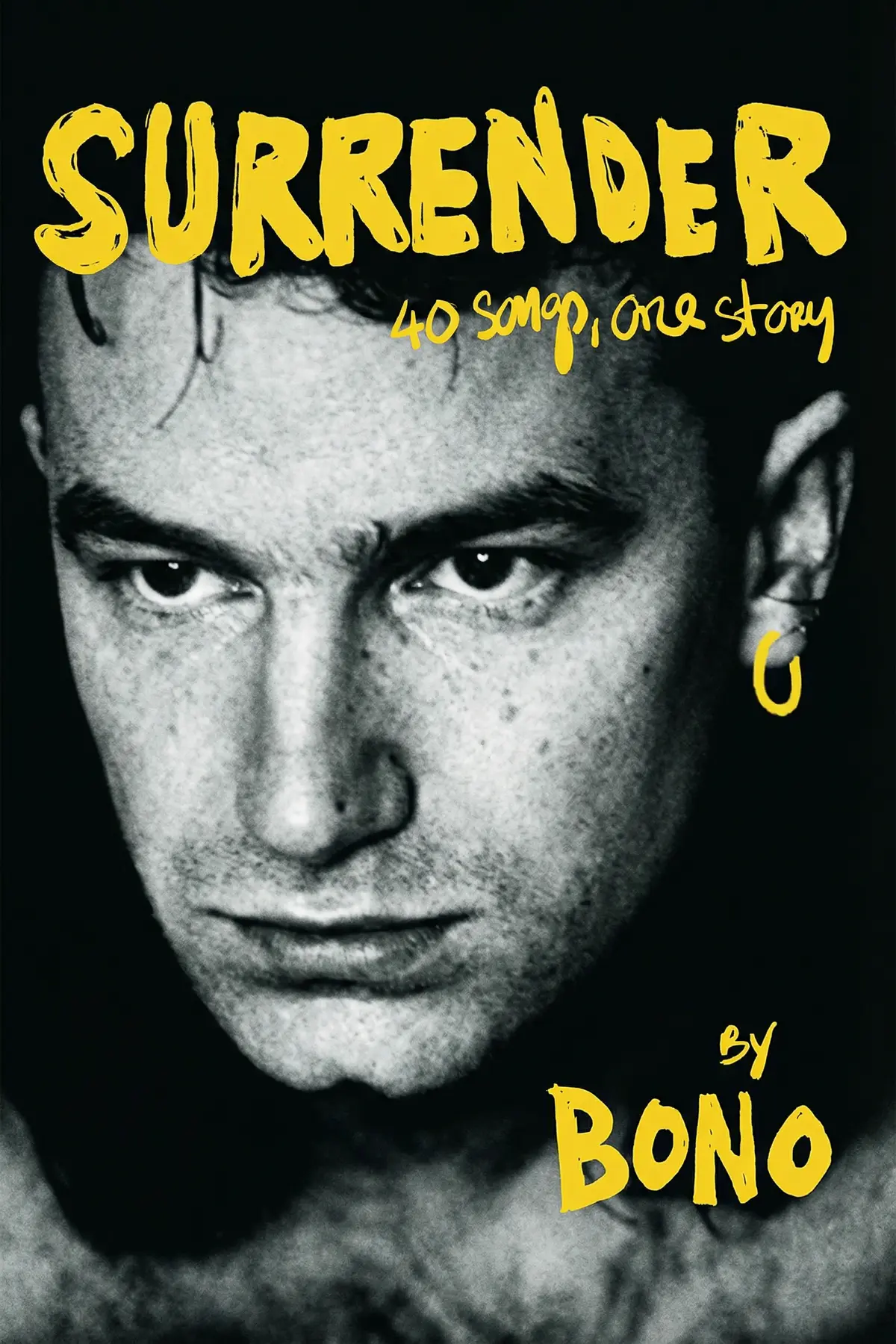
Most success stories are told as solo climbs. In Surrender, his first book, U2’s lead singer Bono tells his the other way: the songs, the failures and the causes all trace back to a handful of people on one Dublin street and to the mother he lost at 14. Over 40 chapters, each named for a song, he moves from a hearing aid shop that lent him his name to a campaign that ended in a $15 billion American pledge for AIDS relief.
The thread holding it together is loyalty. Grief, a marriage to his school sweetheart Ali and three schoolmates who still play beside him carried Bono through rejection, flops and fame. Follow that thread and you get the rise of one of the world’s most successful bands, along with a clear picture of how a few steady relationships can hold a working life together when its public side shakes.
2. Turn early grief into lasting creative fuel
2 min 03 sec
A teenager wrote his first song on his 18th birthday. The energy behind it came from a loss four years earlier, and from a street full of neighbors who refused to let him be alone.
3. Find the steady partner who keeps you on course
1 min 54 sec
The romance began with two girls laughing at him over directions to a lab. It got off to a clumsy start, with his girlfriend hiding under his bed while his father asked, at length, how he was feeling.
4. Four schoolmates turn rejection into a record deal
2 min 05 sec
Four teenagers, one of them less musical than the rest, a representative who double-crossed them and a van crash before their first trip abroad. The move that finally got them signed rested on a cheerful exaggeration.
5. Let what you witness shape what you make
2 min 00 sec
A body by a roadside in El Salvador, a famine in Ethiopia and a fumbled song beside Bob Dylan all changed how the band wrote. One of those lessons arrived in a single short sentence.
6. Let humor carry your group through public failure
1 min 48 sec
Houses in the hills and history unfolding in their hotel rooms, then a kidnapping threat, a flop and a tour opening that went wrong in almost every way. What held them together had nothing to do with music.
7. Put your fame to work on poverty and disease
1 min 38 sec
The same habits that once pushed cassette tapes on London record labels later moved a government to commit billions. The man behind it never stopped being nervous around his heroes.
8. Conclusion
1 min 17 sec
Surrender closes where it began. After the stadiums and the summits, Bono comes back to Iris and the hole her death left, to the neighbors on Cedarwood Road who became his second, third and fourth families, to the school that let him learn and create freely, and to the best friend he married. The boys from Larry’s kitchen are still making music with him.
That return is the book’s real argument. The people of his beginnings carried the fame, and they still do. Grief became songs, a borrowed nickname became a name the world knows, and a band of schoolmates with a parent for a roadie outlasted flops, threats and a tour that should have broken them.
The story suggests a few things worth doing. Notice who plays Ali’s role in your life, the fixed point, and tell them. When a project fails in public, guard the friendships and the humor before you fix the work. And when you witness something wrong, let it change what you make, as El Salvador and Ethiopia changed U2’s songs.
A boy who ate mashed potatoes from a pot in front of the television ended up singing to the world, and he still calls himself that boy from Cedarwood Road.
About this book
What is this book about?
Paul David Hewson grew up on Cedarwood Road in Dublin, lost his mother to a stroke at 14 and was renamed by a childhood friend after a hearing aid shop. Four decades later, as Bono, he is the voice of one of the world's most successful bands and a campaigner against poverty and AIDS. In Surrender, told across 40 chapters that each take a song title, Bono follows that arc with humor and candor. He describes meeting Ali at school and marrying her at 22, forming U2 with schoolmates in a kitchen full of drums, being turned down by every label, and writing songs shaped by El Salvador and the Ethiopian famine. He does not skip the hard parts: a kidnapping threat against his daughters, poorly received albums and a disastrous tour opening in Las Vegas. Readers get the stories behind the music and a clear lesson from one public life: the people who stand by you early are the ones who hold everything together later.
Book Information
Who it's for
Curious about U2 songs
U2 fans who want the stories behind songs like Bullet the Blue Sky and Beautiful Day.
Lost a parent young
Readers who lost a parent young and want to see how that loss can be carried into adult life.
Founders and team leaders
Founders and team leads curious how a band of school friends survived rejection, flops and fame together.
About the Author
Bono
Bono was born Paul David Hewson in 1960 and grew up in Dublin, Ireland. At Mount Temple Comprehensive School he met his future wife, Ali, and formed the band that became U2 with schoolmates. He is U2's lead vocalist and main lyricist, and with the band he has won 22 Grammy Awards. He also campaigns against extreme poverty in Africa and co-founded DATA, EDUN, the ONE Campaign and Product Red. Surrender is his first book.
Ratings & Reviews
Ratings at a glance

What people think
Listeners view this autobiography as a vital experience for U2 fans, praising its deep perspective on Bono’s life and worldview. The narrative relates amazing anecdotes about a singular individual, and listeners value the graceful writing style, with one listener highlighting the specifics regarding the songwriting and studio sessions. Listeners describe the work as sincere, amusing, and packed with lyrical verse, while appreciating how it clarifies the origins of classic tracks.
Top reviews
Watcharaporn
This memoir is a symphony of words that feels more like an intimate conversation than a celebrity tell-all. Bono has a way of weaving his Dublin childhood with global activism that shouldn't work, yet somehow, it does perfectly. Hearing him speak about the devastating loss of his mother, Iris, at such a young age provides a profound lens through which to view his later obsession with "finding" home. The prose is undeniably poetic, mirroring the cadence of U2’s greatest hits without feeling like a marketing gimmick. Some might call his style flowery, but in my experience, it’s just the raw vulnerability of a man who has spent forty years trying to explain the unexplainable. It’s heartfelt, deeply spiritual, and surprisingly self-deprecating regarding his own ego. He doesn't shy away from the messy parts of his fame either.
Show moreManika
As someone who grew up with The Joshua Tree as the soundtrack to my life, this book felt like coming home. It’s not just a collection of anecdotes; it’s a beautiful, sprawling love letter to his wife, his bandmates, and the power of art to change the world. Bono’s voice is full of warmth and humor, especially when he’s poking fun at his own mistakes, like that infamous mullet or the iTunes album "gift" that backfired. The way he describes the inspiration behind "Kite" and "Where The Streets Have No Name" adds so much color to songs I thought I already knew by heart. It is a dense read, and the sentences are often short and punchy, but that’s just the rhythm of a master songwriter. Truly inspiring stuff.
Show moreSumalee
It’s rare to find a megastar this willing to own their failures. Bono’s account of the Songs of Innocence Apple partnership and how it alienated people was refreshingly honest and quite funny. He admits he’s a "pain in the arse," and that self-awareness makes the more preachy sections much easier to digest. The writing is incredibly vivid; you can almost smell the rain in Dublin and feel the heat of the African sun. I loved the "Best Of" approach to his life, focusing on the moments that actually mattered rather than just a dry list of tour dates. His bond with Michael Hutchence was a particularly moving part of the narrative that I hadn't expected. This is a big, messy, beautiful book that captures a big, messy, beautiful life.
Show moreDen
Finally got around to finishing this massive tome, and I’m thoroughly impressed. Bono’s writing style is very rhythmic, filled with fragments and internal rhymes that remind you he’s been writing lyrics for nearly half a century. It’s a deep dive into the creative process, especially the Achtung Baby era where the band almost fell apart. I appreciate how much credit he gives to Edge, Adam, and Larry; he knows he’s nothing without that foundation. His descriptions of his early days in a Martello tower with Ali are some of the most romantic passages I’ve read in a long time. Even the political chapters, which I expected to be dry, were charged with a sense of urgent purpose. A definitive rock memoir.
Show moreMilk
Truth is, I wasn’t sure if I’d like Bono the author as much as Bono the singer, but this book won me over completely. The relationship between Bono and his father, Bob, is the secret spine of the entire memoir. Their frosty interactions and the eventual thawing of their bond moved me to tears. It's a very "Irish" book in that way—filled with what isn't said as much as what is. The humor is sharp, the stories about the early days of the band are legendary, and the production insights are gold for any U2 fan. It’s a thick volume, but the short chapters make it feel like you’re flying through his life at a hundred miles an hour. Heartfelt, funny, and deeply human.
Show moreUdom
Ever wonder how four teenagers in Larry Mullen’s kitchen turned into the biggest band in the world? Surrender gives you that backstage pass, but it’s far from a standard rock-and-roll diary. Each chapter is anchored by a specific song, which serves as a springboard into Bono’s various obsessions—from social justice to the intricacies of his long marriage to Ali. Personally, I found the insights into their recording processes and the creative friction within the band to be the highlight. It’s a thick book, and frankly, a few of the middle chapters regarding debt relief could have used a sharper editor’s red pen. However, the emotional payoff of seeing his relationship with his father, Bob, evolve over the years makes the long journey worth it. It’s a must-read for fans, even if it meanders into the weeds occasionally.
Show moreYulia
Wow, what a rollercoaster of a life this man has led. While many people see Bono as just a rock star, this book reveals the tireless, often grueling work behind his humanitarian efforts. The sections detailing his meetings with George W. Bush and the fight against AIDS are surprisingly gritty and detailed. You see the strategist, not just the singer. Look, it’s a very long book, and there were times when his philosophical musings started to blend together. He can be a bit "much" at times. But his sincerity is impossible to ignore. His devotion to his four children and the longevity of U2 as a "family" is the real heart of the story. It’s a fascinating look into the mind of someone who genuinely believes they can fix the world.
Show moreMattanee
After hearing the snippets of music in the audio version, I felt like I was experiencing a new kind of storytelling. Bono is a polymath, and this memoir is the ultimate proof of that. He writes with a spiritual intensity that is rare in the rock genre. While some might find his word-salad style a bit distracting, I thought it suited his personality perfectly. He’s a baritone who wants to be a tenor, a singer who wants to be a diplomat. The book reflects that duality. It’s a bit overstuffed, sure, but so is Bono. If you want a sanitized, linear biography, this isn't it. But if you want to understand the "why" behind the music and the recording process, it's essential.
Show moreEye
The chapter on "With or Without You" was the peak for me, but the rest of the book was a bit of a slog. I’ll be honest: Bono needs a better editor. He has a tendency to wax poetic for pages about concepts that could be summarized in a paragraph. The structure—forty songs for forty chapters—is a clever idea on paper, but in practice, the timeline jumps around so much that I often lost track of where we were in the band's history. One moment they are struggling in the late 70s, and the next, we're at a gala in the 2000s. There’s some great stuff in here about his faith and his childhood in Dublin, but you have to dig through a lot of fluff to find the gold. It's okay, but proceed with patience.
Show morePacharapol
Picked this up expecting a cohesive history of U2, but instead, I got a 500-page exercise in ego and erratic stream-of-consciousness. To be fair, Bono has lived an incredible life, but the writing here is so turgid and fragmented that it becomes a chore to get through. He treats every minor interaction with a world leader like a mystical revelation from the heavens. One minute we’re in a recording studio, and the next, he’s lecturing the reader on African debt with a tone that borders on the messianic. The lack of a linear narrative is disorienting, and the constant name-dropping of Steve Jobs or Warren Buffett feels less like storytelling and more like a desperate attempt to validate his own importance. If you want a clear-eyed memoir, look elsewhere; this is strictly for the die-hard devotees who worship at the altar of Bono.
Show moreQuestions about this book
What is Surrender by Bono about?
Surrender is Bono’s memoir, told in 40 chapters that each take a song title. It follows his life from a happy childhood on Cedarwood Road in Dublin, through his mother’s death when he was 14, his marriage to his school sweetheart Ali and the formation of U2, to global fame and his campaigns against poverty and AIDS. Its running theme is that the people of his beginnings carried him through everything that followed.
How did Bono get his name?
Guggi, his neighbor and best friend since childhood, handed out nicknames to everybody on their street. He called Paul Hewson Bonovox, later shortened to Bono, after Bono Vox, a hearing aid shop on O’Connell Street in Dublin whose name Guggi liked the sound of. Guggi was not thinking of the Latin meaning, a good voice, though the name fits the singer the boy became.
How did U2 form?
A schoolmate named Larry posted a notice looking for bandmates, and Bono’s friend Reggie persuaded him to answer it. In Larry’s kitchen he met Adam Clayton and David Evans, later the Edge. They rehearsed on Saturdays in the school music room, picked their name from a list of six and wrote their own songs. After a failed trip to England, a big Dublin concert finally led Island Records to sign them.
What does Surrender teach about grief and setbacks?
Bono shows grief shaping a whole life. After his mother Iris died, he, his brother and father turned on each other, and the street’s open doors became his support. Later setbacks, from label rejections to the PopMart tour’s disastrous start in Las Vegas, were survived through friendship and the humor of Cedarwood Road. The lesson is to protect the relationships first when things go wrong publicly.
Who should read Surrender?
It suits U2 fans who want the stories behind songs such as One Tree Hill and Where the Streets Have No Name, readers interested in how musicians use their fame for causes like debt relief and AIDS, and anyone who has lost a parent young. People building something with close friends will also recognize the early rejections and the loyalty that outlasted them.
Readers also enjoyed

A Promised Land
Barack Obama


A River in Darkness: One Man’s Escape from North Korea
Masaji Ishikawa

A Spy Among Friends: Philby and the Great Betrayal
Ben Macintyre

A Room of One’s Own
Virginia Woolf



A Year in the Life of William Shakespeare: 1599
James Shapiro
AUDIO SUMMARY AVAILABLE
Listen to Surrender in 15 minutes
Get the key ideas from Surrender by Bono, plus 5,000+ more nonfiction titles.
- 5,000+ titles
- Listen as much as you want
- 7-day free trial
- Cancel anytime