

59 Seconds: Change Your Life in Under a Minute
Richard Wiseman
 English
Shows how to stop relying on limited willpower by choosing small daily habits, tying each to a trigger and keeping them going. Includes ready-made habits for eating, sleep, exercise, tidiness, email and focus.
58 sec
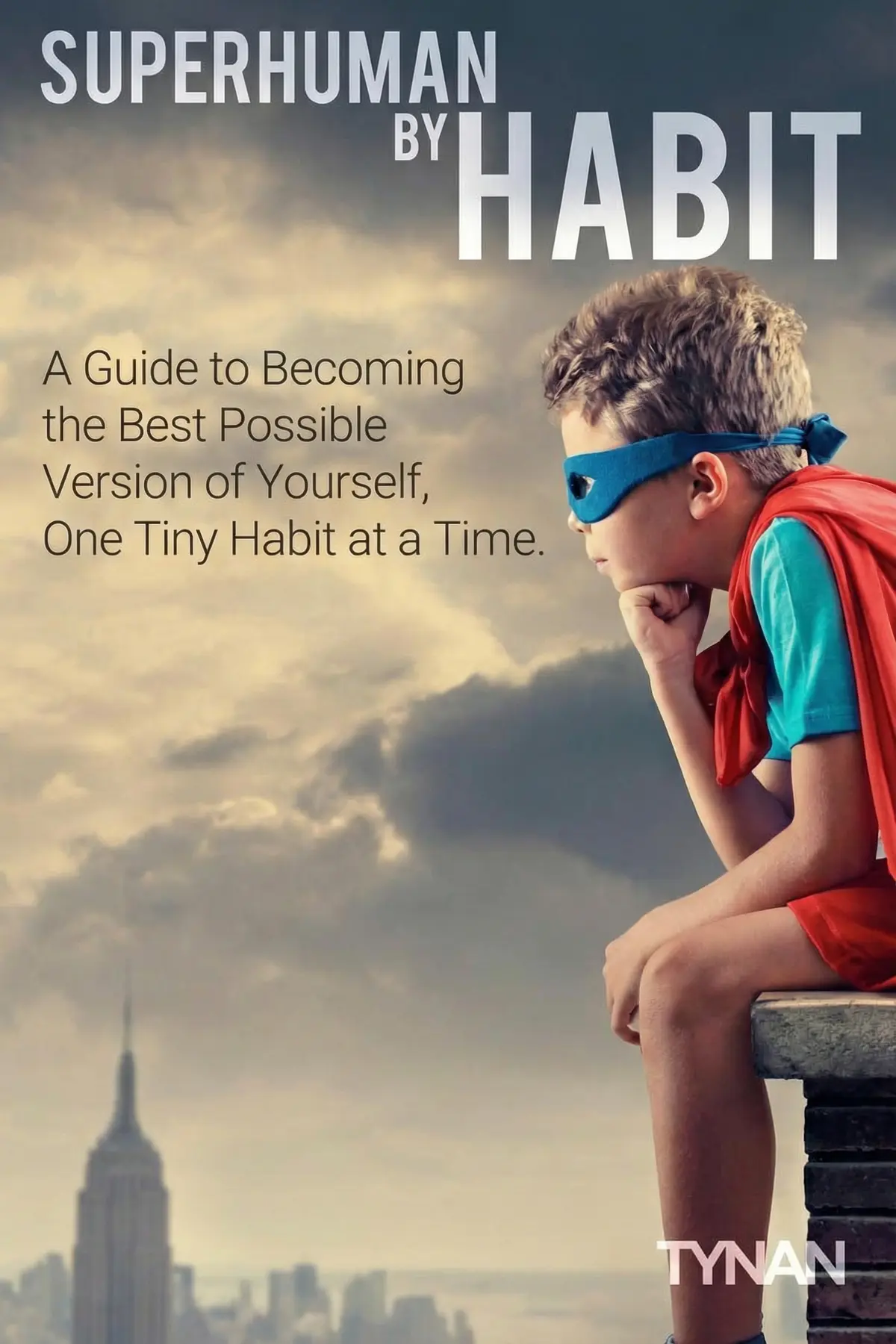
Most people try to improve by forcing themselves, and most run out of force long before they reach the goal. In Superhuman by Habit, author and longtime blogger Tynan argues that willpower is a small, limited fuel, while a habit, once automatic, runs almost for free. Brushing your teeth before bed takes no inner battle, and that is the kind of power he wants you to build on purpose.
His method is simple to state. Choose one small habit you can do every day, attach it to a trigger, push through a hard loading period with no skips, then ease into a lighter version you keep for life. Throughout, you count how often you showed up, not what you achieved. He then offers ready-made habits for eating, sleeping, training, cleaning, email and focus. By the end you will know how to pick your next habit, when to do it and how to keep it alive once the first enthusiasm fades.
1 min 42 sec
Resolutions tend to collapse by spring, and the reason has little to do with character. Tynan points to a fuel that always runs low, and to something you already do every morning that needs no fuel at all.
1 min 40 sec
Borrowing a billionaire’s morning routine sounds like a shortcut. Tynan suggests looking somewhere less flattering, and somewhere less obvious, and he adds one test that rules out most habits people pick.
1 min 29 sec
Good intentions usually depend on how you feel that day, which is why they come and go. Tynan borrows the logic of the most automatic thing you do each night and applies it to everything else.
1 min 42 sec
A new habit can take far longer to settle than most people expect, and the usual way of tracking progress makes quitting more likely. Tynan splits the process into two stages and changes what you count.
1 min 50 sec
Low energy, late nights and skipped workouts often get blamed on a lack of discipline. Tynan’s health habits are almost boringly simple, and one of them starts nine hours before your alarm.
1 min 37 sec
A spotless home sounds like the goal, yet chasing it is exactly what keeps many places messy. Tynan lowers the bar on purpose, and adds a seconds-long habit that rescues forgotten emails.
1 min 36 sec
Most lost working time disappears somewhere you might not expect. Tynan offers one habit for the start of the day and one counting rule for the moment you want to give up.
1 min 02 sec
Tynan’s superpower turns out to be ordinary. It is the same automatic pull that sends you to the sink before bed, aimed at things you actually want. His real argument is about budgeting. Willpower is too scarce to spend on the same fight every day, so you spend it hard during loading, for a month or perhaps a year, and then let the habit run at a lighter, permanent level.
That changes how failure looks. A missed day becomes something to learn from, and progress is counted in days done, since results arrive late and unevenly.
If you take one step this week, choose a single daily habit drawn from a weakness, a priority or something that genuinely excites you. Tie it to something you already do, like finishing your morning coffee, and allow no skips until it feels automatic. Then keep the count of days you showed up, and ignore the mirror and the scale for now.
One day the new habit will feel like brushing your teeth: something you do without deciding to, and without spending any willpower at all.
Most self-improvement plans run on willpower, and willpower runs out. Tynan argues that habits are the better engine, because an action repeated until it is automatic no longer needs force. That is why he calls habits a superpower: they get things done without draining your physical or mental energy. His method covers the whole life of a habit. You choose one that fits you, drawing on your weaknesses, your priorities, your motivation or even something outside your comfort zone, and you make sure it can be done every day. You attach it to a trigger that already exists in your life. Then you work through a loading stage with no skips before relaxing into a lighter maintenance version you keep for good, measuring yourself by consistency rather than results. The second half turns the method into concrete habits: a simple approach to eating and sleeping, a three-day strength routine from Fitocracy cofounder Dick Talens, imperfect daily cleaning, weekend decluttering, flagging emails, starting work early and a rule called Twice, Then Quit for staying on task.
Professionals whose resolutions fade within weeks and who want a method that does not depend on willpower.
People struggling with sleep, diet or exercise who want simple routines rather than strict plans.
Remote and self-directed workers who lose hours to procrastination, clutter and a crowded inbox.
Tynan is the author of six books, some of which reached number one in their categories, and he blogged at Tynan.com for more than ten years. Time Magazine named him one of its top 25 bloggers, and he was among the first Amtrak Resident Writers. Alongside travel books such as Life Nomadic, Forever Nomad and The Tiniest Mansion, he writes about personal improvement and social skills, including Superhuman Social Skills. He is also known for buying an island with friends and for appearing as a character in the book The Game.
Listeners find this book full of actionable advice for forming habits and appreciate its clear, accessible tone. Its brief prose makes for an efficient experience that provides significant motivation, while one listener describes the work as a transformative manifesto. Furthermore, the content offers a detailed look at the topic using a direct method that assists listeners in establishing permanent positive routines.
Wow, Tynan really managed to distill complex psychological concepts into a punchy, actionable manifesto that anyone can implement immediately. The standout point for me was 'habit suicide.' This is the idea that missing two days in a row is the death knell for any new routine. This perspective shift forced me to prioritize adherence over perfection. It drastically reduced my stress levels. By focusing purely on the process and ignoring the results, I’ve actually seen more progress in my fitness than I have in years of traditional goal-setting. The writing is blunt and fast-paced. It serves as a transformative guide for anyone tired of procrastinating and ready to take responsibility for their own greatness. Stop dreaming and start doing.
Show moreEver wonder why it's so hard to make the good stuff stick while the bad stuff feels automatic? This book explains that our subconscious is actually running the show through habit loops, and it gives you a manual to hack that system. The language is easy to understand and the approach is refreshingly straightforward. I've started using a simple app to track my daily reading and the sense of accomplishment is real. Tynan encourages you to start so small that it’s impossible to fail. This is a philosophy I’ve finally started to embrace. It’s a great motivator that doesn't waste your time with unnecessary filler chapters.
Show moreTechnically, this is the most straightforward manual on discipline I've encountered in years, avoiding the flowery language of most 'transformative' manifestos. Tynan argues that focusing on results is actually a great way to add stress to your life, which eventually leads to quitting the habit altogether. Instead, he teaches you to take pride in the process itself. It works. This shift in mindset helped me stop blaming my surroundings for my failures and start taking full responsibility for my progress. Whether it’s eating healthy or meditation, the book provides a clear blueprint for creating long-lasting good habits. It’s a 10/10 for anyone who wants to stop being a victim of their own laziness.
Show moreFinally got around to finishing this short guide on behavioral change and it was surprisingly effective. Frankly, the writing style is incredibly concise. It's a relief. Most 300-page self-help books just repeat the same thesis over and over. The concept of 'twice, then quit' is a game-changer for my morning routine. It allows for a bad day without total collapse. I appreciated the straightforward advice on planning for variance when traveling or busy. While some of the personal examples felt a bit specific to the author's nomadic life, the core logic remains sound. This isn't a deep dive into neuroscience. It's a practical manual for someone who needs a kickstart without the fluff.
Show moreThe idea that missing two days is essentially 'habit suicide' was the wake-up call I desperately needed to get my life back on track. In my experience, we often let one slip-up turn into a week of failure, but Tynan’s logic about the subconscious makes it clear why that happens. The book is remarkably thorough on the subject despite being just over 100 pages long. I liked the section on 'doing a terrible job' for the sake of consistency; it’s better to write one bad sentence than to write nothing at all. Not gonna lie, I wish there was more scientific backing provided for some of the claims. Still, the practical tips on tracking and variance are worth the price of admission alone.
Show morePicked this up during a particularly unproductive slump and it served as a fantastic, low-friction motivator to get moving again. The book emphasizes that greatness is developed through the repeated improvement of one's craft and turning weaknesses into strengths. I especially liked the concept of 'subtracting' to add; sometimes we need to clear the clutter of bad habits before we can build something new. The advice is packed with practical tips that avoid the usual fluff found in the self-help aisle. While it’s quite brief, the clarity of the writing makes the lessons easy to digest and even easier to start applying to your daily routine today.
Show moreThis book feels like it was written specifically for a very certain demographic of young, tech-adjacent men who want to optimize every second of their existence. To be fair, Tynan shares a lot of great philosophy here that reminds me of 'Zen Habits,' particularly the idea that habit building is a muscle best exercised daily. However, I found myself skimming the second half where he lists his own personal priorities, as we don't really share the same lifestyle goals. There are some genuine golden nuggets about focusing on the process rather than short-term results, but it’s peppered with a lot of 'teaching grandma to suck eggs.' It's a useful little book if you can filter out the parts that don't apply to your life.
Show moreLook, there are definitely some golden nuggets hidden within these pages if you're willing to do some digging through the author's personal preferences. I appreciated the 'twice then quit' rule and the emphasis on planning for variances like travel, which usually derails my gym progress. However, the tone can occasionally feel a bit condescending, as if the author discovered fire and is now explaining it to the cavemen. It’s a very quick read—I finished it in a single afternoon—but I’m not sure the content justifies a full book price when much of this is available for free on his blog. It’s a solid 3-star guide that works well as a refresher on discipline.
Show moreAfter hearing several people recommend Tynan’s blog, I expected a bit more meat on the bones of this particular volume. It’s definitely a useful little book, but it often feels like it's skimming the surface of habit formation rather than providing deep insights. I used a simple tracking method suggested in the text and it helped with my consistency for a few weeks, though the motivation eventually waned. The philosophy of daily exercise for the 'habit muscle' is sound, but the second half of the book felt like a list of the author's hobbies. Personally, I think there are more comprehensive guides out there, though this is fine for a quick hit of inspiration.
Show moreAs someone who has read several better-known titles in this genre, I found this one rather derivative and lacking in real depth. The truth is, most of these points are direct echoes of what you'd find on productivity blogs or in more academic texts on behavioral science. The author’s tone can be a bit dismissive of the actual difficulties people face when trying to break deeply ingrained bad habits. I felt like the advice was often too focused on adding new habits while barely scratching the surface of how to effectively subtract the negative ones. It's an okay read for a complete beginner, but it felt more like a collection of blog posts than a cohesive book.
Show moreTynan argues that willpower is limited and rarely enough to reach a goal, while habits run automatically once formed. He calls them a superpower because they get things done without draining your energy. His method is to choose a daily habit that fits you, attach it to a trigger, push through a loading stage with no skips, then keep a lighter maintenance version for life.
Loading is the first stage, where you spend willpower to set a habit in place, giving full effort with no excuses or skipped days. Tynan says this stage lasts a minimum of one month and often runs to a full year. Once the habit feels mastered, maintenance begins and you can relax it, for example moving from daily workouts to every other day, a level you keep permanently.
He suggests four sources: a weakness you honestly admit, a priority such as health, something that strongly motivates you, or even something you do not think you want, like a ballet dancer taking up writing. Whatever you choose should be done every day, because daily habits need no complex scheduling, tend to be small and quick, and cannot be postponed without skipping.
It is a productivity rule for staying on task. The first time you want to stop working, you continue. When the urge returns, you push on again. Only when the temptation comes a third time do you allow yourself to stop. Tynan says this gets more done while still letting you end the session without guilt, since you have already made a solid effort.
Tynan says not to judge by results, because they come slowly: a week of exercise will not sculpt your body. Instead, count consistency, meaning how often you performed the habit and how often you skipped. If you fail, even by abandoning a habit, he recommends learning from it and trying again rather than letting the mistake stop you.
Richard Wiseman





William B. Irvine


Andrew D. Thompson


Deepak Chopra
AUDIO SUMMARY AVAILABLE
Get the key ideas from Superhuman by Habit by Tynan, plus 5,000+ more nonfiction titles.









