


14 min 15 sec
Available in: English
Superbosses: How Exceptional Leaders Master the Flow of Talent
Shows how leaders who grow the best talent in their fields attract intelligent, creative people, push them past their limits and build bonds that often outlast the job, plus three questions to test your own leadership.
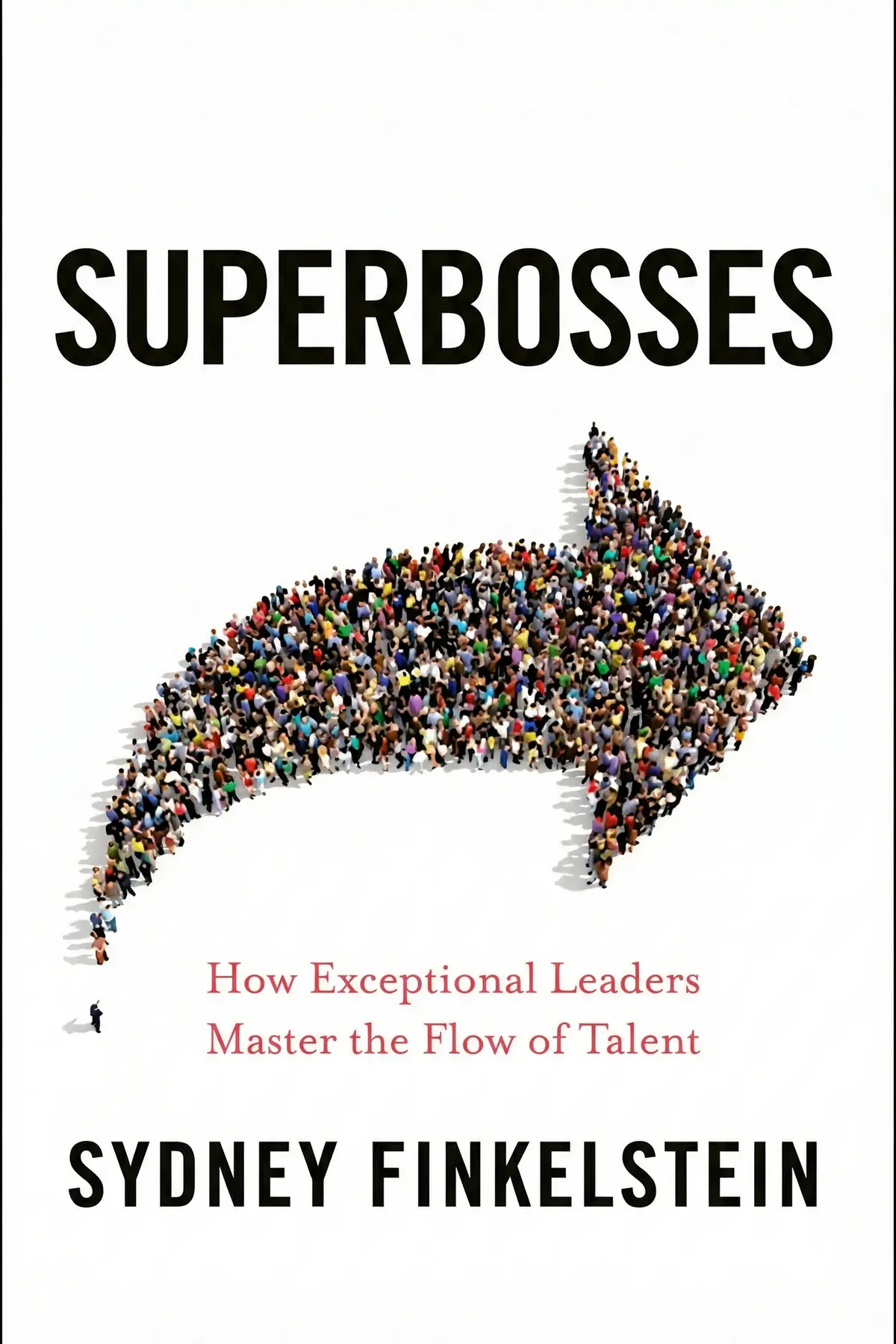
Table of Content
1. Introduction
1 min 06 sec
If you lead people, you are probably judged by what your team delivers this quarter. In Superbosses, Dartmouth management professor Sydney Finkelstein looks at a rarer kind of leader: the boss who helps develop the best talent in an industry, some of whom go on to head major companies. Restaurateur Norman Brinker is a typical case, with some 18 of his old team members later heading major restaurant chains.
Finkelstein spent about ten years studying leaders like these, and he concludes that their gift has nothing to do with a single personality. Gentle or brutal, they share a bold vision, fearlessness and a hunger to compete. They use those traits to attract unusually able people, stretch them past their own limits and bind them into teams that often stay fond of them long after moving on. Great bosses, in his view, are known by the talent they grow.
The examples run from Oracle to Saturday Night Live, and they end in three honest questions any team lead can use this week to measure how close they are.
2. Find the superboss style that fits you
1 min 45 sec
A jazz legend who never meant to teach, a founder who leads through fear and a restaurateur who loved watching people improve all produced remarkable talent. Their methods could hardly be more different, which raises the question of what really mattered.
3. Build the three traits every great boss shares
1 min 45 sec
A fashion designer who skipped business talk at dinner, an Intel founder sprinting through monsoon rain and a financier racing the clock on his chores. Their habits reveal what sits underneath every style of exceptional leadership.
4. Draw people in by being unmistakably yourself
1 min 37 sec
Some bosses fill a room while others are forgotten by Friday. A conductor who refused his profession’s vanity and a hospital founder who loved talking about football show where that pull really comes from.
5. Spot the hires who truly get it
1 min 53 sec
Ralph Lauren once handed a runway model the top design job for women’s clothing. Behind that surprising choice sits a hiring test that values something very different from a matching track record.
6. Raise the bar and keep your people growing
1 min 41 sec
Constant pressure usually burns teams out, yet young designers lined up to work for a boss who never let them settle. A famous football coach supplies the missing ingredient that makes high demands feel possible.
7. Turn rivalry and loyalty into a talent magnet
1 min 46 sec
Saturday Night Live deliberately hired more performers than it could use, and a film director kept urging his best people to leave. Both moves sound risky, yet they made each leader more attractive to new talent.
8. Measure your own leadership with three honest questions
1 min 32 sec
Knowing what great bosses do is easy; knowing how close you are is harder. A short self-test looks at your vision, your team’s ties and your appetite for risk, and the answers can be uncomfortable.
9. Conclusion
1 min 10 sec
On the surface, Finkelstein’s superbosses look nothing alike. One is a jazz legend lost in his own sound, another the founder of Oracle who rules by ridicule, another a restaurateur who loves watching people grow. What ties them together is what they leave behind: people. Their deepest product is talent that walks out better than it walked in, then spreads through an industry and carries the boss’s reputation with it.
That gives any manager a second scorecard. Next to this quarter’s results, ask who on your team is growing faster because of you, and who you have helped move on to something bigger.
The book’s own suggestion for starting is playful. The next time your team seems flat, declare a superboss day and put extra effort into these principles, perhaps during a meeting or on a business trip. Try on one type for the day, the nurturer, the iconoclast or even the inglorious bastard, treat it like a role in a play, and watch what works for you and your people. Then write your vision in one sentence and keep it where you will see it.
Brinker’s legacy is not counted in restaurants. It is counted in the roughly 18 people who went on to run them.
About this book
What is this book about?
Most managers are judged by what their teams deliver this quarter. Sydney Finkelstein looks at an exceptional kind of leader: the boss who develops the best talent in an industry and whose former staff often go on to succeed elsewhere. He calls them superbosses, and he spent about ten years studying them. His finding is that they come in very different styles. Some are iconoclasts absorbed in their own creative vision, some are ruthless winners Finkelstein calls inglorious bastards, and some are nurturers. Underneath, they share a clear vision, fearlessness and a hunger to compete, held together by integrity and authenticity. Those traits draw in intelligent, creative and flexible people, and superbosses then raise the bar again and again while lending their own confidence to the team. The cases run from Miles Davis and Ralph Lauren to Saturday Night Live and the San Francisco 49ers. Readers learn how to hire for people who get it, how to build bonds that survive friendly rivalry and why helping your best people leave can strengthen your reputation. A simple three-question test, the superboss quotient, shows where any leader stands today.
Book Information
Who it's for
Managers wanting loyal teams
Team leads and new managers who want their people to grow faster and stay loyal.
Founders making first hires
Founders hiring their first key staff who need a sharper test than a matching track record.
Choosing their next boss
Ambitious professionals choosing which boss to work for next.
About the Author
Sydney Finkelstein
Sydney Finkelstein is the Steven Roth Professor of Management at Dartmouth College's Tuck School of Business, where he teaches leadership and strategy, directs the Center for Leadership and serves as faculty director of the Tuck Executive Program. He holds a PhD from Columbia University and studied at Concordia University and the London School of Economics. A Fellow of the Academy of Management since 2007, he appears on the Thinkers 50 ranking of management thinkers and writes for the BBC. Superbosses grew out of about ten years of research into leaders who developed their industries' best talent.
Ratings & Reviews
Ratings at a glance

What people think
Listeners describe this work as exceptionally educational and motivating, featuring excellent anecdotes that act as a quality manual for developing into an effective manager. They view it as essential material for every supervisor.
Top reviews
Somrutai
Every manager currently struggling with retention and team morale needs to read this book immediately. It completely flipped my perspective on what it means to be a leader. It’s not about your own ego or your personal success; it’s about what you can do for your employees to make them great. Finkelstein uses wonderful examples from comic books to finance to show how the best bosses act as teachers and mentors. This 'superboss' methodology is exactly what the modern workplace needs. I felt super energized after finishing it. Unlike other business books that are just dry data, this one is inspirational and provides a vision to aspire to. It’s a masterclass in how to build a team that doesn't just perform, but actually transforms the entire industry around them. I can’t recommend it enough for new leaders.
Show moreAndrei
Finally, a business book that focuses on the human element of mentorship rather than just spreadsheets and KPIs. I’ve read a lot of management literature, and 'Superbosses' stands out because it highlights the 'apprenticeship' model that has been lost in many modern corporations. The way Finkelstein chronicles these industry legends is fascinating. He shows that by being a teacher-leader, you create a cycle of success that far outlasts your own tenure. I found the stories about the culinary world and fashion industry particularly vibrant. This is a must-read for all bosses who want to understand how to motivate and enable others. It's inspirational, deeply researched, and provides a fresh lens on leadership. Even if you don't agree with every personality trait of these 'superbosses,' the core message about investing in people is undeniable and powerful.
Show moreClaire
The chapter regarding high-end restaurants and the apprentice model was a total game-changer for my own management style. Personally, I love storytelling as a way to learn, and this book delivers that in spades. Finkelstein explains how exceptional leaders master the flow of talent by essentially becoming a talent magnet. They don't just hire the best; they make people the best. While some reviewers think it’s repetitive, I think the repetition helps drive home the core principles. You start to see the patterns in how these disparate leaders—from different industries and eras—all share the same fundamental obsession with growth. It made me want to be the kind of boss that people look back on as the turning point in their careers. If you're looking for a book that is both a guide and a source of inspiration, this is it. It's an absolute gem.
Show moreDimitri
Not what I expected, but in a mostly good way. Finkelstein, a professor at Dartmouth, takes a very academic look at how 'supermanagers' operate differently than your average boss. I was fascinated by the idea of the apprenticeship format. He shows how junior managers are trained not just to stay, but to eventually leave and dominate the industry. This creates a powerful network that benefits the original boss in the long run. While the book can be a bit dense and repetitive—I definitely think some chapters could have been trimmed—the overarching message about nurturing protégés is vital. It made me realize that my current approach to retention might be too narrow. If we focus too much on keeping people in their seats, we miss the opportunity to build a legacy. It’s a solid, informative read for any director looking to scale their influence.
Show moreTod
Wow, the insights on talent pipelines really resonated with me and my current team. Picked this up after a colleague mentioned Finkelstein's work on why executives fail, and this is a great companion to that. The book is full of fantastic stories that serve as a guide for anyone who wants to be more than just a manager. I particularly liked the focus on how superbosses aren't afraid to let their best people go. That’s a scary concept for most of us! By fostering these 'alumni networks,' they actually increase their own power and reach. The writing style is generally engaging, though I'll admit the middle section drags. You have to be willing to sift through some academic fluff to get to the gems. Still, it’s a must-read for bosses who want to leave a lasting mark on their industry.
Show moreNong
Gotta say, Finkelstein’s research into the different 'types' of superbosses—the Iconoclasts, Glorious Bastards, and Nurturers—is brilliant. It provides a much-needed framework for understanding why some abrasive leaders still manage to produce incredible talent. I found the section on the 'Glorious Bastard' type especially eye-opening. It explains how even difficult personalities can be superbosses if they truly prioritize the development of their people. The book is informative and well-crafted, though it definitely suffers from the common business-book trope of repeating the main thesis in every single chapter. If you can get past the redundancy, there's a lot of wisdom here. It’s a great guide for anyone trying to understand the flow of talent in high-stakes environments like professional sports or high-end kitchens. This is definitely a book you have to chew on word by word to get the full value.
Show moreCarter
As someone who has spent a decade in corporate management, I found the concept of the 'talent flow' to be the only truly redeeming part of this work. Finkelstein does a fair job explaining how certain managers create a 'mafia' of successful alumni, but the rest of the book feels like a repetitive loop. He focuses on these high-profile business deities but fails to account for simple 'dumb luck' or the errors of competitors. It's the classic fundamental attribution error in business writing. I enjoyed some of the anecdotes about the fashion and football industries, but they didn't provide a roadmap for a regular manager. It’s a fine read if you want some light inspiration, but don't expect a step-by-step guide to transforming your leadership style. To be fair, the research is extensive, but the actual takeaways are few and far between.
Show moreLincoln
Is there anything new to say about Larry Ellison or the same handful of CEOs we always talk about? Honestly, that was my biggest gripe with this book. While the storytelling is used to emphasize concepts, many of the anecdotes felt bland and lacked a real punch. I did appreciate the breakdown of the three types of superbosses, as it helped me categorize the leaders I've worked for in the past. However, the advice is quite thin on the ground. It’s more of a descriptive study than a prescriptive guide. I felt exhausted just imagining working for some of these people, as many of their traits seem borderline toxic or at least incredibly idiosyncratic. It’s an okay book if you’re interested in the theory of management, but it didn't apply to my daily grind as much as I hoped it would.
Show moreMan
Truth is, I desperately wanted to enjoy this book when I first picked it up, but it was a massive letdown. The core idea is decent—that some leaders are exceptional at fostering talent—but that concept is repeated ad nauseam for hundreds of pages. In my experience, the entire argument could have been effectively condensed into a 20-page Harvard Business Review article without losing any of the substance. It felt like a chore to get through the case studies. Why do we need more analysis on Larry Ellison or high-end gourmet restaurants? We’ve heard these stories a thousand times before. The book attempts to frame these managers as unique industry-shapers, yet it uses a standard, repetitive trade-book approach that drains the excitement out of the subject. If you have 10 hours for an audiobook, spend them elsewhere; a five-minute summary of this would be far more efficient.
Show moreCholada
This book unfortunately prioritized personal political leanings over objective management theory in a way that I found incredibly distracting. The author cites Hillary Clinton as a primary example of a 'superboss' while relegating Donald Trump to the status of a 'bad boss,' which feels dated and biased given the 2016 publication window. Beyond the politics, I struggled with the sheer lack of actionable advice. Finkelstein repeats the same tired generalities about leadership and talent without ever providing a manual for how to actually implement these changes. I stopped reading about halfway through because the writing style felt incredibly sleepy and relied on the word 'superboss' far too often without defining the actual purpose for the reader. It felt less like a research-backed business guide and more like a collection of bland anecdotes that failed to leave any lasting impression on me.
Show moreQuestions about this book
What is the main idea of Superbosses by Sydney Finkelstein?
Finkelstein argues that the best leaders are known by the talent they develop. After about ten years of research, he finds that superbosses differ in style but share a clear vision, fearlessness and competitiveness, backed by integrity and authenticity. They hire intelligent, creative and flexible people, keep raising the bar, spread their confidence and build close teams whose former members go on to lead elsewhere.
What are the three types of superbosses?
Finkelstein describes iconoclasts, inglorious bastards and nurturers. Iconoclasts like Miles Davis teach almost by accident through their creative dedication. Inglorious bastards like Oracle’s Larry Ellison are driven to win and push their teams hard, even through ridicule. Nurturers like restaurateur Norman Brinker actively guide people, and some 18 of his former team members went on to head major restaurant chains.
What kind of employees do superbosses hire?
They look for people who get it, meaning intelligent, creative and flexible. Ralph Lauren wanted fashion intelligence in every department and once made a runway model head of women’s design. Brinker, Ellison and Roger Corman listened for new ideas in interviews. To build flexibility, bosses like Bill Sanders and Corman put new hires in roles unrelated to their background.
What is the superboss quotient?
It is Finkelstein’s three-question self-test. First, do you have an inspiring vision, expressed in one sentence, that you use to energize your team? Second, do your team members feel close, judged by whether they socialize outside work and stay in touch with people who leave? Third, how much time do you spend helping people learn, and do you trust them with risky, challenging tasks?
How can I apply Superbosses as a manager?
Start by writing your vision in one sentence. Pair every stretch target with open confidence in the person, as Bill Walsh did with the 49ers. Build real personal bonds, add some friendly rivalry and help your best people move on to bigger roles. Finkelstein also suggests a superboss day, when you try one leadership type for a day to see what suits your team.
Readers also enjoyed


A Year with Peter Drucker: 52 Weeks of Coaching for Leadership Effectiveness
Joseph A. Maciariello



Acting with Power: Why We Are More Powerful Than We Believe
Deborah Gruenfeld

All In: How Great Leaders Build Unstoppable Teams
Mike Michalowicz



7 Powers: The Foundations of Business Strategy
Hamilton Helmer
AUDIO SUMMARY AVAILABLE
Listen to Superbosses in 15 minutes
Get the key ideas from Superbosses by Sydney Finkelstein, plus 5,000+ more nonfiction titles.
- 5,000+ titles
- Listen as much as you want
- 7-day free trial
- Cancel anytime









