
14 min 04 sec
Available in: English
SuperBetter: The Power of Living Gamefully
Shows how play can ease pain, build bonds and strengthen motivation, then turns those findings into a seven-step method for meeting illness, stress or a hard goal as a game you chose.
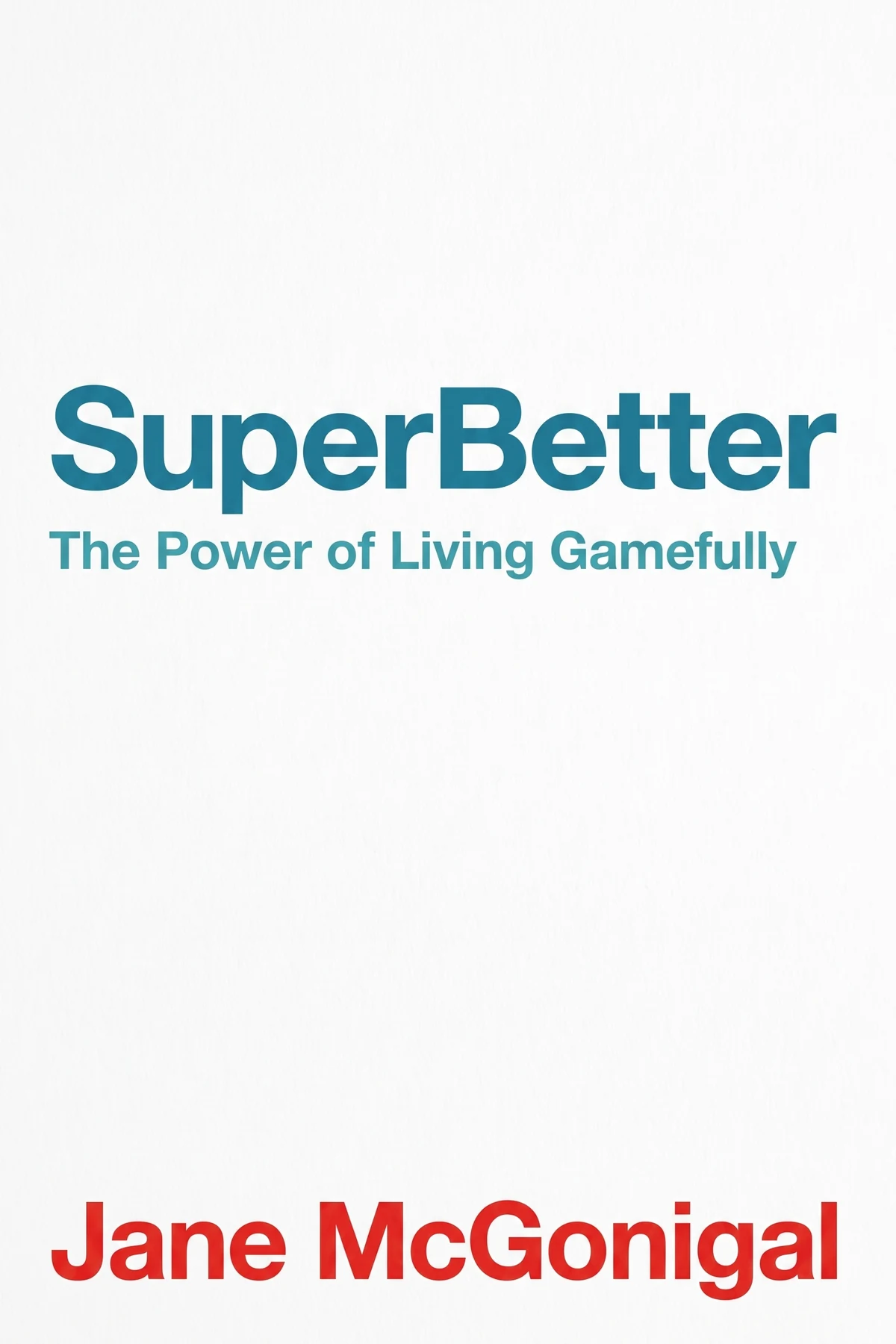
Table of Content
1. Introduction
58 sec
When illness, injury or a hard goal makes you feel overwhelmed, thinking like a game player can give you back a sense of control. Burn patients who played a snowy video game during painful treatment felt less pain while they played. In SuperBetter, game designer Jane McGonigal builds on findings like that one. After a brain injury she created a game to help her heal, and she wanted more than recovery. She wanted to end up better than before, or superbetter.
Her argument is that games build real strength of four kinds, physical, mental, emotional and social, when you play toward something. Any hard stretch of life can become a game you chose. She links this to two kinds of growth. One follows trauma. The other comes from beating challenges you set yourself, like running a marathon or quitting smoking. First comes the science of what play does to the body and mind, then her method, right down to scoring a single day.
2. Turn down pain by giving your attention a game
1 min 40 sec
Doctors could not dull the pain of severe burns with medicine alone. A virtual world full of ice and snow did something drugs could not, and the reason says a lot about how attention works.
3. Play side by side to build real bonds
1 min 34 sec
Two people playing a game in the same room start to share more than a score. Even rivals change in ways they cannot see, but move the opponent to another room and the effect turns sour.
4. Build the belief that your effort counts
1 min 39 sec
Young cancer patients played a game for just two hours, and months later they were still taking their medicine more faithfully. One small design choice made the difference, and you can copy it.
5. Play games for the right reasons to gain benefits
1 min 39 sec
Some heavy players grow lonely and withdrawn, while others grow more creative and hardworking. The split has little to do with which games they choose or how many hours they put in.
6. Turn a threat into a challenge you chose
1 min 45 sec
A diagnosis or a new job can feel like an attack on you. A philosopher’s definition of games, a golf course and two words said out loud offer another way to meet it.
7. Collect power-ups, face bad guys, recruit two allies
1 min 50 sec
Mario has mushrooms and turtles; your life has its own versions of both. Learning to spot them, plus finding a couple of teammates and one small daily mission, gives a hard goal its shape.
8. Become the hero of a six-week adventure
1 min 56 sec
McGonigal faced her concussion under a fighter’s name and later took on a very different title. A hero identity, a few big victories and a playful scoring system turn weeks of effort into a story.
9. Conclusion
1 min 03 sec
McGonigal’s book rests on one bet. The qualities that keep a player trying level after level are the same ones that carry a person through illness, injury or a hard goal, and they can be built on purpose. Snowballs in an ice cave, a blaster that weakens with each missed dose, an old and a young player bowling side by side: each shows play changing attention, belief or connection whenever it moves someone toward something.
The method is easy to start this week. Name one problem you face and say it aloud as a challenge you have chosen, and when the nerves arrive, tell yourself you are excited. Write down a few power-ups you can reach in a minute and one bad guy you expect to meet. Invite two people into the game and give the hero you are becoming a name. At night, give yourself points for determination, however small the step.
After her concussion, McGonigal never aimed to get back to where she had been. She aimed to come back superbetter, and she built a game to get there.
About this book
What is this book about?
Illness, injury, a new job or a goal you keep failing to reach can leave you feeling overwhelmed and out of control. Game designer Jane McGonigal faced that after a brain injury. She decided she wanted more than recovery: she wanted to come out stronger than before. The game she built to get there became SuperBetter. McGonigal starts with what games do to people. Burn patients feel less pain while they play, a few minutes of Tetris can reduce flashbacks after trauma, and playing in the same room can sync two people's heartbeats. Games can also raise motivation and the belief that your efforts count. The catch is that the benefit depends on why you play. Escaping does harm, and playing toward a goal builds you up. From there she lays out a method for real life. You choose a challenge in place of a threat, collect small power-ups, study the bad guys in your way, recruit a couple of allies, take on daily quests, adopt a heroic alter ego, aim for epic wins and keep score over an adventure of at least six weeks.
Book Information
Who it's for
Wanting control back
People facing illness, chronic pain, anxiety or recovery who want a sense of control back.
Losing motivation fast
Anyone starting a hard goal, like quitting smoking or learning a language, who loses motivation fast.
Gamers and their parents
Gamers and parents of gamers wondering when play helps and when it harms.
About the Author
Jane McGonigal
Jane McGonigal is a New York Times bestselling author and game designer. She earned a doctorate in Performance Studies at the University of California, Berkeley, in 2006, the first person in her department to research computer and video games. She has worked on alternate reality games such as I Love Bees and World Without Oil, directed game research and development at the Institute for the Future, and taught a Stanford course called How to Think Like a Futurist. After a severe concussion in 2009 she made a therapeutic game that grew into SuperBetter, which more than one million players have used against depression, anxiety and chronic pain.
Ratings & Reviews
Ratings at a glance

What people think
Listeners find this work rewarding for their mental well-being and enjoy its entertaining approach to personal development. Furthermore, the material is rigorously investigated, with one listener mentioning it backs everything up with tons of science, and listeners find the writing clear and accessible. They also value the high caliber of information, its readability, and its overall effectiveness in improving their lives.
Top reviews
Pruet
Picked this up because I was feeling stuck in a rut with my daily physical therapy. The concept of 'power-ups' changed my entire perspective on how to recover from my injury. Jane McGonigal manages to bridge the gap between hard neuroscience and accessible daily habits in a way that feels both fresh and useful. I particularly loved the section on how Tetris can help mitigate trauma symptoms in patients. While some of the quests felt repetitive, the overall framework for building resilience is quite solid. It is a fun, empowering read that gives you actual buttons to press in real life. If you are a gamer, the metaphors will click instantly for you while reading this book.
Show moreChiw
Wow, I did not expect a book about video games to hit me this hard emotionally. McGonigal’s personal story about her concussion recovery serves as a powerful backbone for this philosophy. I have started identifying all my 'bad guys' and treating my morning walk as a vital quest. The book makes you feel like the protagonist of your life rather than a victim. Some might find the tone a bit too 'cheery,' but the optimistic framing worked for me. The way she explains how gaming builds social resilience is worth the price of the book. It really changed my perspective on why I play games in my free time and how I approach my psyche.
Show moreNew
The chapter on 'allies' and how to recruit people into your recovery process was worth the price. I have always been too proud to ask for help from others during my dark times. Seeing it framed as a multiplayer game made it feel less like a burden to my friends. McGonigal’s prose is clear and she does an excellent job of breaking down complex neurobiology for us. I specifically liked the distinction between playing to escape and playing to tackle a hard challenge. It is a life-improving book that manages to be both fun and deeply serious at the same time. While it is a bit lengthy, the information quality remains high throughout the different sections of the book.
Show moreTang
As someone who has always struggled with traditional self-help, I found this method to be a refreshing change. The author turns the struggle of recovery into a literal game with allies and epic wins. To be fair, the book is quite long and could have probably been condensed into an article. I found myself skimming some of the more anecdotal chapters toward the middle of the book. However, the science regarding cognitive absorption and flow states was absolutely fascinating to read about. It is well-researched and backed by data, though I found some quests to be a bit silly. Despite the fluff, the impact on my mental health has been noticeably positive this month.
Show moreMaja
Ever wonder why we can spend hours failing at a difficult boss fight but give up on habits? McGonigal explores this 'gameful' mindset in a way that is easy to understand and implement daily. I have been using the 'allies' system to keep my sister in the loop about my goals. Having that support makes the 'epic win' feel much more real than just checking a box. My only real gripe is that some of the science felt a bit cherry-picked to fit the narrative. Despite that, the readability is high and the tone is incredibly encouraging for anyone facing a crisis. It is a solid guide that offers a practical toolkit for building personal resilience through play.
Show moreOrawan
Finally got around to reading this, and I’ve got to say, the 'bad guy' framework is a total game-changer. Reframing boring chores as 'quests' gives me that small dopamine hit I need to actually get moving. The writing is punchy and accessible, making it an easy read even for those who usually avoid self-help. Some parts are definitely a bit exaggerated, but the core psychological benefits are there if you do the work. Just don't expect a miracle cure from this book alone without any personal effort. It is a fun way to reframe the struggles you are already dealing with every day. I found the science to be surprisingly solid and easy to follow throughout.
Show moreEllie
Personally, this book changed the way I look at my chronic illness by giving me a new vocabulary. It is a well-written guide that feels like a warm hug from a very knowledgeable friend. Not gonna lie, I cried a bit during the introduction because the author's struggle was so relatable. The steps are easy to follow, and the emphasis on social connection is something many books ignore. It is a bit repetitive in the middle, and I am not convinced about all the claims. Still, the impact on my psyche has been undeniable since I started using the power-ups. I would recommend this to anyone who feels like they are stuck in a dark place and needs a way out.
Show moreAnawin
This book has a fantastic core concept, but the execution feels like it is trying to stretch one single idea into a very long manual. I appreciated the deep dive into how games like Tetris affect the brain’s visual processing to stop cravings. However, the constant repetition of the 'SuperBetter' terminology started to grate on me after I finished the first hundred pages of the text. Frankly, it feels like the author is trying too hard to convince the reader that gaming is not a waste. It is a good framework if you are looking to gamify your life, but be prepared for some filler. You will likely find some useful nuggets of wisdom buried within the longer anecdotal sections if you have the patience to look.
Show moreNook
After hearing so much hype about Jane McGonigal, I went in with very high expectations for this. On one hand, the idea of using Tetris to prevent PTSD flashbacks is a fascinating research point. On the other hand, the book is incredibly wordy and keeps circling back to the same points. In my experience, the actual 'gaming' part of the advice is sometimes a bit thin. It is mostly just standard positive psychology with a fresh coat of paint and new terms. It is not a bad book, and I think it could be very effective for some people. However, it did not quite live up to the revolutionary billing I saw in the media recently.
Show moreBee
Look, I really wanted to love this because I am a lifelong gamer. However, the book eventually lost me with its repetitive structure and questionable scientific interpretations. McGonigal spends a massive amount of time defending gaming culture to an audience that already knows it. The 'quests' are often banal, like standing up or drinking a glass of water. It feels a bit patronizing when you are dealing with serious clinical issues. I found the section on autophagy particularly confusing as it seemed to contradict medical literature. It is well-written in a technical sense, but the signal-to-noise ratio is too low for me. It felt more like a long marketing pitch for her app than a transformative book.
Show moreQuestions about this book
What is the main idea of SuperBetter by Jane McGonigal?
McGonigal argues that games build real physical, mental, emotional and social strength when you play toward a goal, not to escape. Studies she cites show games easing pain in burn patients, reducing flashbacks after trauma and raising motivation in young cancer patients. Her SuperBetter method applies the same structure to real life, so an illness, a job change or a personal goal becomes a game you chose to play.
What are power-ups, bad guys, allies and quests in SuperBetter?
Power-ups are small, frequent boosts that leave you stronger or happier, like a favorite song or a few push-ups. Bad guys are obstacles that block your progress, which you study and test responses against. Allies are about two friends or relatives who support you. Quests are small daily actions, such as writing down a dream, that build skills and willpower toward your goal.
How do I start playing SuperBetter in daily life?
Begin by choosing one challenge and framing it as something you volunteered for rather than a threat; McGonigal suggests saying I’m excited aloud when anxiety rises. Then list your power-ups and bad guys, recruit two allies and pick a daily quest. Each day, aim for three power-ups, one bad guy and one quest, and give yourself determination points for what you did. Plan the adventure for at least six weeks.
Can video games be bad for you, according to SuperBetter?
Yes, depending on why you play. McGonigal says the effect of games depends less on which ones you play or for how long than on your motive. Playing to escape problems tends to be harmful and can leave people withdrawn. Playing with a positive goal brings benefits that carry into the rest of life. Competing heavily against strangers in other rooms can also breed anger, while playing in the same room builds empathy.
Who should read SuperBetter?
It suits people dealing with illness, chronic pain, depression, anxiety or recovery from injury, since McGonigal built the game after her own concussion. It also fits anyone working toward a demanding personal goal, such as losing weight or going vegetarian, who wants structure and support. Parents and players curious about how games affect attention, relationships and motivation will find the research section useful too.
Readers also enjoyed



ADHD an A-Z: Figuring It Out Step by Step
Leanne Maskell







A Guide to the Good Life: The Ancient Art of Stoic Joy
William B. Irvine
AUDIO SUMMARY AVAILABLE
Listen to SuperBetter in 15 minutes
Get the key ideas from SuperBetter by Jane McGonigal, plus 5,000+ more nonfiction titles.
- 5,000+ titles
- Listen as much as you want
- 7-day free trial
- Cancel anytime









