

Ali: A Life
Jonathan Eig
 English
A former junior player explains what television hides about elite tennis: the brutal qualifying rounds, the double vision, the emptied mind and the grace of Roger Federer. It also shows how to watch expertise more accurately.
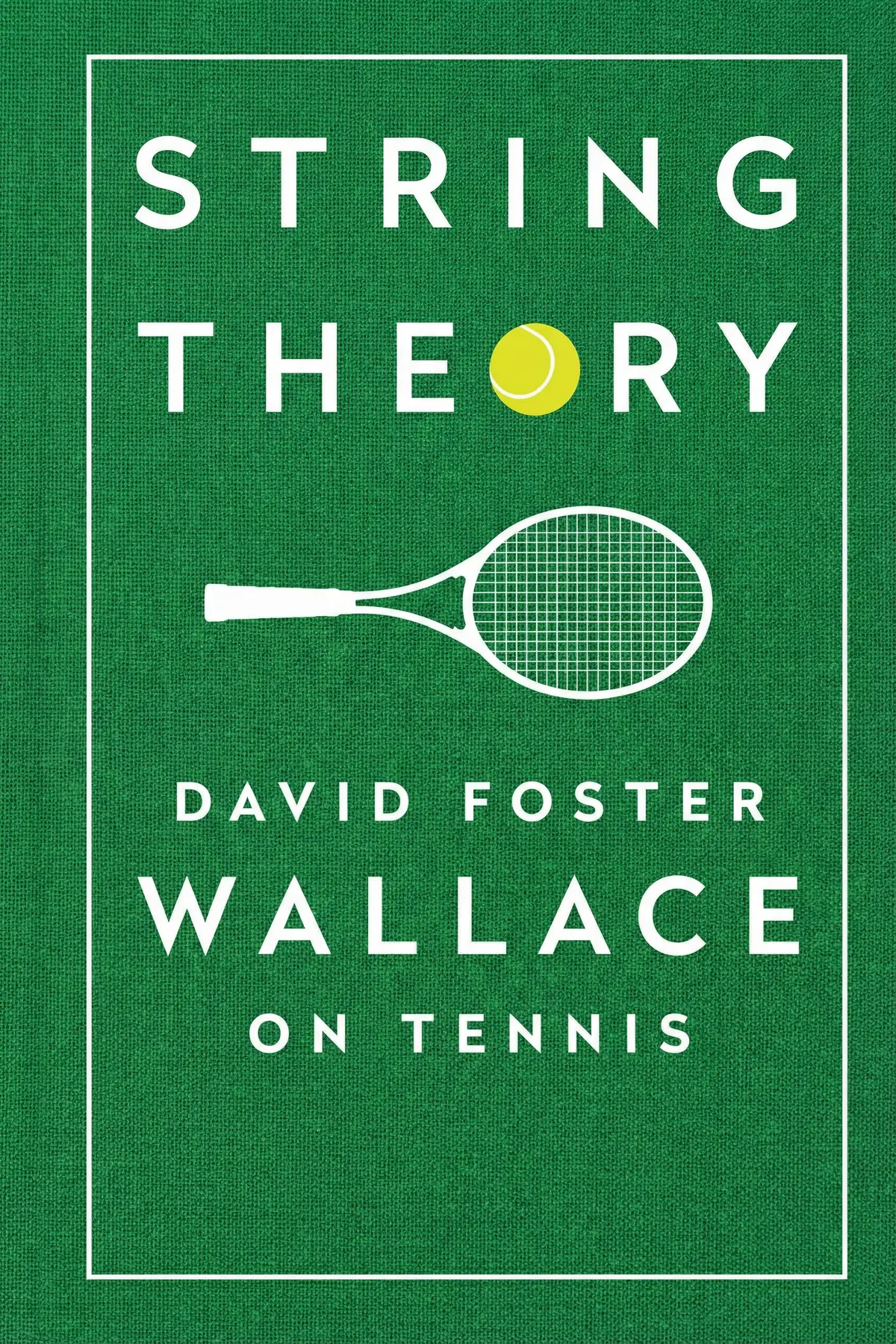
58 sec
Most of us watch elite tennis and think we understand what we are seeing, but the screen hides nearly everything that matters. In String Theory, the novelist and essayist Wallace, once a ranked junior player himself, argues that top-level tennis is a feat of body and mind far beyond what any spectator grasps.
Its greatest players pay for it with years of sacrifice and a deliberately blank inner life. In return they get moments of grace the rest of us can only glimpse. Wallace’s material ranges from his own windy Midwestern childhood to the savage qualifying rounds, a famously dull memoir and the play of Roger Federer.
Along the way come lessons that reach well past the court: how to turn bad conditions into an advantage, why deep focus can look like emptiness, and how to watch any expert at work with sharper, more respectful eyes.
1 min 45 sec
A slow, lazy teenager nicknamed Slug kept beating stronger and more polished players. He did not outhit them. He found two allies on the court that his rivals treated as nothing but a nuisance.
1 min 45 sec
The players on television jet between tournaments and smile in watch adverts. Below them sits a crowded, merciless contest most viewers never see, and a personal price Wallace compares to sainthood.
1 min 38 sec
Many weekend players suspect they could have turned pro with a bit more effort. Wallace’s answer is blunt, and it rests on an energy comparison and two kinds of eyesight working at once.
1 min 44 sec
Sports memoirs sell in huge numbers and almost all of them are dull. Wallace once gave up reading them in disgust, then realized the dullness might explain why their authors win.
1 min 40 sec
Better rackets seemed to have turned tennis into an endless slugging match from the back of the court. Then one player found room nobody else saw, and for him the ball itself seemed to change.
1 min 12 sec
String Theory is finally a book about watching. Wallace starts on a windy Illinois court, where a slow kid nicknamed Slug beat better players by enduring what they could not, and ends with Federer seeing a ball swell and slow while the crowd sees only a blur. In between lies everything the camera leaves out: the qualifying rounds where careers stall, the years of narrowed living, the double vision, the deliberately empty mind. In Wallace’s telling, the game demands every ounce of strength and intelligence its best players have, and pays them back in rare moments of grace. The rest of us are the congregation.
His own advice is simple. Go and watch professional tennis in person, and if you can, choose a small match, ideally a qualifying round, where you can stand a few meters from the players. Only that close, he believes, does the distance between good and great become visible.
Carry the same habit into work: when someone excels, look for the cost and the attention you cannot see. And when the pressure rises on you, give your mind one plain task and let the rest fall silent.
Greatness, on Wallace’s account, looks effortless only from far away.
Elite tennis looks smooth on a screen: athletes glide across the court, dab their faces with towels and repeat polite clichés after the match. Wallace, a celebrated novelist who was once a ranked junior player, argues that almost everything that matters is invisible from the sofa. He starts with his own windy Illinois childhood, where a slow boy nicknamed Slug beat stronger kids by using wind and heat against them. Then he moves up the ladder to the savage qualifying rounds that decide who even gets into big tournaments, the years of sacrifice behind every ranking, the physical load of a single match and the two kinds of vision a professional needs at once. His most surprising turn is a defense of boring sports memoirs: great competitors may sound empty because emptying the mind is how they win. The book ends with Roger Federer, who found a new way to play when tennis seemed stuck. Readers get a sharper eye for any kind of expertise, a usable idea about focus under pressure and a reason to go and watch the game in person.
Tennis fans who want to see what the broadcast leaves out, from qualifying rounds to Federer.
Professionals who freeze under pressure and want a simple model of focus.
Readers who enjoy Wallace's essays and want his take on sport, talent and sacrifice.
Wallace was born in Ithaca, New York, in 1962 and raised in Illinois, where he played competitive tennis as a teenager and later wrote about the sport often. He studied at Amherst College and the University of Arizona and taught English and creative writing at Pomona College, Emerson College and Illinois State University. His essays and stories appeared in The New Yorker and Rolling Stone, and his books include Consider the Lobster and A Supposedly Fun Thing I'll Never Do Again. He died in 2008; his unfinished novel The Pale King was a 2012 Pulitzer Prize finalist.
Listeners describe this as a brilliant hardcover tennis volume, celebrating the expert writing and marvelous essays. They also value the sharp insights provided about the game, and one listener mentions how the text aids in understanding the sport. Additionally, the quality of the storytelling is well-regarded, with one listener identifying the first and last chapters as being especially immersive.
Ever wonder why people worship Roger Federer? Wallace doesn't just explain the man's backhand; he deconstructs the very concept of kinetic beauty until you're convinced tennis is a form of prayer. The final essay on Federer is easily the highlight, though the earlier piece about his own junior career in Illinois is surprisingly grounded and visceral. I’m not even a massive sports fan, but the way he describes a ball slicing through the Midwestern wind makes you feel the grit in your teeth. Frankly, the prose is so dense and electric that it makes every other sports writer look like they’re typing with their boxing gloves on. It’s a slim volume, yet it feels heavy with the kind of genius that only comes around once in a generation. It truly helps readers understand the spirit behind the stats.
Show moreAfter hearing so much about Infinite Jest, I decided to start with this shorter collection, and I’m glad I did. This book captures the visceral, sweaty reality of the court better than any broadcast ever could. The way he describes the 'Chagall bride' suspension of a player in mid-air is the kind of imagery that sticks in your brain for weeks. Personally, I found the U.S. Open essay a bit dated with its focus on 90s concessions, but the core observations about the 'democracy and commerce' of the event are still strikingly relevant today. It’s a fantastic hardcover for anyone who loves the game or just appreciates someone who can write circles around a topic. Highly recommended if you want to understand the deep, soulful mastery behind professional athleticism.
Show moreWow, the first chapter really sets the tone with that harrowing story about the tornado hitting the tennis courts in Illinois. It’s a perfect entry point into Wallace’s brain, blending autobiography with a deep dive into the physics of the game. He manages to make the trajectory of a tennis ball seem as important as the trajectory of a human life. To be fair, you have to be in the right mood for his sentences—they are long, winding, and packed with enough clauses to make your head spin. But when he hits his stride in the final Federer piece, it’s pure magic. This isn't just a book for players; it’s for anyone who wants to see how a master observer deconstructs the world around him. The story quality is top-tier throughout.
Show morePicked this up on a whim and was immediately sucked in by the description of Michael Joyce’s 'professional artistry.' Wallace has this uncanny ability to translate the kinetic energy of a cross-court winner into words that actually vibrate on the page. I’ve played the game for twenty years, and yet I feel like I finally understand the mental geometry of the court for the first time. The book is short, but the density of the ideas makes it feel like a much longer journey. Frankly, the way he links mathematics to the wind in 'Derivative Sport' is nothing short of brilliant. If you’re looking for a gift for a tennis nut, this is the gold standard. It’s insightful, weird, and deeply passionate about the 'grotesquerie' of elite performance.
Show moreThis book is a must-read for anyone who appreciates the marriage of athletic excellence and literary precision. David Foster Wallace brings a level of scrutiny to the tennis court that most writers reserve for Shakespeare or the Bible. Whether he's discussing the 'trigonometry' of a Midwestern youth or the divine grace of a Federer serve, the language is consistently stunning and thought-provoking. I did find the repetitive focus on his own junior career a bit much after a while, but it’s a minor gripe in an otherwise stellar collection. The insights into the 'choice' and 'freedom' of a pro athlete’s life are particularly haunting. It’s the kind of book that makes you want to go out and hit a bucket of balls while simultaneously rethinking your entire life.
Show moreWallace’s obsession with footnotes is on full display here, and while it might annoy some, I found it added a layer of hyper-intellectual charm to the collection. He takes the mundane mechanics of a baseline rally and elevates them into a philosophical inquiry about human limitation and choice. The essay on Michael Joyce was particularly eye-opening, illustrating the vast, cruel gulf between being the 79th best player in the world and a household name. You start to see the sport as a grueling, 'grotesque' art form rather than just a televised pastime. Not gonna lie, some of the technical descriptions of trigonometry and wind speed got a bit repetitive, but the sheer vocabulary on display is worth the price of admission. It’s a masterclass in non-fiction that feels wonderful to hold in this sturdy hardcover edition.
Show moreFinally got around to reading these legendary essays, and they mostly lived up to the hype surrounding DFW's non-fiction. The piece on the U.S. Open was surprisingly funny, capturing the heat and the crowds and the sheer 'loudness' of the event in a way that feels incredibly authentic. My favorite was the deep dive into Tracy Austin’s memoir, mostly because it forced me to think about why we expect athletes to be more than just bodies in motion. He argues that their lack of self-consciousness is exactly what makes them great, which is a fascinating take even if he is a bit harsh. A few sections dragged, and his tendency to ramble can be taxing if you aren't a fan of his specific voice. Overall, it’s a wonderful collection of essays.
Show moreAs someone who grew up watching Agassi and Sampras, these essays felt like a nostalgic but intellectually rigorous trip down memory lane. Wallace doesn't just report on the matches; he performs an autopsy on the players' psyches and the cultural significance of the sport itself. The footnotes are a bit of a maze, but they often contain the funniest and most candid observations in the entire book. Gotta say, his description of the 'Federer Moment' is the best piece of sports writing I’ve ever encountered. It transcends the game. While the tone can be a bit 'ivory tower' at times, the passion he has for the geometry of the game is undeniable. It’s a wonderful, slim volume that I’ll likely return to before every major tournament.
Show moreThe truth is, David Foster Wallace writes about tennis the way most people write about their first love—with an intensity that is both beautiful and slightly exhausting. I appreciated the deep dive into the 'string theory' of the title, particularly how he explores the soul-crushing discipline required to even sniff the pro circuit. However, I can’t help but feel that his caustic wit occasionally turns into a defense mechanism that keeps the reader at arm's length. Some of the footnotes felt like they were there just to show off his range rather than actually serve the narrative. It’s a mixed bag because the highs are incredibly high, but the 'pretentious' vibe mentioned by critics definitely peeks through in the more cynical essays. Still, it's a masterful piece of writing for those with patience.
Show moreLook, I know DFW is the patron saint of literary bros, but I found his tone in the Tracy Austin essay to be remarkably mean-spirited and bordering on misogynistic. Calling a professional athlete 'vapid' and 'insipid' for not being a literary genius feels like a low blow from someone who clearly thinks he's the smartest guy in the room. It’s hard to reconcile the 'religious experience' of his Federer worship with the way he savages a woman for her ghostwritten autobiography. Beyond that, the constant self-referential asides about his own junior tennis ranking felt incredibly pretentious and robotic at times. While he clearly knows the sport, the arrogance dripping from every page made it hard to actually enjoy the insights. I’ll stick to writers who don’t feel the need to belittle their subjects to prove their own intellect.
Show moreIt is Wallace’s writing on tennis, drawn partly from his years as a ranked junior player in Illinois. He argues that elite tennis demands far more skill, sacrifice and mental discipline than television shows, and that its greatest players, above all Roger Federer, reach moments of grace spectators can only glimpse. He covers qualifying rounds, the physical load of a match, dull sports memoirs and Federer’s style.
Wallace gave up on the genre after he read a tennis prodigy’s autobiography, written by a ghostwriter for Tracy Allen, which amounted to little more than a list of matches and scores. He then suggests the dullness reveals something real. To perform under huge pressure, great players learn to empty their minds and silence self-doubt, so phrases like taking it one point at a time are genuine working rules for them.
Wallace credits Federer with rescuing tennis from a stalemate. Better rackets had killed the old serve-and-volley game and produced long baseline slugging matches. Federer found a middle way, using space, movement and fast reflexes to pull opponents around the court. Wallace compares him to Michael Jordan and describes how, for Federer at his peak, the ball seems to grow larger or slow down.
Wallace’s direct advice is to watch professional tennis live, ideally a small qualifying match where you can stand a few meters away, so the gap between good and great becomes visible. His ideas also carry into work: look for the hidden cost and attention behind anyone’s visible success, turn conditions others hate into an edge, and under pressure give your mind one plain instruction.
Jonathan Eig

Billie Jean King
Ben Reiter

Christopher McDougall
AUDIO SUMMARY AVAILABLE
Get the key ideas from String Theory by David Foster Wallace, plus 5,000+ more nonfiction titles.









