
13 min 08 sec
Available in: English
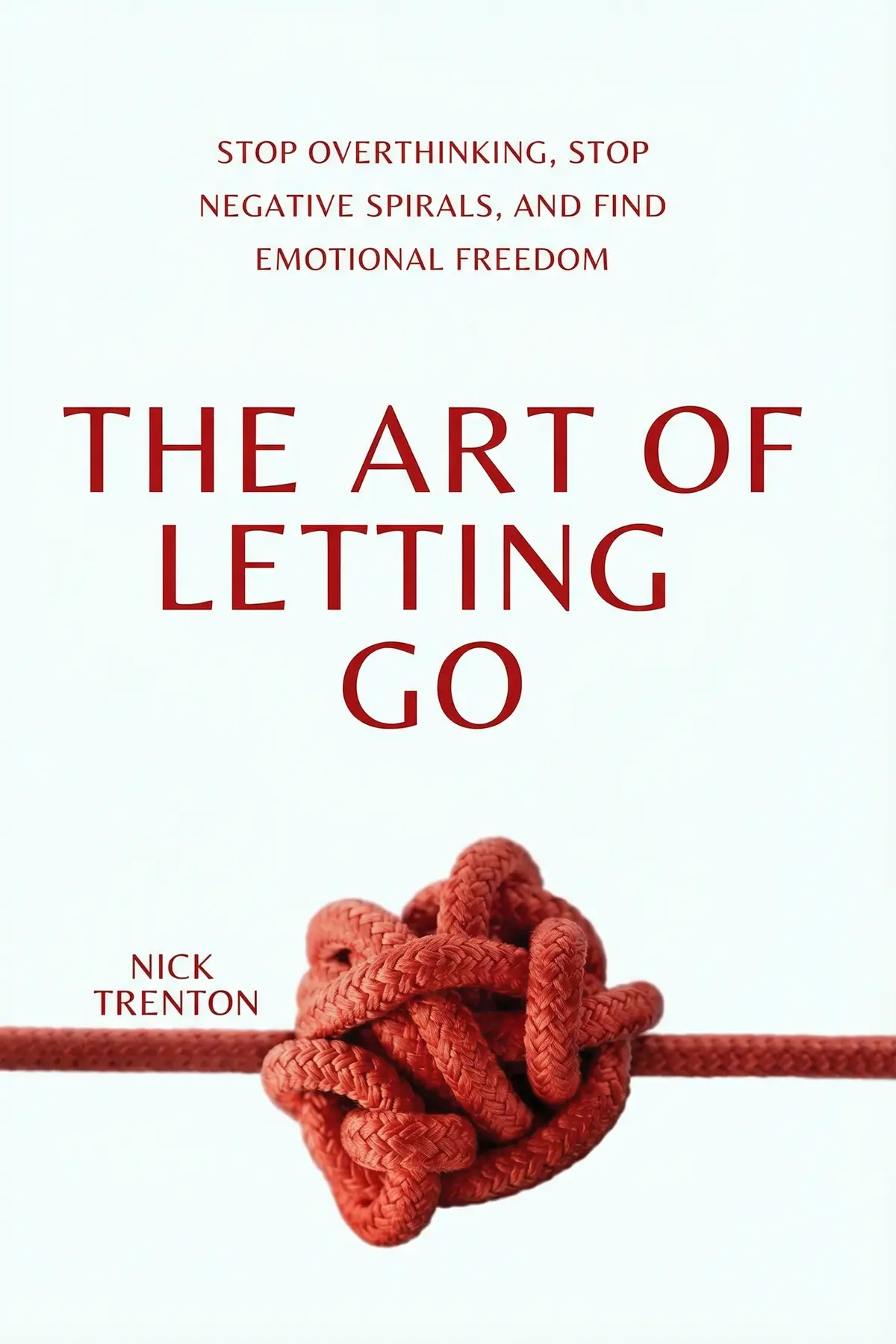
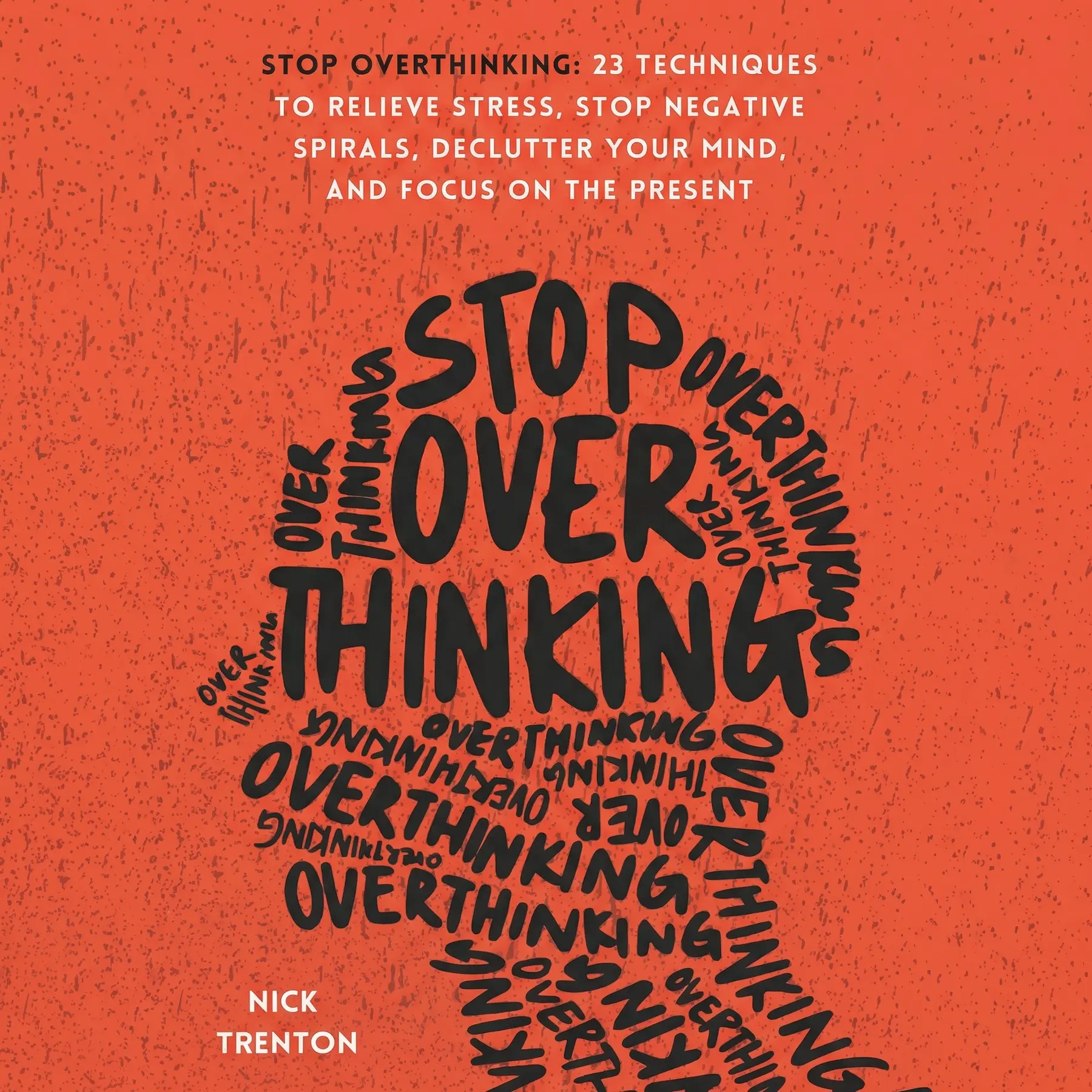
Stop Overthinking: 23 Techniques to Relieve Stress, Stop Negative Spirals, Declutter Your Mind, and Focus on the Present
By Nick Trenton
Shows why overthinking is a loop of thoughts that never reach an answer. It also gives practical ways to break it, from the four A's and SMART goals to thought records and grounding through the senses.
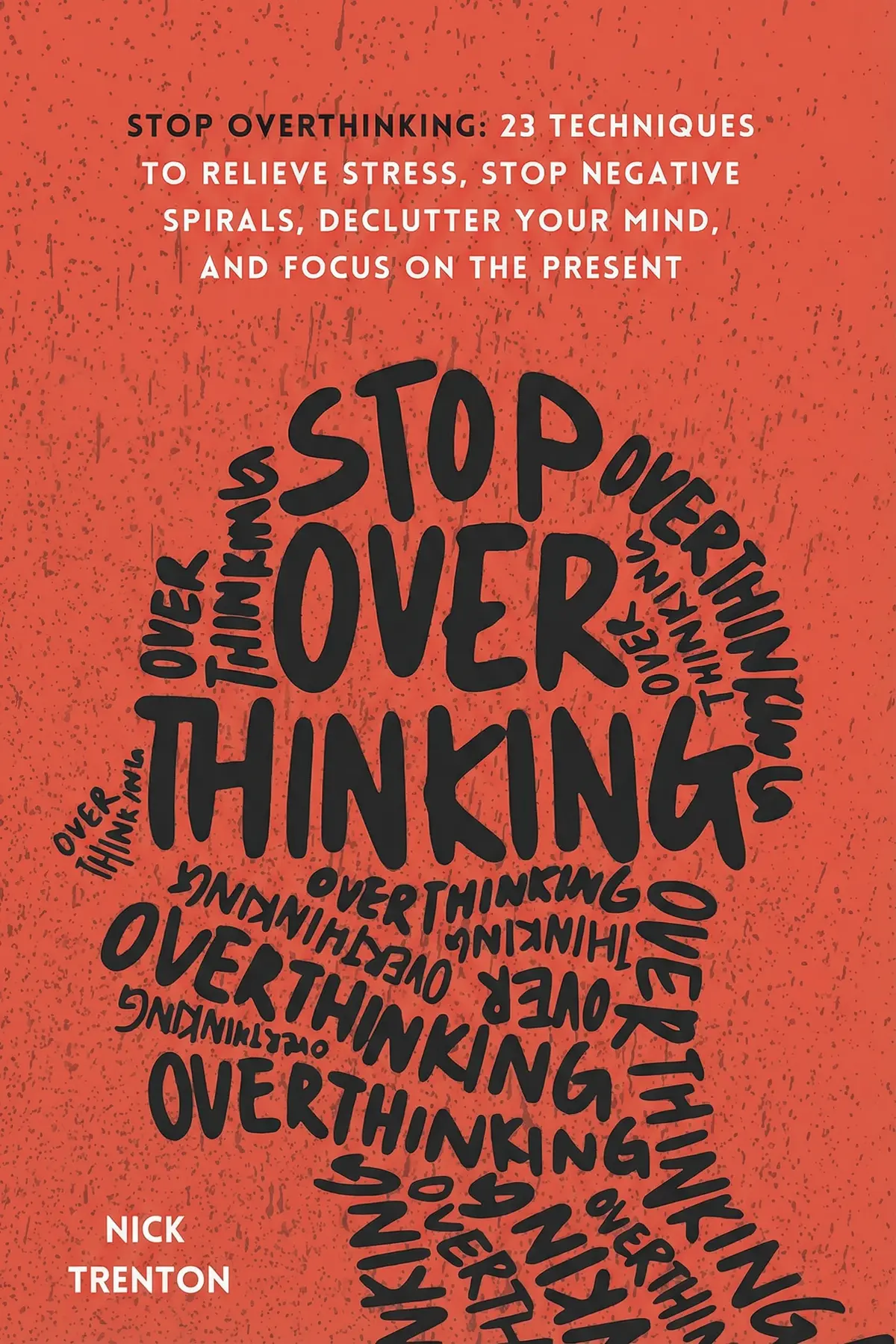
Table of Content
1. Introduction
59 sec
If your mind replays the same worry long after the lights go out, Nick Trenton has a useful diagnosis. In Stop Overthinking, the author, who holds a master’s degree in behavioral psychology, argues that overthinking is a loop: thoughts that circle without ever reaching an answer. Like any habit, it can be broken. He also points out that we react to the stress we perceive rather than the stress that is actually there, so much of the pressure lives in how we read events.
Trenton’s case is that a small set of practical techniques, used until they feel natural, can turn that loop into clear thinking and a calmer body. They work at different levels: what you do about a stressful situation, how you plan your day, how you question a harsh thought and how you settle a racing heart. Each one is short enough to try tonight, giving you a fast response for a bad moment and a slower one for a bad pattern.
2. See the loop before you try to escape it
1 min 48 sec
Overthinking often passes for being careful or responsible. Trenton draws a sharper line between useful thought and the kind that wears you out, and where that line runs may surprise you.
3. Four moves for any stressful situation
2 min 03 sec
Trenton turns the scream that overthinking makes you want to let out into a working tool. Its four letters cover nearly every stressful situation, including the ones you can do nothing about.
4. Build a day that leaves room to rest
1 min 57 sec
Being told to meditate when your calendar is already full can feel like one more demand. Trenton starts with the calendar itself, and a five-part check that shows whether a goal can actually be reached.
5. Catch the distorted thought and rewrite it
1 min 37 sec
Some of your most convincing thoughts rest on errors you would spot at once in a friend’s reasoning. A simple record, kept for a few weeks, makes those errors visible in your own.
6. Calm body and mind with two paired exercises
1 min 49 sec
A single relaxation trick often falls short when stress has taken over both your thoughts and your shoulders. Trenton pairs two exercises that work on different senses, and one ends with an image you can carry in a pocket.
7. Return to the present through your five senses
1 min 41 sec
A tight chest and a mind replaying the same scene can arrive without warning. Trenton’s fastest tool asks nothing of your willpower, only that you count what is already around you.
8. Conclusion
1 min 14 sec
Overthinking makes a promise it cannot keep: one more pass through the problem, and the answer will appear. Trenton replaces that promise with things you can do. Some of his tools act on the world, by avoiding, changing or accepting what stresses you and by shaping a calendar you can actually live inside. Others act on you, by questioning a distorted thought, relaxing muscle by muscle or counting what your senses report.
He never claims life’s uncertainty can be removed. His claim is that it can be handled better when you shift your attitude and your point of view. That starts with accepting your emotions without judging them and tracing what causes or amplifies your anxiety: which people, which places and which situations keep setting it off.
A sensible start is modest. Keep a thought record for the next few weeks and write three alternatives each time a harsh thought lands. Give one recurring stressor its A. And keep the five-to-one count ready for the next tight chest.
The maze will still be there on bad nights. The difference is that you now know several ways out of it.
About this book
What is this book about?
Most people who overthink believe they are being careful. Nick Trenton disagrees. In his view, overthinking is a loop of analysis and worry that keeps hitting the same dead ends, and it costs sleep, energy and sometimes relationships. He adds that we react to the stress we perceive rather than to the stress that is actually there. Trenton's angle is practical. Whether the habit comes from temperament or upbringing, he argues, it can be managed with the right techniques. He offers tools at several levels: for any stressful situation there is a four-part approach of avoiding, altering, accepting or adapting, simple time management and the SMART goal test for an overloaded schedule, and a cognitive behavioral thought record for catching distorted thinking. For the body, he pairs visualization with progressive muscle relaxation, and for sudden spikes of anxiety he gives the 5-4-3-2-1 grounding exercise. Readers get a short toolkit they can use in a bad moment, plus slower habits for changing a bad pattern.
Book Information
Who it's for
Lying awake after meetings
Professionals who lie awake replaying meetings and want quick, practical tools.
Worried by packed schedules
Students and young workers whose packed schedules feed constant worry.
Prone to anxiety spikes
Anyone prone to anxiety spikes who wants a simple exercise to use in the moment.
About the Author
Nick Trenton
Nick Trenton grew up on a farm in rural Illinois. He went on to study economics and then earned a master's degree in behavioral psychology, and he has written more than 30 books on psychology and self-help. He lives mostly in Chicago.
Ratings & Reviews
Ratings at a glance
What people think
Listeners find the guide highly accessible and value the actionable suggestions and real-world scenarios it offers. It proves useful for confronting anxiety and overthinking, assisting listeners in regulating their mental habits and easing tension. Feedback on the quality of the material is generally positive, with one listener highlighting how it articulates standard concepts with clarity. Conversely, the narrative approach draws varied opinions; some praise the writing, whereas others are less fond of the content's Wikipedia-like presentation.
Top reviews
Aria
Wow, I didn't expect a book this short to have such a profound impact on how I view my daily ruminations. I’ve struggled with OCD for a long time, and finding a resource that simplifies complex psychological principles without being condescending is rare. The author provides so many tools for those moments when you are stuck in 'the storm.' I found the section on breaking down the scientific reasons for stress particularly insightful, even if I’d heard some of it before. It’s a fucking amazing guide for anyone who feels paralyzed by their own brain. If you want something that is direct and full of exercises rather than endless theory, this is the one.
Show moreAstrid
After hearing so many people talk about 'Stop Overthinking,' I decided to see if the hype was real—and it mostly is. This book is straight to the point with no water. It’s very modern and relevant to the stresses of today's world. I love how it doesn't just tell you what's wrong with your brain, but actually gives you the pratikas (exercises) to fix it. The summaries are great for quick reference later on. Honestly, the information is presented so clearly that it makes the solutions feel achievable rather than overwhelming. It’s a very helpful read for anyone who needs a quick, effective way to reduce their mental load and just breathe.
Show moreHassan
The tornado of thoughts in my head finally feels like it’s starting to settle after finishing this guide. Trenton relates overthinking directly to stress, providing a host of tools to use when you find yourself spiraling. I loved the metaphors he used, particularly the idea of the 'tornado.' Not every strategy worked for me—some felt a bit repetitive—but there are so many options that most people will find at least two or three things that stick. The writing is accessible and the tone is empathetic throughout. Even though it's self-published, the value of the practical advice outweighs the occasional formatting quirk. It’s a solid resource for anyone struggling with GAD or constant rumination.
Show moreSun
Picked this up on a whim during a particularly stressful week and was surprised by how digestible it actually was. The chapter on cognitive distortions was particularly interesting and offered a great collection of information, even if some of it felt familiar. I appreciate that the author doesn't waste time with 'fluff' and gets straight to the point with concrete exercises. Truth is, many books on this topic are too academic and dense, but this one uses real-life examples that make the concepts easy to grasp. My only gripe is that it occasionally feels a bit technical in the theoretical sections. Overall, a very helpful and modern take on managing a cluttered mind.
Show moreChanikarn
Look, this isn't a deep dive into clinical psychology, but it provides a solid toolkit for the average person who just can't stop their brain from racing at 2 AM. The book is short, concise, and very contemporary in its approach. I liked how the author provided summaries after each section to help the information stick. Some might find the presentation a bit simple, but for someone in the middle of a mental crisis, simple is exactly what is needed. The focus on calming both the mind and the body was a highlight for me. It’s a very practical manual that avoids the usual 'just stop thinking' clichés. Definitely worth a read for the exercises alone.
Show moreNiphon
Finally got around to reading Trenton's work and I appreciate the emphasis on physical calming techniques along with the mental ones. As someone with General Anxiety Disorder, I found the principles easy to understand and the solutions very actionable. The book is well-written for the most part, though I did spot a few errors that an editor should have caught. That aside, the way it frames overthinking as a manageable habit rather than an inescapable trait is very empowering. It isn't a miracle cure, but it gives you the steering wheel back when your thoughts start to drift. The real-world examples really helped illustrate how to apply the techniques during a busy workday.
Show moreAnna
As someone who has wrestled with a noisy mind for years, I found this to be a bit of a mixed bag. On one hand, the book is very easy to get into and isn't boring at all, which is a plus for those of us with short attention spans. On the other hand, the information felt extremely superficial. It starts with scientific reasons why anxiety is bad—stuff most of us already know—and then gives advice that sometimes feels a bit far-fetched or insensitive. Not gonna lie, I expected more than just a brief mention of CBT at the very end. It’s a decent primer if you’ve never read a book on the topic, but seasoned readers won't find much new here.
Show moreSurasit
Does this book offer anything new, or is it just a compilation of things you can find in a quick Google search? Personally, I think it’s the latter. The information quality is fine, and the author presents common ideas clearly, but the writing style is very basic. It feels more like a script for a YouTube series than a professional book. While there are some practical exercises, some of the advice isn't feasible for everyone, especially the suggestion that people can just 'therapize' themselves out of deep-seated habits. To be fair, it’s a quick read and might help someone in a pinch, but it lacks the depth of more established clinical guides on cognitive behavior.
Show moreCamila
Frankly, the line between overthinking and general anxiety is blurred throughout these pages, which might frustrate readers looking for a more surgical approach to rumination. While the book is easy to get into and never feels boring, it often stays at a very theoretical level when I was craving deeper guidance. To be fair, the information quality is decent, and the author presents common ideas clearly enough for a beginner. However, the section on CBT was far too brief for my liking; it felt like an afterthought. I also found the writing style to be a bit hit-or-miss; at times it’s engaging, but other times it feels like a shallow Wikipedia summary. It’s a helpful starting point, but don't expect a masterclass.
Show moreNatnicha
It’s hard to take a self-help book seriously when it is riddled with typos and basic grammatical errors. It feels like it was rushed through self-publishing without a proper editor, which really detracts from the message Nick Trenton is trying to send. The content itself leans far too heavily into general anxiety rather than the specific mechanics of overthinking. In my experience, you can be an overthinker without having a full-blown anxiety disorder, but this book treats them as identical. Furthermore, some of the suggested techniques actually encourage more analysis of your day, which is the last thing a chronic overthinker needs. It felt a bit like reading a series of Wikipedia articles stitched together without much deep insight.
Show moreQuestions about this book
What is the main idea of Stop Overthinking by Nick Trenton?
Trenton argues that overthinking is not simply thinking a lot. It is a loop of analysis and worry that never reaches an answer, much like being lost in a maze. Because we react to stress as we perceive it, much of the pressure comes from interpretation. Whether the habit comes from nature or nurture, he says, it can be managed with practical techniques for situations, time, thoughts and the body.
What are the four A's of stress management in Stop Overthinking?
The four A’s are avoid, alter, accept and adapt. Avoid means stepping away from stressful situations or people and feeling free to say no. Alter means speaking up to change a situation you can influence. Accept means letting go of what you cannot control. Adapt means building a more optimistic outlook that still faces painful facts with attention and looks for moments of hope.
How does grounding with the 5-4-3-2-1 method work?
You count down through your senses. Name five things you can see, four physical sensations you can feel, three sounds you can hear, two smells and one taste. Trenton presents it as a playful distraction for moments of emotional overload. Because overthinking pulls you out of the present and into what-if thoughts, focusing on the senses helps calm breathing and thinking.
How can I use CBT to stop overthinking, according to Trenton?
For a few weeks, Trenton recommends keeping a thought record of dysfunctional thinking. When a strong negative emotion hits, ask whether you have considered all the factors, whether you are making an assumption, and whether your response is a conscious choice or a habit. Then write at least three alternative ways to see the situation. This helps expose distortions such as absolutist attitudes, overgeneralizing and exaggerating.
Who should read Stop Overthinking?
It suits people who recognize themselves in endless worry loops: those who sleep badly, feel tired from constant analysis or struggle with self-doubt. It is practical rather than theoretical, offering short exercises like visualization, progressive muscle relaxation, the SMART goal check and sensory grounding. Busy people who feel they have no time for relaxation will find the time management advice especially relevant.
Featured in
Readers also enjoyed



ADHD an A-Z: Figuring It Out Step by Step
Leanne Maskell







A Guide to the Good Life: The Ancient Art of Stoic Joy
William B. Irvine
AUDIO SUMMARY AVAILABLE
Listen to Stop Overthinking in 15 minutes
Get the key ideas from Stop Overthinking by Nick Trenton, plus 5,000+ more nonfiction titles.
- 5,000+ titles
- Listen as much as you want
- 7-day free trial
- Cancel anytime









