

59 Seconds: Change Your Life in Under a Minute
Richard Wiseman
 English
A practical guide to caring less about other people's verdicts. Moore shows how to read criticism as a reflection of the critic, test gloomy thoughts for evidence, ask for help and strip stress down to essentials.
1 min 07 sec
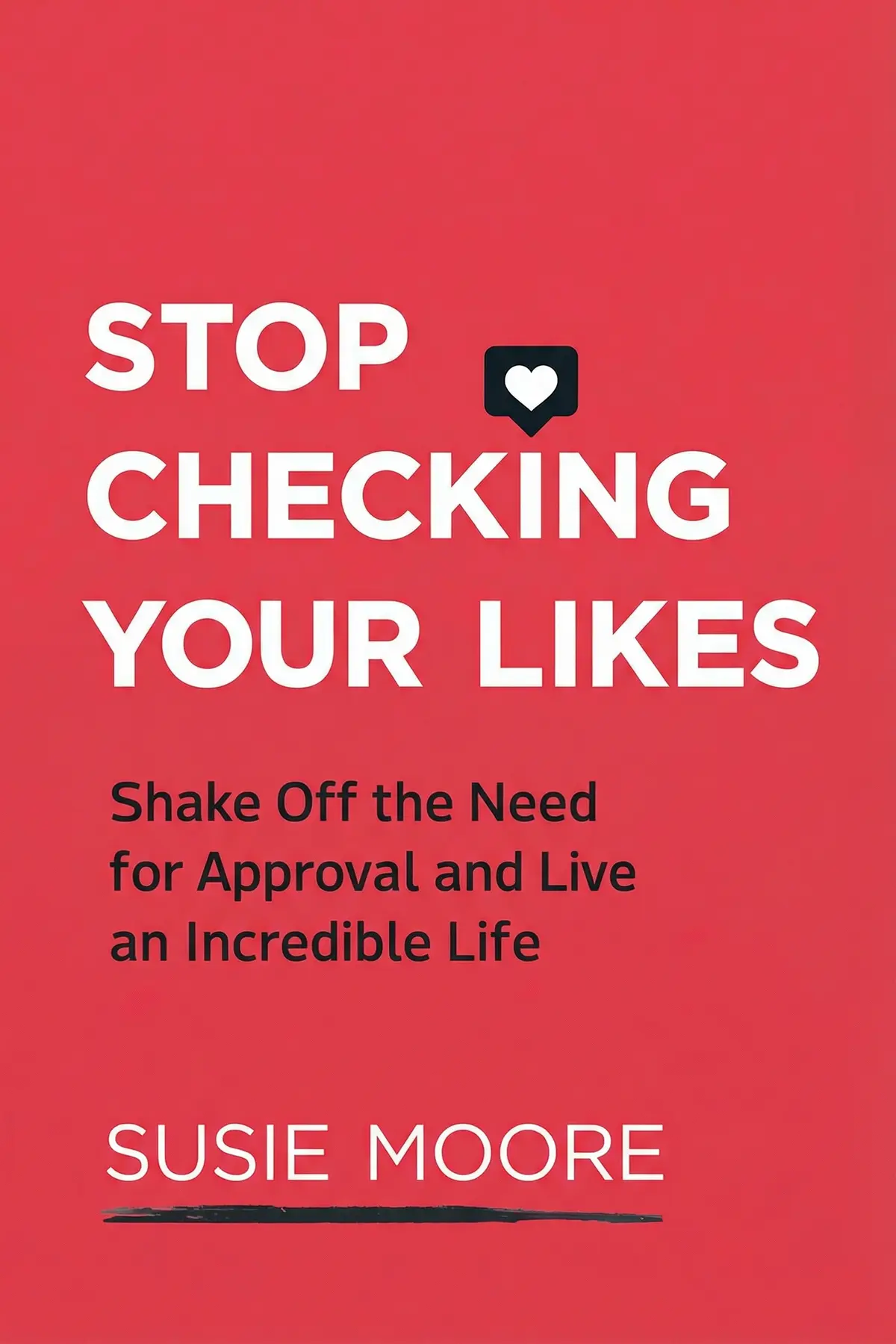
If a quiet phone can sour your mood, or one sharp comment can replay in your head for days, the problem is bigger than any app. In Stop Checking Your Likes, life coach and advice columnist Susie Moore argues that the hunger for likes is only the visible edge of a deeper habit: handing other people the job of deciding what you are worth. Her first move is disarming. She says that most advice and most criticism reveal more about the giver than about the person receiving it.
Muting notifications is a start, but Moore wants a change in how you see and value yourself. The thread through her book is that opinions, other people’s and your own gloomy ones, are theories, not verdicts. Once you stop obeying them, you are free to ask for what you need and to make life lighter. The tools are small and usable today: an email you never send, one blunt test for any dark thought, a private list of what is missing, and a week of five deliberate requests.
2 min 00 sec
Two confident strangers online give you opposite rules for living, and both feel certain. Their certainty hides a clue that changes how much any judgment of you should be allowed to hurt.
1 min 54 sec
Your thumbs are already moving toward a reply. Moore suggests two responses that feel wrong at first, yet both can leave you calmer and leave your critic oddly frustrated.
2 min 04 sec
The worry about money or your body feels like plain truth. A Roman philosopher and a few blunt questions suggest many of those worries would collapse the moment anyone checked them.
2 min 08 sec
When something feels off, most of us hunt for the fault. Moore swaps that hunt for a private written exercise, and what turns up on the page can point in two very different directions.
1 min 55 sec
Plenty of generous people go stiff the moment they need a hand. Moore traces that stiffness to one hidden belief and offers a weeklong challenge designed to wear it down.
1 min 59 sec
Your task list may not be the real source of the weight you carry. A change of one word, a single question and an image of a giant inflatable suit point to where it actually comes from.
1 min 10 sec
Stop Checking Your Likes is finally a book about who gets the last word on your worth. Moore’s answer is that it should not be the algorithm, the critic in the comments or the anxious narrator in your own head. Their verdicts are theories, shaped by their own histories and fears, and a theory can be questioned, laughed at or simply left unanswered. What remains once those voices lose their authority is the more interesting part: the freedom to notice what is missing, to ask for it without shame, and to keep only what is essential.
The practices she offers are small enough to begin today. When a comment stings, write the reply you will never send and let the feeling drift past like a cloud. When a dark thought arrives, ask it whether it is fact or theory, and wait for its evidence. And this week, make five small requests of the people around you, treating every no as passing weather.
The phone will keep lighting up. You simply stop needing it to tell you whether today counts, because, as Moore keeps insisting, your life is already happening.
Checking a phone for likes and comments looks like a small habit. Susie Moore argues it points to something larger: letting other people decide what you are worth. Switching off notifications or taking a break from social media helps, but her real aim is a change in how you see and value yourself. Her case rests on one shift. Advice and criticism tell you more about whoever offers them than about you, and many of your own negative beliefs turn out to be theories nobody has tested. Once you see that, a harsh comment can be left unanswered or met with humor, and a thought like "I don't have enough money" can be checked against the facts. From there the book turns practical. Readers get a private audit of what is missing from their lives, a challenge to make five requests in a single week, a question that makes hard situations easier, and a way to turn a to-do list into a list of things they get to do. The result is a lighter, less anxious way of living that does not wait on anyone else's approval.
People who check their phone for likes and feel worse afterward.
Anyone who replays criticism for days or struggles to ask for help.
Busy professionals weighed down by stress, gloomy self-talk and endless to-do lists.
Susie Moore grew up in England, spending her childhood on welfare and staying in women's shelters. She started work as a receptionist and rose to become a top sales director at a Silicon Valley startup. She later became a life coach and advice columnist, and her work has appeared in Forbes, Entrepreneur, Marie Claire and the Huffington Post. She is also the author of the best-selling What If It Does Work Out?

Listeners find this book both motivating and easy to connect with, offering useful techniques to reach their potential using hands-on advice and real-world instances. They enjoy the well-rounded style featuring funny anecdotes, and one listener mentions that Susie presents her insights from a foundation of sincere affection. This work feels revitalizing and is straightforward to grasp; listeners deem it essential reading, with one individual pointing out how it helps rebuild self-narrative.
Finally got around to reading this, and frankly, it was the mental reset I desperately needed. Susie Moore writes with a refreshing, simple clarity that makes you feel like you’re grabbing coffee with a very wise, very cool older sister. I loved the 'get-to-do' list mindset shift because it turned my daily grind into a series of opportunities rather than burdens. While some might find the optimism a bit much, I found her genuine love for the reader to be incredibly empowering. It isn’t just about social media; it’s about rebuilding your entire self-narrative from the ground up. If you’re tired of living for the 'approval trap,' this is your roadmap to freedom. I highlighted dozens of quotes that I’m now sticking on my bathroom mirror to remind me that my worth is non-negotiable.
Show moreAs someone who also grew up in a household shadowed by domestic violence, I found Susie’s vulnerability to be the heartbeat of this book. She doesn’t just spout platitudes; she shows how she climbed out of a dark place to build a life of joy and confidence. Not gonna lie, I teared up a few times because her stories felt so authentic and grounded in a place of genuine love. The exercises at the end of each chapter are practical, especially the one about identifying what’s missing rather than what’s wrong. It’s a beautiful reminder that we are allowed to be happy right now, regardless of our past or our follower count. This book is a warm hug for your soul that encourages you to finally put yourself first.
Show moreEver wonder why we care so much about the opinions of people we don’t even like? This book tackles that question head-on with humor and a lot of heart, making it feel less like a lecture and more like a chat. I loved how Susie shares everything from a place of total transparency, including her failures and moments of deep insecurity. The 'get-to-do' list concept has completely shifted my morning routine from one of dread to one of quiet gratitude. It’s rare to find a book that feels this simple yet manages to provide such valuable tools for rebuilding your self-confidence. I’ve already recommended it to three friends who are struggling with their own 'inner critic' and social media burnout.
Show moreAfter hearing Moore on a podcast, I decided to give this a try to see if I could finally thicken my skin. The writing style is breezy and conversational, which makes it a very quick read, even when she’s tackling heavy topics like domestic violence. I actually found the 'department store tip' for getting used to hearing 'no' to be quite clever and surprisingly effective in practice. Truth is, some parts felt a little repetitive, and the personal anecdotes occasionally overshadowed the actual advice. However, the core message—that we outsource our self-worth to strangers—hit home in a way that felt very relevant to my current life. It’s a solid 4-star read for anyone needing a gentle push to stop caring about what the internet thinks.
Show morePicked this up because I’ve been feeling trapped by the constant need for digital validation and external praise lately. Susie Moore’s approach is simple and relatable, providing a mirror for our own behavior without being overly preachy or academic. I really liked the focus on the 'approval trap' and how she challenges the assumption that we need everyone to like us to be successful. The advice about simplifying tasks by asking 'how can I let this be easier?' has honestly saved me hours of unnecessary stress this week. While the blazer comment was a bit silly, the overall sentiment of the book remains empowering and easy to digest. It’s a refreshing change of pace from more dense, data-heavy self-help titles that are hard to finish.
Show moreNot what I expected, but in a good way, because I thought this would just be about social media 'likes' and phone addiction. Instead, it’s a broader look at how we live our lives for others instead of ourselves, which is a much bigger problem. I found the 'department store' exercise to be a bit terrifying at first, but it’s a brilliant way to desensitize yourself to rejection. Susie Moore’s tone is incredibly supportive, and even though some of the advice is a bit 'toxic positivity' adjacent, the core message remains vital. She reminds us that criticism usually says more about the critic than it does about the person being criticized. I’ll definitely be keeping this on my shelf for whenever I feel my confidence start to waver.
Show moreTruth is, I highlighted over 40 quotes in this book, which is a record for me in the self-help genre. Susie Moore has a gift for taking heavy, difficult topics and making them feel like a piece of cake to navigate. The way she reframes 'to-do' lists into 'get-to-do' lists is a small linguistic shift that has had a huge impact on my anxiety levels. While I didn't agree with every single anecdote, the overall empowerment I felt while reading was undeniable and very much appreciated. It’s a simple, refreshing read that serves as a necessary wake-up call to anyone stuck in the cycle of seeking external approval. Definitely a must-read if you’re ready to finally start living life on your own terms.
Show moreThe chapter on 'it’s your fault' almost made me put the book down immediately because it felt incredibly victim-blaming at first glance. Even though Moore backtracks to explain she means taking radical responsibility for your reaction to life, the delivery was a bit jarring and insensitive. Personally, I think the book is a bit hit-or-miss depending on which chapter you’re reading; some insights are gold, while others feel like a teenager's diary. I appreciated the 'what's essential here?' exercise, but I struggled with the over-the-top optimism that suggests everything works out just because you want it to. It’s a decent enough read if you can filter out the fluff, but it’s certainly not a life-changing masterpiece for everyone.
Show moreIs it just me, or is this an aggressively neurotypical guide to life? While I appreciate Susie’s personal story and her resilience through a difficult childhood, most of the advice felt like it came from a place of extreme extroversion. To be fair, telling someone with social anxiety to just 'be more positive' or wear a blazer to feel professional feels a bit reductive and dated. The tone is engaging, but the content lacks the scientific depth or actionable frameworks I look for in personal development books. I was hoping for actual tools to stop checking my notifications, but instead, I got a memoir disguised as a self-help guide. It’s okay if you want a light pep talk, but it didn't offer any real solutions for my brain.
Show moreThis book felt more like a curated Instagram feed than a substantial guide to overcoming the need for validation. Look, I understand the author had a tough upbringing, but the constant focus on her own success stories made the advice feel less like a guide and more like a brag. The suggestion that wearing a blazer makes you more professional—and therefore more likable—completely contradicts the title's promise to stop caring what others think. It felt like a collection of blog posts stitched together without a cohesive, research-backed framework to support the claims. If you want a feel-good memoir, this might be for you, but it’s definitely not a deep dive into the psychology of social approval.
Show moreSusie Moore argues that chasing likes is a symptom of a deeper dependence on other people’s approval. Her remedy is to treat opinions, both others’ criticism and your own negative thoughts, as theories that reflect a point of view and can be tested. Once they lose their authority, you can focus on what you need, ask for help and simplify your days.
First, see that criticism often mirrors the critic’s own biases and experiences. Then choose whether to engage at all; detachment means picking your battles to protect your peace. Vent privately by writing an email you never send or speaking your mind alone. If you do respond, try agreeing with the critic or using humor, which leaves the attack with nothing to push against.
When a negative thought appears, Moore asks whether it is a fact or only a theory. For a thought like not having enough money, she asks whether there is really no money for food or a real risk of losing your home. For a belief that your body is too big, she asks too big for what. Many fears turn out to rest on unchecked assumptions.
Moore offers several small steps. Do the What’s missing for me exercise and act on one item within seven days. Make five requests over the week, from a neighbor’s favor to a preferred restaurant table. Rewrite your to-do list as a get-to-do list, and ask what is essential about any task that feels heavy.
It suits people whose mood rises and falls with notifications, comments or other people’s opinions, and anyone who finds it easier to give help than to ask for it. It also helps busy readers weighed down by stress and negative self-talk who want simple, practical habits, such as questioning thoughts and trimming tasks to their essentials.
Richard Wiseman





William B. Irvine


Andrew D. Thompson


Deepak Chopra
AUDIO SUMMARY AVAILABLE
Get the key ideas from Stop Checking Your Likes by Susie Moore, plus 5,000+ more nonfiction titles.









