
13 min 22 sec
Available in: English
 ไทย
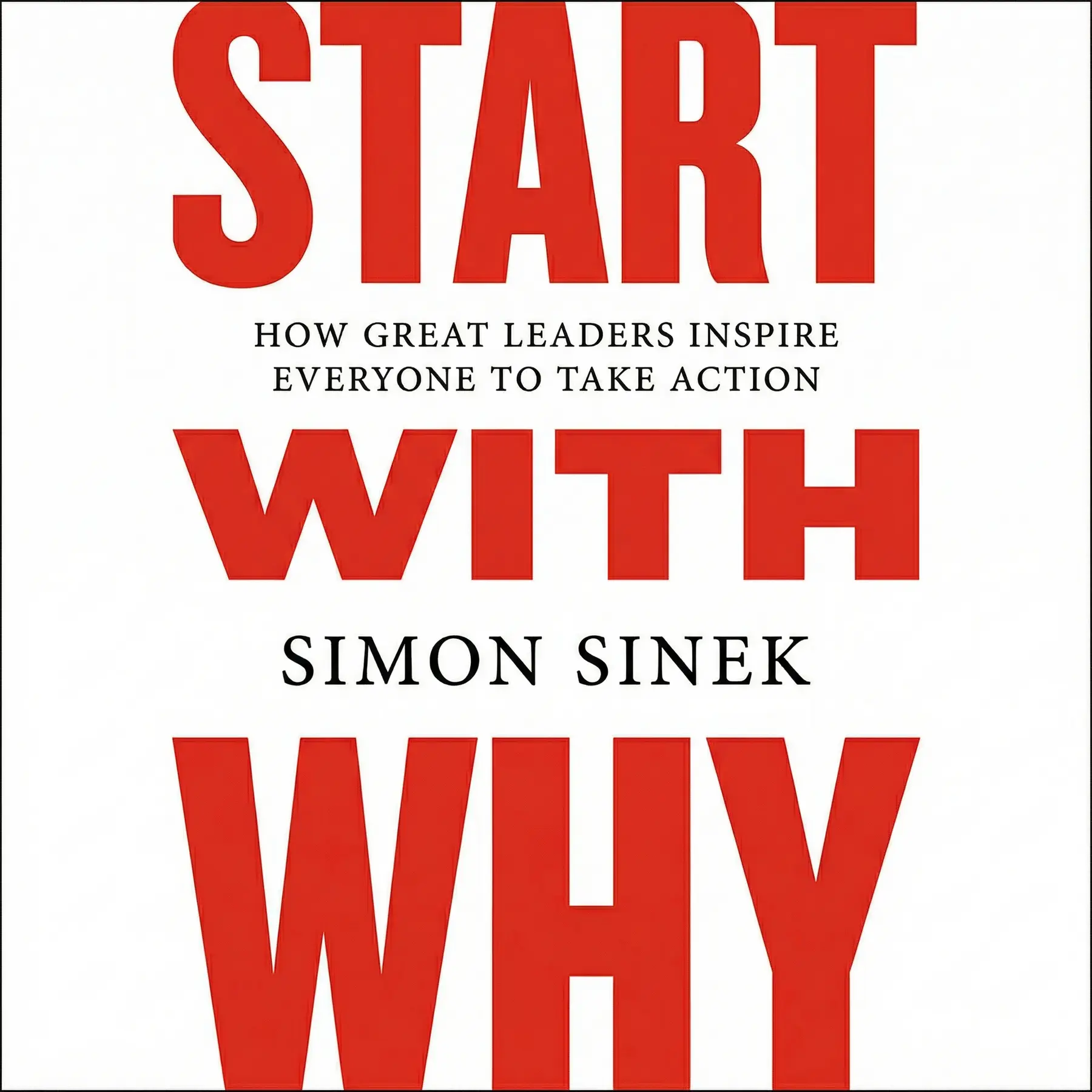
EnglishไทยStart With Why: How Great Leaders Inspire Everyone to Take Action
By Simon Sinek
Explains why customers and employees stay loyal to a clear purpose instead of discounts. It shows how to find your own why and how to put it first in every pitch, job advert and message.
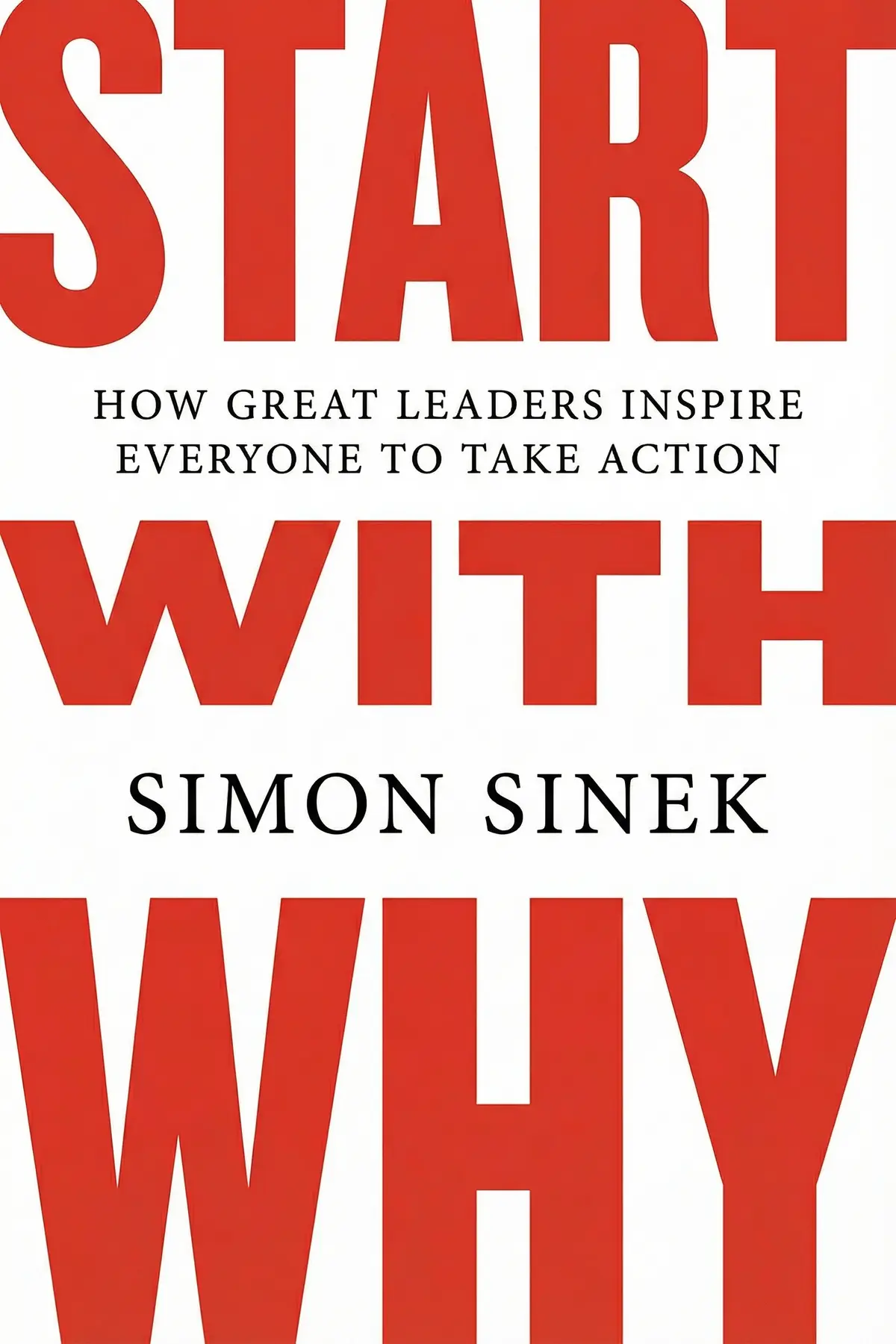
Table of Content
1. Introduction
1 min 00 sec
Plenty of companies have good products and fair prices, yet their customers vanish as soon as a competitor offers a better deal. In Start With Why, leadership speaker Simon Sinek argues that the missing piece is a belief: people stay loyal to the reason a company exists, and what it sells comes second. He first sketched the idea in 2009 at a small TEDx event in Puget Sound, in a room of just over a hundred people, with a microphone that only started working halfway through. That talk became the third most clicked TED talk ever.
His case is simple. Leaders who state their purpose first, then their methods, then their products, earn a commitment from customers and staff that discounts and bonuses cannot buy. Along the way you get a three-ring test for any pitch, a method for digging your own purpose out of your past, and a reason to stop competing on price alone.
2. Tell a deal chaser from a loyal customer
1 min 52 sec
Sales, coupons and limited offers really do bring buyers in the door. The trouble shows up later, in hard times, and it explains why one phone maker can charge more and still draw crowds on launch day.
3. Read any organization through three rings
2 min 04 sec
Nearly every company can explain what it sells and how it makes it. The center of Sinek’s simple drawing is where most of them go silent, and he says that silence is exactly what customers notice.
4. Match every launch to what your customers believe
1 min 52 sec
In 2003 a computer giant with every technical advantage brought out a music player, and buyers ignored it. Sinek’s explanation has little to do with engineering and a great deal to do with how people choose.
5. Win early fans and better hires with one belief
1 min 44 sec
A young company cannot reach the mass market until a small group of enthusiasts takes a chance on it. Sinek says the same quality that attracts them also filters the people who apply to work for you.
6. Find your purpose in what others always saw
1 min 44 sec
Ask most founders why their company exists and the answer drifts into money or vague talk of a better world. Sinek’s way to a real answer starts with a memory most people overlook.
7. Say the why first in every pitch
1 min 56 sec
Two companies could describe the same music player with the same facts and get opposite reactions. The difference lies entirely in the order of the sentences, and Sinek says most organizations get that order backward.
8. Conclusion
1 min 10 sec
Sinek closes with a story about two stonemasons on a large medieval building site. Ask the first whether he likes his work, and he lists the burning sun, the aching back and the endless stones. He adds that he may not live to see the building finished. So no, he does not like it. The second man describes the same heat, the same back and the same doubt about seeing the end. Then he says he loves the work, because he is building a cathedral.
Their days are identical. Only one of them knows what the stones are for. That scene holds the whole book. Purpose leaves the work just as heavy, yet it gives people a reason to stay through the hard stretches that would send a deal-hunting customer or a salary-only employee elsewhere.
The practice Sinek supports is modest. Find your why in the pattern others have always seen in you. Put it in the first sentence of whatever you say, before the how and the what. Then keep repeating it to the people around you, long after it feels obvious to you. Give them a cathedral to build.
About this book
What is this book about?
Many companies sell good products at fair prices and still lose customers the moment a rival cuts its price. Simon Sinek argues that the missing ingredient is purpose. In his view people commit to the reason an organization exists far more than to the features or deals it offers. His tool is the Golden Circle: three rings with the why at the center, the how around it and the what on the outside. Most companies talk from the outside in. Inspiring ones, with Apple as his main example, start from the center. Sinek traces Apple's sense of mission to the anti-establishment mood of late-1960s California. He uses Dell's 2003 MP3 player to show what happens when a product has capability but no cause behind it. Readers learn to tell manipulation from inspiration and to find their own why in patterns from their past. They also learn to order a message from purpose to product, to hire people who share the mission, and to hand off daily operations so a leader can keep the purpose clear.
Book Information
Who it's for
Founders competing on price
Founders who compete on price and want customers who stay when the discounts stop.
Managers wanting purposeful staff
Team leads and managers who need staff to bring a sense of purpose to routine work.
Marketers and young professionals
Marketers and young professionals writing pitches, job adverts or presentations that keep falling flat.
About the Author
Simon Sinek
Simon Sinek speaks and writes about leadership in business, with a focus on helping leaders and organizations inspire people. He has presented his ideas to groups including Microsoft, 3M, the United Nations and the US Air Force. Start With Why appeared in 2009 and has been called a best-seller. His other books include Leaders Eat Last and The Infinite Game, published in 2019.
Ratings & Reviews
Ratings at a glance
What people think
Listeners consider this title indispensable for those in charge, offering profound knowledge and realistic cases that foster different ways of thinking. The book also grants excellent understanding of how to lead and succeed, featuring sharp examples of corporate trailblazers, and listeners value its ability to influence their decisions. Nevertheless, opinions on the writing are divided; while some listeners feel it is absorbing, others remark on its repetitive nature.
Top reviews
Wissanu
Finally got around to reading Sinek's manifesto after years of seeing that famous Golden Circle diagram shared on my professional feed. While the core message is straightforward, its application to leadership is where the real wisdom lies. It pushes you to stop obsessing over the 'what' of your products and start articulating a deeper purpose that your team can actually rally behind. Yes, the author brings up Apple and the Wright brothers a lot, but these case studies effectively illustrate how a clear vision differentiates a leader from a mere manager. To be fair, the text gets a bit repetitive in the second half as he reinforces the same points. However, the perspective shift it offers is essential for anyone trying to build something that lasts. It helped me realize that loyalty isn't bought through features; it's earned through shared beliefs.
Show moreMaksim
Wow. This completely changed how I approach my pitch decks and team meetings. Sinek argues that people don't buy what you do, but why you do it, and he links this directly to our biology. By targeting the limbic system rather than just the neocortex, you tap into the emotional center where true loyalty lives. The book provides a practical framework that I’ve already started using to refine my brand's messaging. Some might find the tone a bit self-important, but the results speak for themselves. This is essential reading for anyone in a position of influence. It forces you to look at your business not as a series of transactions, but as a way to contribute to a larger cause. I'm buying copies for my entire management team.
Show moreNuk
This book provides the missing link for anyone struggling to inspire a team or build a brand that people actually care about. Sinek's 'Golden Circle' is such a simple yet profound way to gain a new perspective on leadership. It’s filled with practical wisdom that pushes you to look beyond the surface level of your daily operations. While some parts feel like they are padding for time, the overarching message is vital for success. It helped me redefine my own career goals and clear up the confusion around our company's mission. I particularly enjoyed the section on how to find your 'Why' and the importance of being authentic in your communication. Highly recommended for new managers who want to lead with integrity.
Show moreDing
Ever wonder why some movements, like the one led by Martin Luther King Jr., gain massive momentum while others fizzle out? Sinek uses this to show that people rally around a shared vision rather than a checklist of demands. This book offers a compelling perspective on why some companies remain resilient during economic shifts. By focusing on a core belief, leaders can guide their actions more effectively than those who just chase short-term profit. I found the examples of industry leaders to be clear and guiding, though the writing can be a bit circular at times. It really helps you gain a new perspective on how to communicate with impact. Definitely a staple for my business shelf and something I'll revisit.
Show moreTen
As a small business owner, I found the core philosophy of 'Starting with Why' absolutely transformative for our internal culture. Sinek spends a lot of time discussing the difference between manipulation and inspiration, which really made me reflect on our current marketing strategies. Are we just dropping prices to get sales, or are we actually building a community of believers? The book provides great insights into leadership and success by showing how visionaries keep their focus on the long-term goal. I did find the constant fawning over Steve Jobs a bit much, especially since business is often more complex than just having a good 'why.' Still, the book is effective in guiding actions toward a more authentic way of doing business. It’s a solid read if you need to clarify your mission statement.
Show moreLayla
Look, you might get tired of hearing about the same few companies by the end, but the underlying logic remains sound. This book is all about the driving forces of a successful business: Purpose, Action, and Results. Sinek does a great job explaining why some companies lose their way once the original visionary leaves. He uses the 'Golden Circle' to show how the 'Why' can get buried under the 'What' as a company grows. Personally, I found the chapters on maintaining the clarity of 'Why' as you scale to be the most useful. It’s not just a book for CEOs; it's for anyone who wants to understand the mechanics of human loyalty. A bit wordy in places, but the wisdom is there if you are willing to look for it.
Show moreScarlett
After hearing so much hype in my corporate circles, I expected a fluff piece, but Sinek actually offers some solid frameworks for success. He uses Southwest Airlines as a case study to show how a company's culture can become its greatest competitive advantage. Most businesses focus on the 'What'—the product—but this book teaches you to lead with your convictions. It’s a great read for gaining insights into why some leaders are so much more effective than others. To be fair, he does repeat his points about Apple quite a bit, which can get tedious. But the clarity of the examples makes the theory easy to apply to your own career. It’s a useful guide for anyone wanting to inspire others and move beyond just selling features.
Show moreAraya
Frankly, the middle section drags a bit because Sinek hammers the same three examples home repeatedly. We get it; Apple is innovative and Southwest cares about their people. However, if you can look past the redundancy, the book offers a powerful framework for organizational stability. It’s a great tool for leaders who feel they’ve lost their spark or are struggling to explain their company’s value proposition to the outside world. I appreciated the distinction between manipulation and inspiration, as it forced me to re-examine our own sales tactics. It’s not a perfect book, and the TED talk covers about eighty percent of the value, but the additional depth on the 'How' and 'What' layers is still worth the time for a dedicated professional.
Show moreTim
The truth is, this is a brilliant twenty-minute TED Talk that has been stretched thin into a two-hundred-and-fifty-page book. I appreciate the central idea—that successful organizations communicate from the inside out—but Sinek repeats the same concepts until they lose their impact. Every few chapters, we are back to the Wright brothers or the birth of the personal computer. While the core message is powerful, the supporting evidence feels anecdotal rather than scientifically rigorous. It's a helpful framework for branding, but don't expect a deep dive into organizational psychology or complex data. If you have a few hours to spare, it’s worth a skim to see the examples in detail, but you might find yourself checking how many pages are left by the middle of the third section.
Show moreNong
In my experience, business success is far more about market timing and raw execution than having a fuzzy emotional vision. Sinek tries to dress up marketing strategies as 'biology' by pointing at the limbic system, but the science feels incredibly flimsy and oversimplified. He constantly uses Southwest Airlines and Apple as his gold standards, yet he ignores the actual economic factors that made those companies survive while others failed. It is easy to look at a winner and say they 'started with why' after the fact, but that feels like circular reasoning to me. The book claims that manipulation and inspiration are different, but the line between them is basically nonexistent in his examples. If you want actual data on how humans make decisions, go read something by Daniel Kahneman instead. This is just another entry in the tech-bro canon that mistakes charisma for actual business strategy.
Show moreQuestions about this book
What is the main idea of Start With Why?
Simon Sinek argues that people commit to the reason an organization exists more than to its products or deals. He illustrates this with the Golden Circle: the why at the center, the how around it and the what on the outside. Companies that communicate from the center outward, as he says Apple does, inspire lasting loyalty. Companies that rely on incentives like discounts get customers who leave when a better offer appears.
What is the Golden Circle in Start With Why?
The Golden Circle is three rings, one inside the other. The outer ring, the what, is the products or services an organization offers. The middle ring, the how, is the way it delivers them, such as its process or culture. The center, the why, is its mission and the reason it was founded. Sinek says inspiring leaders and organizations think and speak from the center outward.
How do I find my why according to Simon Sinek?
Sinek suggests looking for patterns in your past. Think about what you were known for and what friends, family and colleagues noticed that made you stand out. He did this himself during a hard period and realized people had always seen him as an eternal optimist who inspired others to act. That pattern became his purpose: inspiring people.
Why did Dell's MP3 player fail while the iPod succeeded?
Sinek says Dell, which launched an MP3 player in 2003, could build a good product, but buyers sensed it only wanted a foothold in a new market. The iPod fit Apple’s long-standing belief in challenging the status quo, since Apple was taking on the music industry. Apple also pitched it from the why outward, opening with its ambition to change how music is distributed and enjoyed.
How can a manager apply Start With Why?
Lead every message with purpose, then method, then product, whether it is a sales pitch, an internal email or a job advert. Sinek advises writing job adverts so the mission comes first, which attracts people who share it. As the team grows, he suggests handing day-to-day operations to senior people who believe in the vision, so the leader can keep reminding everyone why the work matters.

Readers also enjoyed





A Year with Peter Drucker: 52 Weeks of Coaching for Leadership Effectiveness
Joseph A. Maciariello



Acting with Power: Why We Are More Powerful Than We Believe
Deborah Gruenfeld

All In: How Great Leaders Build Unstoppable Teams
Mike Michalowicz
AUDIO SUMMARY AVAILABLE
Listen to Start With Why in 15 minutes
Get the key ideas from Start With Why by Simon Sinek, plus 5,000+ more nonfiction titles.
- 5,000+ titles
- Listen as much as you want
- 7-day free trial
- Cancel anytime









