

13 min 09 sec
Available in: English
Some People Need Killing: A Memoir of Murder in My Country
A journalist's account of how the Philippine drug war killed thousands of poor men while keeping wide public support, and of the stories, numbers and police scripts that made state killing sound like public safety.
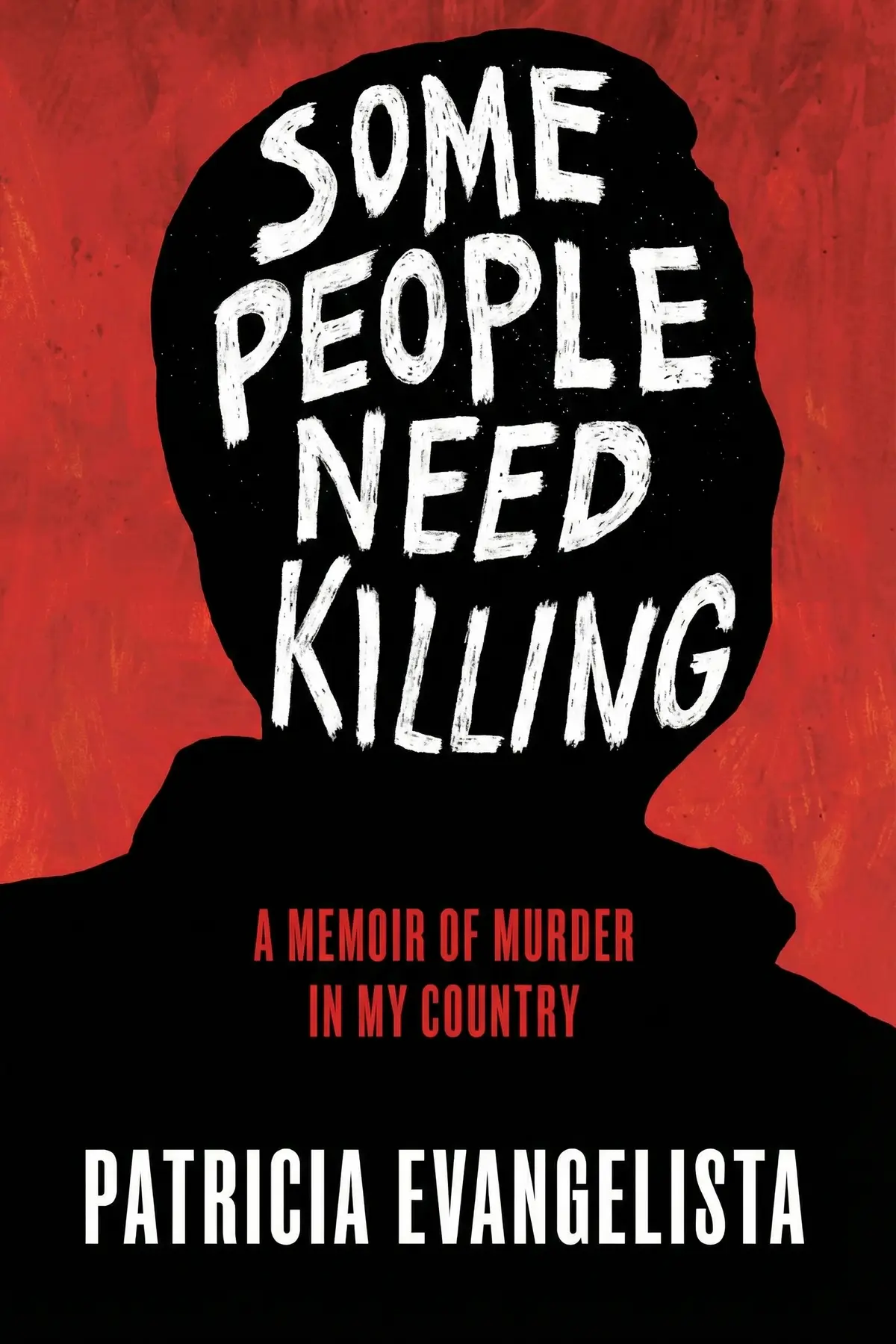
Table of Content
1. Introduction
1 min 15 sec
Most people assume a government that kills its own citizens must rely on fear to keep them quiet. In Some People Need Killing, journalist Patricia Evangelista shows something more troubling: in the Philippines, it relied on applause. After Rodrigo Duterte became president in 2016 and declared a war on drugs, police and armed vigilantes killed somewhere between 7,000 and 25,000 people over six years, most of them poor men suspected of a link to drugs.
Evangelista’s memoir of that war traces how the killing kept its support. Duterte told voters that drug users were monsters behind every problem they faced. Inflated figures made the monsters seem to be everywhere, and police reports repeated the same lines thousands of times. The violence held its legitimacy as long as that story held, and it cracked only where a survivor, forensic evidence or a scandal broke it.
Follow her reporting and you learn to hear how a frightening anecdote, a convenient number and an identical report can make killing sound like safety. A note of care: the stories include murder and the abuse of a child.
2. See how a grievance becomes permission to kill
1 min 59 sec
Many politicians promise to be tough on crime and nothing much happens. This candidate promised that undertakers would get rich, and voters who felt forgotten heard something they had been waiting years to hear.
3. Check the number behind every horror story
2 min 03 sec
A candidate’s favorite campaign tale could never be checked, but the figures he attached to it could. When Evangelista lays the official statistics beside his claims, the gap tells you what the tale was really for.
4. Read a perfect police record as a warning
2 min 19 sec
Thousands of official reports described armed suspects shooting at officers and missing every time, while officers never missed once. Police chiefs called it luck. Evangelista shows what that impossible accuracy was really recording.
5. What one surviving witness can prove
2 min 11 sec
A young vendor went to collect a small debt and stayed for a game of pool. After being shot he was cuffed to a hospital bed and charged with assault, while a police report described four dealers killed after firing on officers.
6. Outrage follows the single victim, not the toll
2 min 13 sec
Thousands of poor Filipinos died without forcing a halt. Then one killing by police became an international embarrassment within months. Evangelista shows what that pause achieved, and what happened when the cameras looked away.
7. Conclusion
1 min 09 sec
Evangelista’s book is finally about how a country talked itself into killing. Duterte did not need to conceal his plan; he campaigned on it. He chose a group with almost no power to answer back, described them as monsters, multiplied their numbers and promised that removing them would cure poverty, crime and corruption. Police reports, with their flawless aim and matching wording, kept the story alive long after the votes were counted. Most of the dead were poor men only suspected of a connection to drugs.
What broke the story, each time, was a stubborn detail: a murder count lower than claimed, a share of drug users well below the global average, a forensic finding that men had been shot on their knees with their hands bound. That is the habit the book leaves with you. When a leader blames one group for everything, ask whether that group can speak for itself. When a number arrives wrapped in a horror story, look the number up. When every official account sounds the same, treat the sameness as a warning.
Efren Morillo was supposed to be one line in a police report. He lived, and the report meant to bury him became proof that it lied.
About this book
What is this book about?
When Rodrigo Duterte became president of the Philippines in 2016, he declared a war on drugs. During those six years, police officers and armed vigilantes took the lives of an estimated 7,000 to 25,000 individuals, and the majority were impoverished men accused of using or dealing drugs. Patricia Evangelista, a journalist who investigates these killings, wonders how a state could take lives at such a scale and yet hold on to the support of so many everyday citizens. Her answer runs through the stories Duterte told. He blamed nearly every national problem on drug users, described them as monsters, multiplied their numbers well beyond official statistics and promised that killing them would make the country safe. Police reports then repeated the same script thousands of times: the suspect fired, officers fired back, the suspect died. Evangelista follows the cases that broke the script, including a survivor who lived to testify against the officers who shot him and a kidnapping scandal that forced a pause in the killings. Readers come away with a clear picture of how official violence is sold, and of the details that expose it.
Book Information
Who it's for
Curious about populist violence
Readers who follow politics and want to understand how populist leaders win support for violence.
Reporters, students and researchers
Journalists, students and researchers interested in human rights, policing and drug policy.
Learning to question statistics
Anyone who wants to read official statistics and police accounts with sharper, more skeptical eyes.
About the Author
Patricia Evangelista
Patricia Chanco Evangelista is a journalist and documentary filmmaker based in Manila whose reporting centers on conflict, disaster and human rights. She has reported for the Philippine news company Rappler and served as a writer-at-large for Esquire. Her coverage of armed conflict and disaster won the Kate Webb Prize for journalism done in dangerous conditions, and she has held fellowships including the Logan Nonfiction Program and the Dart Center for Journalism and Trauma. This is her first book.
Ratings & Reviews
Ratings at a glance
What people think
Listeners find the book expertly crafted and consider it vital reading for those following this subject. Its authenticity is highly regarded, with one listener calling it a masterclass in true journalism. Pacing draws varied reactions, as several listeners find it horrific. The length of the narrative also sees divided feedback, with one listener remarking that it could have been shorter.
Top reviews
Rose
This book is a masterclass in what I consider true journalism at its absolute best. Patricia Evangelista doesn't just report on the facts; she immerses you in the humid, terrifying nights of the 'night shift' where the bodies piled up under Duterte’s orders. The way she juxtaposes the cold, hard data of the drug war with the visceral grief of the families left behind is nothing short of haunting. Some might find the prose a bit dense, but I believe the complexity reflects the tangled morality of a nation cheering for its own destruction. It is a harrowing, essential record of a dark era that the world should not be allowed to forget. Frankly, the detail about the 'grammar of violence' and how the state uses language to mask murder was the most chilling part for me. This is not an easy read, but it is a necessary one for anyone who cares about human rights and the fragility of democracy.
Show moreLayla
Rarely does a piece of non-fiction leave me feeling so utterly devastated yet enlightened at the same time. Patricia Evangelista has written a brave, unflinching account of the slaughter occurring in the Philippines, and her voice is one of pure, righteous exhaustion. I was particularly moved by the stories of the mothers and children in the slums who were caught in the crossfire of a war that seemed to target the poor exclusively. The author’s background as a 'disaster journalist' shines through in her ability to find the humanity in the midst of absolute carnage. She doesn't shy away from the fact that many of her own countrymen supported these killings, which adds a layer of tragic complexity to the whole book. It’s a staggering work of witness. If you want to understand how a populist leader can turn a country against its own people, read this immediately. It is easily one of the most important books of the decade.
Show moreSin
Patricia Evangelista has managed to write something that feels both like a historical record and a living, breathing nightmare. The truth is, I had to put this book down several times just to catch my breath because the descriptions of the executions are so vivid. She captures the atmosphere of fear in Manila perfectly, especially the sense that anyone could be next if a neighbor decided to whisper the wrong name to the police. I found the sections on the 'vigilante' kill squads to be the most fascinating and disturbing parts of the whole narrative. It’s a deep dive into the banality of evil. The author’s prose is sharp and rhythmic, echoing her training in oratorical speech, which gives the book a unique, almost poetic quality despite the grim subject matter. This is an essential read for anyone interested in global politics or the ethics of journalism. Absolutely brilliant work.
Show moreChee
Ever wonder how a democracy slides into a slaughterhouse with the total applause of its own citizens? This book provides a terrifying answer. Evangelista is a surgeon with words, cutting through the propaganda of the Duterte regime to show the rotting core underneath. I was haunted by the story of 'Simon' and the idea that ordinary people can be convinced that 'some people need killing' for the greater good. The reporting here is top-tier; you can tell she spent years on the ground, risking her safety to get these stories. It’s a visceral, bloody, and deeply moving piece of literature that functions as both a warning and a memorial. Some might find the length intimidating, but every page feels like a necessary act of resistance against forgetting. I cannot recommend this highly enough to anyone who values truth and justice. It is a staggering achievement that I won't stop thinking about for a long time.
Show moreMason
Why does a book about mass murder spend so much time discussing intransitive verbs and passive voice? At first, I found the author's focus on linguistics and her own history as a public speaker a bit distracting from the main subject. However, as I got deeper into the narrative, I realized she was dissecting how language is weaponized to justify the slogan 'some people need killing.' Evangelista is a gifted writer, though I’ll admit the pacing can feel a bit sluggish in the middle sections where the descriptions of surroundings become very flowery. To be fair, the sheer volume of stories about the dead can become overwhelming to the point of numbness, which might be the author's intent. It really forces you to look at the 'monsters' and see the humans underneath. The book is perhaps a bit too long, but the investigative work is undeniably brave and meticulously detailed.
Show moreChai
I struggled initially with the balance between the author’s personal memoir and the actual reportage of the drug war. I went in expecting a straightforward political analysis of Duterte’s regime, but what I got was something much more intimate and, at times, more frustrating. Evangelista’s style is very deliberate, almost like she’s trying to paint a picture in slow motion with every sentence. While this makes for some beautiful passages, it also means the book clocks in at a very hefty length that might test the patience of casual readers. Still, the accounts of vigilantes like 'Simon' are absolutely gripping and provide a terrifying window into the psyche of those who believe they are doing 'good' by killing. It’s a powerful testament to the victims whose names would otherwise be erased. I’d recommend it, but be prepared for a very heavy, slow-burning experience that demands your full attention.
Show moreSiraporn
After hearing so many snippets about Duterte’s drug war on the news over the years, I thought I was prepared for the contents of this book. I was wrong. The level of detail Evangelista provides regarding the police operations and the planting of evidence is truly horrific and eye-opening. The writing itself is quite sophisticated, though I can see why some readers might find it a bit verbose or 'wordy' in certain chapters. Personally, I appreciated the deep dive into Filipino history and the author's own journey, as it provided much-needed context for how someone like the 'Punisher' could rise to power. My only real gripe is that the narrative structure feels a bit disjointed at times, jumping between different years and victims in a way that can be hard to track. Nevertheless, it is a monumental achievement in investigative reporting that deserves every bit of praise it gets for its authenticity and courage.
Show moreKom
Picked this up on a whim after seeing it on several 'best of' lists, and it certainly lives up to the hype in terms of its emotional weight. Evangelista is a phenomenal writer who knows exactly how to twist the knife by focusing on the small, tragic details—like the color of a child's backpack at a crime scene. I learned so much about the political landscape of the Philippines that I never knew before. However, the author’s obsession with the 'grammar' of the killings—the way she analyzes the specific words used by Duterte and the police—felt a bit academic and took me out of the story a few times. Got to say, it’s a very heavy lift for a weekend read. It’s a book that demands you sit with the discomfort of what humans are capable of. It’s not perfect, but it’s a vital piece of work for our current political climate.
Show moreUraiwan
The truth is, this could have been a much tighter and more impactful book if it were about 100 pages shorter. I have immense respect for the author's bravery and the importance of the subject matter, but the delivery felt very repetitive after a while. We get dozens of stories of young men being killed in alleys, and while each one is a tragedy, they start to blend together in a way that diminishes the impact of the individual narratives. I also found the author’s tangents into her childhood and international speaking competitions to be somewhat self-indulgent and irrelevant to the drug war. It felt like she was trying to write a literary masterpiece when a more direct, punchy reporting style might have served the victims better. It’s still a significant historical document, but the pacing issues and the long-winded descriptions of scenery made it a bit of a chore to finish.
Show moreNarongrit
Look, I understand the importance of documenting these atrocities, but the writing style here just didn't work for me. It felt extremely verbose and 'literary' for a book that is ostensibly about a bloody drug war. There are long, sprawling sentences about trees and the layout of neighborhoods that felt like filler, making the already long page count feel even more daunting. I was expecting more of a high-level political analysis, but the book leans very heavily into personal memoir and repetitive scene-setting at the sites of various murders. To be fair, her interviews with the killers themselves are chilling and well-conducted. But overall, the 'staccato' pacing and the constant grammatical asides made it a frustrating experience. It’s an important record, certainly, but I think a more rigorous editor could have made this a much more effective and readable book for a general audience.
Show moreQuestions about this book
What is Some People Need Killing about?
Patricia Evangelista reports on the war on drugs declared by Philippine president Rodrigo Duterte in 2016. Across six years, somewhere from 7,000 to 25,000 people died at the hands of police and vigilantes, and most were poor men suspected of using or selling drugs. She asks how a state could kill so many while keeping wide public support, and she finds the answer in the stories, inflated statistics and scripted police reports that made the killing look like protection.
Did Duterte's drug statistics hold up?
No, according to the official figures Evangelista cites. Duterte applied a UN average of 3.5 percent drug use to claim 4.5 million users, but the real share in the Philippines never exceeded 1.5 percent, and most users took marijuana rather than methamphetamine. He also said addicts had committed 77,000 murders in four years, when the actual total of murders from all causes was 53,000.
Who is Efren Morillo in Some People Need Killing?
Efren Morillo was a young, poor vendor shot by police during a raid in Quezon City on August 21, 2016, while playing pool at a friend’s house. He survived a bullet near his heart, walked nine hours to a hospital and was then charged with assault. Forensic evidence showed the men had been shot kneeling with bound hands, and he was acquitted in March 2023.
What can readers learn from Some People Need Killing?
The book teaches how official violence gets sold to the public. Watch for leaders who blame one powerless group for every problem, check the numbers attached to frightening anecdotes, and treat suspiciously perfect records as a warning, like the 32 reported gunfights in Bulacan in one day with no officer hurt and every suspect dead. It also shows how much one surviving witness can change.
Readers also enjoyed

A Promised Land
Barack Obama

A River in Darkness: One Man’s Escape from North Korea
Masaji Ishikawa

A Theory of Justice
John Rawls



A Warning
Miles Taylor



A Biography of Loneliness: The History of an Emotion
Fay Bound Alberti
AUDIO SUMMARY AVAILABLE
Listen to Some People Need Killing in 15 minutes
Get the key ideas from Some People Need Killing by Patricia Evangelista, plus 5,000+ more nonfiction titles.
- 5,000+ titles
- Listen as much as you want
- 7-day free trial
- Cancel anytime









