

13 min 22 sec
Available in: English
Smart Calling: Eliminate the Fear, Failure, and Rejection from Cold Calling
By Art Sobczak
Shows how to make cold calls prospects actually welcome by researching them first, opening with their needs, setting a main and a fallback goal, standing out with bold timing and winning over gatekeepers.
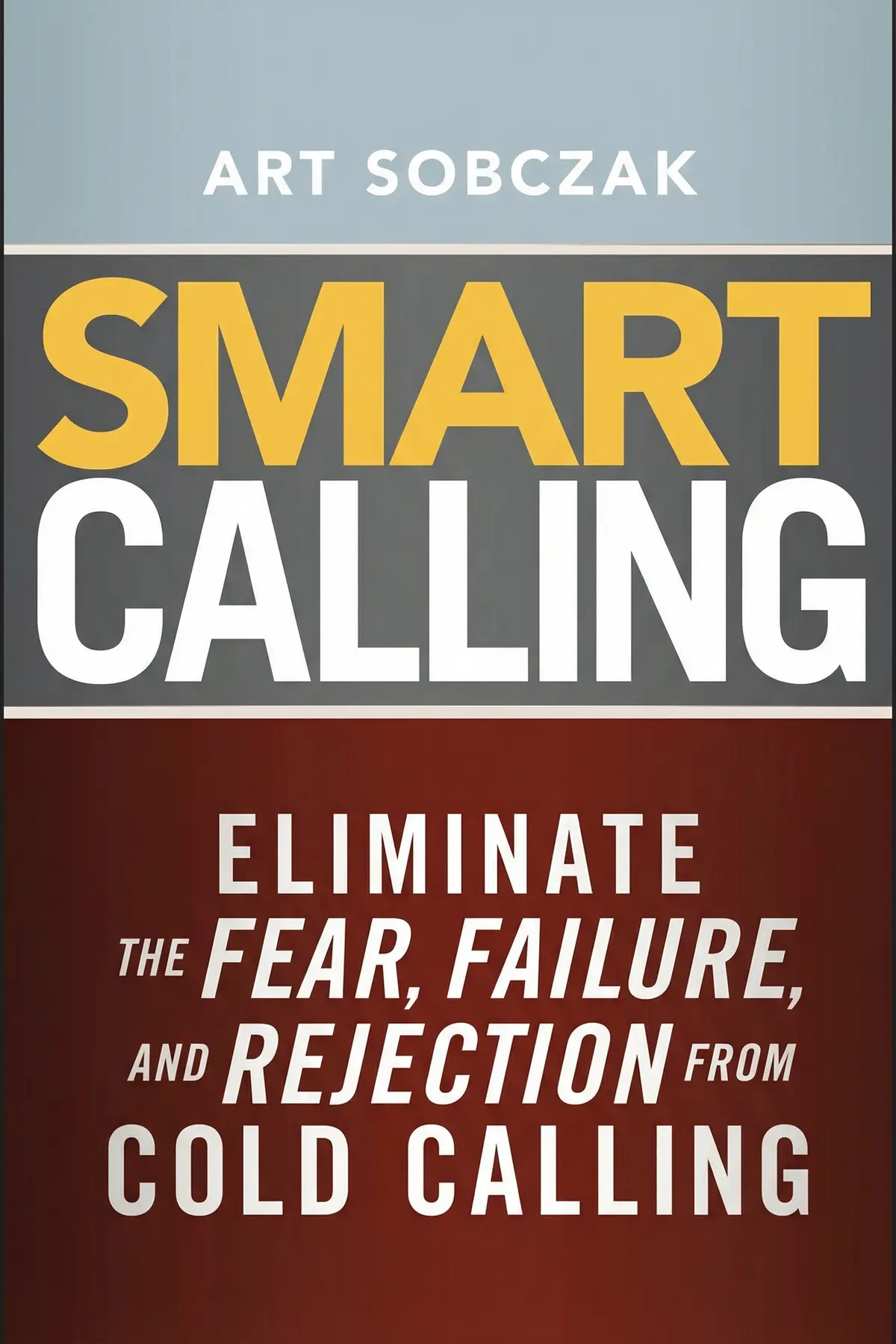
Table of Content
1. Introduction
55 sec
Most people dread cold calling because most cold calls deserve to be dreaded: vague, centered on the caller and forgotten within seconds. In Smart Calling, phone sales trainer Art Sobczak argues that the fear fades once a call stops being a gamble and becomes a prepared conversation about the other person’s needs. His case is that research, written goals, empathy and a little nerve can turn an unwelcome interruption into a call a stranger is glad to take.
The proof comes from the field: a Xerox rep who set a sales record during a snowstorm, a gatekeeper who makes 90 percent of her office’s purchases, and a simple search trick that turns any company website into a briefing file. Along the way you’ll pick up the words to cut from your opening, the questions to answer before dialing, and a two-week plan for practicing until picking up the phone feels ordinary.
2. Opening lines that keep a prospect listening
1 min 33 sec
A call can be perfectly polite and still lose the listener in its first breath. Sobczak names the small habits that give callers away, including one innocent little word most people use without thinking.
3. Dial with a clear goal and a fallback
1 min 39 sec
Plenty of experienced callers pick up the phone with no idea what a good result would be. Sobczak explains what that costs them, and why the most useful goal is the one you hope not to need.
4. Match your pitch to what the listener needs
1 min 38 sec
The same vacuum cleaner can be sold to two buyers in two completely different ways. Sobczak shows why the details one buyer wants first are exactly the details another buyer wants you to skip.
5. Read the prospect's world before you call
1 min 43 sec
A perfectly reasonable request can be terribly timed because of a headline the caller never saw. Sobczak shows how to read a prospect’s mood in advance, down to what their office building tells you.
6. Let digital tools do the homework for you
1 min 33 sec
Three dozen open browser tabs is not research, it is overload. Sobczak points to tools and corners of the web that reveal far more about a prospect than any polished corporate page ever will.
7. Stand out by breaking the calling rules
1 min 37 sec
Sales folklore says some days are off limits for calling. One salesman did not let a snowstorm stop him, and he set a three-day sales record. Sobczak explains why bending the rules makes prospects remember you.
8. Win over the assistant who guards the boss
1 min 33 sec
Most callers treat the person who answers as a wall to climb over. Sobczak tells of one gatekeeper whom sellers kept ignoring, even though almost every purchase in her office went through her.
9. Conclusion
1 min 11 sec
Sobczak’s book changes what makes a cold call cold. It has little to do with the phone and almost everything to do with how little the caller knows about the person on the other end. A call made after reading the company’s website, checking the news that shapes the prospect’s week and writing down what a good result would look like is no longer a shot in the dark. It is a short, useful conversation that happens to arrive unannounced.
That preparation also takes some of the sting out of rejection. With a fallback goal in hand, a call that misses its main aim can still leave a good impression or permission to call again.
To build the skill, Sobczak recommends two weeks of deliberate training. Set goals for that period and call a fixed number of prospects each day. Tell some of them openly that you are new at this and ask for feedback; some may be glad to help. Even if you miss a few targets, you will finish with real insight into your market.
And when the next call feels hard, think of the Xerox salesman in the snowstorm. Luck had nothing to do with it. The assistants stayed home in the storm, so for once he could talk to the bosses who still came in to work.
About this book
What is this book about?
Most people who have made cold calls remember the hang-ups more than the wins. The calls feel robotic, the offers sound useless and every rejection makes the next dial harder. Art Sobczak, who has trained salespeople in phone prospecting for decades, argues that the pain comes from how most calls are made, not from the phone itself. His alternative, smart calling, treats each call as a planned conversation. Before dialing, the caller learns about the prospect's company, the news shaping their week and the person's own style, using websites, precise search commands, Google Street View, social networks and research tools such as InsideView. The caller writes down a clear goal and a backup goal, opens with something useful to the listener instead of a stock introduction, and looks for ways to stand out, from calling during a holiday week to sending a witty gift. Readers get the exact habits to drop from their opening lines, a routine for preparing each call, a fresh way to treat the assistants who answer the phone, and a two-week practice plan for turning dread into a repeatable skill.
Book Information
Who it's for
Sellers who dread calling
Salespeople and business developers who dread picking up the phone after too many hang-ups.
Founders finding first customers
Founders who must find their first customers by calling strangers themselves.
Seeking a new job
Job seekers and career switchers who need to reach busy decision makers without sounding like a script.
About the Author
Art Sobczak
Art Sobczak began selling by phone at 14, offering tickets to a police fundraising circus, and kept working phone-based jobs through school before sales roles with the original AT&T and a division of American Express. In 1983 he founded Business By Phone Inc., which trains salespeople in business-to-business cold calling and phone prospecting. He has delivered more than 1,500 onsite workshops, created over 100 learning resources and publishes the Telephone Prospecting and Selling Report newsletter.
Ratings & Reviews
Ratings at a glance

What people think
Listeners find the material packed with high-value insights, with one highlighting the inclusion of current examples and details. Furthermore, the work earns praise for its flow and accessibility, as one listener describes how it concisely organizes the material. Finally, listeners value its ability to inspire, with one stating it increases prospecting results dramatically.
Top reviews
Moo
Finally got around to reading this staple of the sales world, and I wish I’d done it sooner. It’s not just a collection of old-school tactics; Sobczak updates the cold calling landscape for the modern era with fresh examples that actually feel relevant today. The book is incredibly readable and the pacing is tight, moving from theory to execution without getting bogged down in too much technical jargon. Since implementing the 'Smart Calling' framework, my prospecting results have increased dramatically because I'm no longer just shooting in the dark. It turns that 'mortal terror' of the phone into a strategic game. If you're tired of being a 'weenie' about your outbound calls, this provides the exact motivational kick you need to get moving. This is highly recommended for any serious professional.
Show moreOscar
This book completely rewired my approach to prospecting by focusing on what the buyer actually values rather than what I’m trying to sell. There’s a great line about how people love to buy but hate to be sold, and this book lives by that mantra. The author meticulously goes through how to set up your scripts and voicemails so you don't sound like a recording. I especially appreciated the focus on 'Smart Calling' as a way to eliminate the sting of rejection. When you have a logical reason for the call, a 'no' doesn't feel like a personal failure anymore. My team has already seen a spike in appointments just by changing our opening statements. It’s an essential read for anyone in a B2B role.
Show moreThida
Succinct, well-paced, and incredibly practical, this is the first sales book I’ve actually finished in a single weekend. I loved how each chapter ends with a 'Smart Calling Action Step' that forces you to apply what you just read. It’s not just theory; it’s a manual for getting people to take action and move the needle on your commissions. The advice on leaving voicemails that actually get returned has been a game-changer for my daily workflow. I no longer feel like I'm bothering people because I actually have something of value to offer before I even pick up the phone. This book contains updated information that is vital for navigating the modern office landscape. Every sales professional can benefit from this one.
Show morePhu
The chapter on gatekeepers alone is worth the price of admission for anyone struggling to get past the front desk. Instead of the usual sleazy tactics, you learn how to navigate social engineering with actual ethics and common sense. Art emphasizes that a 'smart' call is one where you’ve actually done the research, like knowing the prospect's hobbies or current business challenges. While some might say that’s obvious, the way he scripts the interactions makes it feel much less like a cold pitch and more like a warm conversation. I found the advice on using disarming language like 'I understand' particularly helpful for lowering the prospect's guard early on. It’s a solid, practical guide that avoids the typical 'wolf of wall street' nonsense.
Show moreIff
As someone who has always dreaded the telephone, this text provided a much-needed psychological safety net for my daily prospecting. Sobczak suggests canning the hard sells and the pushiness that we all associate with the cliché 'clip-on tie' salesman. Instead, he teaches you how to engage people in a real conversation, focusing on their needs instead of your own quota. The book is unpretentious and the tone is often funny without being overly jokey or cloying. I did find some of the research requirements a bit heavy for high-volume industries, but the principle is sound. It takes the fear out of the process by giving you a script that actually sounds human. It is a very helpful guide for the introverted salesperson.
Show moreArthit
I’ve been in sales for three years, and while some of the tips are basic, the specific scripting advice is top-tier. I loved the section on using silence as a tool; it's a simple technique that most people overlook in their rush to fill the air. The book is very focused on the telephone, yet many of these principles apply to general relationship building and even email outreach. Art’s stance on ethics is refreshing in an industry that often rewards 'closing at any cost' mentalities. My only gripe is that some of the 'Action Steps' at the end of the chapters are a bit vague and feel like filler. Despite that, the transition from 'cold' to 'smart' calling is a framework that every modern SDR should master.
Show moreSomrutai
Ever wonder why your prospects hang up before you even finish your introduction? This book explains exactly why that happens and how to fix your opening statement to grab interest immediately. I particularly liked the 'Could you ever see situations changing' line as a way to handle early rejection without losing your dignity. It’s a no-nonsense approach that ditches the sleaziness for actual substance and research-backed conversations. While some of the advice on timing your calls felt a bit dated, the psychological aspects of the book are timeless. It really helps to take the 'mortal terror' out of the process by giving you a clear plan. It’s a great resource for anyone who has to prospect as part of their job.
Show moreDream
Look, Art Sobczak clearly knows his stuff, but the Kindle version felt like one giant advertisement for his other coaching services. There are so many hyperlinks and recommendations for affiliate authors that it occasionally disrupts the flow of the actual teaching. To be fair, the core strategies regarding 'warm calling' are useful, especially for beginners who have no idea how to structure a pitch. However, many of the success stories from previous clients felt a bit repetitive and drawn out after a while. I was looking for a more concise step-by-step 'how to' manual, but instead, I got a lot of motivational padding. It is a decent book with some good nuggets of information, but you have to be willing to sift through the fluff.
Show moreAndrew
To be fair, there is some solid meat on these bones, but you have to dig through a lot of success stories to find it. The book is a bit long-winded, and I found myself reading less and less each time I picked it up. I appreciate the positive ethical stance, but the author frequently contradicts himself on whether or not you should use a script. One minute he says to be natural, and the next he’s giving you word-for-word lines to memorize. It’s a bit of a mixed bag, though the advice on 'social engineering' the gatekeeper is actually quite clever. If you’re brand new to sales, you’ll get a lot out of this. Experienced pros might find it a bit redundant.
Show moreBunyarit
After hearing so much hype, I found the core message of 'Smart Calling' to be remarkably basic and somewhat disappointing. Truth is, Art basically rebrands 'doing your homework' as some kind of revolutionary secret, which feels insulting to anyone with sales experience. The book promises to eliminate the fear of failure, but his solution is essentially to lower the bar for what you consider a win. If you think getting a gatekeeper to tell you the boss is out golfing is a massive victory, then this is the book for you. For the rest of us, it’s just common sense padded with endless links to other coaches. Honestly, I expected much more than advice on standing up while you talk or using disarming phrases. It’s a pathetic take on information others have offered in better ways.
Show moreQuestions about this book
What is the main idea of Smart Calling by Art Sobczak?
Sobczak argues that cold calling only feels painful because most calls are unprepared and focused on the caller. Smart calling means researching the prospect and their situation, writing down a clear goal and a backup goal, opening with something useful to the listener, finding ways to stand out and treating gatekeepers with respect. Done this way, a cold call becomes a short, relevant conversation instead of an interruption.
What should you avoid saying at the start of a cold call?
Sobczak warns against stock lines such as wanting to introduce yourself and your company, which sound like an apology. He also advises cutting the word just, which makes you sound unsure, and skipping obvious remarks like telling someone they were hard to reach. Use the person’s proper name, spark curiosity with an interesting idea and say specifically how you might help them.
How do you research a prospect before a cold call?
Start with the company website, then use a precise search: your term in quotation marks followed by site, a colon and the company’s web address. Check the news that might affect the prospect’s mood. For senior contacts, Sobczak suggests looking at their office on Google Street View to judge the right tone. Tools like InsideView, plus Facebook, Twitter, blogs, forums and YouTube, fill in the rest.
How should you deal with gatekeepers when cold calling?
Sobczak says to treat assistants as people and potential allies, not obstacles. Introduce yourself, do not interrupt, listen and answer their questions carefully. Rudeness gives them every reason to block you. He also warns against assuming they have little power: in one office he describes, the gatekeeper makes 90 percent of the purchases and only the CEO ranks above her.
How can I practice cold calling as a beginner?
Sobczak recommends a two-week training period. Set goals you want to reach in those two weeks and call a fixed number of prospects every day. Be open about being new and ask some prospects for feedback, since people may be willing to help a beginner. Even if you miss some targets, you will learn a great deal about your market.
Readers also enjoyed




AUDIO SUMMARY AVAILABLE
Listen to Smart Calling in 15 minutes
Get the key ideas from Smart Calling by Art Sobczak, plus 5,000+ more nonfiction titles.
- 5,000+ titles
- Listen as much as you want
- 7-day free trial
- Cancel anytime









